
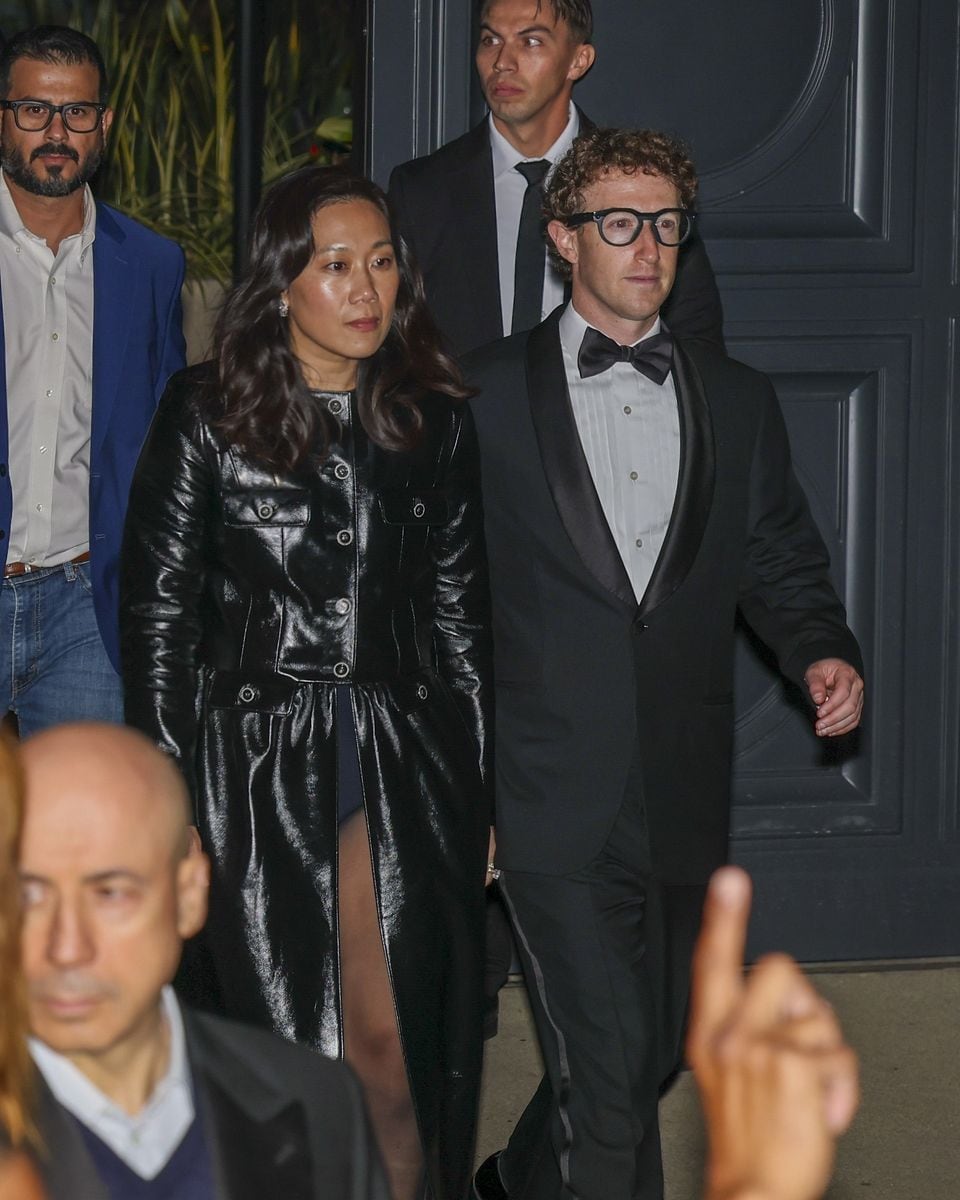
At the Prada show in Milan on Thursday, the room didn’t move until one final guest took his seat. The holdout was Meta chief executive Mark Zuckerberg, arriving with Priscilla Chan moments before the lights dimmed.
He was escorted in alongside Anna Wintour and Eva Chen, Instagram’s director of fashion partnerships. So what was Mark Zuckerberg doing at Prada? And more importantly, what is Meta doing in fashion?
Front Row Power Signals in Milan Fashion Week
Front rows at Milan Fashion Week are not random. Seating is choreography. Designers, editors, celebrities, and executives are placed to send messages about alliances and ambitions. Prada, helmed by Miuccia Prada and Raf Simons, does not casually hold a show for late arrivals.
When Zuckerberg is ushered in with Anna Wintour and Eva Chen, it reads more like a coordinated statement. Fashion is culture. Culture drives platforms. Platforms drive commerce.
 © Getty Images
Meta owns Instagram, still the most powerful visual engine in fashion marketing. Designers launch collections there. Influencers build brands there. Luxury houses sell there. Sitting front row at Prada signals that Meta is not just hosting fashion online. It wants to be embedded in it.
Is Meta Making a Luxury Fashion Play?
Short answer: likely yes, but not in the way a traditional fashion brand would. Meta’s interest in fashion is structural, not aesthetic. The company has spent years investing in digital identity, augmented reality, AI tools, and social commerce. Fashion sits at the center of all of those.
Instagram shopping, creator monetization, branded content tools, and AI-driven advertising are already deeply tied to fashion and beauty. Luxury brands from Prada to Gucci rely on Instagram to reach global audiences instantly. Meta benefits every time a runway look becomes a viral post.
 © The Grosby Group
Now, layer in the next phase is generative AI, virtual try-on technology, digital avatars, and immersive experiences. Meta has long signaled its ambitions in the metaverse. While the term has cooled, the infrastructure remains. Digital clothing for avatars, AR filters that simulate runway pieces, and AI-powered styling assistants.
Zuckerberg’s presence at Prada suggests relationship building at the highest level of luxury fashion. That matters if Meta wants exclusive AR partnerships, early access to collections for digital drops or deeper commerce integration inside Instagram.
The Instagram Fashion Ecosystem
Eva Chen’s presence reinforces the theory. As Instagram’s director of fashion partnerships, she acts as a bridge between tech and luxury. Her job is to ensure that brands feel supported on the platform and that Instagram evolves alongside their needs.
 © Getty Images
Fashion is one of Instagram’s most valuable verticals. It drives engagement, ad revenue, and creator economies. Meta’s AI push could supercharge this ecosystem. Imagine a runway looks instantly tagged, searchable, and shoppable.
Why Luxury Matters to Big Tech
Luxury fashion offers something tech companies crave, which is cultural relevance. Platforms risk feeling transactional. Fashion offers aspiration, storytelling, and emotional engagement.
By aligning with Prada and other heritage houses during Milan Fashion Week, Meta positions itself as a partner to cultural tastemakers, not just an advertising platform. That distinction becomes crucial as younger audiences grow skeptical of overt commercialization.
There is also a competitive angle. TikTok has rapidly expanded its influence in fashion discovery. Brands experiment with TikTok Shop. Pinterest leans into visual search and styling inspiration. If Meta wants Instagram to remain dominant in fashion and beauty, it needs deep, visible alliances.
Tech no longer sits outside the fashion tent. It has a seat in the front row. And Meta seems determined to keep it.