
Atwood Magazine caught up with Curls Ultra, a Chicago-based psychedelic rock fusion band, discussing everything from improv, Phish, and equality in modern music.
Stream: ‘Women on Cocaine’ – Curls Ultra
Curls Ultra make music because they have something to say.
In an era where AI and capitalism seem to be at the forefront of art and creativity, the Chicago band creates to share – for themselves, their community, and beyond.
“We’re trying to be a little more improvisational, a little more exploratory,” drummer Steve Plock says. On MKCurls Vol. 3, the most recent iteration of their improvisational series, these elements shine.
Each MKCurls volume is an exploratory, improvisational collection of songs. Their instrumentals reflect their depth of musical knowledge, as well as their relationship to each other. The series is incredibly “DIY,” focusing on feeling over anything else. While other artists might obsess over perfection in the process of creating art, Curls Ultra create art because it feels right in the moment.

Michael Fansler, guitarist and vocalist for Curls Ultra, started the band in the mid-2010s. The group, then called The Curls, featured an entirely different lineup and sound. “The band now has really only existed post-pandemic,” Fansler says. Their indie pop sound shifted toward psychedelic rock, and their original 8-12-person band became a 4-5-person band.
SJOD, theremin and sampler in Curls Ultra, joined the band in October 2024. He sat in on a show at Gold Sounds in Brooklyn – the same show he opened for as a solo artist. “Michael [Fansler] said I passed the test and was asked to join the band,” SJOD shares.
Fansler nods. “When you’re trying somebody out, you want to do it in a major market,” he jokes. “Steve [Plock] joined the band in 2019,” he adds. “I guess that’s when it started to shift, because we put out a record called Smothered and Covered around that time.”
Plock lived in Wyoming when Fansler initially asked him to be part of the band. He flew back to Chicago for tour rehearsals almost immediately. It was his first time meeting Dove Hollis and Eric Novak, two other members of Curls Ultra. “We needed a bass player,” Plock said. “We just had keys, and we met up, rehearsed one time.” Then they went on the road for two weeks.


Curls Ultra “became something else” out of necessity.
Coming out of the COVID-19 lockdowns, Fansler felt the need to “go out and play.” Within two days of the first tour with Plock and SJOD, he knew he had the band he’d set out to create.
“There are two chapters of whatever this project has been,” Fansler says. It’s simple: the story has evolved, and it will continue to do so.
Thus, the modern era of Curls Ultra began. The current group began touring in 2021 and has stuck together since. They’ve gravitated towards the psychedelic rock sound and improvisational elements together, suiting their maturity, interests, and desire for novelty in a world dictated by trends.
“Steve [Plock] radicalized me with all his Phish-mysticalism,” Fansler jokes. The Phish influences shine in their MKCurls series through guitar-driven choruses, drum hooks, and keyboard progressions.
Successful improvisation occurs when teammates understand each other, not just know each other. The bond the Curls Ultra members have is abundant in their music, which leads to their novel, polished sounds in their improvisational series and studio projects alike, as well as electric live performances.
Many of the band’s visuals are hand-drawn by Novak, the saxophonist, flutist, synth, and bassist for Curls Ultra. They’ve done a majority of the artwork for the singles and tours. Inspiration for their work comes from inside jokes and shared moments between bandmates, resulting in an incredibly cohesive appearance.
“It’s just like, we need this thing, we have the idea, just execute and do it,” Plock says. Not only is this the approach to the band’s visuals, but it also touches on their approach to creating music. “It’s much more satisfying to just go than talk about what artist to use for the album.”
During their Let’s All Go to Heaven Tour in October 2025, Curls Ultra continued to highlight their musical expertise through improvisation. Their latest project, Women On Cocaine, was released in December 2025 following the tour.
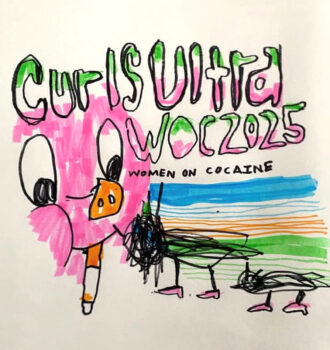
The album features 11 guitar-forward tracks that highlight the futuristic sonics of the psychedelic rock genre and the band members’ knowledge of one another’s skills. Women on Cocaine showcases Curls Ultra’s growth in improvisational performance beyond the simplicity of “jamming.”
Each track is labeled with the city where the recording took place. “Philly” and “Portsmouth” fall into a more “techno” genre, while tracks like “Ypsilanti” and “Boston” are more rock-focused. Overall, the project serves as a time capsule of the band’s sound, era, and relationship for the Curls Ultra members, their musical niche, and the tour. Ultimately, Women on Cocaine ties 11 tracks together with the fundamentals of bands: finding community in a society that teaches individuals to highlight differences.
Similar to the MKCurls series, all proceeds from Women on Cocaine will be donated to the Midwest Immigration Bond Fund. Given the band’s Chicago origins, the organization stood out for its efforts to uplift its hometown.
“It’s a local group that basically bails out people unlawfully detained by ICE, the domestic terrorist organization,” Fansler says. “That’s kind of the goal of these. This is a way we can use these recordings in a kind of creative way that also helps the community, hopefully, in some small way.”
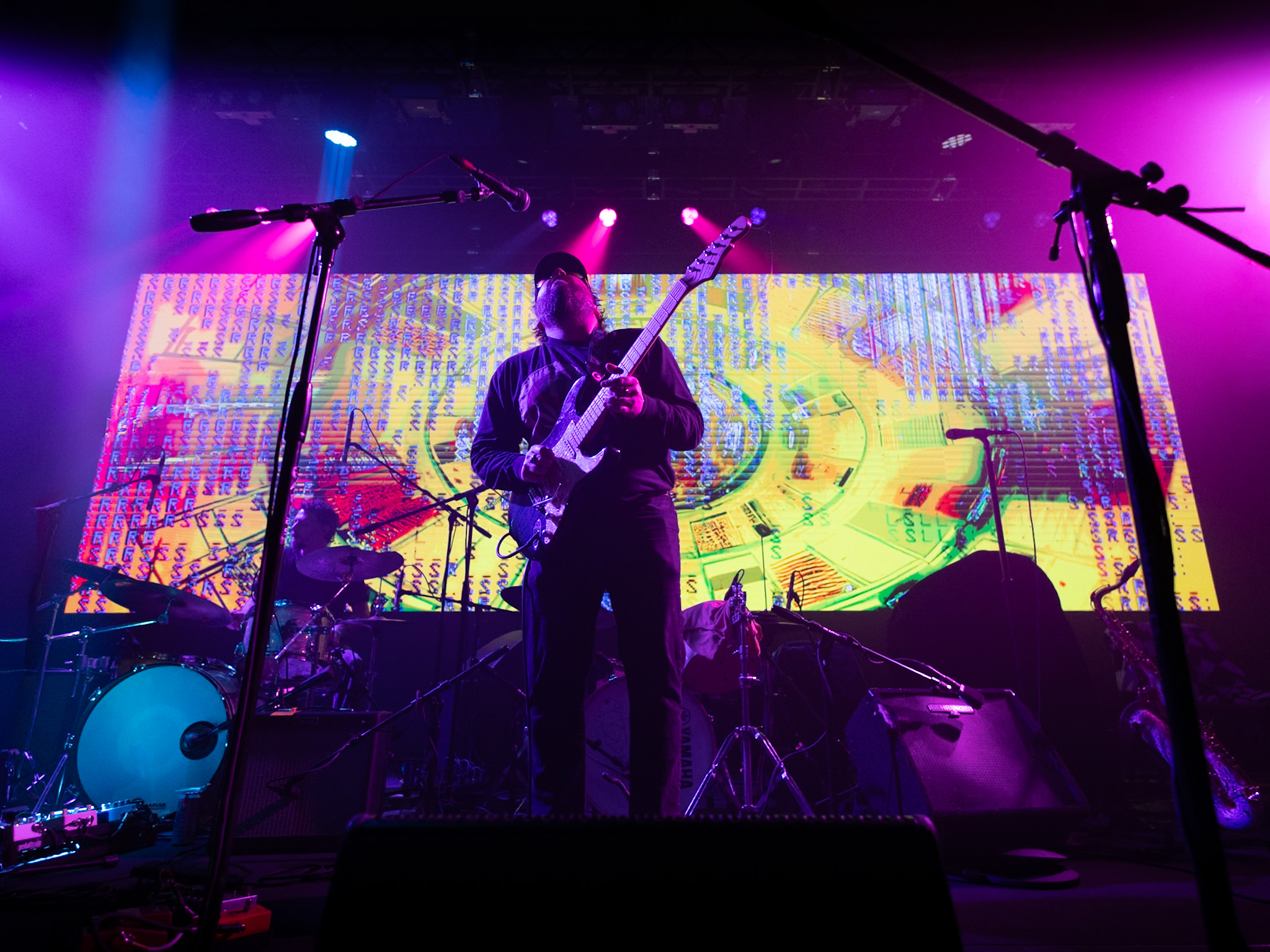
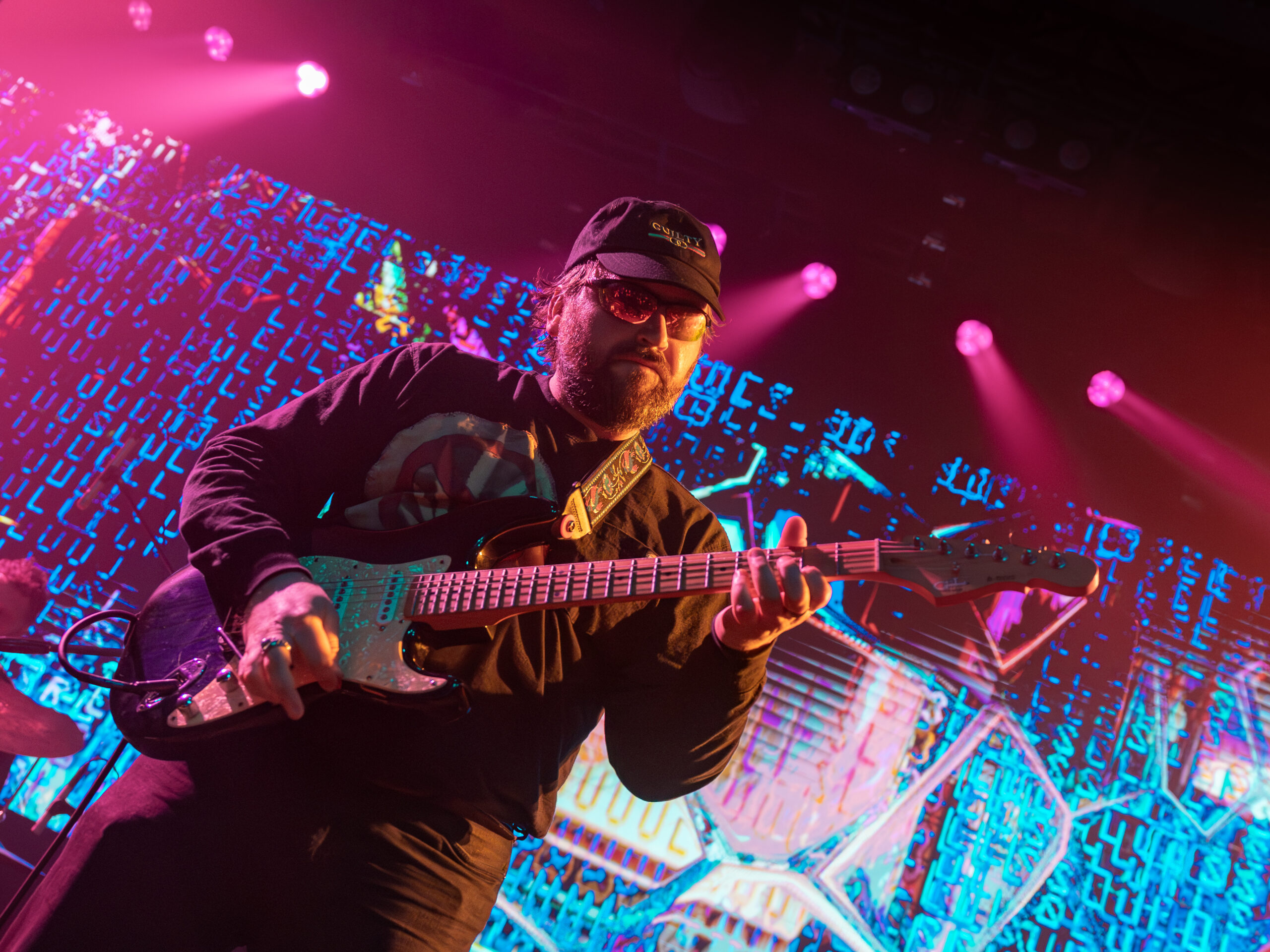
The group often donates proceeds from their art – whether it be ticket sales or full-length records – to various causes.
In January 2025, Curls Ultra performed a Warren Zevon tribute show with other Chicago artists and donated all proceeds to California wildfire relief fund organizations.
All of the band’s projects are released through Truth Zone Records, a label Fansler, Plock, and SJOD created in 2024 while on tour. It’s a nonprofit focused on community for artists in Chicago and beyond.
“While we were on the road, we just felt really inspired along with Dove [Hollis] and Eric [Novak],” Plock shares. The band was in Vermont and stopped to celebrate the achievement over a nice meal and sign paperwork. “It’s just another outlet to promote not only our own music, but each other’s or eventually other people’s.”
Several members of Curls Ultra pursue music outside the band, with SJOD opening for several of the band’s shows as a solo artist. Additionally, Plock drums for various bands around Chicago, having recently toured with Tobacco City.
Truth Zone Records enables Fansler, Plock, and SJOD to promote live shows in a more equitable way that feels authentic to them and their fans. Additionally, they’ve been able to host fundraiser concerts and other specialty events on their own accord, without the oversight of a label. It follows that “just go” mentality; there’s no need to wait around and discuss the possibility of creating.
“We DJ-ed a couple places as Truth Zone Records, so it’s just another outlet to spread the good music and vibes,” Plock adds.
It speaks to Curls Ultra’s relationship with the Chicago arts community and offers insight into a music career beyond the “traditional labels” as well. It’s still very much possible – and perhaps more ethical.

In October 2025, Curls Ultra removed its music from Spotify.
The band highlights former CEO Daniel Ek’s investment in Helsing, an artificial intelligence company that specializes in developing weapons. They’re not the first, and they certainly won’t be the last. In June 2025, San Francisco band Deerhoof was the first to announce its removal from the streaming service as a direct result of Ek’s financial investment in Helsing. Shortly after, musicians like Hotline TNT, King Gizzard & The Lizard Wizard, The Mynabirds, and more have parted ways with the service for the same reason.
In addition to the humanitarian crisis AI weapons have posed, which Ek continues to fund despite stepping down as CEO in January 2026, many artists have parted ways with Spotify due to low royalty payments.
“They’re also inventing fake bands to do their money away from the pennies and fractions of pennies that they give to real artists,” Plock says. “All in all, it’s just trying to be part of the movement that can put evil companies out of business. Maybe even for one day.”
For some newer artists, removing music from Spotify can also be seen as a removal of publicity. While the service doesn’t tend to cater to its artists – financially or morally – in many ways, it’s still a massively populated place for average audiences to discover music.
“I was scared to do it for my solo stuff,” SJOD says. “I’m thinking about putting a record out and I’m like, ‘Oh, I’m a small guy. Don’t I need this?’ But that’s kind of a sick mind space.”
Plock nods. “It’s the dependency.”
“It’s the ego,” SJOD adds. “I need this on here for people to hear this. How many times does someone tangential to you release music, and you go to Spotify to click play on it?” He pauses, letting the question simmer in the quiet of the room.
“If you look at it from a big picture, this is a relatively new thing that we’ve been massively conditioned to just accept,” Fansler says. “It’s like being addicted to convenience and what’s easiest and what seems like the best way to promote yourself.” It’s not an answer, but it’s certainly a fact that needs to be addressed on a mass scale. Spotify was invented in 2006 and didn’t gain popularity until 2011, when it launched in the United States.
“Musicians that are already in this maybe wake up a bit and say, ‘Oh maybe I should just go to shows and buy records and experience this in an organic way like we used to,’” Fansler adds.


In 2026, there’s a multitude of ways to share music.
While people tend to think of Spotify and Apple Music first, or sharing physical music – vinyls, CDs, cassettes – services like Bandcamp, Soundcloud, and TIDAL are digital services known to pay artists relatively well.
Curls Ultra have utilized themselves – physically and artistically – and their community to showcase their music. They create because it brings them joy and elevates the people around them, from fans to venues to each other.
While some artists shy away from their previous projects, Curls Ultra embraces its history. It’s not change, it’s evolution – natural progression as the band and the world around them grow.
“Find the band you like and latch onto them, not a platform,” Plock says. Curls Ultra are set to release their debut album American Blood in June, followed by a tour and festival performances.
Stay up to date with Curls Ultra here. Follow them on Instagram here and listen to their latest album, Women on Cocaine, here.
— —
:: stream/purchase Women on Cocaine here ::
:: connect with Curls Ultra here ::
— — — —

Connect to Curls Ultra on
Facebook, 𝕏, Instagram
Discover new music on Atwood Magazine
© Willow Sokora