
When most Americans think of NASA, they imagine astronauts sitting on top of giant rockets launching into space. NASA astronauts walking on the moon are some of our most iconic images. Much less known is that NASA does Earth Science too.
The first satellite dedicated to Earth observation was Landsat, initially launched in 1972. The most recent replacement, Landsat 9 was launched in 2021, thus providing the only 53-year continuous record of the Earth surface.
In the 1970s and 1980s, computers did not have the capacity to process satellite images of the entire Earth, so the data were only used regionally. Today, global scale analyses can be done in minutes.
Back in the 1980s, measurements begun in 1957 at Mauna Loa Hawaii and what’s now known famously as the Keeling Curve was just beginning to show a pattern of steady atmospheric CO2 increase, kindling a new interest in Earth as a climate system.
President Reagan called for NASA to begin a study of Earth, leading Congress to authorize and fund the Mission to Planet Earth in 1989, with its centerpiece, the Earth Observing System (EOS).
The primary hardware for EOS was three giant satellites, each the size of a bus, that contained multiple sensors to measure all aspects of the atmosphere, ocean, land, and snow/ice. I proposed and was selected to build algorithms – step by step mathematical instructions – for one of these sensors, MODIS, shorthand for the Moderate Resolution Imaging Spectroradiometer.
My proposal was for a daily measure of global land photosynthesis (plant growth) and evapotranspiration (water loss from soils and plants). The three satellites, known as Terra, Aqua and Aura, were ultimately launched in 1999, 2001 and 2002.
I am pleased to report that these satellite platforms are still in orbit and producing daily global data, a tremendous return on investment for the American public.
Although the original justification for this program was global science, identifying local applications was always encouraged. For Montana, our overwhelming agricultural issue is drought. So, at the University of Montana, we explored how to translate the global evapotranspiration dataset into a statewide drought monitor for use by water managers and policy makers. The history of our global dataset can be found here: modis.gsfc.nasa.gov/data/dataprod/mod16.php.
Drought is defined in many ways, meteorologically, hydrologically, agriculturally, ecologically, and even socioeconomically. All refer to a deficiency of water availability from some expected average condition.
We used the satellite data, merged with ground observations, to estimate daily precipitation, evaporation and potential evaporation, a water balance calculation logically like your checking account balance. Conceptually, one needs to compare the inputs (precipitation), the storage (snow and soil water), and the outputs (evaporation and transpiration from the land surface).
These initial efforts set the stage for the Montana Climate Office to now produce a very detailed, yet user-friendly, weekly map of statewide drought conditions, available at climate.umt.edu/drought/.
However, the term drought implies a departure from normal, with the presumption that at some future date, conditions will return to “normal”. But Montana has warmed, so far by two-to-three degrees Fahrenheit in the last 50 years, increasing potential evaporation.
These rising temperatures are not matched by increasing precipitation, resulting in drought. Global change science suggests Montana is drifting towards a permanently more arid climate, similar to Utah’s, rather than to some past “normal” condition.
Should this more arid climate be defined as the “new normal”? Any reader interested in the latest science around evapotranspiration can go to etdata.org/.
NASA’s Earth-observing satellites have been central to measuring climate change and its impacts. Such timely information is critical if we’re to plan for a changing future.
Steven Running is a Regents Professor Emeritus of the University of Montana and has been lead author on several national and international climate reports. For three decades he has given numerous public lectures to explain climate science and trends.
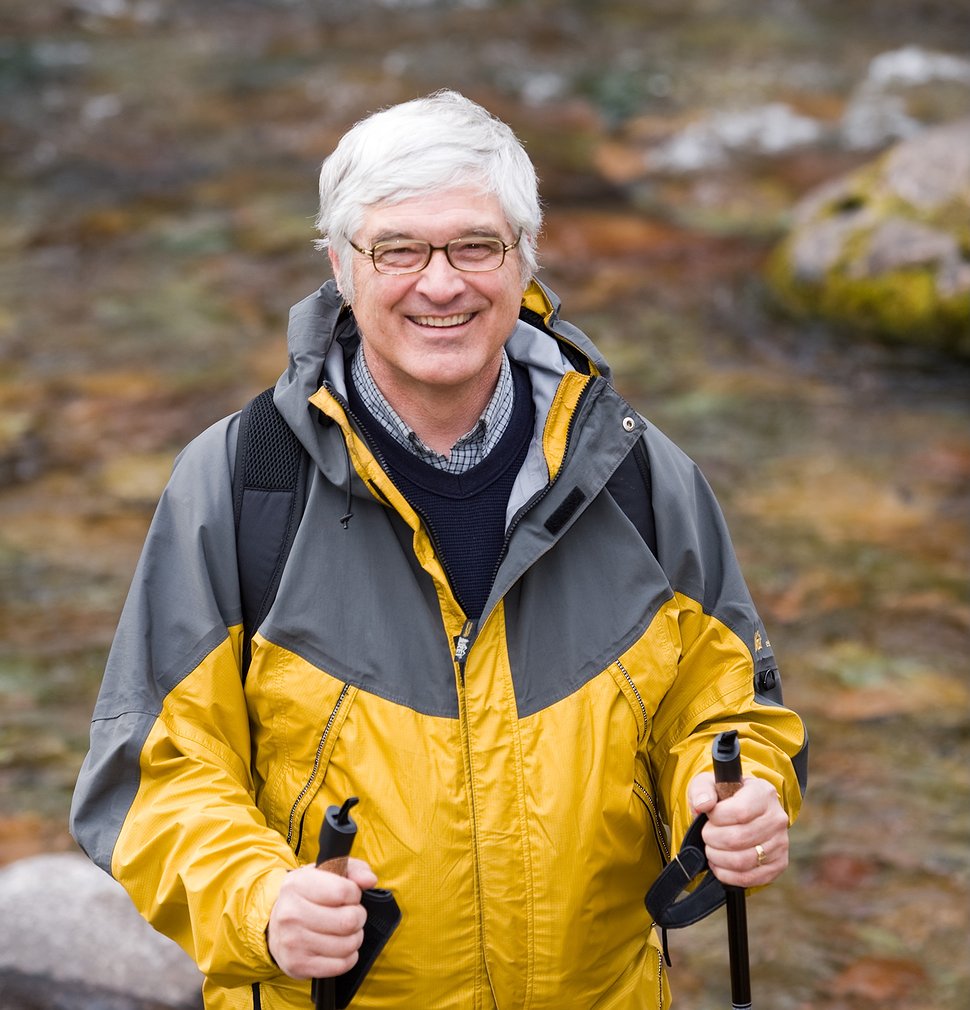 Steven Running is a Regents Professor Emeritus of the University of Montana and has been lead author on several national and international climate reports. (Courtesy photo)