
Most people understandably focus on freezing temperatures and the mountains of snow outside their doorsteps when a winter storm hits. But frigid weather can often have dramatic effects offshore—even in typically tropical regions. As NASA highlighted today, a wave of Arctic air recently turned the Gulf of Mexico’s deep azure waters into a shockingly bright blend of blues and greens.
The rapid brightening off Florida’s west coast took place across late January and early February amid two massive winter storms named Fern and Gianna. The weather systems were so vast that they even drove temperatures below freezing in parts of the state. Earlier cold snaps had iguanas falling from trees and the ocean also experienced a rarely seen change. On February 3rd from the Moderate Resolution Imaging Spectroradiometer (MODIS) tool aboard NASA’s Terra satellite spotted the rare water change orbiting over the West Florida Shelf. The waters were turned pale blue by agitated calcium carbonate mud composed mostly of the remains of marine organisms.
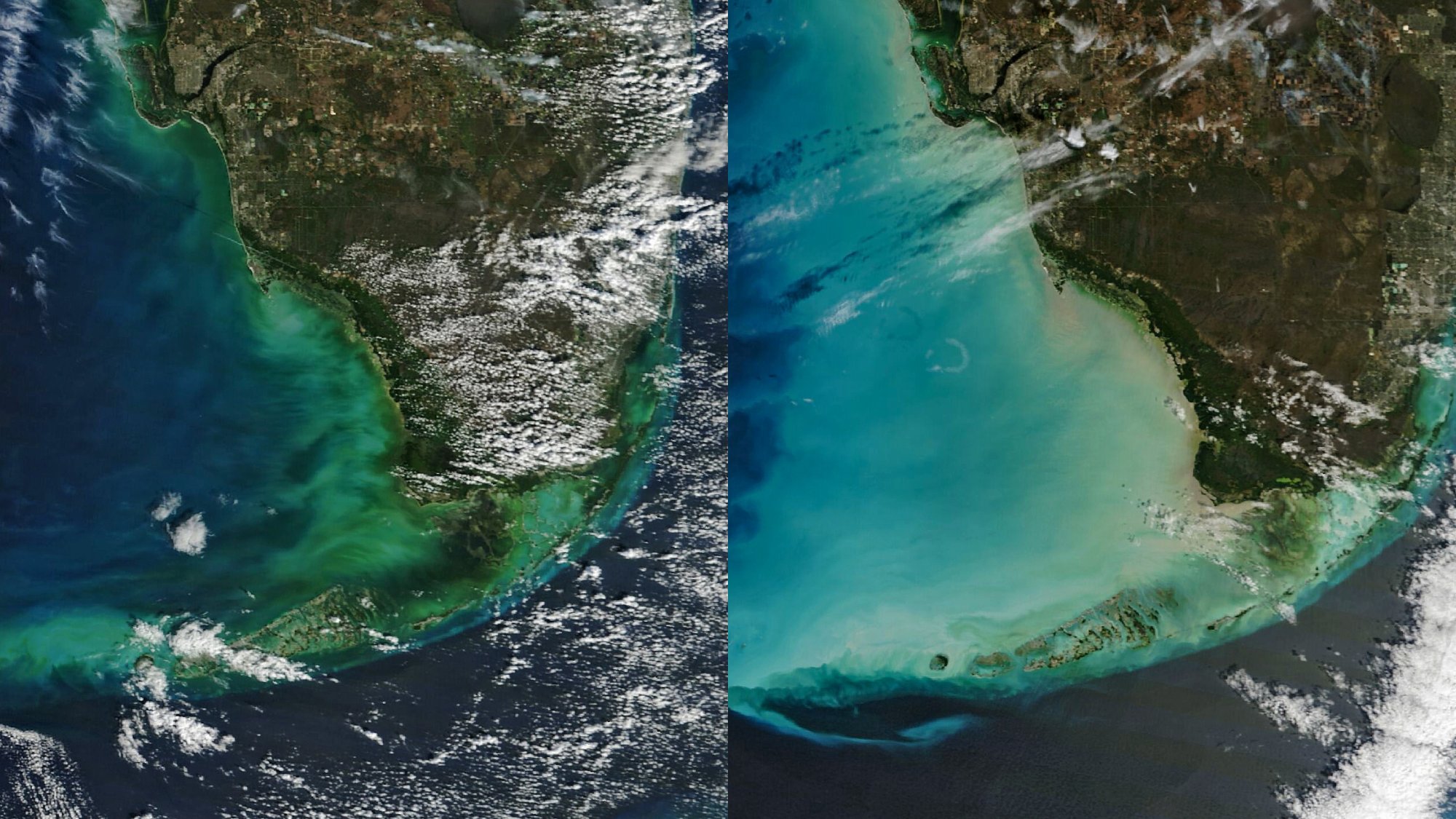
But what swirled all of that mud around in the first place? According to NASA, it was all thanks to this historic cold air event. As ocean temperatures dropped and winds strengthened, the chillier, shallow water became denser and flowed offshore with the tides. Although such circumstances are mostly seen during hurricanes, they can happen during winter storms, too.
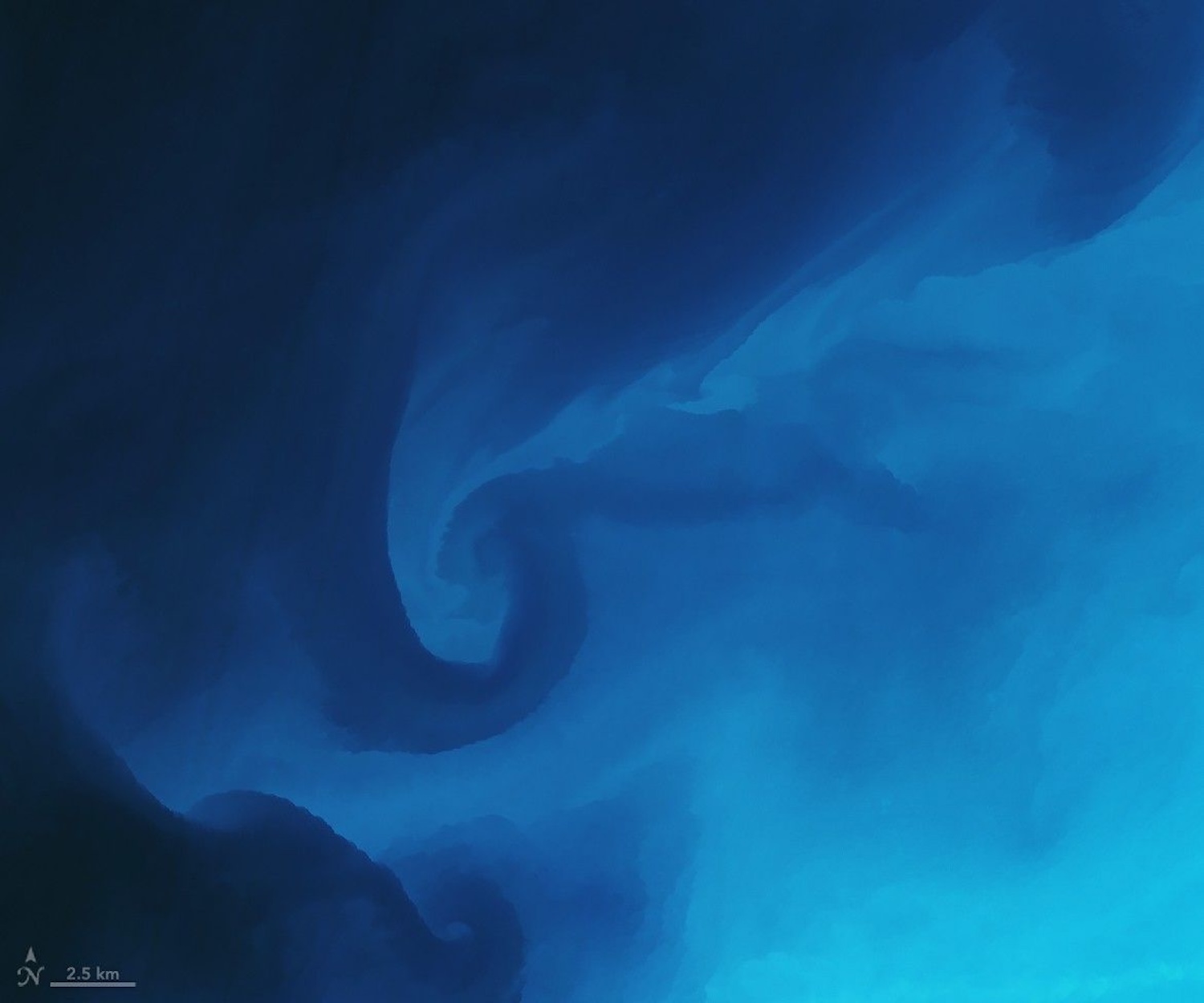
Other images acquired by Landsat 9’s Operational Land Imager (OLI) reveal even more detailed looks at the process. The winter interactions clearly produced “hammerhead” eddies near the Western Florida Shelf’s slope. These happen as narrower, denser, colder waters pull sediment into the slower-flowingGulf of Mexico. The fluid physics then creates curling, counterrotating swirls—the same dynamics seen during dust storms both on Earth and Mars.
These rare seasonal consequences aren’t only visually interesting—they contain useful information for climate scientists. Carbonate sediment suspensions affect Earth’s overall carbon cycle. These events usually take place during tropical hurricanes and cyclones, which sequester the material in deeper water. However, researchers know much less about how cold fronts facilitate similar situations. By better understanding these rarer occurrences, climatologists hope to learn about more local oceanic carbon sequestrations.

2025 PopSci Best of What’s New