
Bananas are in trouble. The popular fruit is threatened by a fungal disease called Fusarium wilt of banana (FWB), which blocks the flow of nutrients and makes it wilt. In the 1950s, the pathogen even made one species–Gros Michel bananas–functionally extinct.
Fear not though, scientists are on it. In 2024, a team identified the molecular mechanisms behind the microbe that destroys bananas. Scientists at The University of Queensland in Australia have now made another step towards protecting the global banana supply. The team identified a region in the banana genome that controls resistance to a strain of Fusarium wilt called Sub Tropical Race 4 (STR4), which affects bananas in subtropical regions. The newly discovered genomic region is detailed in a study published in the journal Horticulture Research and could lead to new banana varieties that are more resistant to disease.
“Fusarium wilt—also known as Panama disease—is a destructive soil-borne disease which impacts farmed Cavendish bananas worldwide through its virulent Race 4 strains,” Dr. Andrew Chen, a study co-author and geneticist, said in a statement. “Identifying and deploying natural resistance from wild bananas is a long-term and sustainable solution to this pathogen that wilts and kills the host plant leaving residue in the soil to infect future crops.”
The team crossed a wild banana called Calcutta 4 with susceptible bananas from a different subspecies. When they exposed the cross-bred plants to STR4, they compared their DNA with the bananas who had died from the pathogen with those that didn’t. They found that the Calcutta 4 banana is resistant to STR4 infection on chromosome 5.
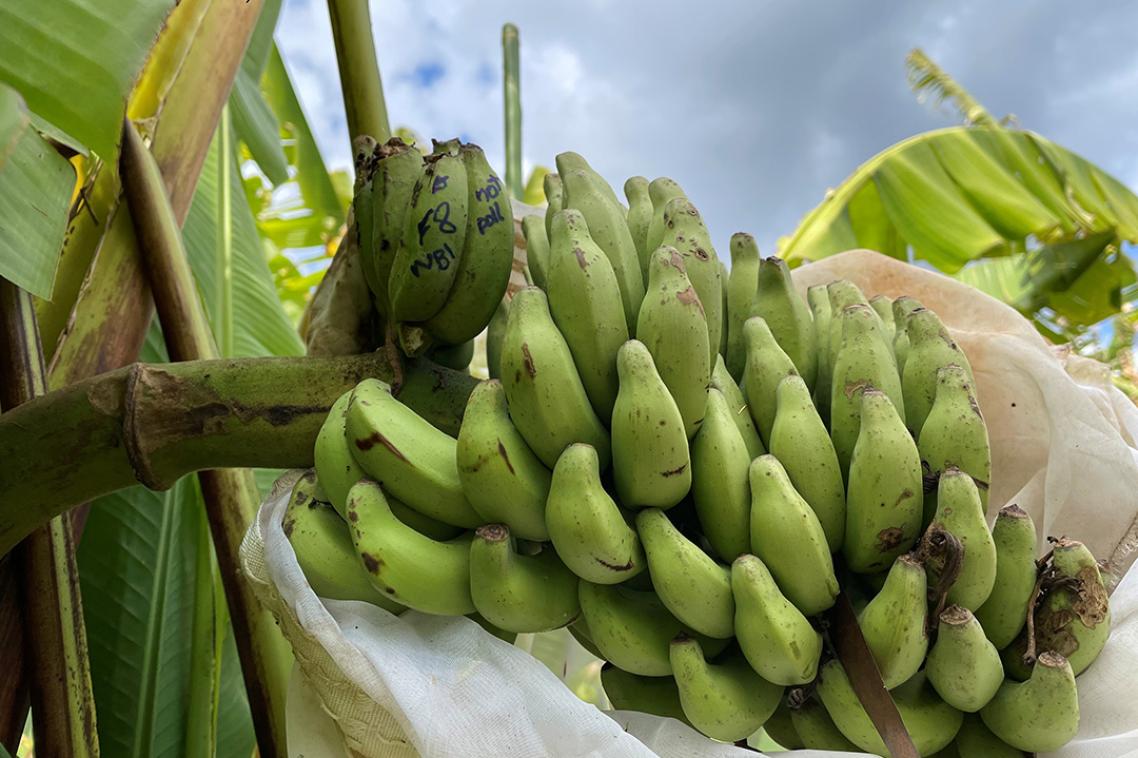
“This is a very significant finding; it is the first genetic dissection of Race 4 resistance from this wild subspecies,” Chen added.
Scientists spent five years on this complicated project to help save bananas from extinction. Each generation of banana crosses needed to grow for at least 12 months before it was studied and then used for further breeding once it flowered.
According to the team, the discovery will help develop banana varieties that are more resistant to Fusarium wilt. While the Calcutta 4 banana does have critical genetic resistance, it is not suitable for commercial cultivation because “it doesn’t produce fruit which are good to eat.”
“The next step is to develop molecular markers to track the resistance trait efficiently so plant breeders can screen seedlings early and accurately before any disease symptoms appear,” said Chen. “This will speed up selection, reduce costs and hopefully ultimately lead to a banana that is good to eat, easy to farm and naturally protected from Fusarium wilt through its genetics.”
Banana suppliers around the world are working to protect the industry valued at $140 billion. Bananas are also considered the fourth most important food crop in the world, following wheat, rice, and maize. About 80 percent of bananas are for local consumption, and over 400 million people rely on the fruit for 15 to 27 percent of their daily calories.
“It’s easy to take the banana for granted—simple, familiar, always there. But behind that simplicity lies one of agriculture’s most coordinated and collaborative supply chains,” Fresh Del Monte Produce chairman and CEO Mohammad Abu-Ghazaleh said in their July 2025 earnings call. “Protecting it is our shared responsibility—and if we don’t act collectively to support growers and stabilise this supply chain, we risk seeing this fruit—and the livelihoods behind it—disappear before our eyes. That reality weighs heavily on me and drives much of our focus today.”

2025 PopSci Best of What’s New