

A new excavation at the Samikon archaeological site in western Peloponnese, Greece, is shedding new light on a sixth-century BC temple that may have served as both a religious center and an archive for official records.
The discoveries were made during the 2025 campaign of a five-year research program running from 2022 to 2026. Dr. Birgitta Eder of the Archaeological Institute of the Austrian Academy of Sciences and Dr. Erofili-Iris Kollia of the Ephorate of Antiquities of Elis co-direct the project, with support from the Gerda Henkel Foundation and the Austrian Archaeological Institute.
Greece’s Samikon temple holds an architectural mystery
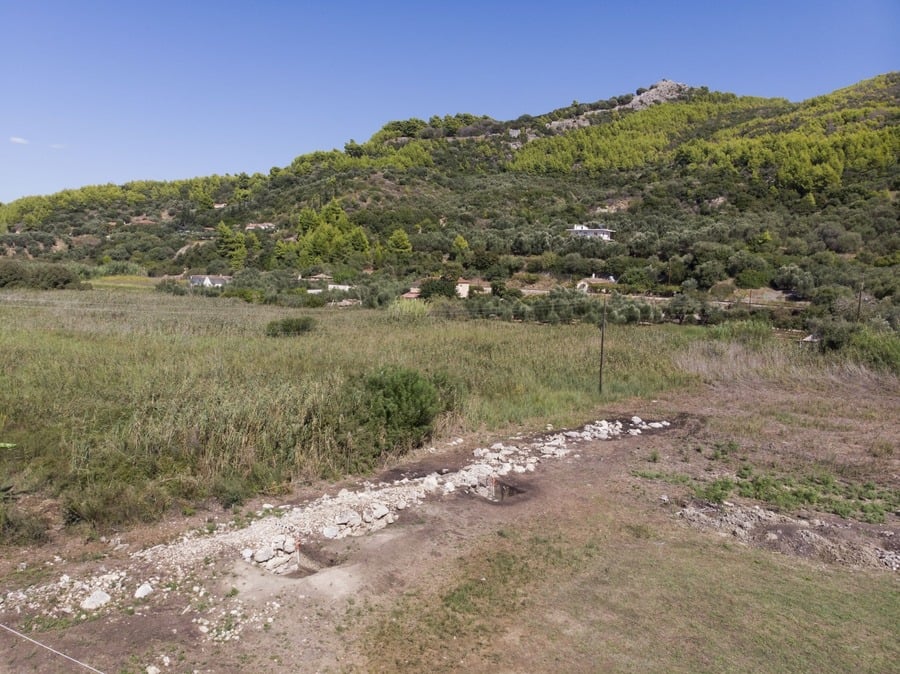
At the center of the research stands a striking temple building measuring about 28 meters long and 9.5 meters wide (92 feet long and 31 feet wide). What sets it apart is its layout. Instead of a single hall, the structure contains two large adjoining halls, each organized around a central colonnade running along its length. That arrangement is highly unusual in the religious architecture of the Archaic period and had already led researchers to suspect that the two spaces may not have served the same purpose.
This year’s discoveries appear to sharpen that theory. Archaeologists concentrated on the northwestern hall, where earlier excavation had already produced significant finds. In 2024, the same space yielded a large bronze inscription and an almost complete marble perirrhanterion, a ritual vessel used to hold lustral water. Together, those discoveries suggested that the hall contained objects of both ceremonial and institutional importance.
Fire, collapse and the clues left behind
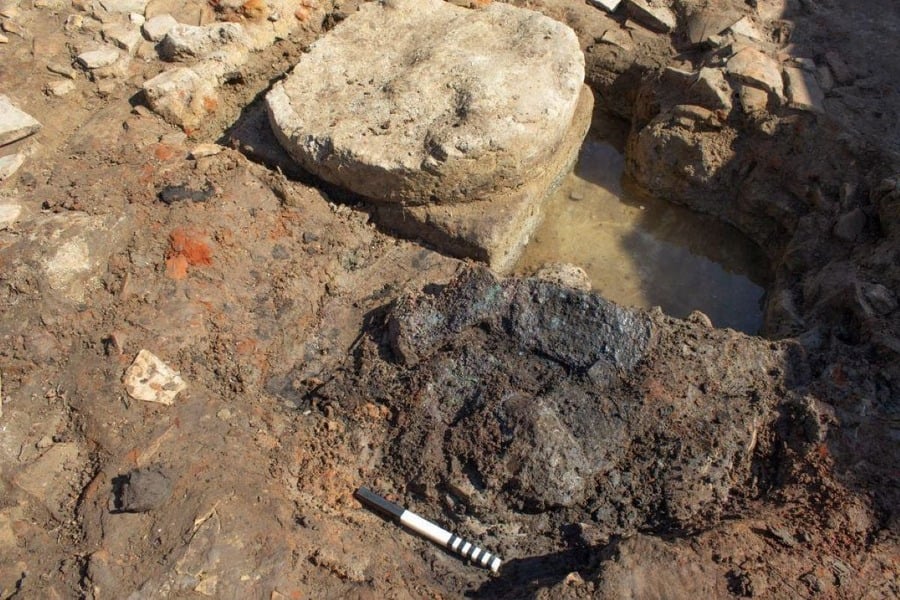
The breakthrough came when excavators removed a thick layer of collapsed Laconian-type roof tiles from the hall. Beneath that destruction layer, directly on the floor, they uncovered clear traces of a fire that had devastated the building in antiquity.
Rather than obscuring the past, the destruction helped preserve it. The collapse sealed the room and trapped a series of objects in place, creating a snapshot of the building at the moment of its final use.
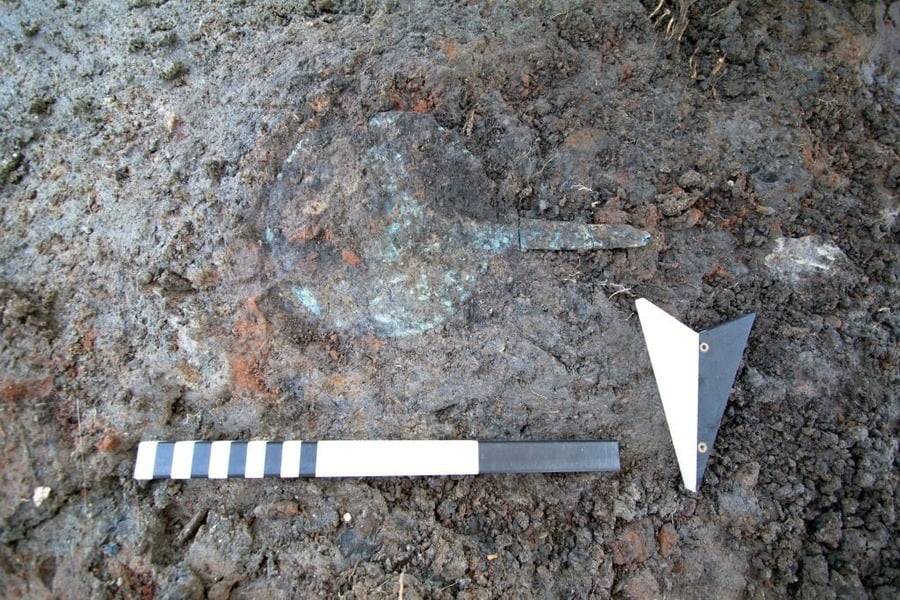
Among the most important finds was a concentration of bronze sheets, many of them fragmented and visibly damaged by intense heat. The fire warped the metal, while later water infiltration caused corrosion over time. Even in that condition, the material proved revealing.
The bronze sheets lay clustered in one specific area of the hall, and, when considered alongside the inscription found there in 2024, they strongly suggest that the space may have housed written texts.
Why archaeologists see an ancient archive
In Ancient Greece, sanctuaries were not only places of worship. They could also serve as secure repositories for public and sacred documents, sometimes inscribed on metal sheets. Against that broader historical backdrop, the Samikon finds take on added significance.
The repeated discovery of inscribed bronze material in the same hall has strengthened the view that this part of the building may have functioned as an archive, likely preserving records of official or religious importance.
If confirmed, that would make the building one of the more distinctive sanctuary structures known from the period, combining monumental religious architecture with a practical institutional role.
Monumental decoration adds another layer to Greece’s Samikon temple
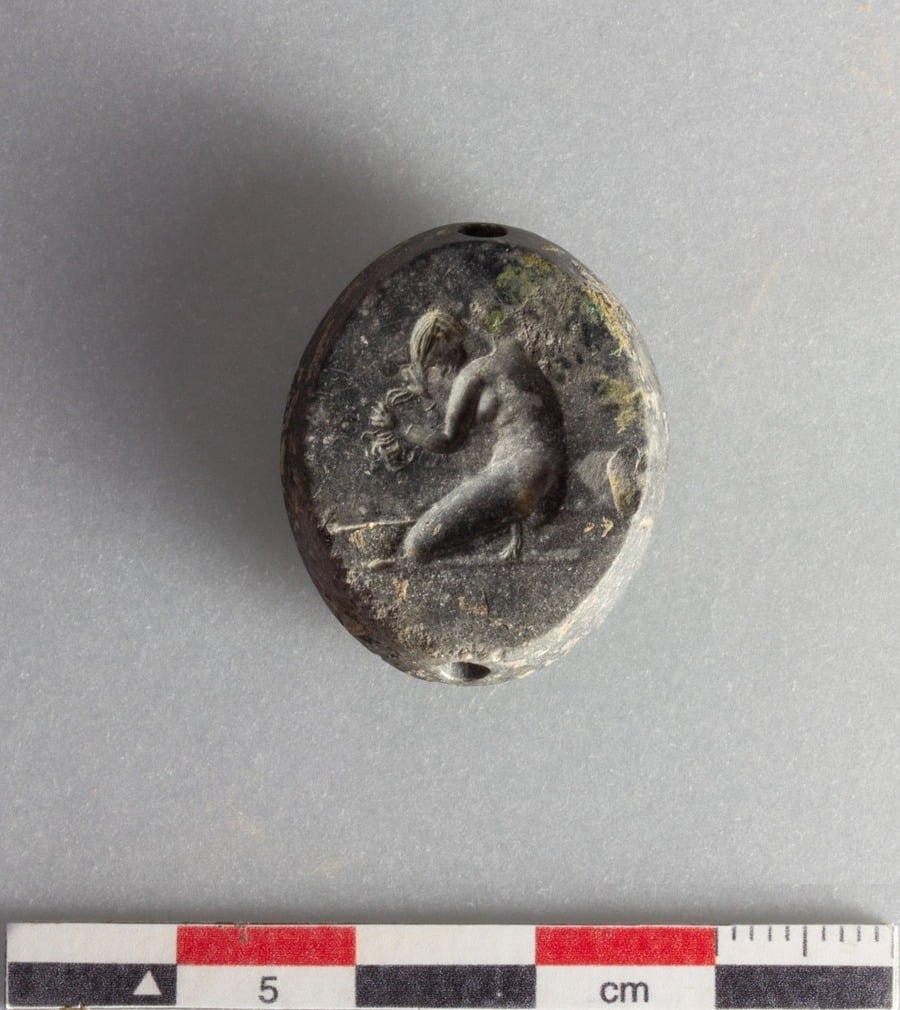
The 2025 season also produced important evidence of the temple’s appearance. Archaeologists uncovered three fragments identified as parts of a discoid acroterion, a terracotta ornament that once crowned the roof. Based on the surviving pieces, researchers estimate that the full disc had a diameter of at least one meter, pointing to a building with substantial and visually impressive architectural decoration.
The fragments preserve traces of black and red paint, along with relief bands arranged in concentric layers. That decorative style is characteristic of the Archaic period and may be linked to Laconian coroplastic traditions or other Peloponnesian workshops, although specialists say further comparative study will be needed before they can determine its precise origin.