
We’ve all wanted to live in the Pokémon world, right? Living amongst Pokémon in a peaceful little community, not a human in sight, would be a dream come true. No one throwing Poké Balls at you or forcing you to battle, just you and your Poké‑friends living your best Poké‑life!
Pokémon Pokopia lets you live out this little fantasy in a cozy life simulation where you, a Ditto, help other Pokémon by restoring habitats, fixing broken structures, and overall improving the environment. After humans mysteriously disappeared, the Pokémon are lost and confused. With no one else to turn to, they come to you to help find them a home, and hopefully find out what happened to the humans and try to bring them back.
At the beginning, the world looks bleak, dry as a desert with dead trees, crops, and other dried up plants. You revive this barren landscape by learning the abilities of some of the Pokémon you encounter along the way, like Squirtle’s Water Gun and Bulbasaur’s Leafage. Like any other life simulation game, early gameplay can feel tedious and repetitive as you run around trying to hydrate the area, creating bush and flower habitats next to streams, trees, and boulders, and picking up scraps, lumber, and consumables. Visiting the PC at the local pile of rubble that used to be a Pokémon Center will give objectives to complete to help improve the Comfort Levels of the Pokémon you’ve met, who may also have more specific requests, like a toy or decoration for their habitat.
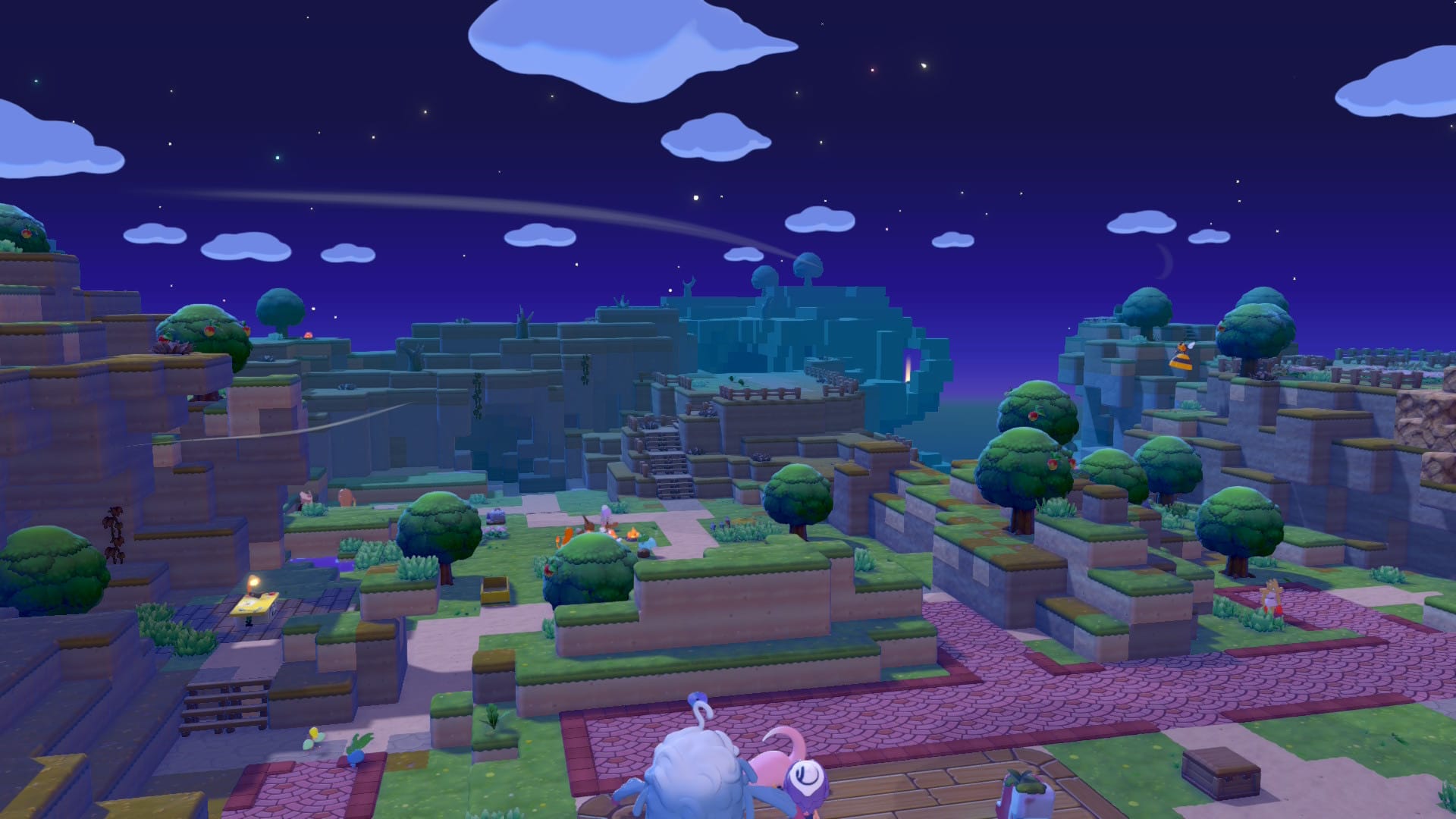
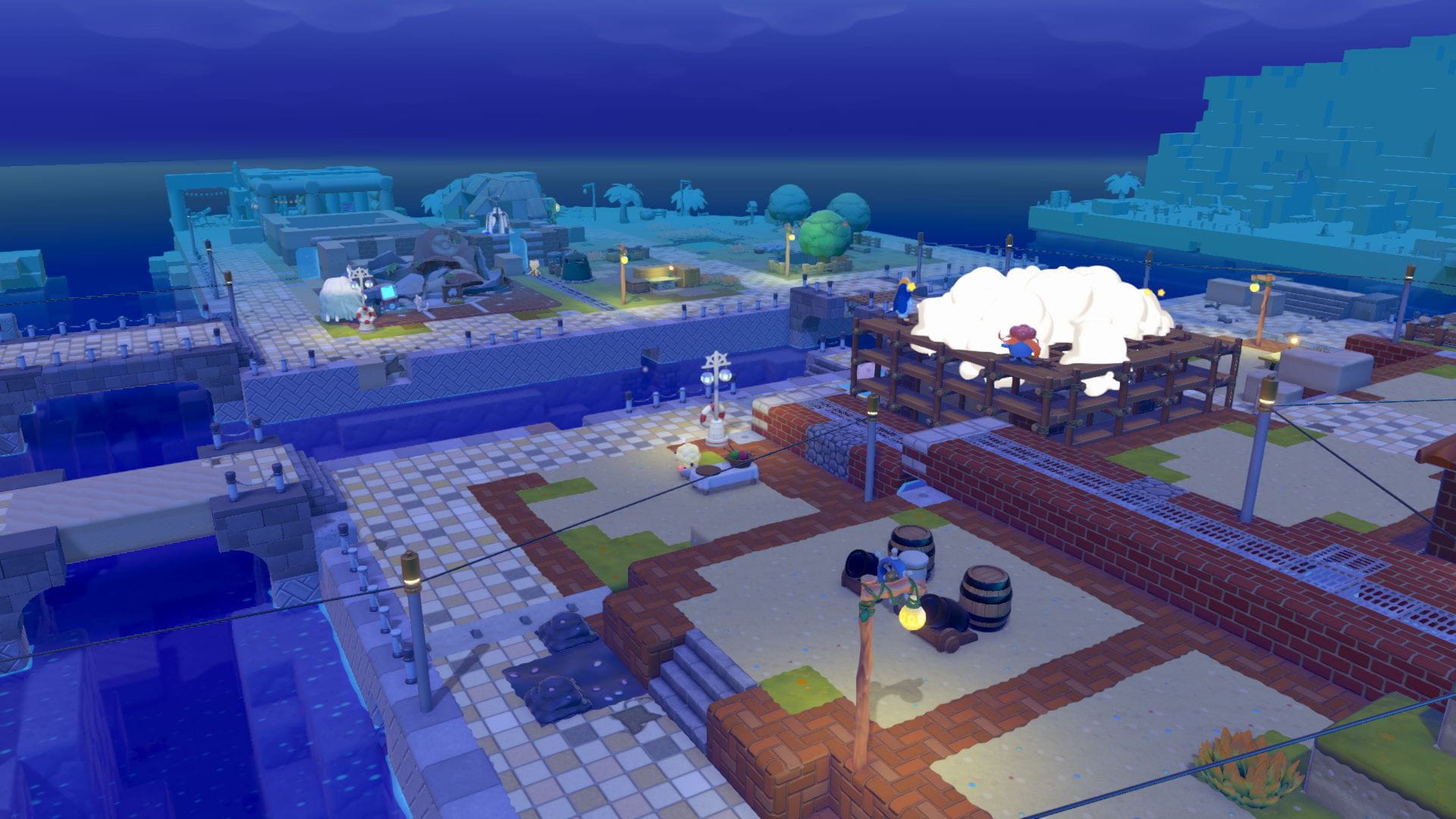
This is a very Pokémon‑meets‑Animal‑Crossing‑meets‑Minecraft kind of game. You’ll meet various Pokémon from across the many generations and create homes for them to stay in, make farms to grow crops, build up your relationship with said Pokémon, headbutt trees, mine for materials to build and restore structures, and explore various landscapes to uncover their secrets and treasures. It’s a big, open sandbox with multiple areas to visit and limitless potential for what you can do and create.
The world is made of blocks, and everything is built on a grid. The building system is intuitive and relatively easy, with block placement being guided by a placement indicator and the ability to rotate blocks and objects before placing instead of having to turn the entire character, among other features. There are also a ton of options for different variations of furniture, appliances, building materials, decorations, and whatever else you could possibly want to put into your Poké House or town. I’m still not the most creative person out there — my house is, in fact, a giant square — but I’m still giddy with excitement at the possibilities.
The crafting system is intricate but also fairly simple as there aren’t that many materials in the first place, and you don’t have to go on any dangerous adventures to try to obtain anything. The biggest obstacles you may run into are when you need a particular Pokémon ability, or when the thing you need is in an area you haven’t accessed yet. Unfortunately, there’s no option to freely experiment with crafting; you can only craft the recipes you’ve discovered, which limits the player’s ability to discover new recipes and items through exploration, which is part of the fun. You discover recipes as you go by talking to Pokémon, finding lore bits scattered around, or buying them from the Poké Center PCs. A lot of things can be purchased from the PCs, including specific items, building kits, and even hints at additional habitats so you can find more Pokémon. Once you’ve collected everything you need, you head to a workbench to craft whatever recipe you need.
The bulk of your Pokémon will come from grassy or flowery habitats, however later in the game, some of the habitats become more intricate, requiring specific pieces of furniture, decorations, or other things to summon special Pokémon. Most Pokémon will pop up within 20 minutes of creating their habitat. That being said, the fact that I still have yet to get Ivysaur to pop out of its little flowery field for literal days at this point has me baffled, especially when I already have the full Char‑family and hydro‑turtle line. What else do you want from me, Ivysaur?!
Some habitats come in the form of build kits, which require you to gather certain materials and Pokémon to complete the build. This is a super handy and convenient feature as you can carry on about your business instead of having to build everything yourself, though that is also an option. Poké Centers are also restored in this manner. Some of the build kits are quite large, so placing them can become a task on its own, especially in places like Rocky Ridges, which has limited open space. Once you’ve gathered everything and everyone you need and found a place to set it, building will commence, and you’ll be presented with an estimated time or day of completion, mostly within a few hours. The game follows your real‑time day and night cycle, so you sometimes have to wait for the next day for a build to be completed.
The build kits aren’t for summoning Pokémon. Instead, if a Pokémon is looking for a better home, you can invite them to live in one of the completed builds after adding a few furnishings. You can also manually build a new structure for them to live in. As long as it has four walls, it is considered to be a completed structure, no ceiling required, although I’ve used Bridge Planks because they require less lumber than actual building blocks. You can also move into any of the kits, designating it as your home by placing a Ditto flag on it.
Pokémon Pokopia has quickly become one of my absolute favorite Pokémon games. I’ve never been big into the catch and battle Pokémon games; instead, I like spending my time hanging out with Pokémon where they’re happiest, taking pictures, studying their behaviors, and helping them live their best Poké Lives. Pokopia has also brought back some of the joy and love of cozy life sims that I first experienced with Animal Crossing: New Horizons back in 2020, although playing the waiting game for builds, crops, and Pokémon arrivals can make the game feel monotonous when there’s not much else to do at the time. Of course, I could go on a material collecting and custom building frenzy, but even that can become a drag at times. Still, playing this game has been a welcome reprieve from my other gaming adventures, including Pokémon Legends: Z‑A.
Pokémon Legends Z-A review — Welcome to battle city
Dress cleanly, fight dirty

I love that they continue to use essentially the same art style, keeping things colorful and vibrant and whimsical. It keeps the games feeling familiar; when you load up Pokémon Pokopia, or any of the other Pokémon games on the Switch systems (aside from Mystery Dungeon), you know it’s a Pokémon game right away from the design. For some, this may be a turn‑off. I know fellow editor Anthony Shelton would like to see an evolution in the style of the games, but I personally enjoy the current look and feel. However, if anything, I believe a change to match the art style of the anime could also be a good, iconic look.
This is the first Pokémon game to be an exclusive for the Nintendo Switch 2 system, which has been a major gripe of Switch and Pokémon fans alike. Not everyone can justify spending the cash to get their hands on the system, and the game on top of it. I am surprised with the exclusivity; the Switch 2 isn’t even a year old yet, and there’s nothing particularly demanding about Pokémon Pokopia that warrants the older system’s exclusion. I’ve not experienced any performance issues; the game loads fairly quickly, including when moving between regions, and we’ve already established that the game is graphically similar to previous Pokémon titles. That doesn’t mean Pokopia would work perfectly on the Switch, it would certainly take some optimization. Maybe they will consider a port in the future. For now, the game is taking full advantage of the Switch 2’s superior hardware and processing power, achieving smooth framerates, fast rendering, and overall great performance.
Review Guidelines
Excellent
Pokémon Pokopia is a cozy Pokémon life simulation game that is full of adventure and creative opportunities. The game is very fun and relaxing, with great building and crafting systems that don’t leave players feeling overwhelmed. It’s a Switch 2 exclusive, but maybe some day our friends on the first Switch can join us.
Pros
- Vibrant and familiar art style
- Fun to play for hours and relax
- Much to explore, discover, and create
Cons
- Switch 2 exclusive, limits access for Poke fans
- Occassional dry spells where you’re stuck playing the waiting game
This review is based on a retail Nintendo Switch 2 copy provided by Nintendo.