
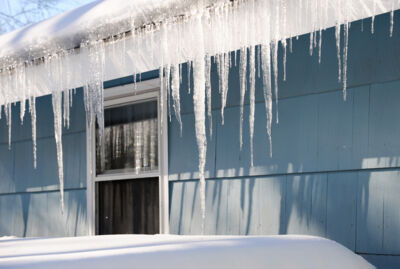
Alaska’s cold, snowy winter is beautiful, but it can be tough on houses! Repeated thawing and freezing, melting snow and shifting soil mean that homes are often most susceptible to damage and flooding during the spring thaw.
From Alaska Housing Finance Corporation’s department of Research and Rural Development, here are tips for home and business owners to help identify potential causes for concern and protect your property from damage this spring.
Potential Signs of Water Damage to Look For:
- Moisture in a crawlspace or basement: If not controlled, this can lead to structural damage and mold growth. As Spring approaches, check both your crawlspace floor and foundation walls for any evidence of moisture seeping in.
- Ice dams: When air from inside the house warms the snow on the roof, causing it to melt and run down to the eaves where it freezes again, ice dams form. Water can become trapped behind ice dams and seep under shingles, causing property damage. Learn more about ice damming and how to prevent it here.
- Cracks in your foundation: Cycles of freezing and thawing can cause foundation cracks, possibly leading to structural problems or damage from water leaking in.
If you spot damage to your roof, plumbing or foundation, reach out to a professional.
Often, water damage can be mitigated with proactive measures. Even if everything is currently looking good, here are tips to help you continue to protect your home from water damage.
Tips to Protect Your Home from Water Damage:
- Remove snow from around the sides of your home. Even a few feet of clear space can provide a useful buffer.
- Check gutters and downspouts for damage and debris. Make sure water is able to flow freely.
- Extend downspouts to direct water at least six feet away from your foundation.
- Check the drainage around your house to ensure snowmelt runs away from your foundation, not towards it.
- Test your sump pump to ensure it’s in good working order. Find a list of sump pump maintenance tips here.
- Inspect foundation and seal cracks to prevent water leaking.
If you see evidence of water seeping in, take steps to control it before the problem becomes worse – excessive moisture in your home may elevate the risk of unhealthy air due to mold and mildew.
Visit AHFC’s Resource Information Center Library for more tips and information from Research and Rural Development.