
Released on Christmas Day 2020, the first season of Bridgerton re-shaped modern period drama. Its sweeping romance and string-quartet pop covers quickly captured audiences worldwide, with season one amassing 113 million views. Produced by Shondaland and created by Shonda Rhimes, the series adapts Julia Quinn’s eight-novel romance series and has since delivered four seasons, with the first part of season four airing on 29 January 2026.
Set in the Regency London, around 1813, “the ton” immerses viewers into the glittering elite of 19th-century high society. Lavish balls dominate the social calendar, overseen by Queen Charlotte. Amid heart-warming love stories and scandals in the latest Whistledown, fashion is the show’s unforgettable feature.
Regency reality vs Netflix fantasy
Regency fashion was characterised by empire waist silhouettes: bonnets, modest necklines, and delicate, mostly neutral fabrics such as muslin. Bridgerton certainly adopts the silhouettes – the elegance of the costumes cannot be disputed – but allows contemporary ideas to seep through.
Historically, authentic Regency wardrobes featured soft pastels and neutral hues, but Bridgerton takes a bold approach with vivid, bright, and visually stunning colours in their costumes. Yet, this also serves a narrative purpose, with the signature “Bridgerton Blue” distinguishing the family from their rivals.
Many fabrics used in the series would not have been possible to obtain in 1813, but this only heightens the unrivalled aesthetics. After all, the sewing machine was not adopted until decades later.

Of course, the fashion was never intended to be 100% accurate, and it certainly leans towards ‘historical fantasy’ – but this is what the viewers love. Many historical adaptations, such as Greta Gerwig’s adaptation of Little Women, have also had the accuracy of historical costumes debated.
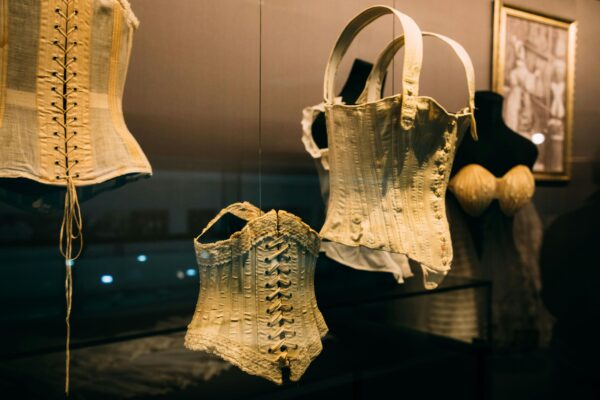
In 2023, Le Monde reported that it was no longer a requirement for the actresses to wear corsets, due to “difficulty breathing”. Whilst certainly breath-taking for the viewer, this aspect of the fashion mimicked the physical discomfort women historically endured in the pursuit of beauty.
Meanwhile, bonnets, which were essential outerwear for Regency women, were notably scarce in Bridgerton. The lower necklines which are also showcased on many of the designs are more daring than acceptable in polite everyday society.
Season 1: Ellen Mirojnick
Season One’s lead costume designer, Ellen Mirojnick, pioneered the show’s iconic dazzling identity. She revealed around 7,500 costumes were created for the first eight-episode series alone, and Phoebe Dynevor (Daphne Bridgerton) had 104 changes.
Intricate craftsmanship was at the forefront of the aesthetic: bespoke tailoring, delicate hand-embroidery, and a department devoted to embellishments which would make Bridgerton memorable. Famous corset maker Mr Pearl, known for pieces worn by Rihanna, Victoria Beckham, and Beyonce, collaborated on structured garments that elevated regal and romantic designs.
Season 2: Sophie Canale
This season introduced more Regency-appropriate outerwear, such as coats and pelisses, keeping the ladies of the ton warm in the English weather. The Sharma family’s Indian heritage was woven into their pieces – South Asian embroidery and jewellery made with continued precision and delicacy. Therefore, the result was richer and more culturally layered than previously seen.
Seasons 3 and 4: John Glaser
Emmy-nominated costume designer John Glaser described these later seasons as more “fashion-forward”, leaning into theatrical embellishments and bolder details, each show growing more spectacular and extravagant than the last.

Hair, makeup, and modern touches
In the hair and makeup departments, initially led by Marc Pilcher and later by Erika Okvist and Nic Collins, some of the series’ most iconic visuals were crafted. Queen Charlotte’s towering updos were perhaps the most remarkable, symbolising her wealth and hierarchical dominance.
Yet attentive viewers spotted modern details: false eyelashes, smoky eyes, even the suggestion of acrylic nails. Contemporary touches like these serve as a reminder that Bridgerton is less a time capsule and more a stylised interpretation.
At the heart of the glittering balls and ornate embellishments lies the marriage market. Fashion is not mere decoration, but rather a signal of family wealth, romantic eligibility, and ambition.
Bridgerton was never going to be spot on with its fashion accuracy – that would have made it not half as successful as it is today. Instead, it is a fantasy, blending waistlines with wishful modern glamour, and reimagining the Regency era as what we wish it might have looked like: unapologetically extravagant.
And that is perhaps why, dear reader, we cannot look away.