
Robert Ludlow “Bob” Trivers, one of the most consequential evolutionary biologists of the twentieth century, died on March 12, 2026, at the age of 83. In an extraordinary burst of intellectual creativity between 1971 and 1974, he published four papers that permanently altered how evolutionary biologists—and eventually the public—understood cooperation, conflict, selfishness, and deception in the natural world. These papers presented original theories of reciprocal altruism (1971), parental investment and sexual selection (1972), facultative sex ratio adjustment (1973), and parent-offspring conflict (1974). Each paper addressed a deep puzzle in evolutionary theory; together they laid much of the foundation for what would become the field of sociobiology and, later, evolutionary psychology.
His paper on parental investment and sexual selection (1972) proposed that the sex which invests more in offspring becomes the choosier mate. This theory explained with elegant simplicity why males and females so often behave differently across the animal kingdom. The paper arose from watching male and female pigeons out the window of his third-floor apartment in Cambridge, Massachusetts, a reminder that transformative science can begin with simple, careful observation.

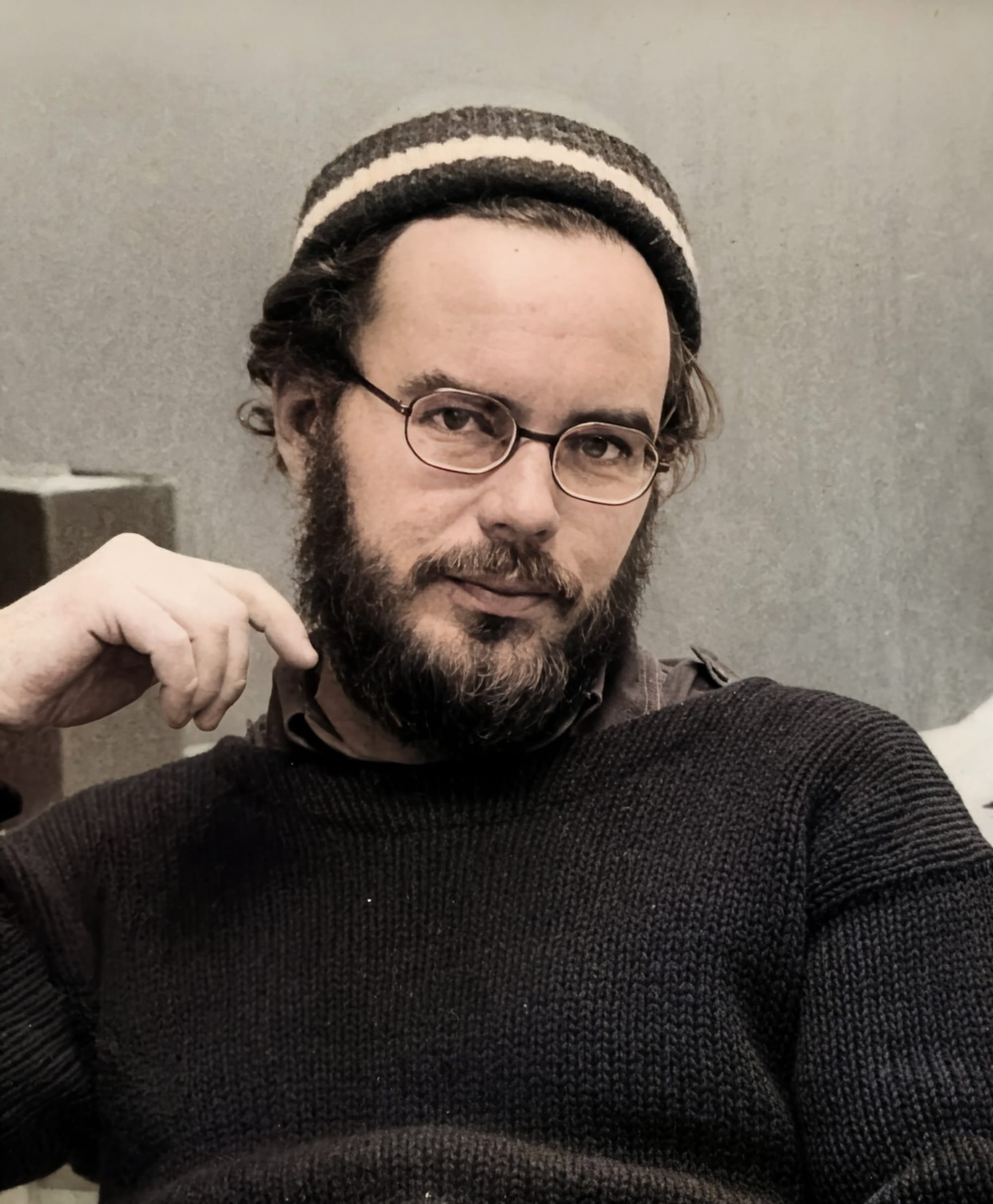
Robert Trivers (photo courtesy of Alelia Trivers Doctor) | A younger Robert Trivers
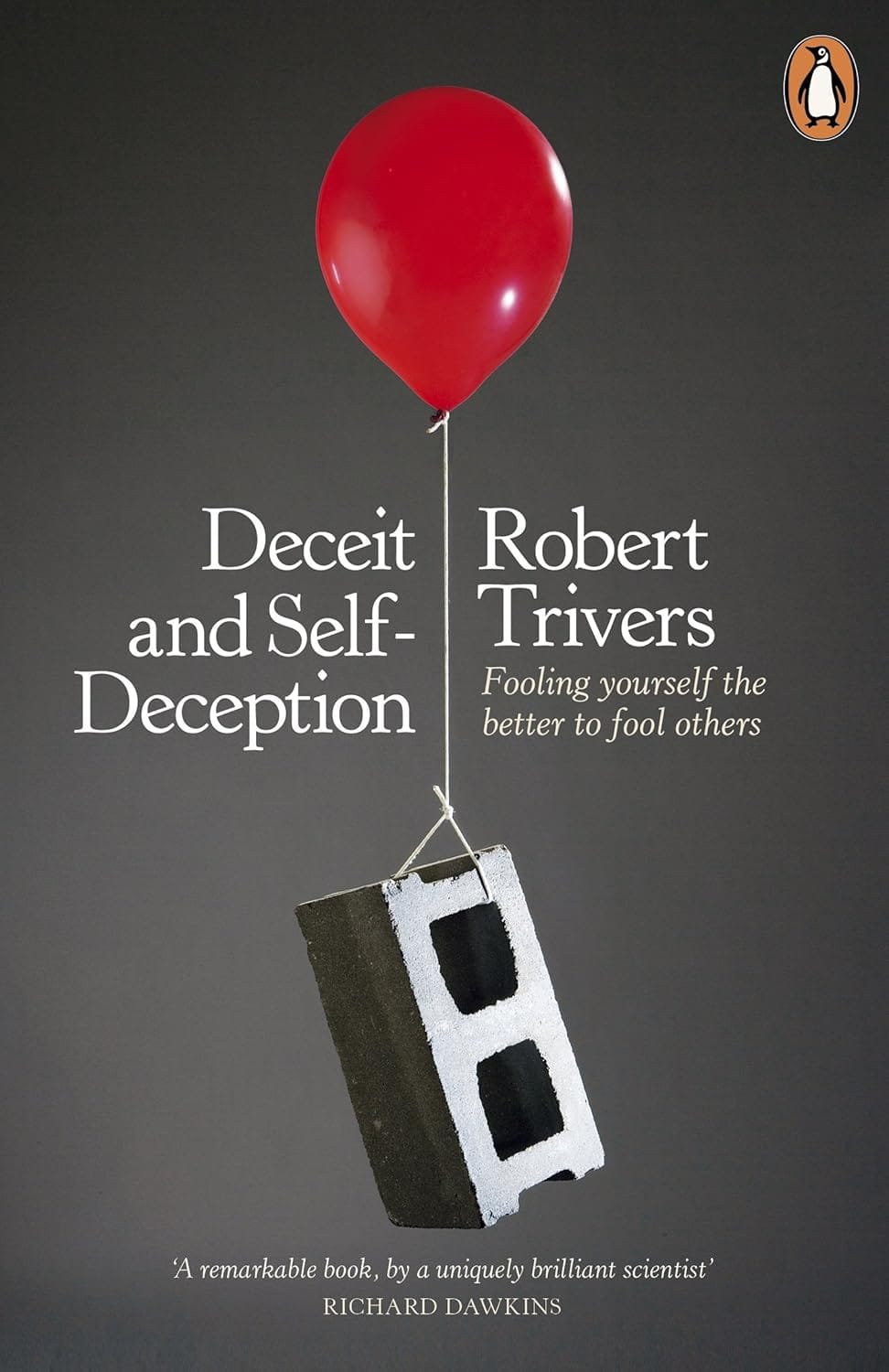
He was also among the first to explain self-deception as an adaptive evolutionary strategy, first describing the concept in 1976—arguing that we deceive ourselves in order to deceive others more convincingly, a counterintuitive idea that has since attracted enormous attention across psychology, philosophy, and the social sciences.
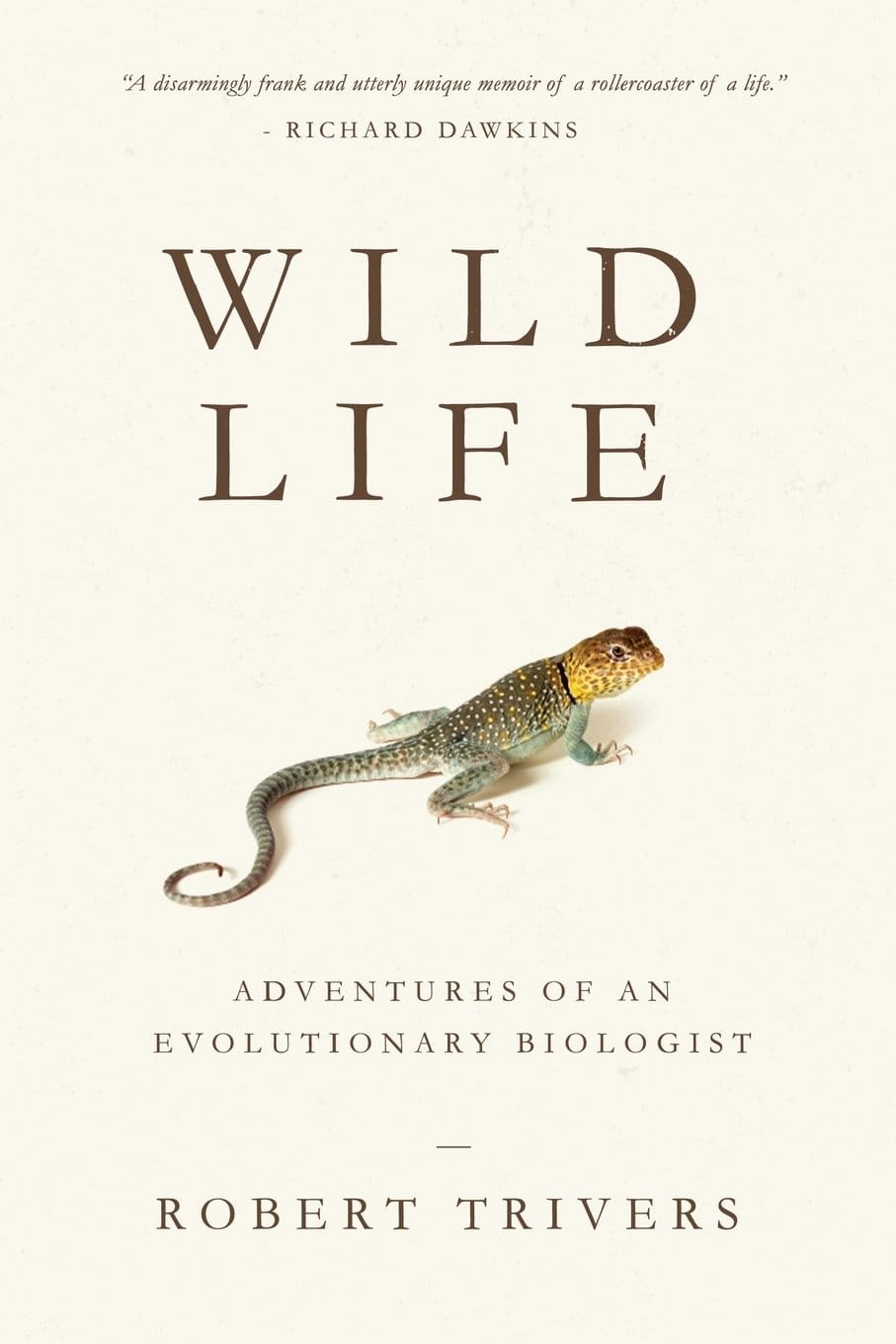
Robert’s books included Social Evolution (1985), widely praised as among the clearest accounts of sociobiological theory, Natural Selection and Social Theory (2002), a collection of his early influential papers outlined above, Genes in Conflict (with Austin Burt, 2006), which makes the central argument that genomes are not harmonious but instead sites of constant struggle, and The Folly of Fools: The Logic of Deceit and Self-Deception in Human Life (2011), which brought his ideas about self-deception to a popular audience. He also chose to be the author of his own story in his memoir, Wild Life (2015).
Robert Trivers was born on February 19, 1943, in Washington, D.C., the son of Howard Trivers, an American diplomat, and renowned poet, Mildred Raynolds Trivers. Growing up in a diplomatic household, Robert attended schools in Washington, D.C., Copenhagen, and Berlin before enrolling at Phillips Academy and later Harvard, where he initially studied American history before making an important pivot to biology.
He studied evolutionary theory with Ernst Mayr and William Drury at Harvard from 1968 to 1972, earning his PhD in biology. While a graduate student at Harvard, Robert accompanied Ernest Williams on an expedition to study the green lizard in Jamaica’s countryside. Robert met his first wife, Lorna Staple, in Jamaica; he fell in love with her and the island at the same time. Robert and Lorna wed in 1974 in Cambridge, Massachusetts, and they had four children together: a son, Jonny, twin girls, Natasha and Natalia, and another daughter, Alelia.
Robert was on the faculty at Harvard University from 1973 to 1978, then moved to the University of California, Santa Cruz, where he remained until 1994, before joining the faculty at Rutgers University. Robert was named one of the greatest scientists and thinkers of the 20th century by TIME magazine in 1999. In 2008–09 he was a Fellow at the Berlin Institute for Advanced Study. He was awarded the 2007 Crafoord Prize in Biosciences by the Royal Swedish Academy of Sciences for his fundamental analysis of social evolution, conflict, and cooperation—widely considered the highest honor in evolutionary biology and a prize often mentioned alongside the Nobel in scientific prestige.
His life outside the laboratory was as unconventional as his science. Robert met Huey P. Newton, Chairman of the Black Panther Party, in 1978, when Newton applied from prison to do a reading course with Robert as part of a graduate degree at UC Santa Cruz. The two became close friends and Robert joined the Black Panther Party in 1979. He and Newton later co-authored an analysis of the role of self-deception in the 1982 crash of Air Florida Flight 90.
After Robert and Lorna divorced in 1988, Robert maintained a close relationship with her and with the whole Staple family in Jamaica. He also built a home in Southfield, St. Elizabeth, and spent several months a year in Jamaica for decades. His favorite pastime at his home in Jamaica was to sit on the front veranda and observe the wildlife around him, often joking that the same group of animals would pull up a chair each evening and join him for a glass of red wine, marveling with him at the beauty of the sunset. He made lifelong friends in Jamaica and conducted research from the island on lizards, symmetry, and honor killings over the years. Robert married his second wife, Debra Dixon, in 1997 and they had one child together, a son—Aubrey. They divorced in 2004 but also remained friends until his passing.

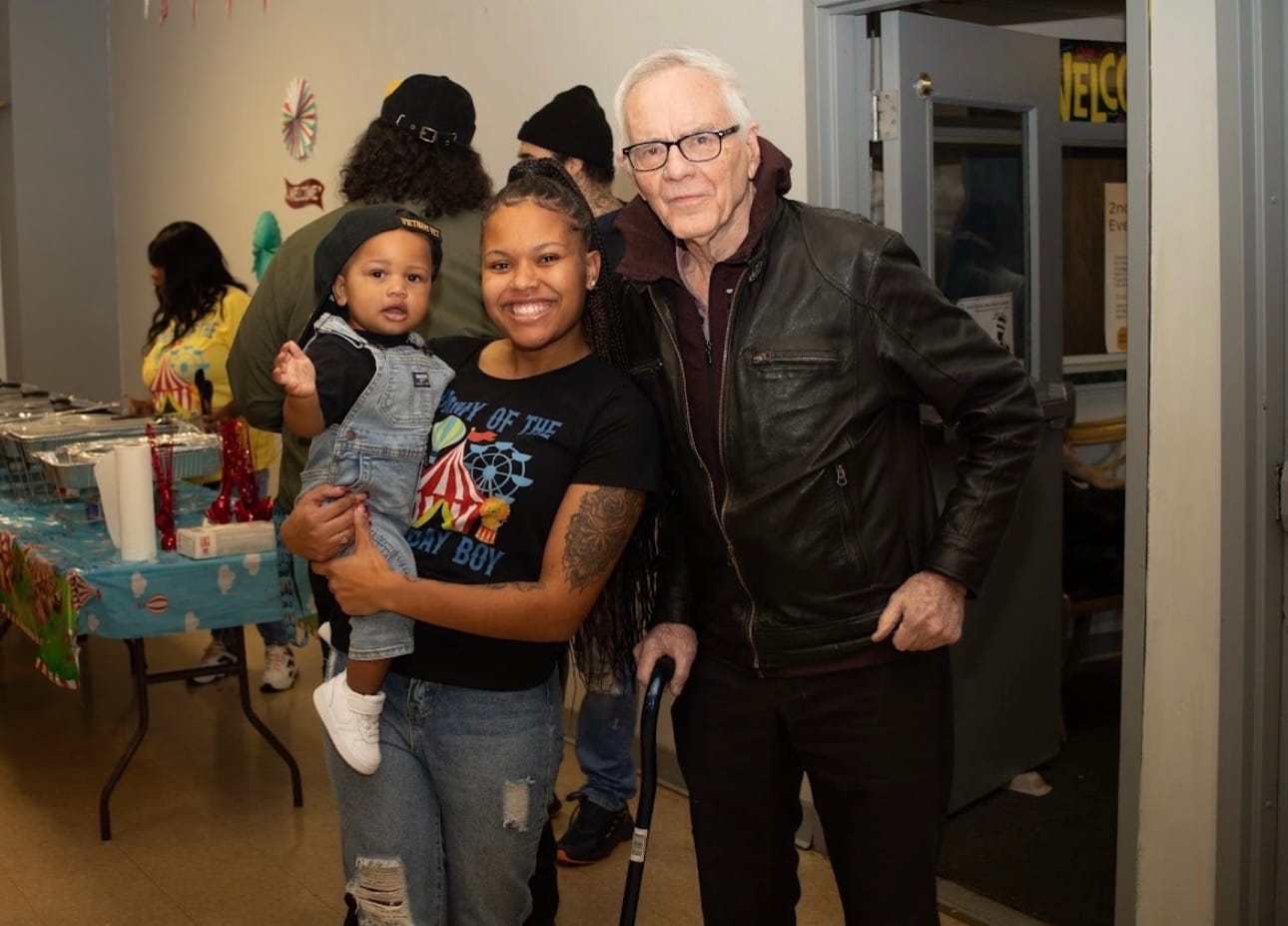
Robert Trivers with his five children | With grandson, Lucas Malcolm Howard | With ex-wife Debra, stepson, Diego, and son Aubrey | With three children and seven grandchildren | With grandaughter, Jonisha, and his great grandson, Masiah
Robert Trivers was, by any measure, a complicated man. He was diagnosed first with schizophrenia at the age of 21 and that diagnosis was modified to bipolar disorder later in adulthood. He could be generous and brilliant in one breath, reckless and destructive in the next. But he was always a loving father, a dynamic teacher, and a caring friend, often listening to loved ones for hours and providing valuable guidance and needed moments of levity. He loved life with tenacity—both studying it and living it.
Towards the end of his life, Robert found the greatest joy spending time with his children, grandchildren, and his great grandson, Masiah. His eyes would light up the moment he saw him.
Robert’s work throughout his life was also very important to him. He wanted to make a significant contribution to scientific thought in his lifetime. The theories Robert produced reshaped how we understand the deep logic of living things. His brilliant contributions to our collective understanding—and his family—are his legacy and will spur important scientific research for years to come.
He is survived by his siblings, Jonathan Trivers (Karen), Ruth Ann Mekitarian, Milly Palmer (David), Howard Trivers (Cathy), and brother-in-law, Souham Harati. Robert is predeceased by his parents, his brother, Aylmer Trivers, and sister, Kate Harati. He is also survived by five children: Jonathan Trivers (Carline), Natasha Trivers Howard (Jonathan), Natalia Barnes (Jovan), Alelia Trivers Doctor, and Aubrey Trivers; ten grandchildren; and one great grandson.