

Phil Lord & Chris Miller have already proven themselves to be some of the most imaginative and reliable filmmakers working today. They reinvigorated the tired trend of turning classic TV shows into movies with “21 Jump Street, ” they made a dazzling animated movie based on the mere concept of plastic building bricks with “The LEGO Movie,” and they maximized the potential of superhero stories as producers of “Spider-Man: Into the Spider-Verse.” Sadly, we never got to see what they could do with “Star Wars,” due to their unfortunate departure from “Solo: A Star Wars Story.” Thankfully, they’ve circled back to sci-fi with an adaptation of Andy Weir’s best-selling novel “Project Hail Mary,” and it proves Lucasfilm was foolish for letting this visionary duo go.
Combining the best parts of “E.T. The Extra-Terrestrial,” “Arrival,” “The Martian,” and “Interstellar,” the magnificent “Project Hail Mary” (watch the trailer here) is not only likely to be 2026’s best sci-fi movie, but it’s immediately one of the best sci-fi movies ever. Packed with mesmerizing adventure, an uplifting sense of hope, and a hearty dose of humor and genuine emotion, the story of a scientist turned astronaut and his surprising alien collaborator is one of the most satisfying cinematic experiences of the 21st century.
Ryan Gosling stars as Ryland Grace, a middle school teacher with an overqualified but professionally troublesome background in science who is recruited by Eva Stratt (Sandra Hüller) to assist in a top secret, global mission. That mission, dubbed Project Hail Mary, is to stop a slow-burning cosmic conundrum that is mysteriously destroying our sun, which will have drastic consequences for the population of Earth. If that sounds like well-tread sci-fi disaster territory, don’t worry, because it’s how the story of “Project Hail Mary” unfolds that makes it stand out.
Project Hail Mary doesn’t follow a normal narrative structure
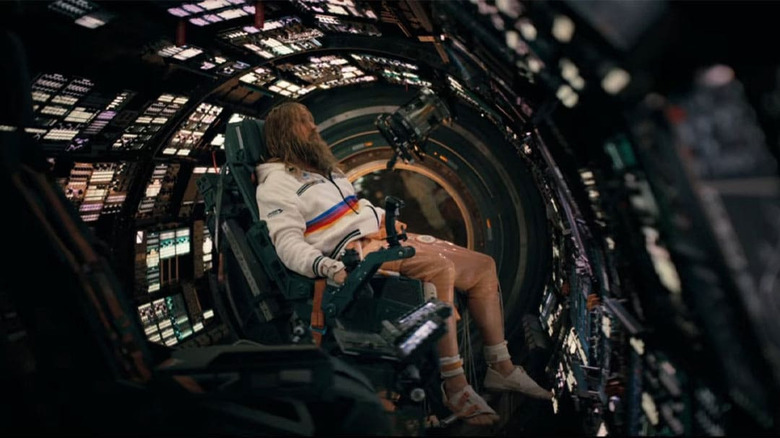
When “Project Hail Mary” begins, Ryland Grace awakes suddenly in a medical bay on a ship that’s deep in outer space, but he’s not entirely aware of why he’s there, his memory having seemingly been impacted by induced sleep for long space travel.
Gosling’s everyman persona is in full swing right off the bat, as he’s completely and hilariously out of his element in space, apparently having no proper training on how to navigate zero gravity or operate the ship in which he’s one of three crew members. His situation is even more desperate as the other two crew members, the ship’s pilot and engineer, are found deceased in their medical pods.
Grace slowly begins to remember what happened in his past to lead him here in space. Intermittent flashbacks unfold throughout the entirety of the film’s runtime, revealing everything that led to Grace’s surprising mission in space, from the scientific explanation as to why Earth’s sun is slowly dying to what Grace contributed to solving the problem. To make it simple, there’s some kind of mysterious micro-organism called Astrophage that is eating the sun, and this phenomenon is happening to dozens of other stars too, but nobody knows why. Project Hail Mary is tasked with traveling to the closest star that somehow hasn’t been effected by the Astrophage in order to figure out a potential solution to their problem.
While the flashbacks have plenty of story to tell, including a shocking reveal that I won’t spoil here, the driving force of the movie lies in the present day, when Grace meets an alien being who is also trying to save his planet from the exact same problem.
Rocky is one of Hollywood’s best aliens
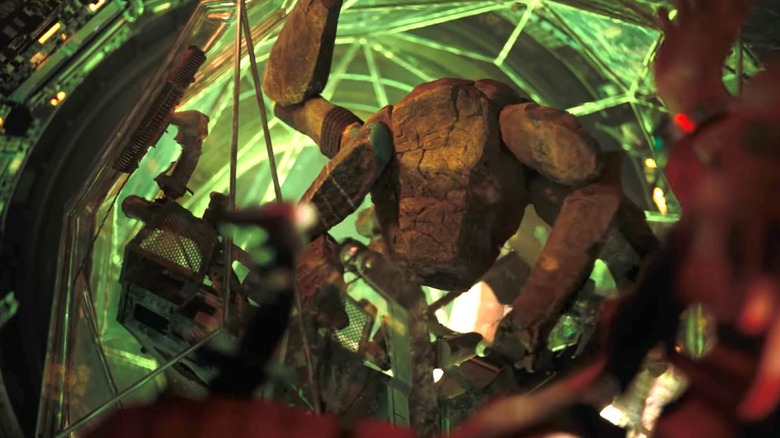
After some time spent consuming some vodka in a bag and digging through his personal belongings, Grace learns what he’s supposed to be doing. He clumsily figures out how to navigate the ship towards the the Tau Ceti system, which holds the sun that isn’t being damaged by Astrophage. But upon his arrival, he realizes he isn’t the only explorer there. Another ship takes notice of Grace’s arrival and tries to engage him in communication.
Gosling’s performance as an average guy who just happens to be a brilliant scientist works as well as Matt Damon’s turn in “The Martian,” which was also adapted by “Project Hail Mary” screenwriter Drew Goddard, but there’s an added layer than makes him effectively less cool. While Damon’s character Mark Watney is an experienced astronaut and botanist who’s mostly cool under pressure, Grace is totally unfamiliar with space travel and lacks the confidence and composure that Mark Watney had. This is key, because when the time comes to have a close encounter with an alien being, Grace is an amusing combination of curious, concerned, and scared, and Gosling plays the role splendidly. You are with him every step of the way, from his triumphs to his failures.
 Amazon MGM Studios
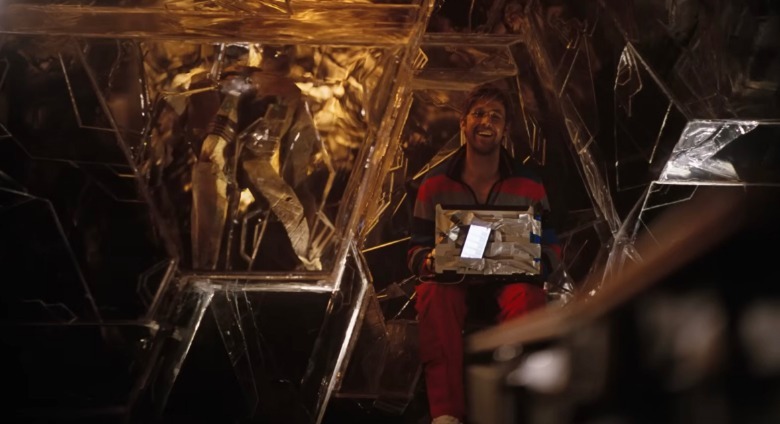
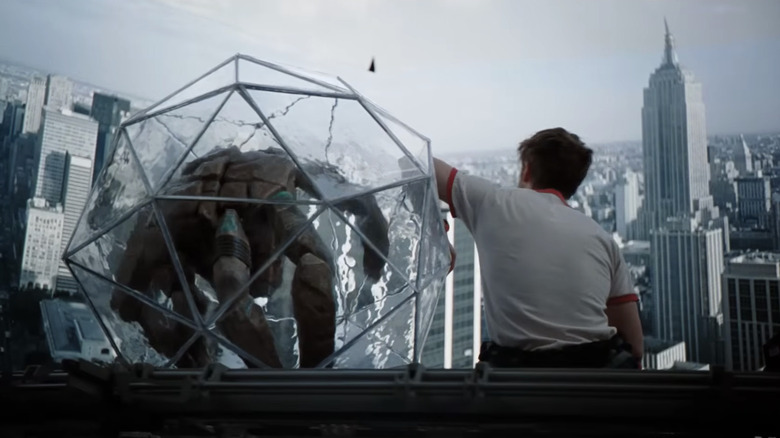
This is where the “E.T.” and “Arrival” comparisons come into play, because when Grace meets the rock-spider-like alien that he comes to call Rocky, they can’t speak to each other. So Grace has to create a makeshift translator to turn Rocky’s melodic language into words that he can understand. This marks the beginning of a hilarious and beautiful friendship where two completely different species work through their fundamental differences to work together in order to save each other’s planets. The digital voice used for Rocky (provided by James Ortiz, who also acted as the puppeteer of Rocky on set) gives him both a tenderness and an innocence that makes his interactions with Grace thoroughly both entertaining and heartfelt. The two become collaborators and friends, providing a wonderful buddy comedy interplay in the middle of a thrilling sci-fi adventure.
See Project Hail Mary in IMAX if you can
The stealthy MVP of “Project Hail Mary” is composer Daniel Pemberton. When in space, the score adds some cosmic pluck to the proceedings, especially in the funnier sequences with Rocky and Grace. But as we’ve heard in Pemberton’s work on movies like “Spider-Man: Into the Spider-Verse,” he knows how to ramp up suspense and make you feel something too. While the themes may not be as instantly resonant as something like John Williams’ notes for “E.T.,” the score certainly adds a unique sound to the movie, and adds plenty of emotional weight to the friendship between Rocky and Grace.
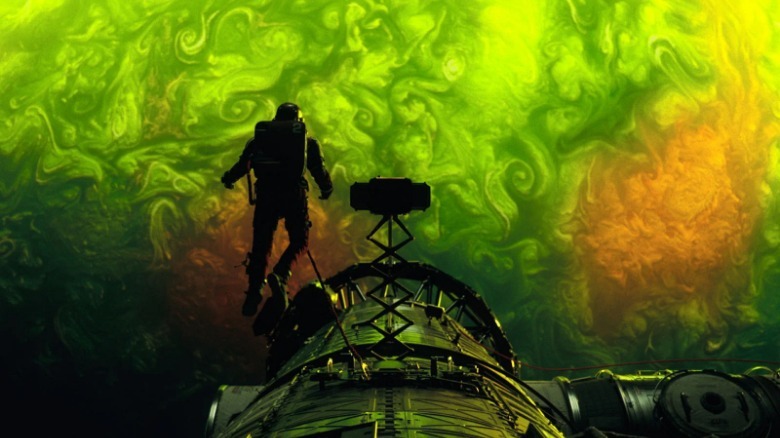
While the heart of “Project Hail Mary” rests on the dynamic between Grace and Rocky, and it will be the element that resonates with audiences the most, let’s not forget that this is a sci-fi movie, and Lord & Miller make sure to remind us of that with stunning imagery captured on IMAX, the format for which the movie was designed.
 Amazon MGM Studios
In fact, the footage shot in IMAX helps expand the scope of the story and helps frame the narrative. Present day sequences in space unfold in full IMAX ratio, but the flashbacks revert back to the more narrow 2:39:1 aspect ratio. There are sequences in “Project Hail Mary” that are so beautiful to see in IMAX, especially when Grace and Rocky begin navigating the Tau Ceti system. It’s the kind of immersive viewing experience that movie theaters were made for, and IMAX only enhances that by projecting the story on an even bigger screen. Without giving away details of what’s happening, the shot above is one of the standout, awe-inspiring sequences packed with vibrant, eye-popping colors.
“Project Hail Mary” is a once-in-a-generation kind of sci-fi movie, and it seems other critics agree too. It will lift up and squeeze your heart, crack you up with laughter, and give you a sense of hope and wonder in a way that few movies have been able to inspire. Lord & Miller have created something truly magical, and we’ll be talking about this one for decades to come.
/Film Rating: 10 out of 10
“Project Hail Mary” opens in theaters on March 20, 2026.