
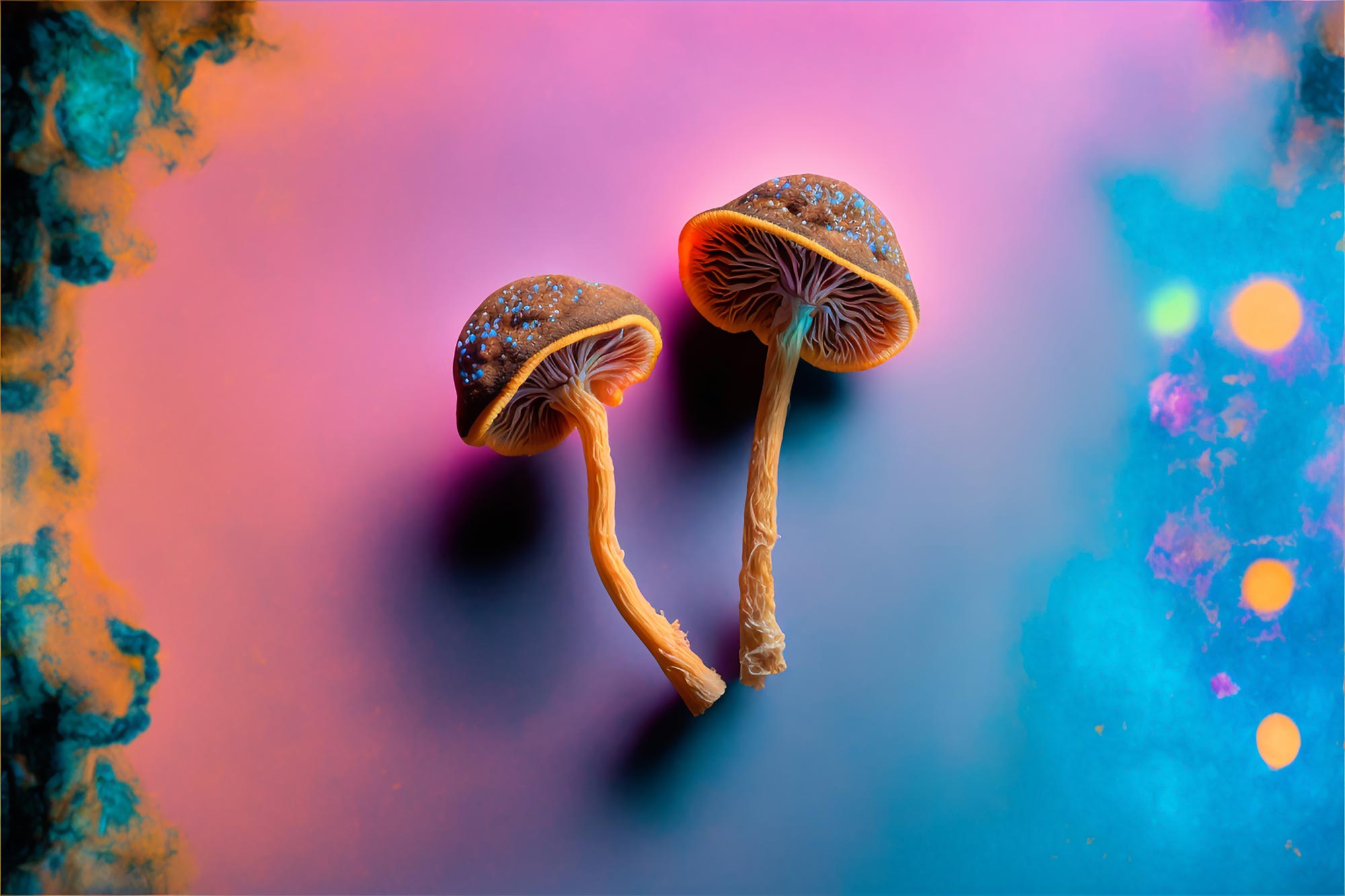
A familiar “magic mushroom” may not be what it seems.
A decades-long mystery surrounding the origins of the world’s most widely cultivated “magic mushroom” – Psilocybe cubensis – may finally be settled. New research suggests its evolutionary story is far older and more complex than scientists once believed.
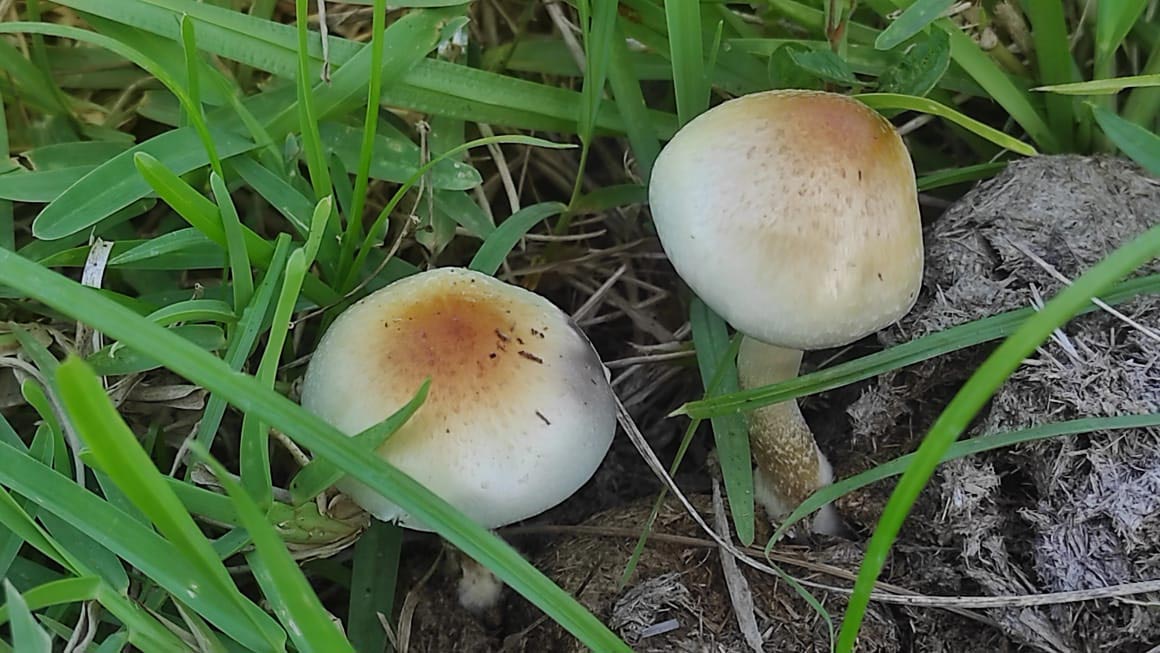
In a study published in Proceedings B of the Royal Society, scientists report the discovery of a new species, Psilocybe ochraceocentrata, found in grasslands in South Africa and Zimbabwe. The species takes its name from the ochre-yellow color at the center of its cap. Genetic evidence shows that P. ochraceocentrata and P. cubensis last shared a common ancestor about 1.5 million years ago.
This finding challenges the long-held idea that P. cubensis spread to the Americas through cattle introduced from Africa and Europe in the 1500s. The species was first formally described in Cuba in 1906.
Genetic Differences and Scientific Implications
Breyten van der Merwe, a mycologist and PhD student in chemical engineering at Stellenbosch University and co-author of the study, explains that while the two mushrooms appear similar, they differ in their genetics, ecology, and chemistry.
He says the results offer new insight into the natural origins of cultivated P. cubensis and provide useful genetic data for future research on psychedelic fungi.
P. ochraceocentrata has been grown worldwide for years under the names “NSS” (which stands for “Natal super strength”) or “Transkei.” “It’s one of the most popular strains of magic mushrooms, because it is quite potent and easy to grow. But until this study, nobody realized it was a totally separate species from the classic magic mushroom,” he explains.
Advanced Methods Reveal Hidden Lineages
The research team included Dr. Alexander Bradshaw (Clark University), Prof. Bryn Dentinger (University of Utah Health in the USA), Dr. Keaton Tremble (Duke University), and Dr. Cathy Sharp (Natural History Museum of Zimbabwe). They analyzed DNA from both recent samples collected across southern Africa and historical reference specimens, using multi-locus phylogenetic analysis, molecular clock dating, and ecological niche modeling.
Dr. Sharp first identified some of the earliest known specimens of P. ochraceocentrata in Zimbabwe in 2013. Despite this, Africa remains under-sampled when it comes to fungal diversity.
In the paper, the researchers outline several possible explanations for how these species diverged millions of years ago. At that time, grasslands were expanding in South America, while grazing animals, which provide the material these mushrooms grow on, were spreading from Africa into Eurasia. These environmental shifts may have created new ecological opportunities, leading to the separate evolution of P. cubensis and P. ochraceocentrata.
Reference: “Discovery of the closest free-living relative of the domesticated ‘magic mushroom’ Psilocybe cubensis in Africa” by Alexander James Bradshaw, Cathy Sharp, Breyten Van Der Merwe, Keaton S. Tremble and Bryn T. M. Dentinger, 11 March 2026,
Never miss a breakthrough: Join the SciTechDaily newsletter.
Follow us on Google and Google News.