
A mouse study highlights the role of acetylcholine in behavioral flexibility, offering new insight into the brain mechanisms involved in addiction and obsessive compulsive disorder.
Adjusting how we act depending on the situation is essential in everyday life. From professional meetings to personal interactions, success often depends on the ability to change behavior when circumstances shift. In some cases, adapting quickly can even determine survival. Scientists have long been interested in how the brain enables this flexibility.
A new study published in Nature Communications by neuroscientists at the Okinawa Institute of Science and Technology (OIST) explores how this ability works in mice and offers clues that may help researchers better understand conditions such as addiction, obsessive compulsive disorder (OCD), and Parkinson’s disease.
“The brain mechanisms behind changing behaviors have remained elusive, because adapting to a given scenario is very neurologically complex. It requires interconnected activity across multiple areas of the brain,” explains co-author Professor Jeffery Wickens, head of the Neurobiology Research Unit at OIST. “Previous work has indicated that cholinergic interneurons—brain cells that release a neurotransmitter called acetylcholine—are involved in enabling behavioral flexibility. Here, we were able to use advanced imaging techniques to see neurotransmitter release in real time and delve into the fundamental mechanisms behind behavioral flexibility.”
The chemical signals of disappointment
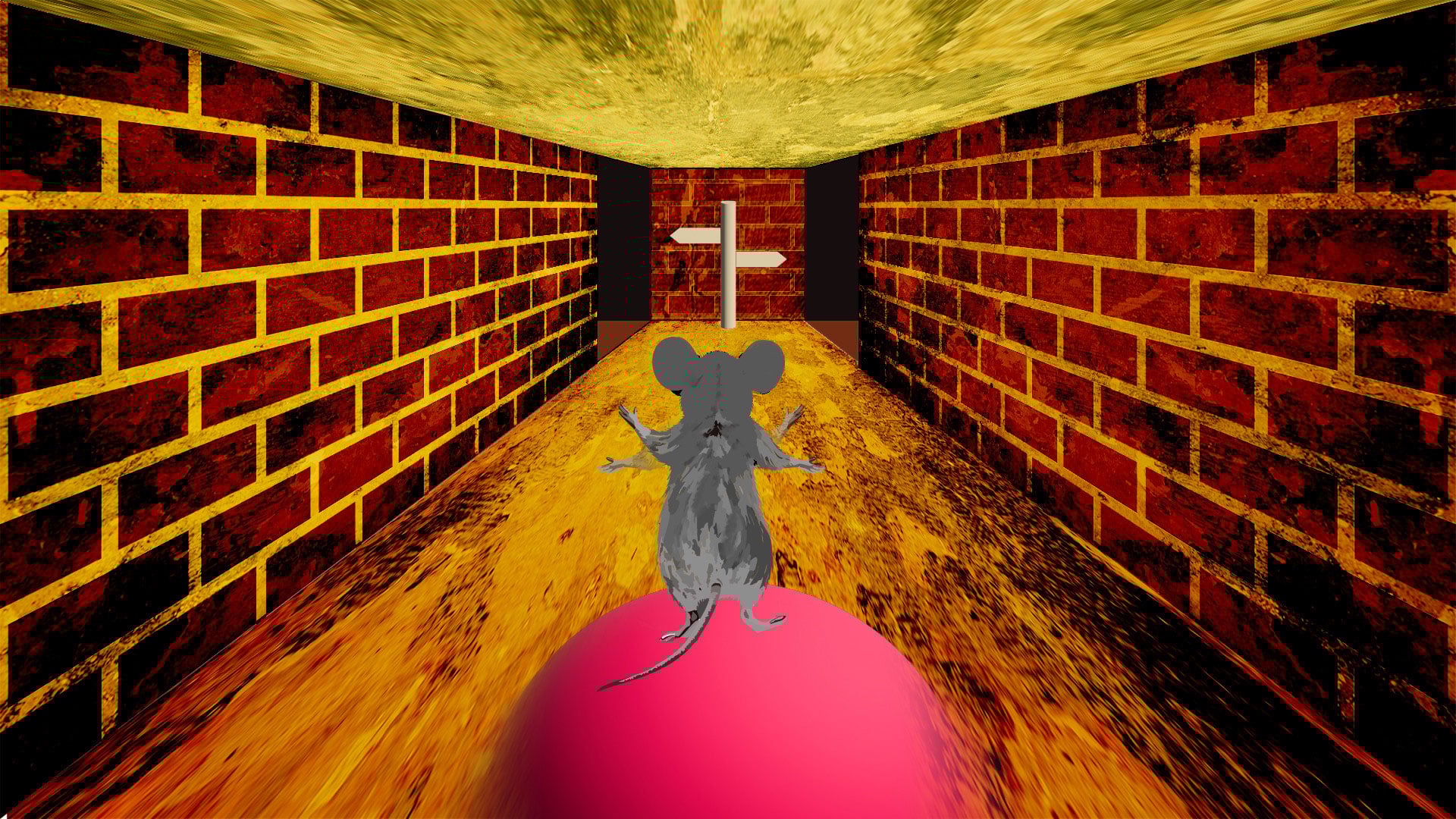
To investigate how the brain responds when expectations suddenly change, researchers trained mice to navigate a virtual maze. The animals learned which route would lead to a reward. After the mice became familiar with the task, the scientists unexpectedly changed the correct path. As a result, the mice experienced the loss of an expected reward. The team used two-photon microscopy to monitor brain activity during this moment of surprise.
“Neurally, we saw a significant increase in acetylcholine release in certain areas of the brain. And behaviorally, we saw more mice displaying what’s known as ‘lose-shift’ behavior—changing their choices in the maze after non-reward,” says Dr. Gideon Sarpong, first author on the study. “The greater the increase in acetylcholine the more likely the mice were to change their future choices. Our results demonstrated the importance of acetylcholine in breaking habits and enabling new choices to be made.”
To verify that acetylcholine was responsible for the shift in behavior, the researchers reduced the animals’ ability to produce the neurotransmitter. When acetylcholine levels dropped, the mice were far less likely to change their decisions after losing a reward. This confirmed that the chemical plays a crucial role in helping the brain adapt when conditions change.
Although most cholinergic interneurons increased acetylcholine release during the experiment, some small clusters of cells showed little change or even a decrease. Researchers think these areas might help preserve memories of previously successful routes. “This indicates that the mice may not necessarily forget the previous pathway to reward, but retain this information in case the situation changes again,” says Dr. Sarpong.
Understanding neurological disorders
The researchers emphasize that behavioral flexibility involves many interconnected brain systems. The current findings provide an important piece of the puzzle but do not represent the entire mechanism. Other brain regions, cells, and neurotransmitters also contribute to the complex network that governs how behavior changes in response to new situations.
“But it’s an important piece of the puzzle, as the activity of the striatum, where these cholinergic interneurons are held, is a central component of this system,” emphasizes Prof. Wickens.
Beyond advancing basic neuroscience, the work could have practical implications for medicine. Understanding how acetylcholine influences behavior may help researchers develop improved treatments for several neurological and psychiatric conditions.
“Acetylcholine levels are often altered in treatments for neuropsychiatric disorders like Parkinson’s disease or schizophrenia, so understanding the function of this neurotransmitter is essential in treating many neuropsychiatric disorders,” says Prof. Wickens. “In particular, with conditions such as addiction and obsessive-compulsive disorder, we see a difficulty in breaking habits and shifting behavior. So, understanding the mechanics of behavioral flexibility may one day help us develop better treatments.”
Reference: “Spatially heterogeneous acetylcholine dynamics in the striatum promote behavioral flexibility” by Gideon A. Sarpong, Rachel Pass, Kavinda Liyanagama, Kang-Yu Chu, Kiyoto Kurima, Yumiko Akamine, Julie A. Chouinard, Loren L. Looger and Jeffery R. Wickens, 17 December 2025, Nature Communications.
DOI: 10.1038/s41467-025-66826-1
This work was funded by a research grant from the Human Frontier Science Program (HFSP) No. RGP0062/2019 to J.R.W., subsidy fund from OIST, and supported by the Japan Society for the Promotion of Science (JSPS) KAKENHI (Grant numbers, 22K15633 and 24K10485) to G.A.S.
Never miss a breakthrough: Join the SciTechDaily newsletter.
Follow us on Google and Google News.