
Ancient fossils are revealing unexpected chemical survivors, challenging long-held assumptions about how biological carbon is preserved over Earth’s history.
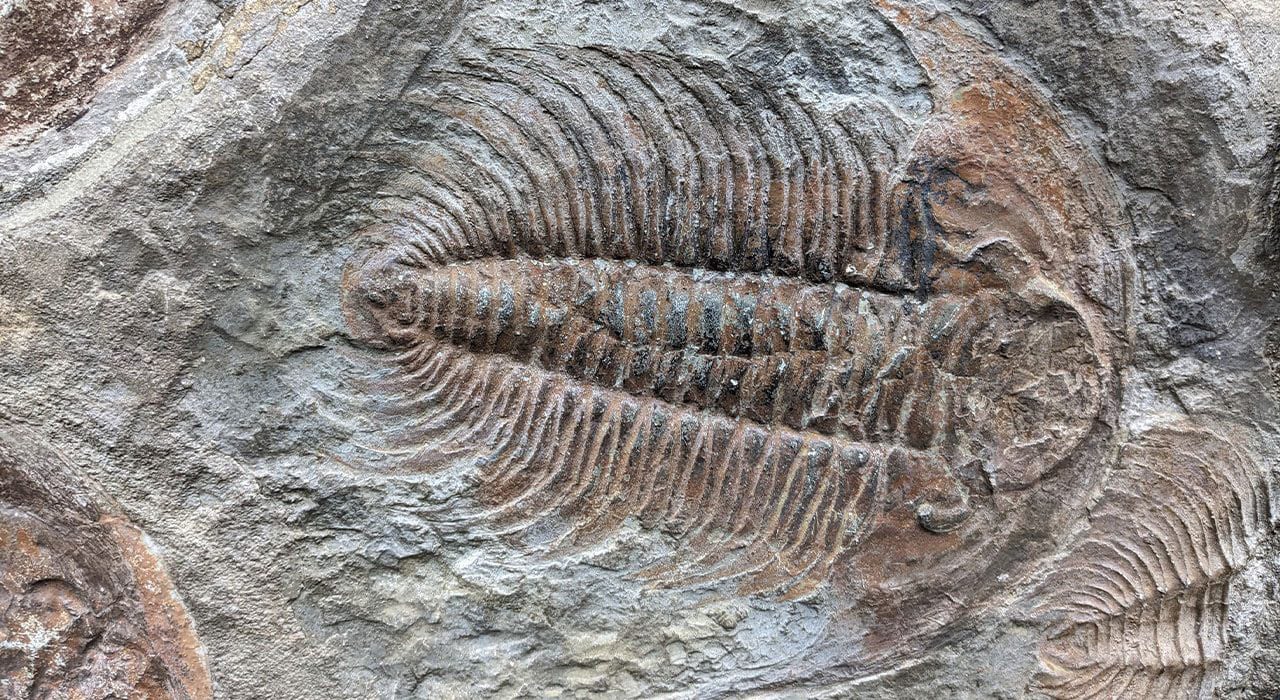
Trilobites are some of the most recognizable fossils on Earth, yet they have mostly been treated as mineral snapshots of long vanished marine life. Now, an international team led by UT San Antonio reports something far rarer: chemical evidence of chitin preserved inside trilobite fossils that are more than 500 million years old. Chitin is the tough organic material that helps build modern crab shells and insect exoskeletons, and this is the first confirmed time it has been found in trilobites.
The work was led by Elizabeth Bailey, assistant professor of earth and planetary sciences at UT San Antonio. Beyond adding a new layer of detail to these classic fossils, the results point to a bigger story about how certain biomolecules can endure deep time and what that durability might mean for Earth’s long-term carbon storage.
Chitin is among the most common organic polymers made by living organisms, second only to cellulose, and it is best known for giving strength to many animals and also to fungal cell walls. For a long time, researchers assumed chitin would not last long after death because microbes and chemical breakdown tend to dismantle complex organic materials quickly.
The new study adds to a growing body of evidence that some biological polymers can persist in the geologic record much longer than expected, especially when they are shielded by the right burial conditions.
“This study adds to growing evidence that chitin survives far longer in the geologic record than originally realized,” Bailey said. “Beyond paleontology, this has significant implications for understanding how organic carbon is stored in Earth’s crust over geologic time.”

Bailey contributed a geochemical and planetary science approach to the project, drawing on her background in stratigraphy, field geology, and studies of how biological materials interact with Earth’s carbon cycle across billions of years.
“I was motivated to pursue this work from my perspective as a planetary scientist interested in how organic molecules play a role in planetary geochemical processes,” said Bailey. “My collaborators specialize in modern chitin analytics, and they were excited to apply increasingly sensitive techniques to such an ancient and iconic fossil group.”
The research was recently published in PALAIOS, a monthly journal that focuses on how life has shaped Earth’s history through paleontological and sedimentological records.
How carbon is stored
Although the study examined only a limited number of fossils, its significance extends beyond trilobites. Learning how organic carbon can persist in common geological environments helps scientists better reconstruct Earth’s carbon cycle and understand how carbon is naturally stored within the planet’s crust.
The findings may also be relevant to discussions about climate and carbon storage today. Limestones, which form from the buildup of biological material and have been widely used as construction materials throughout human history, often contain organisms that produce chitin.
“When people think about carbon sequestration, they tend to think about trees,” Bailey said. “But after cellulose, chitin is considered Earth’s second most abundant naturally occurring polymer. Evidence that chitin can survive for hundreds of millions of years shows that limestones are part of long-term carbon sequestration and relevant to understanding Earth’s carbon dioxide levels.”
Early Earth lab
The research began prior to Bailey’s appointment at UT San Antonio, during her postdoctoral fellowship at the University of California, Santa Cruz, and was supported by the Heising-Simons Foundation’s 51 Pegasi b Fellowship in Planetary Astronomy.
While no other UT San Antonio faculty or students were directly involved in this specific study, Bailey anticipates that the findings will create new opportunities within the university’s Early Earth Lab for future student-driven research into the long-term survival of organic molecules in geological materials.
In 2020, Bailey earned her Ph.D. in planetary science at Caltech and received the 51 Pegasi b Postdoctoral Fellowship in Planetary Astronomy from the Heising-Simons Foundation, which she took to UC Santa Cruz. In her postdoc, she branched out from her very theoretical dissertation work into using laboratory-based techniques to study planetary materials. In 2025, Bailey accepted a tenure-track professorship at UT San Antonio in the Department of Earth and Planetary Sciences.
Bailey’s research focuses on how the Solar System, including Earth, formed and changed over time. Her Early Earth Lab builds computer models and carries out laboratory-based chemical analyses of planetary materials, including meteorites that formed in the Solar System and ancient rocks from Earth.
Reference: “Evidence for Surviving Chitin in Cambrian Trilobites from the Carrara Formation, Western North America” by Elizabeth Bailey, Mikhail Tsurkan, Krzysztof Nowacki, Teofil Jesionowski and Hermann Ehrlich, 24 December 2025, PALAIOS.
DOI: 10.2110/palo.2024.025
Never miss a breakthrough: Join the SciTechDaily newsletter.
Follow us on Google and Google News.