
Astronomers have captured their clearest view yet of a star collapsing and forming a black hole.
The event was discovered in archive data from 2014, captured by a now-defunct NASA asteroid-hunting space telescope.
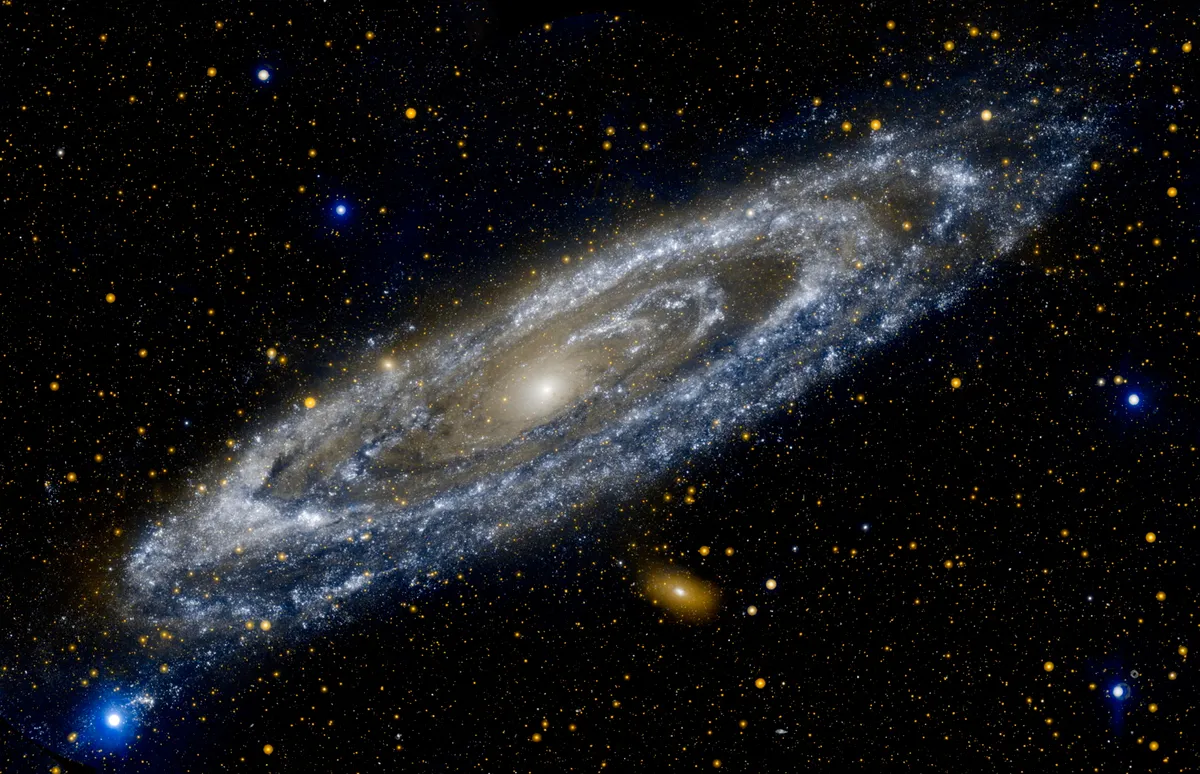
Using the data, astronomers pinpointed a brightening of a source of infrared light in the Andromeda Galaxy.

Did scientists almost miss the event entirely?
NASA’s WISE (Wide-field Infrared Survey Explorer) spacecraft was a space telescope that observed in infrared and was primarily designed to search for asteroids and comets.
In 2013, the spacecraft was given a new mission, named NEOWISE, and focussed on helping find near-Earth asteroids and comets.
In 2024, NEOWISE was decommissioned and, on 1 November 2024, was purposely sent hurtling into Earth’s atmosphere, burning up upon re-entry.
Scientists have been trawling through the data that NEOWISE left behind, and a team have discovered something they might otherwise have missed.

In 2014, NEOWISE observed infrared light from a massive star growing brighter and brighter.
The star is located in the Andromeda Galaxy, which is the closest major galaxy to our own Milky Way.
The star glowed intensely with infrared light for three years before fading and disappearing, leaving behind a shell of dust.
A team led by Kishalay De of Columbia University say the brightening was a star collapsing and giving birth to a black hole.
This is a phenomenon that astronomers have predicted for decades, but have never fully seen occur.
What happened to the star
The team say the star seems to have undergone direct collapse, turning directly into a black hole without first exploding and becoming a supernova.
“This has probably been the most surprising discovery of my life,” says De.
“The evidence of the disappearance of the star was lying in public archival data and nobody noticed for years until we picked it out.”
The star is supergiant named M31-2014-DS1 located in the Andromeda Galaxy, 2.5 million lightyears away.

In its youth, the team say, the star was about 13 times heavier than our Sun. But by the time of its death, it was just 5 times the mass of the Sun, having shed its material out into space.
“The dramatic and sustained fading of this star is very unusual, and suggests a supernova failed to occur, leading to the collapse of the star’s core directly into a black hole,” De says.
“Stars with this mass have long been assumed to always explode as supernovae.
“The fact that it didn’t suggests that stars with the same mass may or may not successfully explode, possibly due to how gravity, gas pressure, and powerful shock waves interact in chaotic ways with each other inside the dying star.”

The team say it’s likely that, at the end of the star’s life, its inner core wasn’t pushed out in a supernova explosion and instead collapsed in on itself.
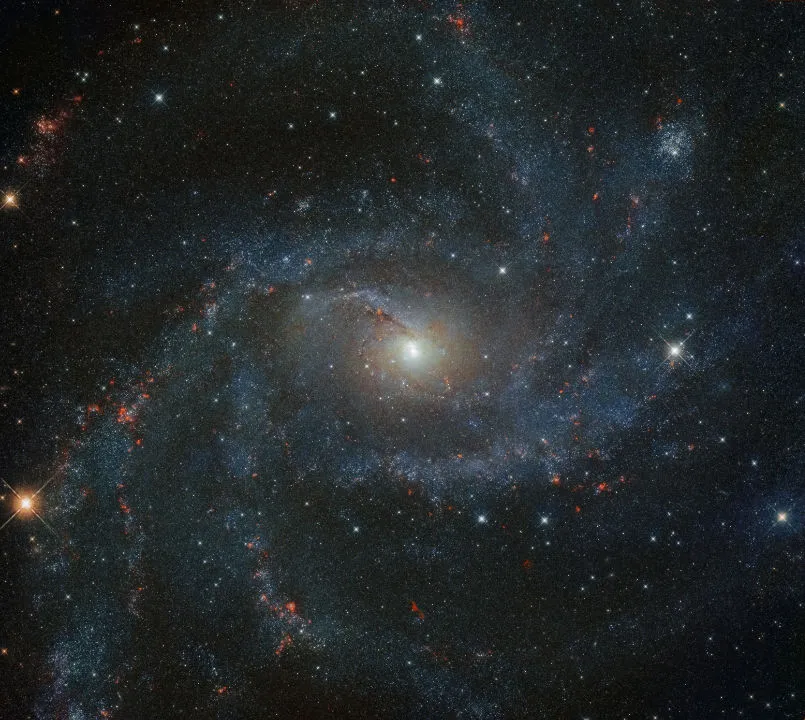
They say this process of direct collapse may have been witnessed before in 2010, in a different galaxy, named NGC 6946, also known as the Fireworks Galaxy.
However, this event was much fainter and astronomers don’t have as much data on it, compared to this latest event in the Andromeda Galaxy.
“We’ve known that black holes must come from stars. With these two new events, we’re getting to watch it happen, and are learning a huge amount about how that process works along the way,” says Morgan MacLeod, a lecturer on astronomy at Harvard, and co-author on the paper.
The team used archival data from the NEOWISE mission, following a previous prediction that a star undergoing direct collapse would leave a faint infrared glow behind.
They looked for variable infrared sources across the Milky Way and other local galaxies, and found M31-2014-DS1.
“Unlike finding supernovae, which is easy because the supernova outshines its entire galaxy for a few weeks, finding individual stars that disappear without producing an explosion is remarkably difficult,” De says.
“It comes as a shock to know that a massive star basically disappeared (and died) without an explosion and nobody noticed it for more than five years.
“It really impacts our understanding of the inventory of massive stellar deaths in the universe. It says that these things may be quietly happening out there and easily going unnoticed.”