
by Chelsea Sektnan
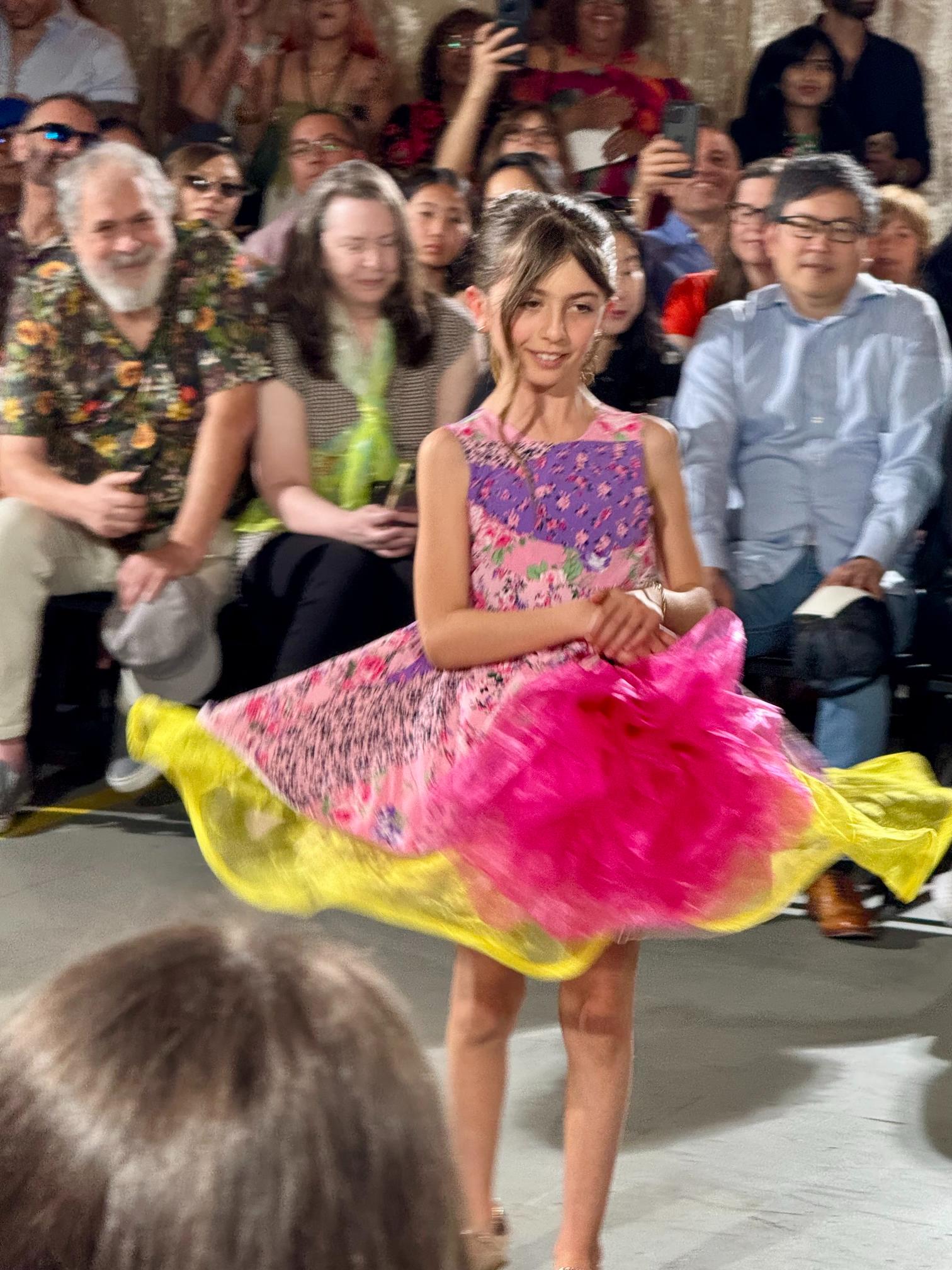
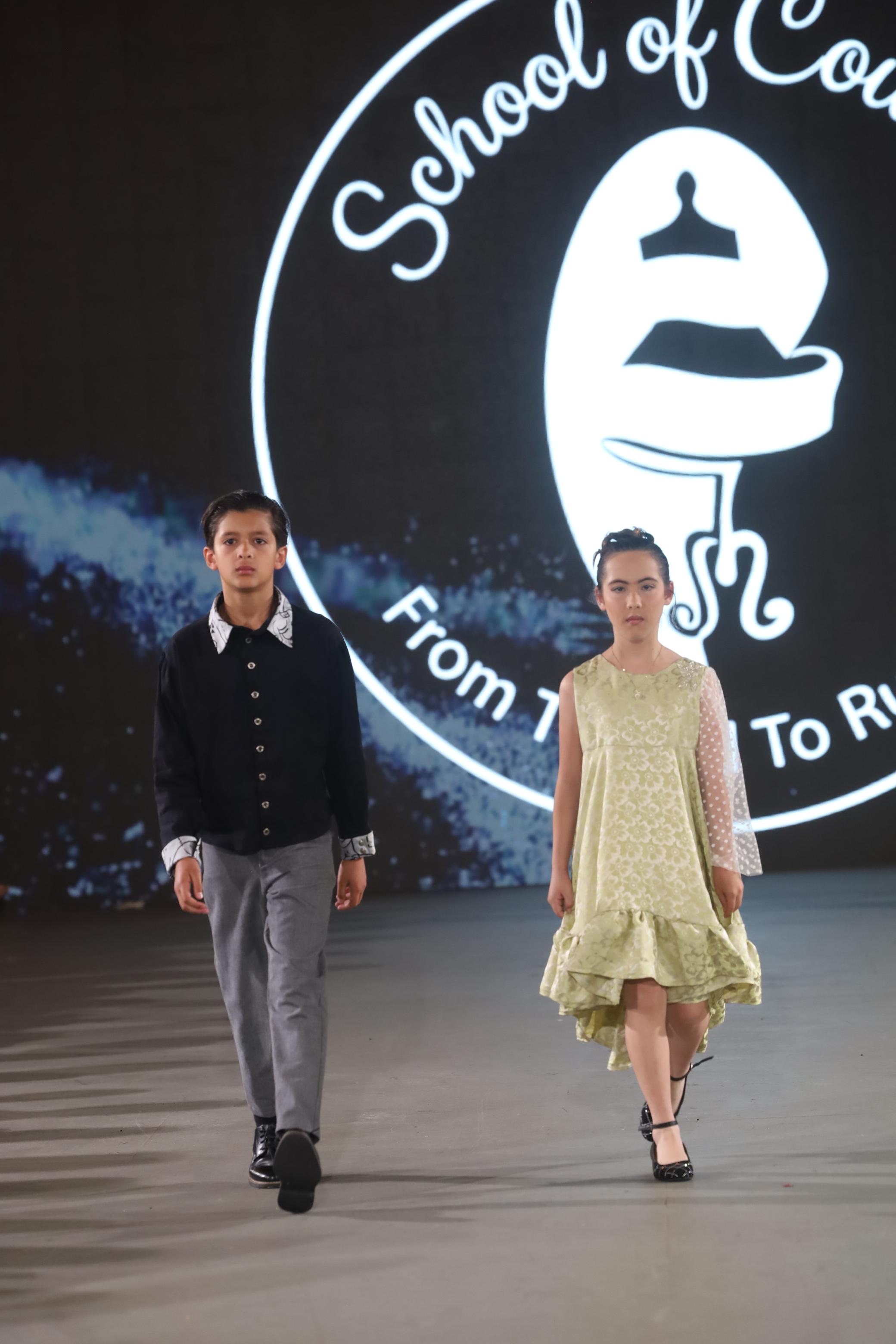
Backstage at LA Fashion Week, young designers from the South Bay stood under bright lights as makeup artists worked quickly around them, photographers tested their lenses, and both professional models and student designers prepared to walk the runway.
Some of the designers were barely tall enough to see over the garment racks.
They were students from the School of Couture, a South Bay fashion design program founded by Dauriya “Miss Dee” Aizakhmetova, where children as young as five learn to turn their ideas into clothing they design, sew, and present on a runway.
For the first time, the students were invited to participate in LA Fashion Week’s Spring/Summer 2026 shows, an experience that placed them directly inside a professional production.
“It was exactly what you see in backstage videos from professional fashion shows,” Aizakhmetova said. “The kids had professional makeup, professional hair styling, and photo shoots. They experienced the same process professional designers do.”
In all, 60 students participated, presenting designs they had spent months developing.
“They created the idea, chose the fabric, made the patterns, and sewed the pieces,” Aizakhmetova said. “They were the designers and the models at the same time.”
Just miles away from the runway, the place where all of that work begins is far less glamorous.
The School of Couture is tucked away in a nondescript building near a vacuum repair shop off Hawthorne Boulevard in Torrance. Except for the sign, there’s no indication from the outside that inside, young designers are learning to construct garments, build collections, and, in some cases, prepare for a professional runway.
Inside, the space feels different.
Fabric lines the walls. Sewing machines hum. Students move between sketches and stitches, learning not just how to make clothing, but how to think like designers.
After moving from Kazakhstan with her family a decade ago, Aizakhmetova developed a teaching philosophy rooted in education, discipline, and creativity. Her background bridges both teaching and design, with formal training in business, education, and fashion.
She said the idea for the school grew out of what she saw in traditional fashion programs.
“In fashion school, it’s not about preparing for a test,” she said. “You have to have the skills to complete a project, to solve it, and to make it.”
But she noticed many talented students struggled because they hadn’t been taught how to think through the process.
“They were very talented, but they weren’t ready,” she said. “They just didn’t have the skills yet.”
That realization led her to move her family to Los Angeles, specifically to create a program focused on building those skills early. At her school, students are taught to slow down, to problem-solve, and to start over when something doesn’t work. The goal isn’t perfection; it’s growth, a philosophy that carried over into the Fashion Week experience.
“We want them to understand that they can take an idea and make it real,” Aizakhmetova said.
For some students, the School of Couture becomes more than a class. It becomes the starting point for a career.
Ksenia Smirnova, 41, who now runs her own clothing brand, began at the school with no sewing experience.
“I came to the School of Couture with zero knowledge,” Smirnova said. “Absolutely nothing. I just had an idea of what I wanted to create.”
Over time, Smirnova’s designs became more complex as she learned construction techniques and garment design. Today, she runs two fashion lines, including Unbuttoned Clothing, a menswear brand focused on simple silhouettes with distinctive details, and Urban4rest, a ballet clothing brand.
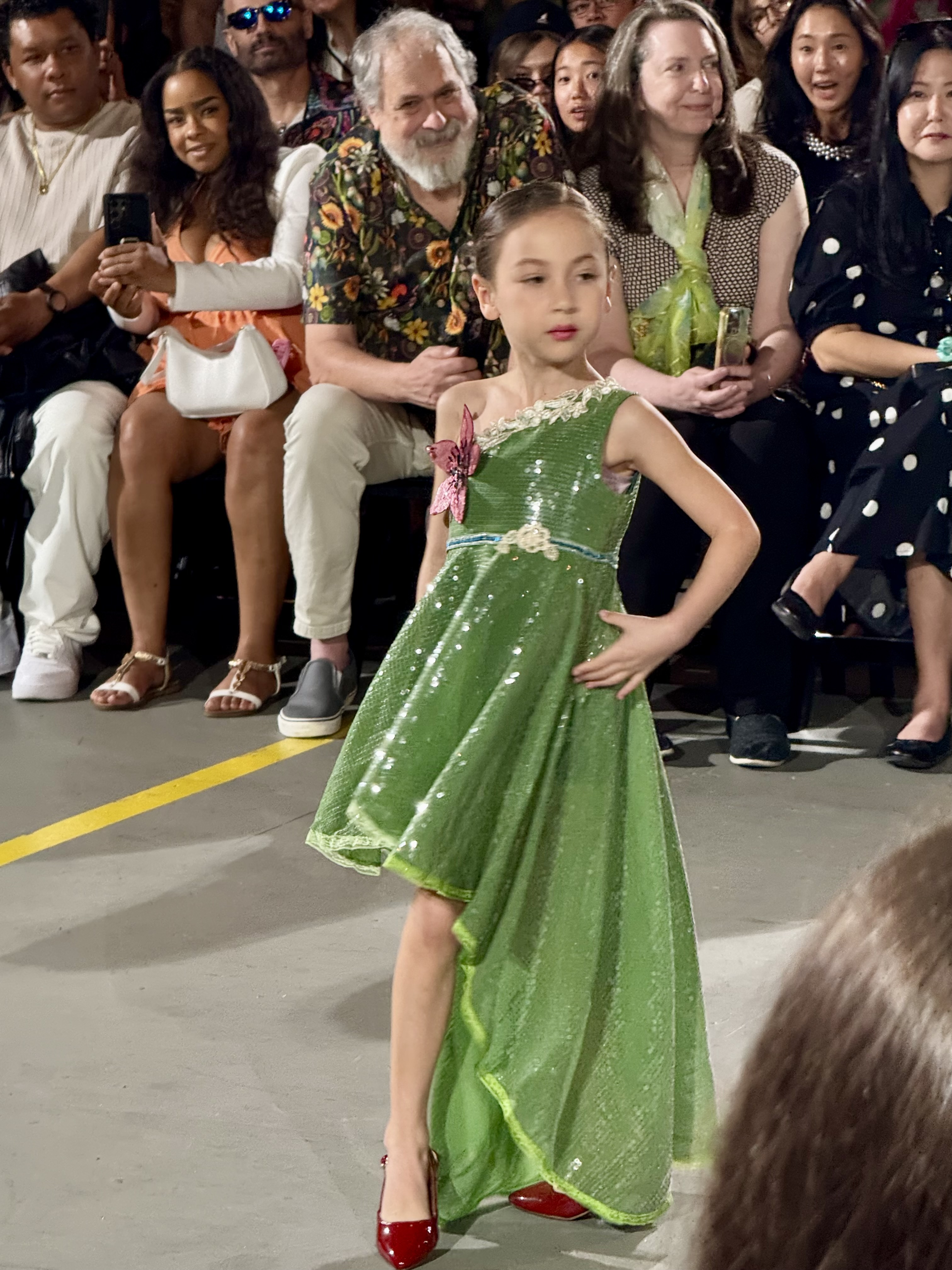
Smirnova also presented her collection at LA Fashion Week for the first time this year.
“At first I thought, ‘No way. I’m not ready. I’m not big enough,’” she said. “But Dee encouraged me to try. She told me it would be a good experience.”
Smirnova ultimately created three pieces from her collection, experimenting with fabrics and design elements that highlight what she calls the brand’s “DNA,” including feminine influences incorporated into menswear. Both her daughter and her husband walked the runway, wearing her pieces.
“I was proud of myself,” she said. “From the beginning, I thought I couldn’t do it. But step by step, I built the pieces and showed them.”
The experience spanned all ages, from adult designers like Smirnova to students just beginning their journeys.
At 11 years old, Clair Takatsuki was not just walking at LA Fashion Week — she was presenting three original designs of her own.
The fifth grader, who began classes at the School of Couture in February 2022, described the experience as “very exciting and kind of overwhelming.”
One of her looks was an empire-waist dress, short in the front and long in the back, finished with ruffles and a hand-sewn beaded leaf embellishment. Another paired a collared shirt and jeans with a jaguar cutout design sewn onto the back. A third featured an off-the-shoulder top with high-waisted bell-bottom pants. Clair wore one of the looks herself and watched models present the others.
She credits Aizakhmetova for helping guide her through the process.
“She’s an excellent teacher. I couldn’t have done any of this without her,” Clair said.
For Clair’s mother, Sarah Takatsuki, the months leading up to the show came with the usual parental worries — whether the garments would be finished, whether the kids would feel confident stepping onto the runway, and whether everything would come together in time.
“I think all the kids, by the time they got there, were pretty comfortable and were just able to enjoy the excitement of it all,” she said.
The experience, she added, taught more than just sewing.
“The hardest part for the kids was the waiting,” she said. “There’s a lot of waiting in the fashion industry, but I think it develops character.”
One of the youngest designers in the lineup was Eva Mintz, a 7-year-old, who said she has wanted to create clothing for nearly her entire life.
“She’s wanted to be a fashion designer since she was two,” her mother, Nancy Duan, said.
Eva began attending the school in 2025 and quickly immersed herself in the work.
For LA Fashion Week, Eva designed and sewed three original dresses and walked the runway herself, drawing inspiration from characters she loves.
“I made a pink one like Cruella de Vil,” Eva said. “And the blue one, like the Fairy Godmother.”
“The design was entirely Eva’s,” Duan said. “She would argue over every type of fabric, every inch, every millimeter.”
Backstage, the experience felt both exciting and overwhelming.
“I was feeling a little bit nervous… and a little bit excited,” Eva said. “It felt like twenty thousand minutes, but I think it was just twenty minutes.”
When Eva first started at the school, Duan was unsure what to expect when she saw the professional-grade equipment in the classroom — sewing machines, hot irons, and other tools she hadn’t expected young children to be using. That concern quickly faded.
“They really teach the kids how to work with the tools,” she said.
She added that the program emphasizes patience and persistence alongside creativity.
“If you mess up, you take the seam ripper and redo it,” she said. “There are mistakes, but that’s how they learn. It goes so much farther beyond sewing and fashion — it’s like lessons in life.”
At 15, Juliette McNamara brought a more advanced level of design experience to the program, presenting a three-look mini collection and working with professional models for the first time.
Her mother, Patricia McNamara, said the opportunity was a major milestone.
“Her enthusiasm reminded me of when she was 5 years old again,” she said.
For Juliette, the experience was both exciting and overwhelming. Backstage moved quickly, with designers, models, and teams all working at once.
“It was pretty hectic… there was a lot going on,” she said.
Her collection featured two ballerina-pink looks with ruffles and a third in deep burgundy, chosen to catch the runway lights. Because designers did not meet their models until the day of the event, she had to adjust her work in real time.
At 15, she approaches the process simply, starting with sketches and building from there. The experience also gave her a chance to see how other designers worked and presented their ideas.
“It was really cool to see what other people had done,” she said.
For Patricia, the moment reflected something bigger, not just the finished pieces, but how far her daughter had come.
Juliette, along with other student designers from the School of Couture, has also been invited to present at New York Fashion Week in the fall.
For Aizakhmetova, that kind of growth is exactly the point, and something she’s working to extend beyond her own students.
Last year, she and former student Erin Rosaire, an account executive in commercial insurance, co-founded the UMAI Foundation, expanding that approach beyond the classroom.
“We wanted to bring this to kids who are fighting battles most of us can’t even imagine,” Rosaire said. “We try to refocus them and give them hope… To create something and forget about the pain.”
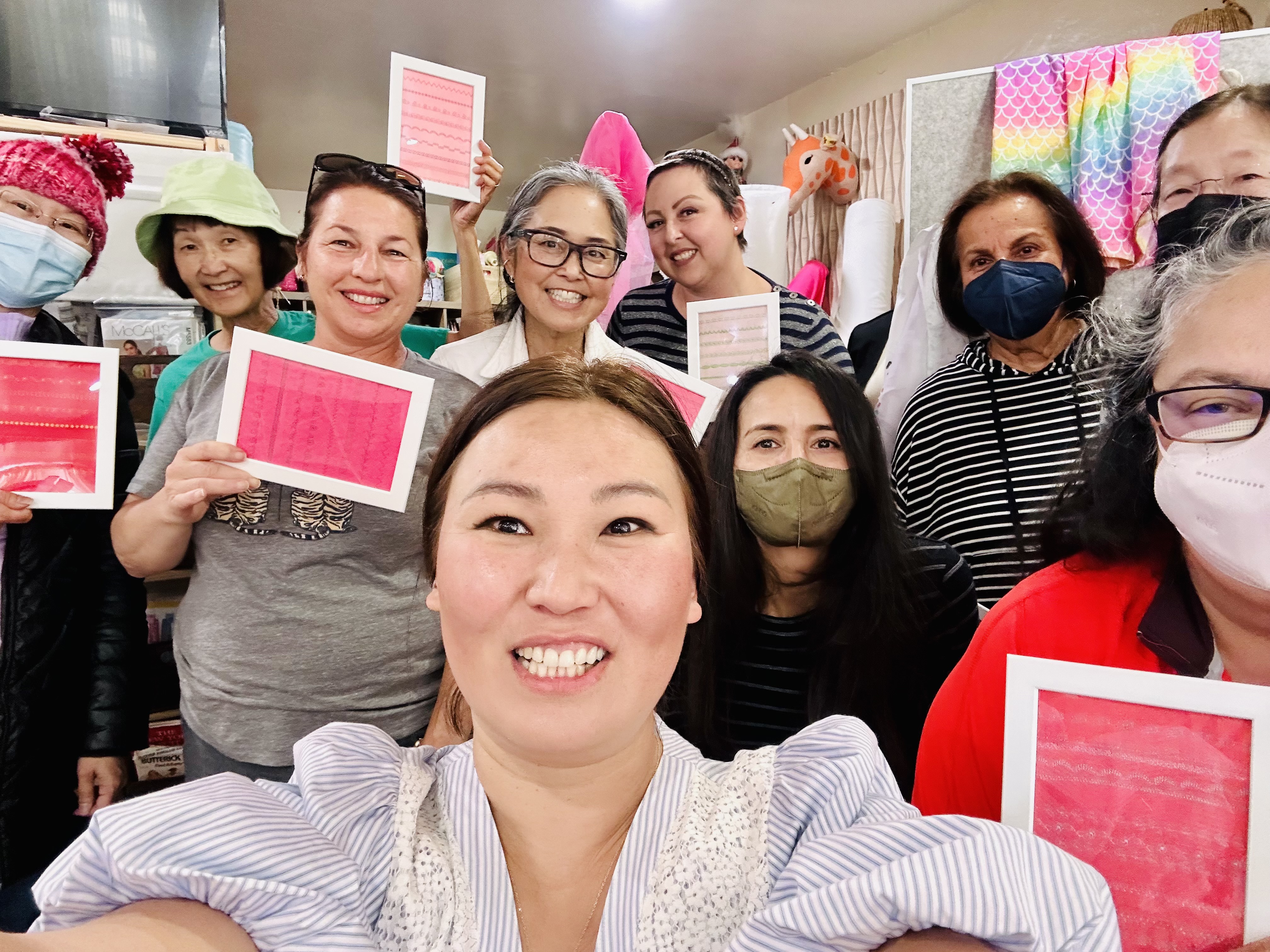
Through the foundation, Aizakhmetova brings fashion design directly to children facing serious medical challenges, offering workshops in hospitals and small group classes outside of treatment. For many, it’s a rare chance to step out of that world, if only for a few hours.
“It allows the child to just kind of forget about everything for a couple of hours,” said Rosaire, chief relationship officer of the UMAI Foundation. “They have fun, and they laugh… and they create.”
Some of those students also took part in the LA Fashion Week showcase.
“It was life-changing for these kids,” Rosaire said. “They got their hair and makeup done, they walked the runway, they got to be part of something. For a moment, they weren’t thinking about hospitals or treatment; they were just part of the show.”
For many, it was a rare chance to make creative decisions, build confidence, and see their ideas come to life. Beyond the runway, the impact is often quieter but just as powerful.
“They get to make decisions about their designs, and they’re young,” she said. “…That confidence, that creativity, it changes how they see themselves. They get to try, make mistakes, fix them, without judgment. And that’s what really builds confidence.”
At the center of it all is Aizakhmetova.
“She’s our fearless leader, creator, teacher, a sensei,” Rosaire said. “One stitch at a time… it really can change lives.”
For Aizakhmetova, that’s the point.
“We want kids to believe that any idea can be real,” she said. “That they don’t give up, that they finish what they start.”
For some, that means stepping onto a runway for the first time. For others, it means something quieter — a few hours where they can create, make their own decisions, and simply be kids. ER