
Things started out so well.
Do you, dear reader, remember a 2005 WayForward GBA game called Sigma Star Saga? That particular game had been erased from my memory banks years ago, but as soon as I saw the cover art, I knew what this was. I didn’t get a chance to experience it back then, but I certainly recall reading about it in EGM, Game Informer, and a certain website more than 20 years ago. Sigma Star Saga is a strange game that’s nearly impossible to classify. It combines aspects of 2D Zelda games, side-scrolling shooters, a surprisingly heavy plotline, and WayForward charm. The end result is a strange game with charm for days but is rough around the edges.
The Earth has been attacked by a group of aliens known as the Krill, and an Allied Earth Federation fighter pilot named Ian Recker is sent on an undercover mission as a “defector” to report on Krill activities on the inside. Recker gets a weird parasite outfit and meets a cute Krill girl named Psyme before discovering there’s much more to the invasion than meets the eye. The plot is intriguing if occasionally confusing, and I was impressed by the writing and ongoing spy games right through to the end.
Sigma Star Saga takes place primarily in a 2D Zelda-like top-down view, but the unusual dimensions of the GBA’s screen, along with the impressive spritework, means that your view of the surrounding area is pretty limited. This was initially frustrating, and while I adjusted, it remained a persistent annoyance. Even so, there were plenty of times where I just plain walked into an enemy that I couldn’t see ahead of me, or was hit by projectiles that were fired from off-screen. At least there are plenty of pickups, including health, in every area. Gameplay is essentially divided into halves: overworld exploration and randomized SHMUP stages. I’ll cover each in turn:
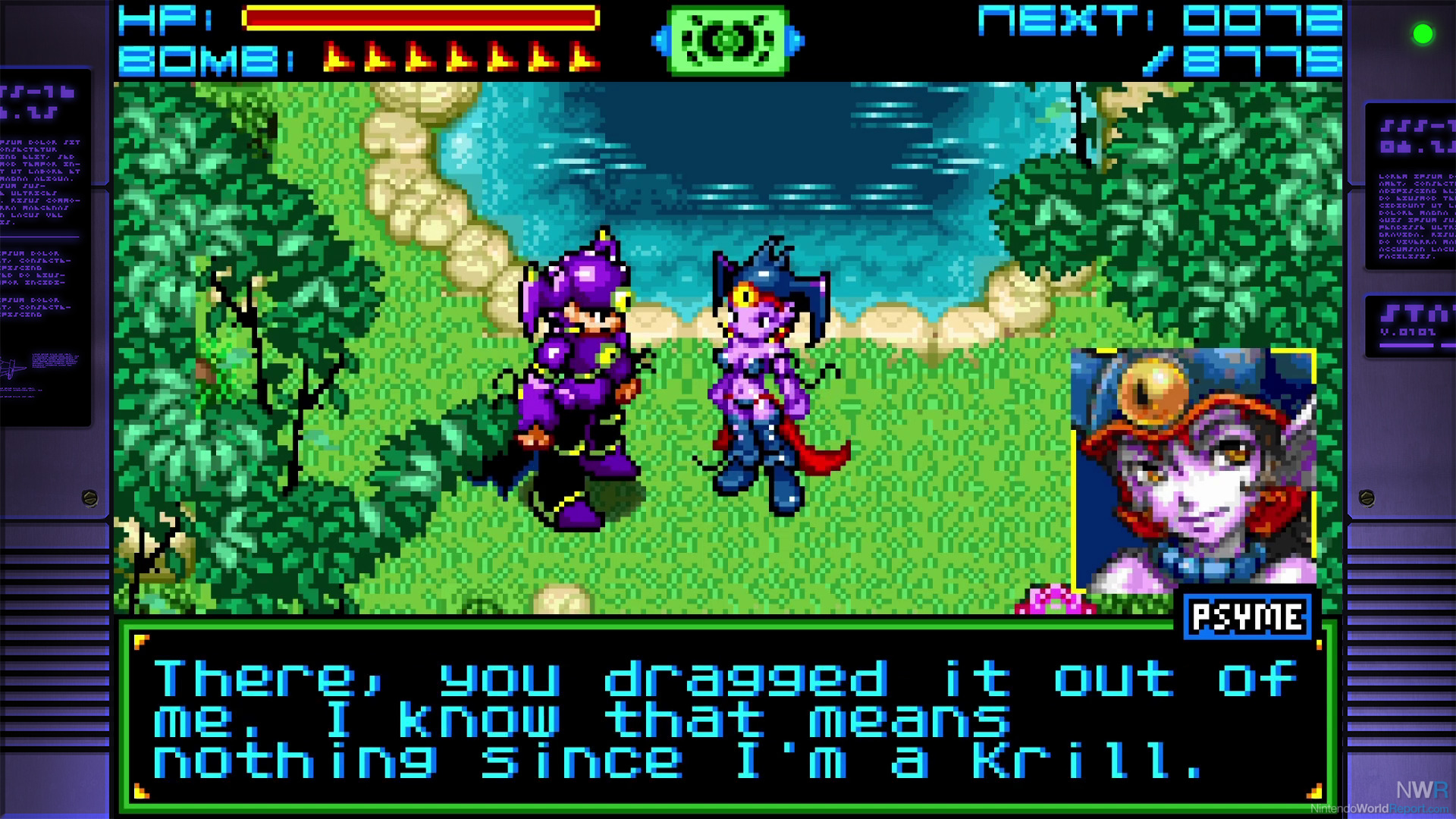
In overworld areas, you’ll control Recker as he explores space stations or various planets. On space stations, your job will usually be to find your commanding officer, the comm room, or both. The space stations are honestly difficult to navigate, and all but one don’t have a map on the status screen, which I was flummoxed by. There were a couple space stations that I genuinely had trouble finding my way through despite the omnipresent white staircase that (usually) lead to the CO’s office. Planetary exploration is far more enjoyable thanks to the presence of a rudimentary map. Recker starts his journey with a close-range laser gun but will find new items (Tools) as the game progresses, including a much more powerful melee attack and what’s essentially an underground scanner.
As you explore these planets, Recker will frequently be drawn into random SHMUP battles, which take the place of random enemy encounters in a typical RPG. Here, however, the “encounter” is a randomized sidescrolling space shooter.
While initially enjoyable, you’ll quickly run through the gamut of SHMUP maps on any given planet and then replay them ad nauseum. I’m told the encounter rate has been decreased in this DX re-release, so I can’t imagine what it was like in 2005. Since the SHMUP segments really have no bearing whatsoever on the overhead segments, I began to wonder why they’re so prevalent. In the overhead sections, Recker will find power bombs (only useful in SHMUP encounters), but nothing you encounter in the SHMUP segments affects the overhead segments, which I found strange. More bizarrely, your ships–you will occupy a small range of ship types during your journey–collect experience orbs and level up, which seem to increase ship HP. On the other hand, Recker himself does not benefit from these level-ups. His laser gun doesn’t get any more powerful, his HP stays the same, and he can’t use power bombs in the field.
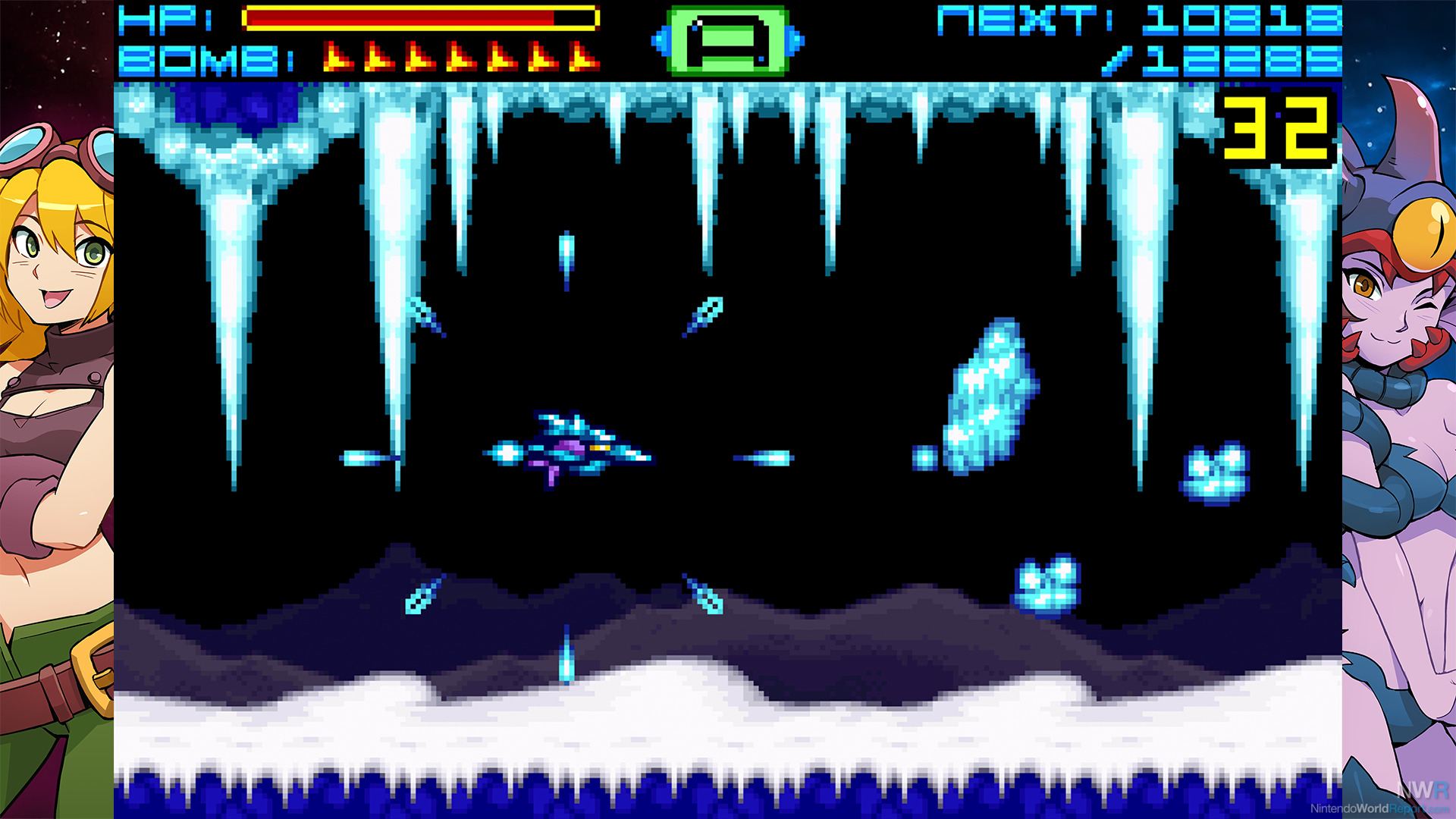
Because of this disconnect, the SHMUP areas feel simultaneously undercooked and overutilized, which is a shame, because one of the major systems of Sigma Star Saga deals exclusively with your ship’s weaponry: Gun Data.
Throughout your overhead adventures, Recker will find Gun Data icons, which look like little orange DS cartridges, in the open and below ground. There are more than seventy pieces of Gun Data to find, and these allow you to customize your ship’s shot type to an impressive degree. However, the majority of them are too weird or narrowly useful given the randomness of SHMUP encounters, so I wound up min/maxing, landing on three or four broadly useful combinations. Sadly, these loadouts cannot be saved as unique builds and cannot be “assigned” to specific ship types. As a result, I eventually settled on one combo and stuck with it for the entire back half of the game. Experimentation is great, but you cannot experiment during SHMUP sequences, only while you’re in the overworld.
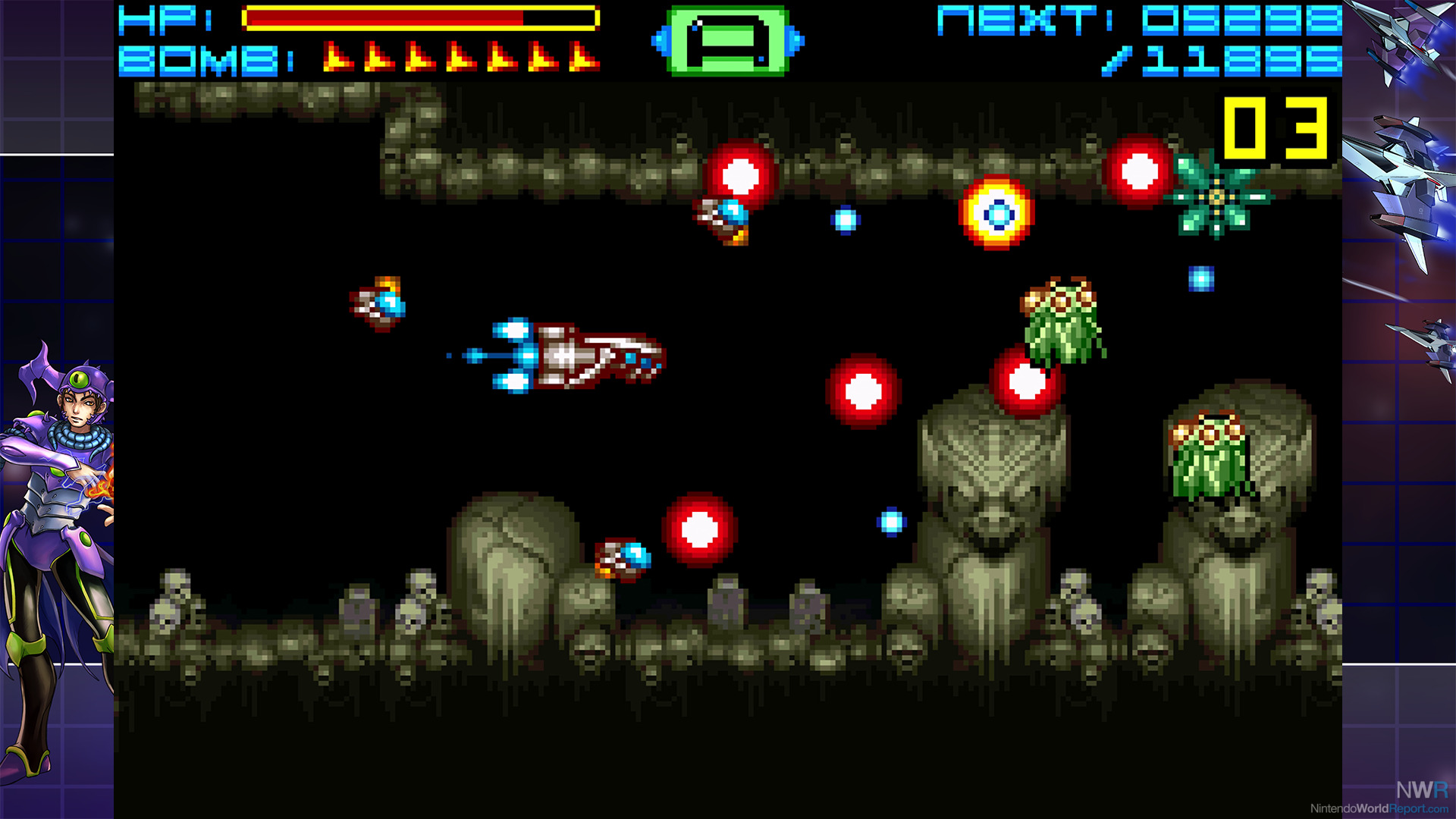
And fear not, dear reader: these SHMUP sequences aren’t as challenging or interesting as Gradius or R-Type. Your enemies, for the most part, listly drift along, occasionally firing their own bullets, but just as often welcoming death with open arms. Minibosses are more interesting in that they tend to have specific attack patterns, but only two or three (including the final boss) were actually challenging. The randomized maps occasionally clash with the randomized ship designs, and it’s sometimes hard to tell what is and isn’t in the background. Thankfully, having your ship blown up by running into an obstacle or accidentally respawning in a rock wall simply lowers your HP.
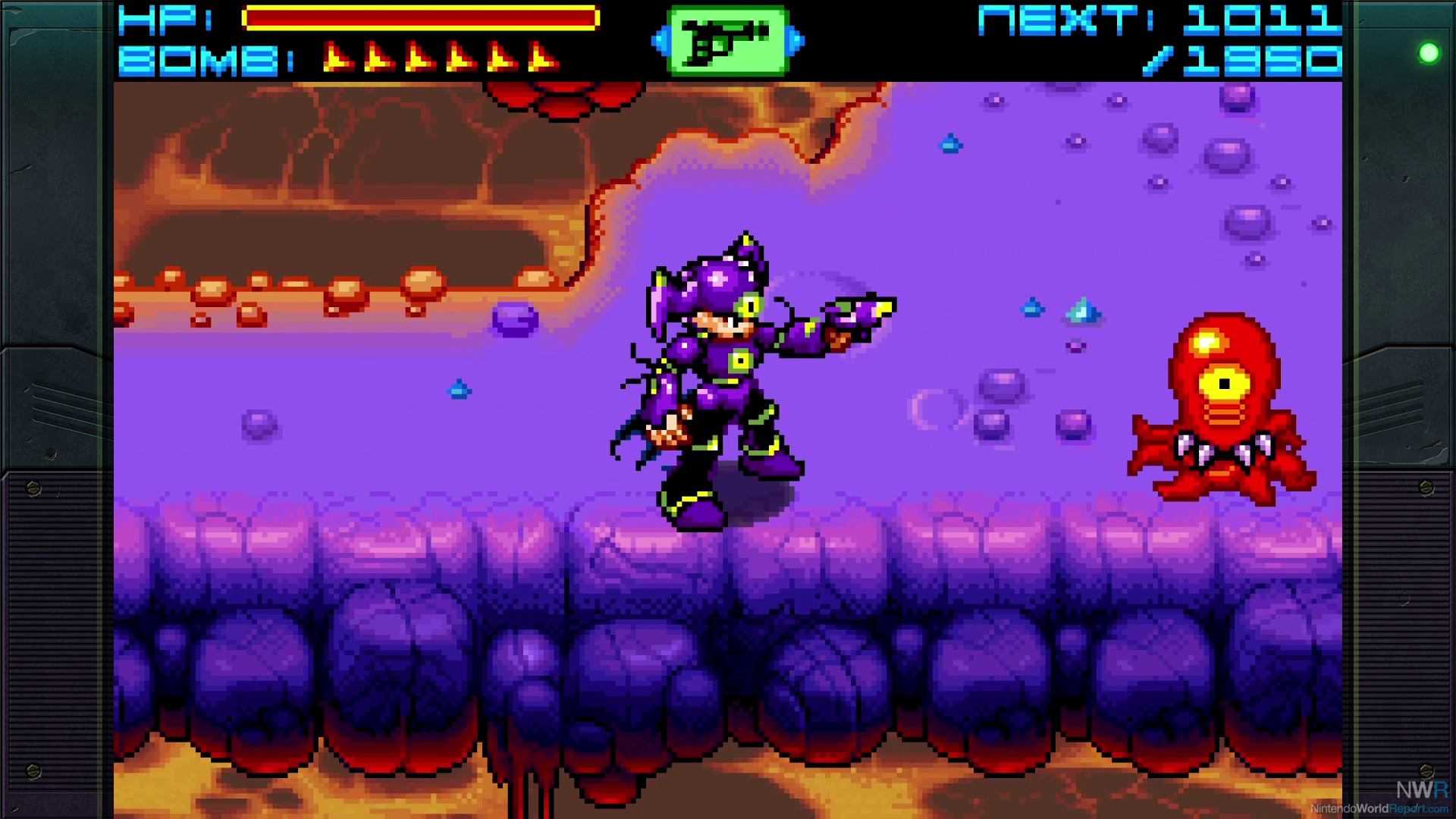
In part because of these shortcomings, Sigma Star Saga overstays its welcome. On each planet, you’re generally tasked with going to a highlighted location on the map to find or plant things. New Tools gives you more to do whenever you revisit a planet, but the overall gameplay loop doesn’t change; this isn’t exactly a Metroidvania. Throughout your journey, you will come to resent the constant SHMUP interruptions, as I did. And what were minor irritants early in the game, like space stations lacking maps or enemies constantly respawning, become legitimate frustrations as things go on. I will say the story remains engaging throughout, though I could do without SHMUP-adjacent story sequences, which give you nothing to do but read slowly-scrolling text.
Also, and this is the world’s pettiest complaint, the planets don’t have names. They’re identified only by their environments (like “Forest Planet”). I still haven’t forgiven Retro Studios for going with “Space Pirate Homeworld” in Metroid Prime 3, so this complaint might be specific to me.
On the plus side, the spritework is typically phenomenal as you’d expect from WayForward, but the character portraits look a little bit off, especially the Krill characters, who look like actual human people with weird hats. I expected a clearer anime aesthetic given the sprites of Recker, Psyme, and Scarlet. The music is either too repetitive (space stations & SHMUP segments) or generally pleasant but not especially memorable (planets). The writing is very good, clearly inspired by sci-fi anime and reminded me a little of Johji Manabe’s Outlanders.
Sigma Star Saga DX is an interesting curio–a forgotten WayForward joint that I’m thrilled to have an opportunity to play in 2026, warts and all. I can honestly say I’ve never played anything quite like it. That said, no single aspect of the gameplay is without some measure of frustration. The overworld is interesting but the zoomed-in camera, respawning enemies, and retraversal can get old. One late-game planet in particular adds a foggy filter and a quickly-ticking timer that required several retries. I eventually grew tired of the SHMUP encounters because they’re so repetitious and while Gun Data is a cool idea, its implementation is ham-strung.
All that said, I think this game has great bones and I’d love to see a sequel someday that addresses some of my issues with it.