
PRESS RELEASE
Published March 10, 2026
United States, 10th Mar 2026 — For years, China’s fashion design industry has grappled with longstanding pain points: a disconnect between academic training and industrial practice, lack of unified criteria for evaluating originality, and inefficient translation of designs into marketable products. These challenges are now being systematically addressed through six industry specifications led by Luo Liurong, a preeminent authority in the field. Launched three years ago, this comprehensive set of standards — covering university practical training, fabric design, color diagnosis, casual wear evaluation, and personal image services — has been adopted by over 50 colleges and universities and more than 80 enterprises nationwide, emerging as a cornerstone of the industry’s drive toward standardization.
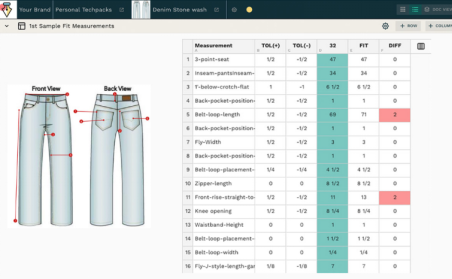
“Before adopting Professor Luo’s standards, our design review process was fragmented — different judges applied inconsistent criteria, making it hard to ensure originality while keeping commercial viability on track,” said the design director of Jeanswest, one of the first enterprises to implement the Industry Evaluation Criteria for Serial Original Design of Casual Wear. Since integrating the framework, Jeanswest has seen the approval rate of original design projects rise from 30% to 50%, with market acceptance of new products increasing by 35%. The four-dimensional evaluation system — focusing on originality, practicality, aesthetics, and implementability — has helped the company move beyond subjective “experience-based reviews.”
Upstream in the design chain, the Technical Specifications for Creative Fabric Design and Color Matching in Apparel has become equally pivotal. “Blending traditional elements with modern fashion has long been a industry-wide challenge,” noted the founder of Qingjin Zaowu, an emerging Guofeng (Chinese-style) fashion brand. “These specifications provide quantitative standards for fabric texture and color coordination, cutting our design trial-and-error costs by 30% while enhancing our brand’s distinctiveness.” Data shows that enterprises adopting the standards have shortened their average design and R&D cycles by 20%, with product qualification rates jumping from the industry average of 75% to over 95%.
Transformations are equally pronounced in higher education. “Previously, practical training in universities was arbitrary and lacked clear standards, leaving graduates needing over six months to adapt to corporate roles,” explained the department head of Fashion and Image Design at Jiangnan Design College. Since adopting the Industry Specifications for Practical Teaching of Fashion and Image Design in Universities, the college has seen employment rates for relevant majors rise by 28%, with a 92% probation pass rate for graduates — far exceeding the industry average. More than 50 institutions, including Beijing Institute of Fashion Technology, have integrated the standards into their curricula, establishing a scientific training system encompassing “creative design, aesthetic matching, and practical implementation.”
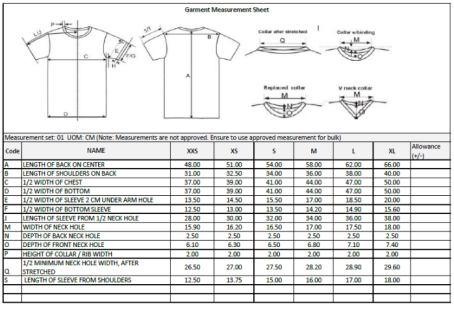
Luo’s influence stems from nearly three decades of professional accumulation. In 1997, she won the Bronze Award at the 6th National Shenlang Cup “Golden Scissors” Fashion Design Competition for her innovative fabric designs. In 2003, she was a finalist in the South China Regional Preliminary of the Jeanswest Casual Wear Design Competition, with her serialized design concepts widely disseminated across the industry. As an assessor for artistic image design at the Ministry of Culture and a member of the Academic Working Committee of the China Fashion Association, she combines international perspective with local expertise — holding four international certifications jointly issued by Ximan Color and Japan’s COLORTOP Institute, while spending a decade teaching at universities and cultivating over 1,000 industry professionals.
Today, Luo’s impact forms a closed loop of “standards, textbooks, and talent.” Her 10 practical guides, developed alongside the specifications, have sold over 32,000 copies, with supporting online courses attracting 86,000 learners — primarily grassroots designers and university instructors. Zhang Qinghui, Director of the Academic Working Committee of the China Fashion Association, commented: “These six specifications fill the standardization gap between academic teaching and industrial practice. Their core value lies in translating practical experience into a replicable, scalable system.” From frontline designer to industry rule-maker, Luo’s journey is driving China’s fashion design industry toward greater professionalism, efficiency, and innovation.
Disclaimer: Information contained on this page is provided by an independent third-party content provider. Digitaljournal.com does not take responsibility of the content published here.