
Published on
December 29, 2025
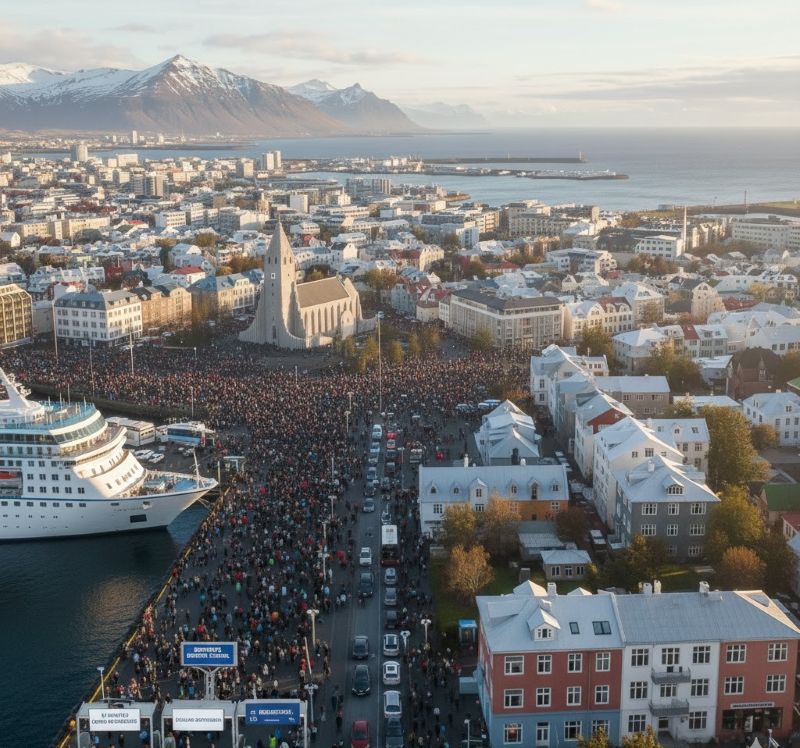
Spain Joins Germany, Italy, Greece, Portugal, and Iceland in a Full Travel Meltdown, UK Tourists Stuck for Hours as Biometric Border Checks Cause Major Delays. As the travel landscape in Europe evolves, Spain joins Germany, Italy, Greece, Portugal, and Iceland in experiencing a full travel meltdown. This growing issue has now engulfed Spain, where the implementation of new biometric border checks is causing severe delays at key entry points. UK tourists, once accustomed to swift border crossings, are now facing hours-long delays as the new systems attempt to process facial scans and fingerprints.
The delays are not limited to Spain alone. Germany, Italy, Greece, Portugal, and Iceland are also grappling with similar challenges, as these countries struggle to manage the increased volume of travelers combined with the complexities of biometric data collection. What was supposed to be a more efficient and secure system has become a source of frustration for many.
The biometric border checks, introduced to streamline travel and enhance security, are instead slowing down the process, causing long queues and missed connections. The result? UK tourists, in particular, are left frustrated as they wait for their biometric data to be processed. What should be a simple border entry has turned into a stressful and time-consuming ordeal, especially during peak travel seasons.
This major delay has caused a ripple effect across Europe’s busiest airports and border crossings. From the sunny beaches of Spain to the historic landmarks in Italy, travelers are feeling the pinch. As the systems continue to experience growing pains, the situation remains fluid, with no immediate resolution in sight. Spain and its European counterparts are under pressure to address the issues quickly, but for now, UK tourists are facing travel chaos like never before.
Understanding the Biometric Border Systems: UK’s ETA and EU’s EES
The new biometric systems represent a significant leap forward in border security. Designed to streamline the immigration process, both the ETA and the EES were conceived with the aim of making cross-border travel smoother and more secure. However, the reality has proven more complicated.
The UK’s Electronic Travel Authorisation (ETA)
The ETA is a digital travel authorisation aimed at visa-exempt nationals, including EU citizens, entering the UK. It requires travelers to submit biometric data, including facial images and fingerprints, along with biographical information. The system costs £16 and was introduced to expedite entry into the UK. Despite its promise of increased efficiency, the ETA has been plagued with technical glitches, system overloads, and delays, especially during busy travel periods.
The primary objective of the ETA is to pre-screen travelers before they even set foot on UK soil, ensuring that entry is granted more efficiently. However, the reality of processing biometric data at scale has created an additional layer of complexity at airports and border control points. Rather than reducing delays, travelers have found themselves spending more time at border checkpoints, with waits extending up to several hours.
The EU’s Entry/Exit System (EES)
Similarly, the EU’s EES was implemented to track the movement of non-EU nationals, including UK citizens, as they travel across the Schengen Area. The system replaces traditional passport stamping with biometric scans (facial recognition and fingerprints), aiming to create a more efficient and accurate immigration process. Officially launched in October 2025, the system has been phased in across various Schengen countries, with full implementation set for April 2026. However, this phased rollout has done little to stem the tide of disruptions.
The EES has been beset with delays and technical issues, leading to long queues at major entry points. In the early stages of its implementation, the system’s inability to handle large volumes of travelers has led to significant congestion at key airports, particularly during peak travel periods like the holiday season.
The Core Causes of Travel Chaos and Airport Delays
Several factors have combined to exacerbate the challenges faced by travelers under the new biometric border systems.
Increased Processing Time
One of the most significant causes of delays is the amount of time it takes to process biometric data. Traditional passport stamping could be completed in a matter of seconds, whereas biometric registration involves scanning both facial images and fingerprints. This process can take up to three minutes per traveler, a considerable increase in time compared to manual passport stamping.
For travelers passing through busy hubs, this delay can quickly snowball, creating long lines and causing missed flights or connections. According to industry estimates, the average time per passenger has increased by up to 70%, leading to extended wait times at key airports.
Staffing Shortages and Technical Glitches
Adding to the chaos is a shortage of border control staff and the malfunctioning of self-service kiosks. Many airports are still adjusting to the new systems and have not fully ramped up staffing to meet the increased workload. In addition, technical glitches with biometric scanning equipment and kiosks have led to even longer delays, with travelers often having to rely on manual registration instead of the automated system.
Furthermore, the “Travel to Europe” app, which was meant to allow travelers to pre-register their biometric data in advance, has not been widely implemented, forcing many travelers to go through the lengthy physical registration process at the border.
Countries Most Affected by Travel Chaos: Major Entry Points Grappling with the New Biometric Border Systems
As the rollout of the new biometric border control systems continues across the UK and the EU, certain countries are bearing the brunt of the disruption more than others. These nations, which serve as major entry points for travelers from the UK and beyond, are facing a perfect storm of logistical challenges, from system malfunctions to overwhelmed infrastructure. The new systems, which rely on biometric data such as facial scans and fingerprints, are designed to streamline border processes and improve security, but their implementation has caused significant bottlenecks at key travel hubs. Below is an in-depth look at the countries most impacted by these issues, and how they are struggling to cope with large volumes of passengers.
France: Major Border Disruptions at Dover, Eurotunnel, and Eurostar
France, a critical gateway for travelers heading to and from the UK, has witnessed some of the most significant delays as the new biometric systems come into play. The French border authorities have reported persistent and extensive queues, especially at major entry points such as the Dover Port, the Eurotunnel, and the Eurostar terminals.
In particular, the border checks at Dover and the Eurotunnel have become notorious for the long wait times that are now a common experience for passengers. For UK-bound travelers, the biometric checks have been compounded by pre-departure screenings, creating a double bottleneck. Travelers not only need to go through these checks before boarding the train or ferry, but they also face delays as the same biometric data is processed multiple times, first when leaving the UK and then again on arrival in France. This dual processing, while aimed at enhancing security, has led to a dramatic slowdown in border processing.
The increased processing time at these key points is particularly detrimental to passengers traveling during peak periods, such as the summer holidays and long weekends. The delays are further exacerbated by technical failures with self-service kiosks, forcing travelers to rely on manual processing. The lack of sufficient border personnel to handle the increased workload has led to severe congestion, leaving many frustrated passengers stranded for hours.
This situation is particularly concerning for France as one of the busiest travel routes between the UK and Europe. Not only does it affect leisure travel, but it also has a knock-on effect on business travel, as flights and train connections are delayed or missed due to lengthy processing times. With no clear timeline for resolving these delays, France faces the continued risk of being a significant bottleneck in Europe’s travel network.
Spain: Tourist Hotspots Straining Under the Weight of New Regulations
Spain, one of the most popular travel destinations for UK holidaymakers, has also been deeply affected by the introduction of the new biometric systems. Major tourist gateways such as Malaga, Alicante, and Palma have seen significant disruptions as they attempt to cope with the high volume of travelers, particularly from the UK. These airports, which handle millions of passengers annually, have struggled to keep up with the increased demand for biometric processing, leading to lengthy queues and delays.
The situation in Spain is exacerbated during peak seasons, such as the summer holidays and the festive winter period, when the country sees an influx of tourists. As a result, travelers are often left waiting for hours at passport control, with many missing their connections or facing long delays in the baggage claim area. Spain’s position as a major tourist hub, particularly for travelers from the UK, means that these delays are causing significant frustration among both travelers and the hospitality sector.
The country’s airports are ill-equipped to handle the influx of travelers under the new biometric system, which has been a challenge even in times of normal traffic. As the system continues to face issues, airport authorities are struggling to maintain the necessary staffing levels and ensure smooth processing for tourists. Spain’s reliance on tourism means that this disruption has economic consequences, not only for travelers but for the broader hospitality industry, which relies on efficient transportation for smooth operations. The long wait times at these airports are deterring visitors, affecting the reputation of Spain as a top European destination.
Germany: Frankfurt and Munich Grapple with Congestion
Germany, with its major transit hubs in Frankfurt and Munich, has also been hit hard by the new biometric systems. As two of the busiest airports in Europe, both hubs have become notorious for their congestion, particularly during peak travel windows. The delays caused by the introduction of the EES system have significantly impacted the flow of passengers, creating bottlenecks at passport control.
The increased processing times, which can now take up to several minutes per passenger, have made connecting flights more difficult, especially for travelers with tight layovers. Frankfurt and Munich airports, known for their efficiency, have become some of the worst bottlenecks for travelers, with queues extending for hours. The technical issues with biometric kiosks, coupled with a shortage of staff to handle the increased load, have further delayed the processing of passengers.
For passengers traveling to or from other European destinations, these delays have far-reaching consequences, often causing missed connections and a ripple effect throughout the flight network. The fact that both airports are major hubs for international and intercontinental flights means that these disruptions extend beyond the immediate region, affecting global travelers. The impact on the economy cannot be understated, as travel disruptions at such large hubs can result in a drop in business travel and hinder the broader European travel infrastructure.
Italy: Rome and Milan Struggling with Overburdened Infrastructure
Italy, a major destination for both business and leisure travelers, has been struggling with significant delays at its busiest airports, particularly in Rome and Milan. These two major airports, which serve as gateways for international travelers, have been experiencing severe congestion due to the introduction of the EES system.
The challenges in Italy are especially pronounced during the winter holiday rush, a time when the country welcomes millions of tourists. Rome’s Fiumicino Airport, the busiest in Italy, has seen long queues at both passport control and baggage claim as the new system struggles to cope with the sheer volume of passengers. Similarly, Milan’s Malpensa Airport has also seen significant delays, with travelers reporting long wait times at the border.
Italy’s infrastructure has not been equipped to handle the increased demand for biometric processing, and the result has been a breakdown in the flow of passengers. The new system has caused delays in both arrivals and departures, leading to operational chaos and making travel more stressful for tourists. As one of Europe’s most popular travel destinations, Italy’s ongoing struggles with the EES system are not only a frustration for passengers but also a significant blow to the country’s tourism industry, which depends on efficient transportation to support its economy.
Greece: Athens Faces Challenges with Registration Thresholds
Greece, a country renowned for its historic sites and natural beauty, has faced significant delays as it adapts to the EES system. Athens, in particular, has been a major point of contention. While Greece has made strides in scaling up the system, it has struggled to meet the growing demand for registration, particularly as the registration threshold increases to 35% of all arrivals.
Athens Airport, one of the busiest in Europe, has faced significant delays as the system continues to scale. The lack of resources and infrastructure to handle the increased registration load has caused long queues at passport control, with travelers often waiting for hours before their biometric data can be processed. This has led to frustration among tourists and airlines alike, as the slow processing times have led to missed flights and connections.
Greece is particularly vulnerable to these delays due to its popularity as a tourist destination, especially in the summer months. The country’s economy heavily relies on tourism, and the ongoing disruptions at key entry points are undermining the travel experience for visitors. As the registration threshold rises, the delays are expected to worsen, potentially leading to even greater travel chaos.
Portugal: Lisbon and Porto Face Technical Failures
Portugal, with its major airports in Lisbon and Porto, has also been impacted by the introduction of biometric border control systems. Both airports have faced significant technical issues with the new kiosks, which have led to further delays. The kiosks, which were meant to speed up the entry process, have malfunctioned on multiple occasions, forcing border staff to manually input traveler data. This has only added to the delays, as passengers are forced to wait for manual processing at border checkpoints.
Lisbon, the busiest airport in Portugal, has struggled to cope with the increased passenger flow, particularly during the summer and winter holiday seasons. The technical failures with the biometric systems have caused further strain on airport operations, with long queues stretching into the terminals. Similarly, Porto, another key entry point, has faced its own set of challenges as the system continues to be fine-tuned.
For Portugal, which heavily relies on tourism for its economy, these delays are a significant concern. The tourism sector is suffering as travelers are deterred by the long processing times and unreliable systems. With key holidays like Easter and Christmas approaching, Portugal faces the risk of further disruption to its tourism industry unless these issues are addressed swiftly.
Iceland: Winter Tourism Affected by System Failures
Iceland, known for its stunning landscapes and unique tourist attractions, has also been facing severe delays at its border points, particularly during the winter season. The new biometric systems, designed to streamline the entry process, have struggled to meet the demands of Iceland’s specialized tourism traffic. Winter months, which attract thousands of tourists keen to experience the Northern Lights and other natural wonders, have been particularly affected.
Iceland’s airports, such as Keflavik, have seen long queues as the biometric systems fail to handle the influx of international travelers. The delays have been especially problematic for inbound tourists, many of whom have come for specific tours and activities with limited time. The lack of reliable processing systems has caused travelers to miss tours or face delays in reaching their destinations.
As a country with a unique tourism offering, Iceland is particularly vulnerable to these disruptions. The growing delays at key border points could undermine the country’s reputation as a destination for winter tourism.
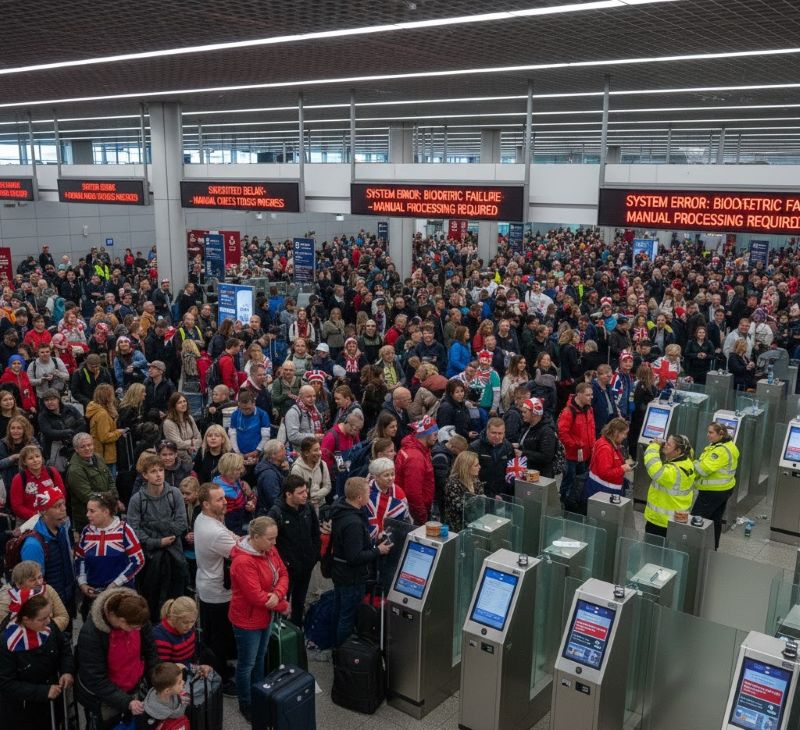
Key Deadlines and Compliance Deadlines for 2025-2026
As both the ETA and EES systems continue to evolve, key deadlines loom that will likely affect travel even more. The travel industry must prepare for these deadlines, as they could lead to further disruptions if technical issues are not resolved.
January 9, 2026: EES Registration Threshold Increases to 35%
By this date, the EU’s EES system will raise its registration threshold to 35% of all arrivals, a move that could result in even greater delays and systemic disruption if technical issues persist. Travelers are advised to prepare for longer wait times at border points as the system is fully implemented.
February 25, 2026: ETA Enforcement for All Eligible Visitors
From this date, the UK will strictly enforce the ETA requirement for all eligible visitors. Travelers without the ETA will be denied boarding at the point of departure, potentially disrupting travel plans for many passengers who fail to meet the new requirements.
April 10, 2026: Full EES Implementation Across the Schengen Zone
This is the target date for the full implementation of the EES system across all 29 Schengen countries. By this point, the biometric system will be in operation at all major border points, with increased expectations for faster processing. However, if the current challenges are not resolved, the travel chaos could continue well into 2026.
The Future of Travel in the Face of Biometric Systems
The implementation of the ETA and EES systems is a bold move toward modernizing and securing border control. However, the ongoing delays, technical failures, and logistical challenges have proven to be a significant hurdle for the travel industry. Travelers are experiencing unprecedented levels of frustration, and as the systems continue to roll out, the impacts on tourism and international travel will only intensify.
As the deadlines approach, the travel industry must adapt and prepare for the changes, while also addressing the significant issues causing delays. Without a clear resolution to these challenges, travelers across the UK and Europe will continue to face long waits, confusion, and frustration. With the full implementation of the EES and ETA systems still months away, it remains to be seen whether these systems will truly improve border security and efficiency, or whether they will continue to disrupt the flow of international travel.
