
Published on
March 6, 2026
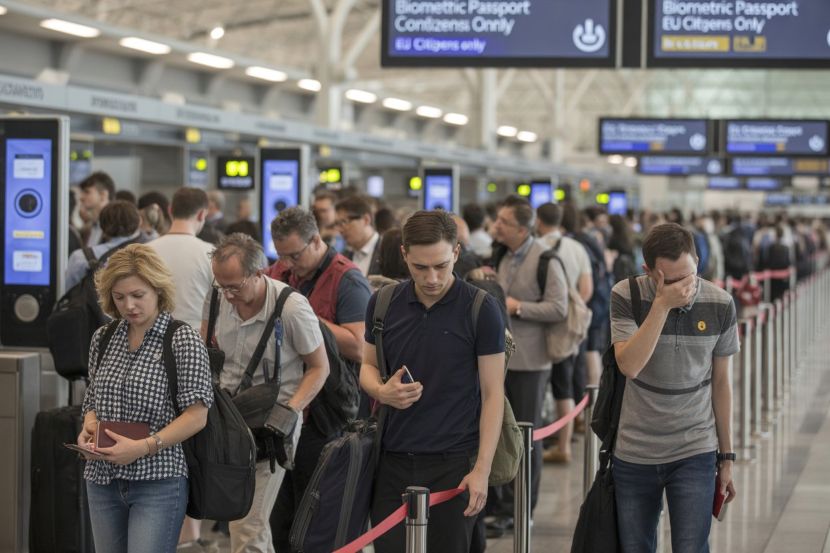
Image generated with Ai
What Exactly Is the Entry-Exit System?
The Entry-Exit System (EES) is a digital border management system designed to register the biometric data of non-EU nationals travelling to the Schengen Area. Instead of the traditional passport stamping process, EES requires travellers to provide fingerprints and a facial scan when they cross the border for the first time. The data is stored for up to three years and is meant to help track visitors’ entry and exit, as well as prevent overstays.
The system, while aimed at increasing efficiency and security, has been far from smooth in its implementation. Reports of delays, technical issues, and long queues have plagued the system since its launch in October 2025. Governments have warned travellers to expect longer waits at borders as the system is rolled out. While officials promise that the system will make future travels smoother, current reality is creating chaos.
Schengen Countries Affected by the EES
The EES impacts all 29 countries in the Schengen Zone, including high-traffic destinations like Spain, France, Greece, Italy, and Austria. The Schengen Area includes countries such as Austria, Belgium, Croatia, Denmark, Finland, France, Germany, Greece, Hungary, Iceland, Italy, Latvia, Luxembourg, Netherlands, Poland, Portugal, Romania, Slovakia, Slovenia, Spain, Sweden, and Switzerland. Though Ireland and Cyprus are excluded, every other country is required to implement biometric kiosks at airports, ferry terminals, and land borders.
For visitors arriving in popular destinations like Rome, Barcelona, and Paris, the new system means they must go through biometric checks. This adds extra time to the entry process, which could severely affect the efficiency of busy airports during peak tourism seasons.
Official Warnings About Longer Waits
In an effort to manage expectations, several governments have issued warnings about the potential for longer border wait times due to the new biometric checks. For instance, the UK government has warned that the checks might add a few extra minutes per passenger, but advised travellers to prepare for longer waits during the phased roll-out period.
Similarly, in Portugal, the U.S. Embassy issued an advisory urging travellers to arrive at least three hours before their flights due to extended wait times at Lisbon’s Humberto Delgado Airport. These official warnings highlight the system’s current limitations and the growing frustration among travellers.
Advertisement
Advertisement
Industry Sounds the Alarm on Delays
The aviation industry is sounding the alarm about the mounting delays caused by EES. A joint letter from Airports Council International Europe, Airlines for Europe, and the International Air Transport Association (IATA) in February 2026 warned that the system could lead to “significant delays” at airports. They expressed concerns that without additional flexibility, queues could extend to four hours or more during the summer peak.
Currently, airports are experiencing wait times of up to two hours, and technical failures and understaffing are being blamed for the long delays. Industry groups are calling on the European Commission to suspend the EES during busy periods to prevent the system from overwhelming travellers and the entire airport infrastructure.
Spain’s Holiday Headache
As one of Europe’s busiest tourist destinations, Spain is bracing for chaos at its airports, including Madrid-Barajas and Barcelona-El Prat. Spain sees tens of millions of international tourists each year, and now, under EES, every non-EU traveller must submit biometric data. This adds extra minutes to the processing time for each passenger, and with summer travel expected to double, industry groups fear that airport queues will spill out of terminals.
Tourism is a lifeblood for Spain’s economy, and any disruption to smooth travel could lead to missed flights, strained connections, and a decrease in the visitor experience. The new border system, if not properly managed, threatens the very foundation of Spain’s tourism industry.
Italy’s Airports Under Pressure
In Italy, airports like Fiumicino in Rome and Malpensa in Milan are now tasked with processing millions of biometric registrations for incoming non-EU nationals. While the process might be efficient during off-peak periods, airlines have raised concerns that poorly trained staff, slow equipment, and understaffed border posts could lead to bottlenecks at Italy’s most significant air travel hubs.
With tourism being a critical sector for Italy, any delays that cause missed connections or long waits could harm its reputation as one of Europe’s top tourist destinations. As the summer tourist season draws closer, local authorities are urging tourists to arrive earlier and factor in the potential delays caused by the EES.
Greece: From Mythic Welcome to Biometric Backlog
Greece is known for its warm hospitality, but the implementation of EES is threatening to disrupt that welcoming spirit. Travellers to Greece must provide biometric data on their first entry into the country, which was meant to simplify border control. However, the reality of the system’s implementation has been less than smooth.
Reports have pointed to delays caused by training issues, equipment failures, and insufficient staffing at airports, leading to long queues at busy Greek airports. The Greek Ministry of Foreign Affairs notes that the full implementation of EES will be completed by April 2026, but industry experts warn that long wait times could hinder the ease of travel that Greece is known for.
Portugal’s Lisbon Nightmare
Portugal has been an early adopter of the EES and is already experiencing major issues. At Lisbon’s Humberto Delgado Airport, travellers have reported longer-than-usual wait times due to the system’s growing pains. In some instances, delays have exceeded seven hours, particularly during peak travel periods.
Although the Portuguese government insists that the biometric checks are meant to improve security, these delays have created a backlash, with travellers expressing frustration at the lengthy waits. In response, local authorities are working to add more biometric booths and staff to alleviate the pressure, but it remains to be seen if this will be enough to manage the ongoing delays.

Image generated with Ai
France: The Gates of Paris Creak
In France, airports like Charles-de-Gaulle and Orly are already struggling with the added workload of biometric checks. The UK government has warned that the biometric scanning process could add several minutes to the border entry process, and travellers should expect longer queues at these busy airports.
With the 2024 Paris Olympics and the 2026 tourist season approaching, there are concerns that border bottlenecks could tarnish France’s reputation as a host for major global events. French airport operators are pushing for flexibility in the EES roll-out, fearing that the system will result in significant delays during peak travel times.
Austria’s Alpine Entry Points Jammed
Austria’s famous alpine destinations are also feeling the pressure of EES. With popular ski resorts in Tyrol and tourism hotspots in Vienna, the country’s airports are already experiencing delays of up to two hours. With a full roll-out of the system, experts predict that waits could increase to four hours during the summer months.
Austria has been an advocate of strict border control policies, but now its own infrastructure is struggling to cope with the volume of passengers. Austrian officials are calling for the right to suspend biometric checks during peak periods to avoid a complete breakdown of the system.
The Promise and Peril of Biometric Data
The introduction of biometric data collection in the form of fingerprints and facial scans is central to the EES system. The aim is to improve security and track overstays, replacing traditional passport stamps. Biometric data is stored for three years and is intended to simplify border checks in the long run.
However, critics argue that the system is prone to technical failures and that the process could infringe on privacy. The friction between enhancing security and ensuring a smooth travel experience has created widespread concern, with travellers voicing frustrations about long waits and complicated procedures.
Is Tourism Really Plummeting?
Despite the chaos, official data shows that tourism across Southern Europe remains robust. The EES only affects non-EU nationals, and many travellers have willingly participated in the registration process. While industry groups express concern about delays, there is no evidence to suggest a significant drop in tourist arrivals. For instance, Spain recorded record visitor numbers in 2025, before the full implementation of EES. The full impact on tourism will become clearer after summer 2026.
Government Preparations and Investments
In anticipation of the full deployment of EES, governments across Europe are making significant investments. The UK, for example, has allocated £3.5 million to Eurostar, Eurotunnel, and the Port of Dover to build registration kiosks and upgrade infrastructure. Other EU member states are also hiring additional staff and enhancing technology to handle the new system. However, chronic understaffing and technical issues remain major challenges.
Security Versus Mobility
EES highlights the tension between security and mobility. While the system is designed to enhance security by tracking non-EU nationals, it is also slowing down border crossings and creating frustration for travellers. Aviation groups argue that the European Commission must strike a balance between these competing priorities to avoid gridlock at borders and maintain the free movement of people that is central to Europe’s tourism economy.
Tips for Travellers: How to Survive the New Checks
Despite the chaos, there are ways for travellers to minimise stress. Arrive early, use e-gates when eligible, and keep your passport and documents accessible. If you’re exempt from EES, be sure to present proof of your exemption to the border officer. By planning ahead and being prepared, travellers can better cope with the new system and avoid unnecessary frustration.
A Call for Flexibility and Upgrades
The aviation industry is calling for more flexibility in the EES roll-out, urging the European Commission to suspend biometric registration during busy periods. The industry also recommends additional investment in border staff and technology to ease the pressure. Without these changes, the system could continue to disrupt travel during peak seasons.

Image generated with Ai
Looking Ahead: The Road to April 2026
With full implementation scheduled for April 2026, EES will be tested during the summer peak season. Governments are gradually increasing the percentage of travellers processed, but many issues still need to be resolved. If the system proves unable to handle the demand, the European Commission may have to consider suspending the biometric checks during peak periods or delaying full enforcement.
A Lesson in Modern Border Management
Europe’s biometric Entry-Exit System promised a smarter and more secure border experience, but its rushed roll-out has led to chaos, delays, and growing frustration. While the system’s goal of improving security is valid, the reality has been far less efficient. As governments and the tourism industry scramble to address these challenges, the full impact of EES on Europe’s tourism economy will become clearer in the months to come. Only time will tell whether the system can strike the right balance between security and traveller convenience.
