
The handheld market is about to get a lot more competitive. A new rumor circulating on NeoGAF suggests Valve is targeting 2028 for the Steam Deck 2, which would put it squarely in the same hardware cycle as whatever Sony and Microsoft have planned for portable gaming.
Here’s the thing: this timeline actually tracks with what Valve has been saying publicly for a while. Pierre-Loup Griffais, one of the key engineers behind SteamOS, has been consistent that the company does not want to ship a minor spec bump. The goal is a clear generational leap in performance while keeping battery life in the same general range as the current Steam Deck OLED. The problem is that no system-on-chip available right now delivers both. Valve is essentially waiting on the semiconductor industry to catch up, and according to a recent claim via Insider Gaming, that wait could stretch to 2028 or even beyond if RAM and NAND supply conditions stay difficult.
What the 2028 window actually means for the market
When the original Steam Deck launched in 2022, it had no real competition in the PC handheld space. That is no longer the case. The ROG Xbox Ally is already on shelves, running a full Xbox interface on handheld hardware. Sony’s PS6-era portable remains unconfirmed, but multiple reports have pointed to a late 2027 or 2028 window for that device. The Nintendo Switch 2 will be well into its life cycle by then.
A 2028 Steam Deck 2 would land in a market that looks nothing like the one Valve dominated four years ago.
danger
The 2028 target is still an unconfirmed rumor. Valve has made no official statement on Steam Deck 2, and supply chain complications could push the date further.
Why Steam Deck still has an edge the others don’t
Raw competition aside, Valve has built something that pure Windows handhelds have not matched: a product that actually feels designed for handheld use. The trackpads and gyro controls make shooters and older mouse-driven PC games genuinely playable on a small screen. Fast suspend and resume works reliably. The Deck Verified system tells you upfront whether a game will run well or need manual configuration, which removes the trial-and-error that plagues most Windows-based handhelds.
The deeper story here is what the Steam Deck did for Linux gaming. SteamOS is built on Linux, and Proton, Valve’s compatibility layer, lets Windows games run through a modified version of Wine with full graphics tool support. Valve’s own Steamworks documentation confirms that most APIs are already supported, and Proton now handles major anti-cheat systems including Easy Anti-Cheat and BattlEye with the right configuration. The result: Linux’s share of the Steam user base crossed 5% for the first time, according to Valve’s latest Steam Hardware Survey, roughly doubling the previous year’s figure.
That is not a coincidence. That is the Steam Deck pulling casual Linux users into an ecosystem they never would have touched otherwise.
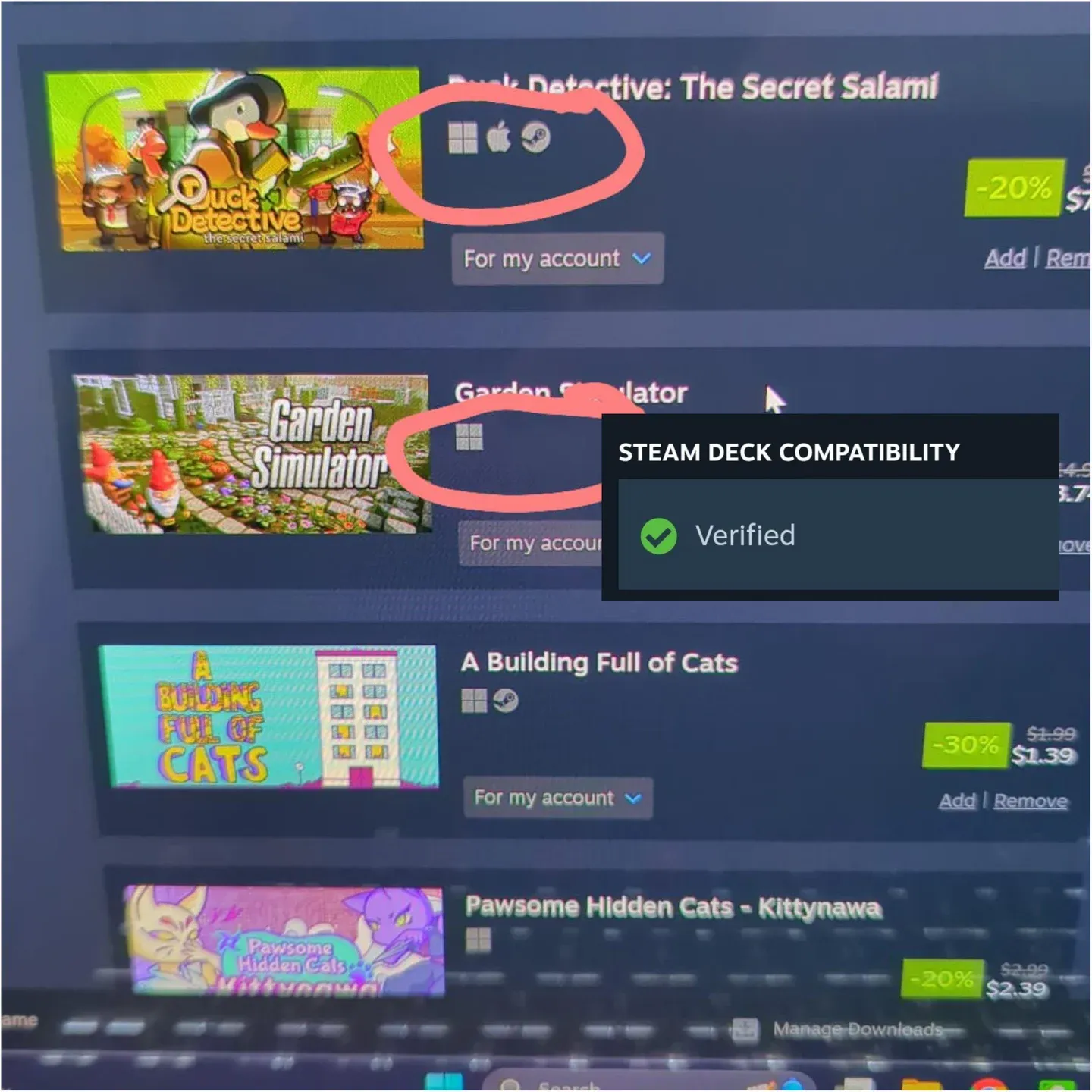
Deck Verified compatibility system
The wait, and whether it’s worth it
Two years is a long time in handheld hardware. By 2028, the competition will have had time to mature, build software ecosystems, and fix the rough edges that plague first-generation devices. Valve will need Steam Deck 2 to be a genuinely substantial upgrade, not just a new chip in the same shell.
The good news is that Valve’s track record suggests it understands this. The company sat out multiple potential refresh windows specifically because the performance-per-watt gains were not there yet. That kind of patience is rare in hardware, and it is probably why the original Steam Deck still holds up as a product worth buying in 2026.
Keep an eye on AMD’s next-generation APU roadmap. That is where the answer to Steam Deck 2‘s actual specs will come from first, well before Valve says anything official. For more gaming hardware coverage, make sure to check out more: