
In many ways, the gaming landscape was radically different in 2010, and one difference was a relative lack of indie releases.
Nowadays, it’s not uncommon for games like Balatro or Hollow Knight: Silksong to have equal sales, attention, and excitement behind them as major AAA releases, and it can be easy to forget that such success stories were once largely unheard of. Super Meat Boy was one of the first games to contribute to the change in that narrative, showcasing the massive success that can come from a small team executing well on unique gameplay ideas and blazing a trail that’s been followed by countless indie teams in the years since.
However, Super Meat Boy never really got a proper sequel. The End Is Nigh acted as a sort of spiritual successor and Super Meat Boy Forever was a sidestep with its auto-running shenanigans; it wasn’t until now that Team Meat (and Sluggerfly) really took a big swing at trying something that pushes the series forward. It’s not perfect, but Super Meat Boy 3D feels like a true sequel to the original 2D release, building upon many of its ideas while also pulling off the unenviable task of trying to make it all work in 3D space.
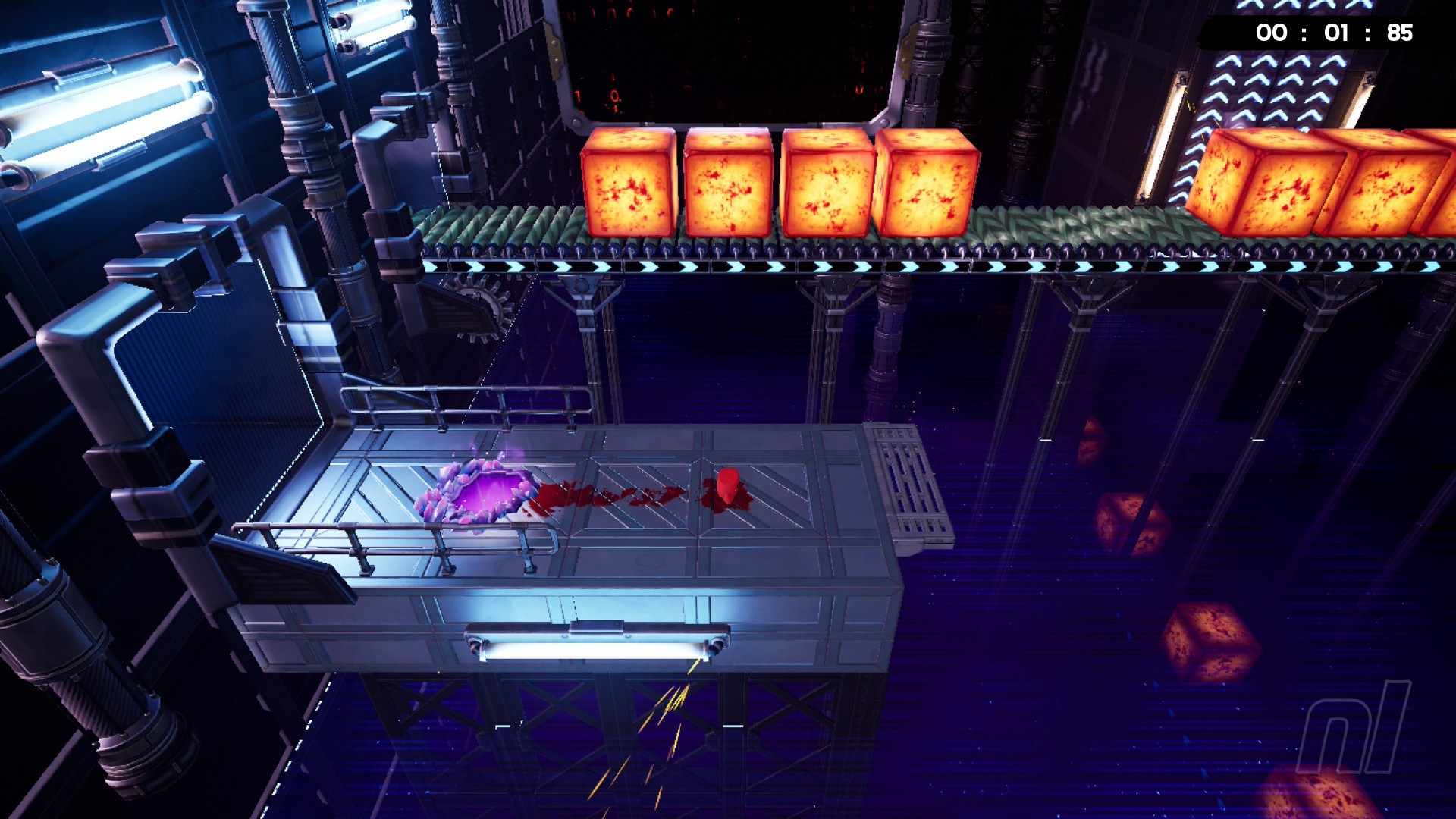
It carries over the same ‘tough but fair’ gameplay of the original, presenting players with a rapid-fire series of insanely tough platforming gauntlets where mistakes are immediately punished by sending the player back to the start of the level. Ordinarily, the lack of checkpoints and the uncompromising difficulty would quickly lead to frustration, but that’s smartly sidestepped through the short length of levels and the speed of resets. You barely have time to register your failure before you’re already starting your next run, and it’s only another couple of seconds before you’re back at the spot where you initially got hung up.
Through these speedy retries, each level becomes this almost meditative practice where you rapidly learn from your mistakes and improve your times as you hone your route and deftly bound between obstacles. The game design speaks for itself here and it’s very impressive in how well it manages player frustration, doling out just enough satisfaction from new successes to make it feel worthwhile pushing through the desire to ragequit.
And when levels are only about 20 seconds long apiece, it’s easy to convince yourself to throw yourself back in. I especially liked how they carried over a feature of the original Super Meat Boy where you’re greeted with a cool replay at the end of each stage showing ghost data of all your previous failed attempts, watching them all die off as the winning Meat Boy pulls ahead of the pack. What a way to concretely showcase your growing skill!
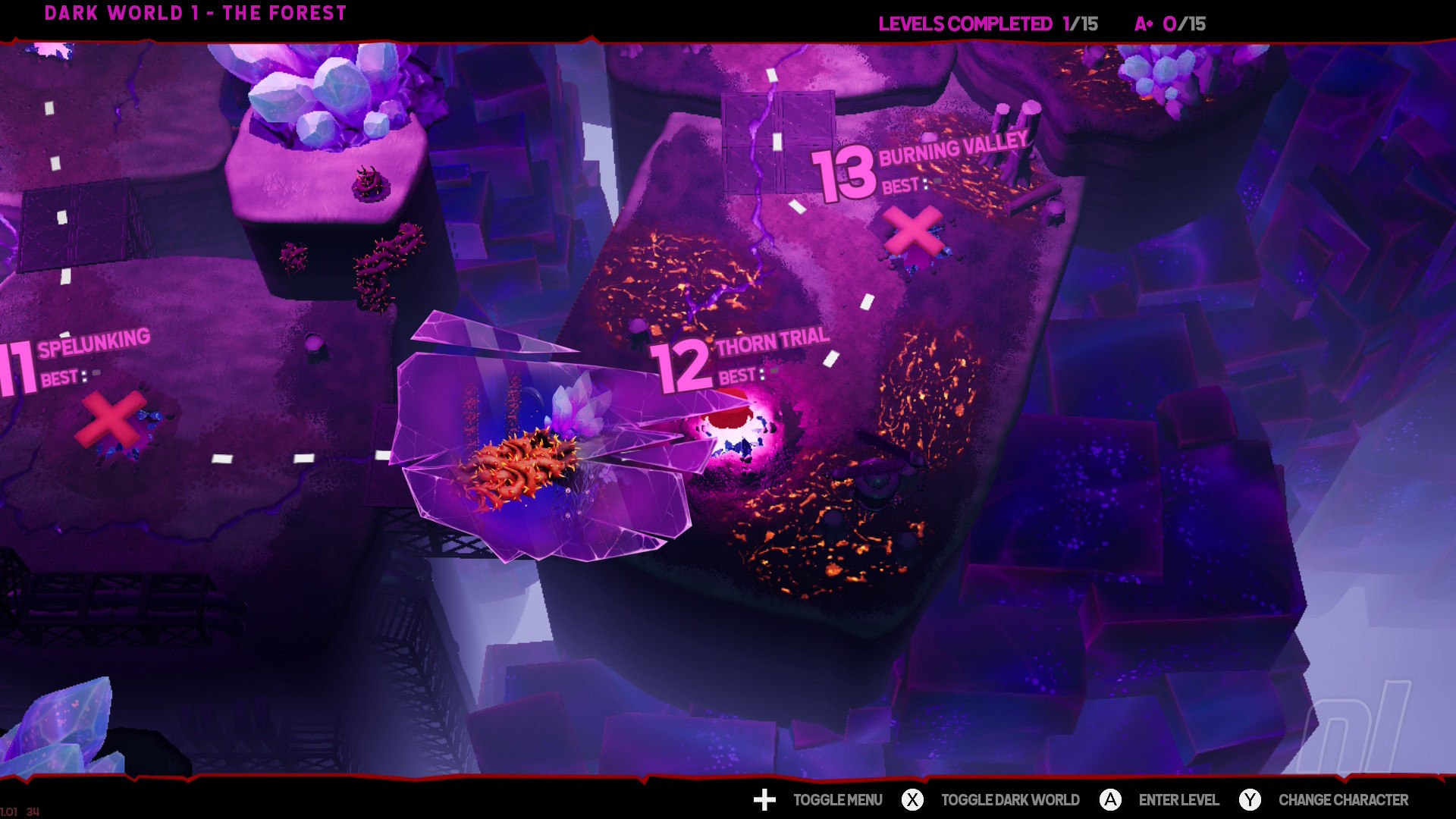
Beating a stage is itself a big accomplishment, but there are further mastery challenges to engage in if you wish. Every stage contains a bandage somewhere, often placed in an especially out of reach or hidden place, and these are used to unlock more characters.
Additionally, each stage has an ‘A+’ rank that challenges you to finish it within a certain time limit. If you can do so, you’ll unlock a much harder Dark World variant of the level which also has an ‘A+’ time you can go for. Merely beating the game is itself a decent demonstration of skill, but getting 100% completion is something that could potentially take you dozens of hours.
A game like this lives or dies by its controls, and the developers luckily delivered in this regard. Meat Boy feels both responsive and floaty, perfectly matching his 2D counterpart and making it hard to blame any of your hundreds of deaths on loose controls. To account for the additional challenges offered by the extra dimension, Meat Boy also now has an air dash to give a quick burst of speed and to close gaps between walls as you approach them. It takes a bit of getting used to, but the air dash introduces a lot of opportunities for skips where perfect execution can allow you to bypass whole sections of levels.
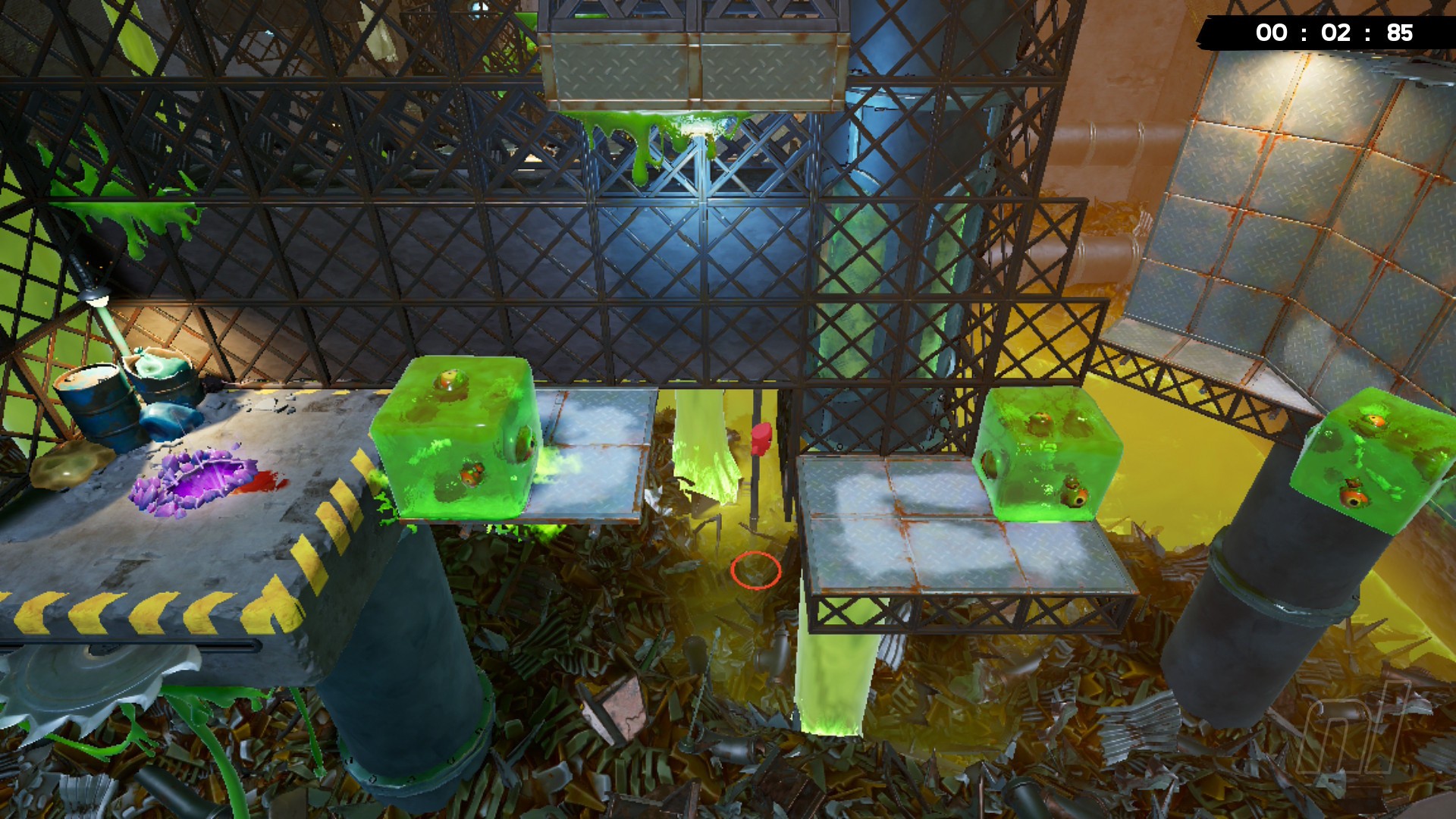
Yet Meat Boy hasn’t made the leap to 3D totally unscathed. Though the core experience of equally rewarding and punishing gameplay is still here, the level designs can stray too far into unfair territory. Due to the fixed camera angle, it can be tough to accurately judge the depth of a jump, and with how narrow the margins are for failure, this can lead to untimely deaths. Naturally, you get a better feel for things through repetition, but I found that there were many failed attempts where I plummeted to an early death because a wall I was hurtling towards turned out to be just a bit further away than it looked.
Beyond this, the performance is unfortunate. A rage-inducing game such as this demands a stable 60fps, but the actual frame rate falls short of this. Though things are a bit more stable in docked mode, it seems to jump anywhere from the mid 40s to the low 30s, leading to a rather choppy experience. Given the relatively simplistic graphics, it’s tough to see why this game has such a hard time running on the hardware; I was disappointed by the lack of optimisation and hope this is something that’s fixed in the future.
Interestingly, I found that the unforgiving nature of the game covers over the camera and performance issues relatively well. When you’re conditioned to put in dozens of attempts on a challenging platforming gauntlet, it’s tough to pay close attention to the fact a few of those were due to depth perception issues or a sudden frame hitch given how quickly you jump right into the next attempt.
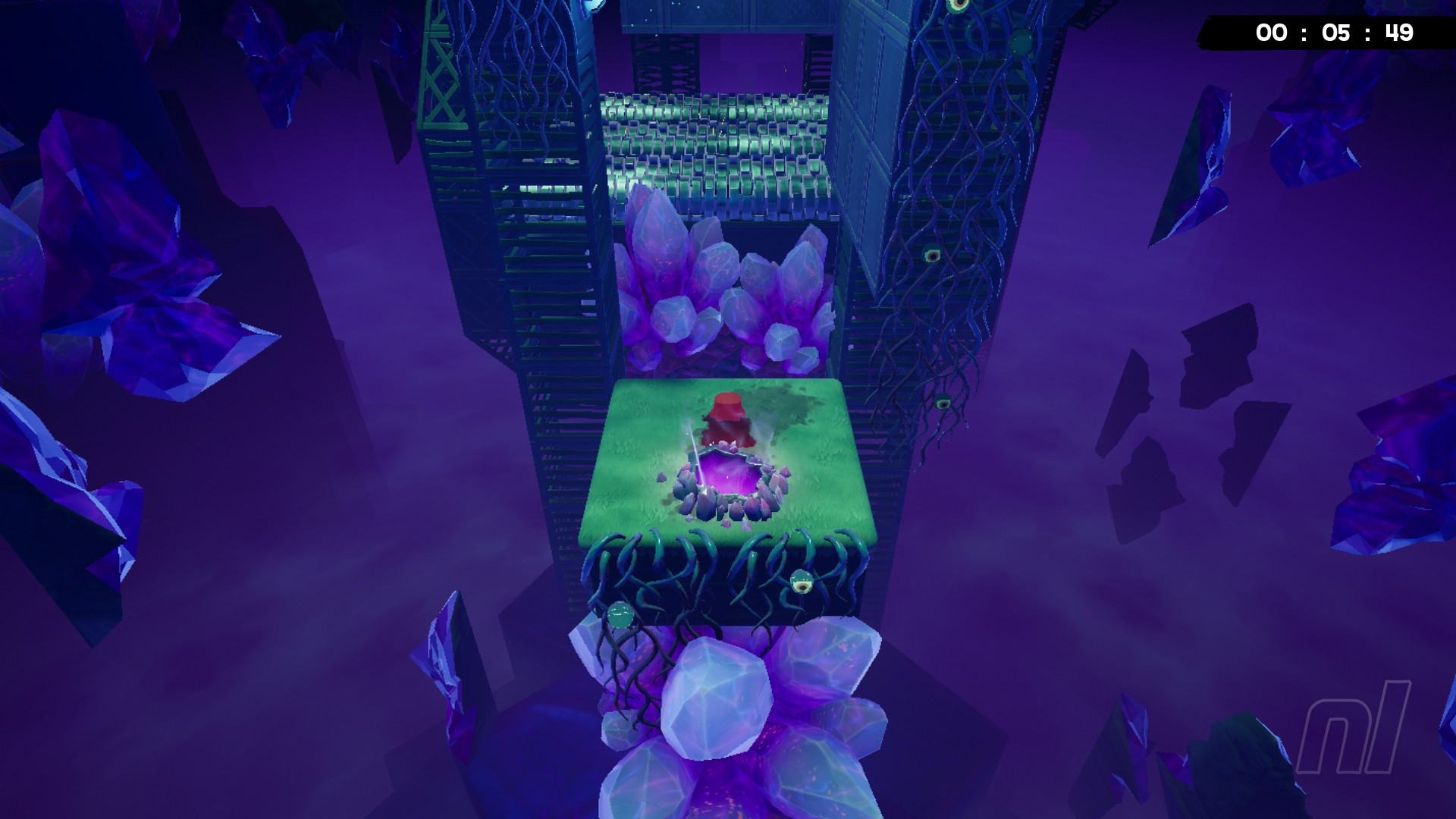
This doesn’t excuse the camera and performance issues, but it feels like they negatively influence your experience less than something with lengthy loads and runbacks. When the whole game is designed around being frustrating, occasional technical frustrations feel more like they’re just ‘part of the experience’, maybe.
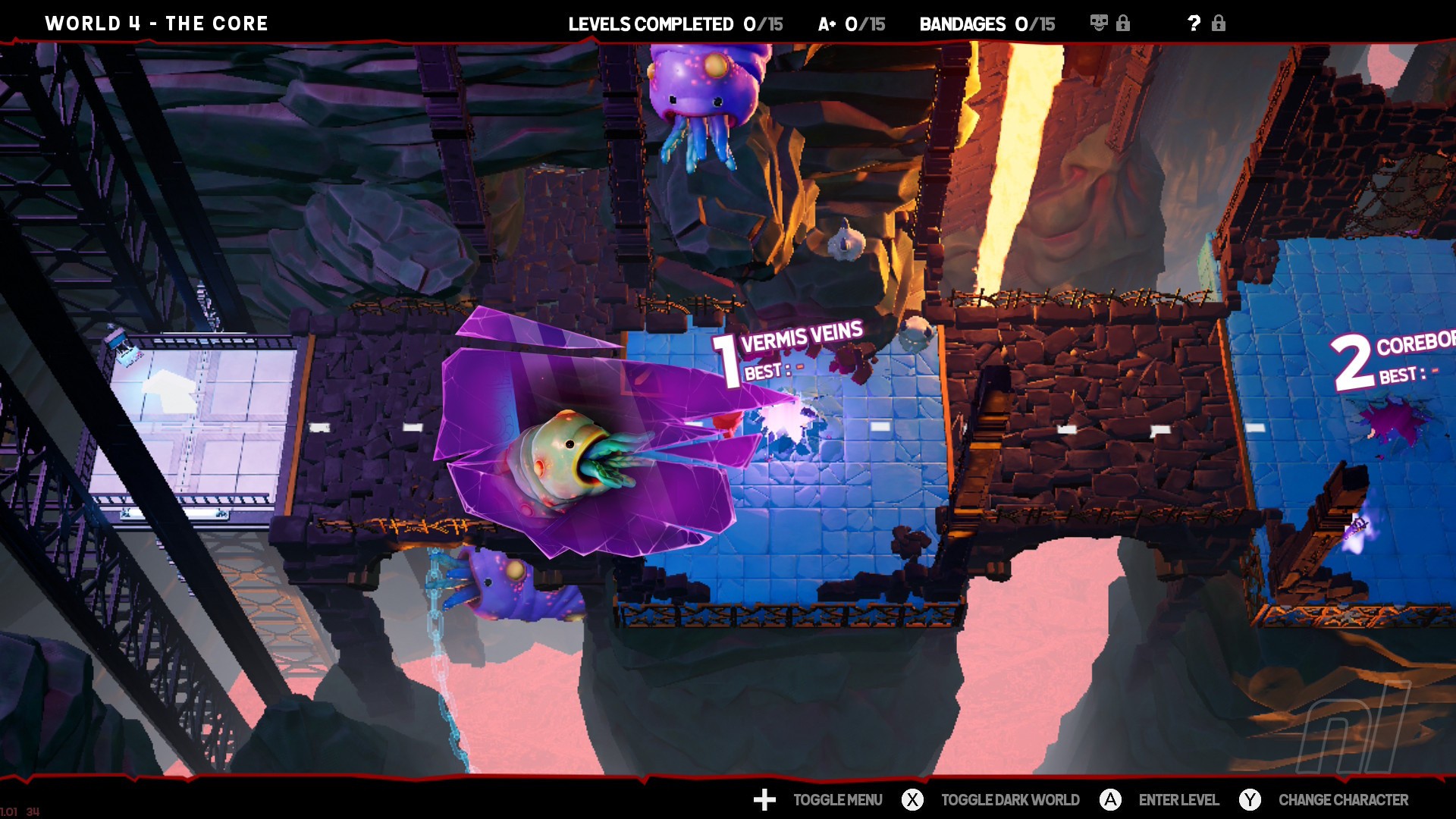
Visually, Super Meat Boy 3D does a nice job of carrying over the colourful, gross, and violent aesthetic of the original game. Whether you’re exploring a dark world, a forest , or a toxic waste dump, each stage has a lot of fun details in the environment that nicely match the kinetic nature of the gameplay. Some biomes make it a little bit tough to make out Meat Boy himself—a red blob swiftly dashing through an environment full of warm, dark colours can sometimes get lost. Even so, I was pleased with the graphical design here, especially for the fun little FMV scenes that play out around boss fights.
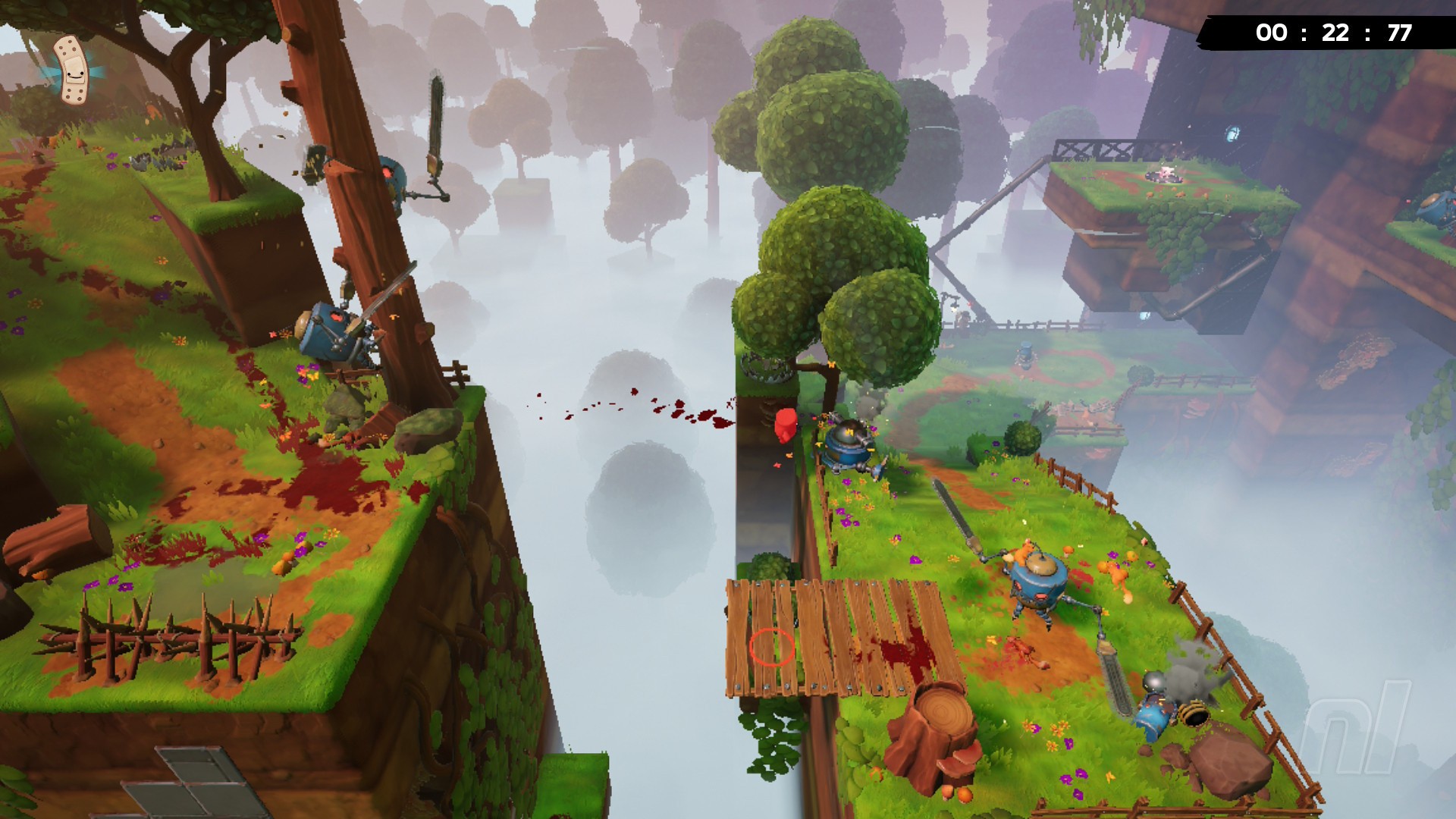
The soundtrack matches the intensity of the gameplay and visual design with a metal and rock-based soundtrack. The cacophony of screeching guitars and clanging drums perfectly goes with the buzzsaws and lasers, but I found it interesting how surprisingly chill some tracks sound despite all the action onscreen.
Conclusion
Super Meat Boy 3D may not be quite the same watershed moment for indie gaming as its respected predecessor, but there’s a lot to love about this one and would say that Sluggerfly and Team Meat have largely stuck the landing in the transition to a new dimension.
Tight controls, tough, rewarding gameplay, and lots of replayability all stack up in its favour, even as frame rate and camera issues hold it back from being a flawless successor. If you’re looking for an addictive platformer that’ll push your skills to their absolute limit, I’d give this one a strong recommendation.