
Paris Fashion Week’s autumn/winter 2026 edition saw a cohort of new creative directors present their visions and settle into their brands. The most talked about sophomore ready-to-wear collections came courtesy of Jonathan Anderson at Dior and Matthieu Blazy at Chanel. Elsewhere, stalwart houses such as Hermès demonstrated why the French capital still reigns over fashion month. Finally, Belgian designers including newcomer Marie Adam-Leenaerdt, Alaïa’s Pieter Mulier and Julian Klausner at Dries Van Noten showed up in force. Here are our top-10 picks from the runways.
1.
Marie Adam-Leenaerdt
The latest rising star to come out of Belgium is Marie Adam-Leenaerdt, whose fiercely independent and pleasingly off-kilter spirit was on full display this Paris Fashion Week. Before the show, guests were invited to pick their own foldable stool and position themselves in the room – a way of eschewing the traditional (and hierarchical) fashion-week method of allocated seating. What followed was a tableau of suburban domesticity with apron dresses, bubblegum-pink velour tracksuits and handwear pulled up to the elbows like Marigold kitchen gloves. Then, outfits for going out on the town: fur coats, a zebra-print dress and even a lace ballgown.


Adam-Leenaerdt’s ability to push the conventions of good taste – be it through proportion or pattern – has fast become a trademark of the designer since she founded her brand three years ago. It begs the question: might Adam-Leenaerdt be the next Belgian to helm a major house? After all, the European kingdom has given the fashion industry names such as Dries Van Noten, Ann Demeulemeester, Pieter Mulier, Martin Margiela and Raf Simons.
marieadamleenaerdt.com
2.
Dior
When the Jardin des Tuileries first opened to the public in 1667, access to the park came with acquiescence to a strict dress code, making it an important shared space for Parisian social life to be performed – a place to see and be seen. It’s this socio-historical context that provided the starting point for Jonathan Anderson’s second womenswear collection for Dior, which was unveiled in a temporary greenhouse by French design studio Bureau Betak, built atop the garden’s Bassin Octagonal. In the water floated supersized recreations of waterlilies.


Shrunken bar jackets featured layers of silvery scalloped tulle (a reference to the 1949 Junon ball gown designed by Christian Dior himself) and were paired with jeans. A longstanding love for botany – both by the maison and Anderson – shined throughout: the weighted hem of a butter-yellow dress resembled the silhouette of a trumpet flower. Waterlilies featured on shoes and the raffia embellishments on bags and dresses. The clothes represented a pleasing evolution of Anderson’s vision for Dior – one that finds common ground between the codes of the French house and the Northern Irish designer’s ambitions for the brand’s next chapter.
dior.com
3.
Dries Van Noten
Julian Klausner, who was appointed creative director of Dries Van Noten in late 2024, continues his exploration of what it means to come of age. Following the January presentation of his menswear collection that captured the feeling of flying the nest and packing your bags for the big city, his womenswear line featured elements of the school uniform – think toggle coats, shirts with ties and tailored blazers – mixed in with pieces that might have been picked up on gap-year travels to Southeast Asia.
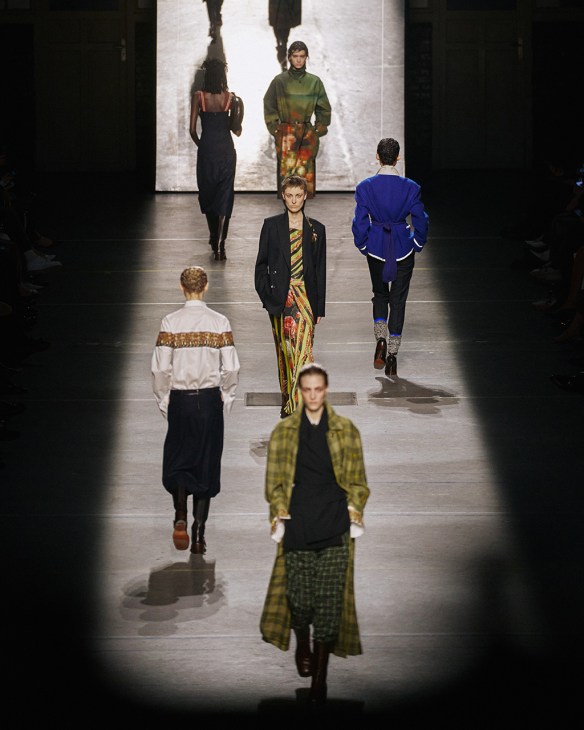
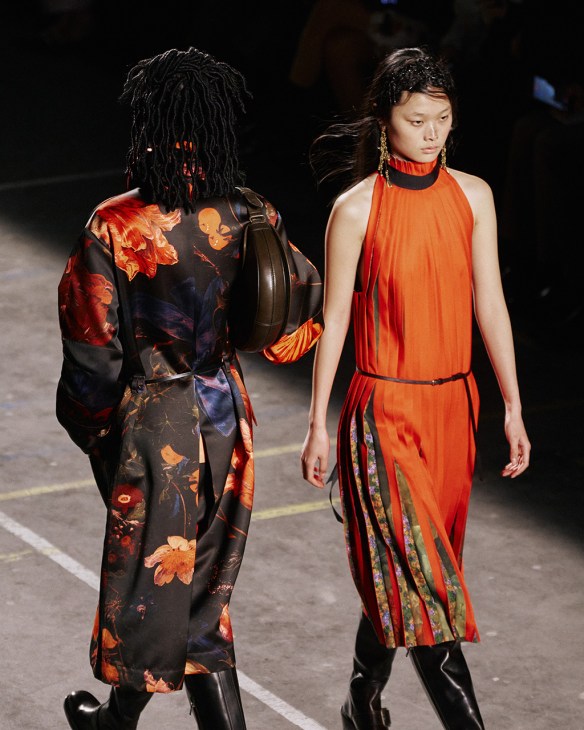

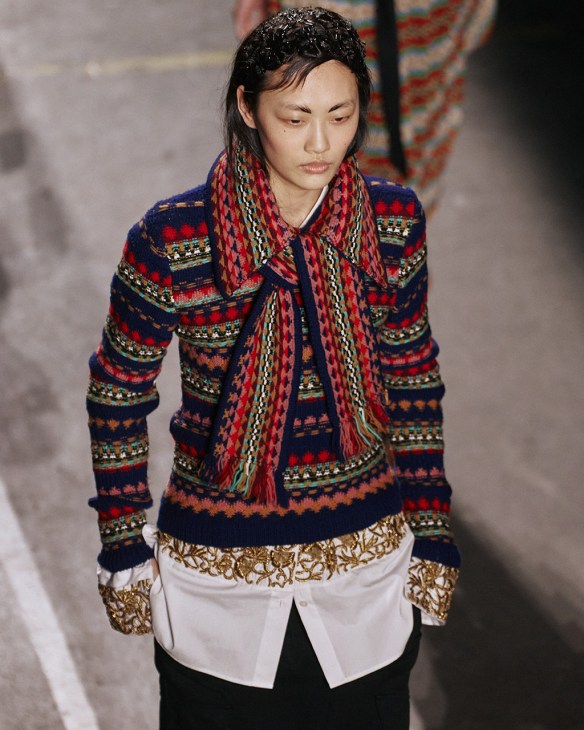
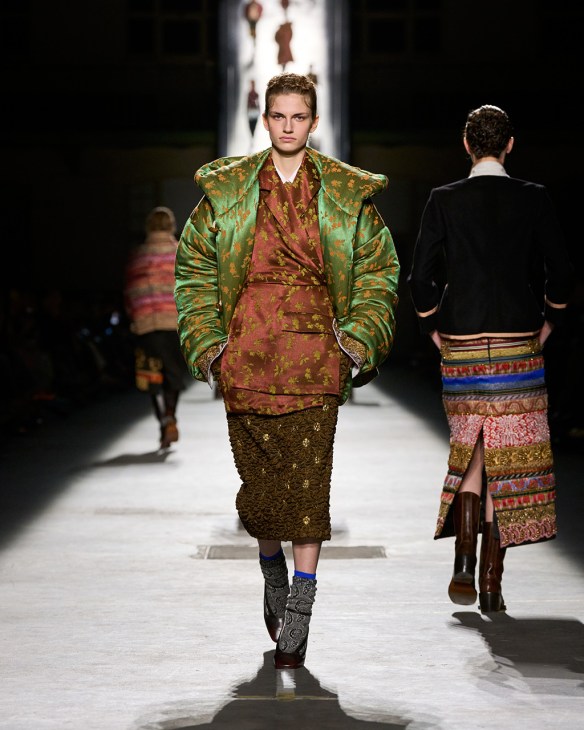
Bronze belts, embellished golden cuffs and embroidered ribbons added texture to outfits that already featured an abundance of patterns and material depth, something of a calling card for the Antwerp-based brand. Still-life paintings of fruit and flowers, reminiscent of the Dutch Golden Age, were screen-printed (and sometimes pixelated) onto skirts and coats. Overall, what pervaded was a sense of nostalgic yearning for a time of self-discovery and dressing for expression of identity.
driesvannoten.com
4.
Chloé
What role does devotion play in fashion? For Chloé’s creative director, Chemena Kamali, the answer lies in the maker’s hand as observed in folkloric clothing, be it an embroidery, a stitched seam or a piece of knitwear with irregularities. “It’s about exploring what folk means – all that is shared within a community,” said Kamali before the show. “Folk, for me, is about togetherness. It’s about empathy, humanity and a connection to the past; the symbolic and spiritual threads that bind people together.


Inspired by these traditions, and specifically the origins of Dutch folk costumes, the creative director sent models down a misty runway in prairie dresses, clogs and voluminous quilted skirts. And references to the hippy counter-culture of the 1960s and 1970s – think mirrored, round sunglasses styled with long, freeflowing hair – are Kamali’s call to put down arms. A signpost for utopian idealism and the value of finding strength in pacifism.
chloe.com
5.
Carven
“Composed, instinctive and self-assured” is how Mark Thomas, director of design at Carven since 2025, described the women he designs for before the show. “We’ve drawn on influences from 1950s couture to bring a sculptural presence: curved shoulder seams that create a spherical shape, controlled waists and a reverence for craft,” he said. These silhouettes were then abstracted to suit contemporary tastes and a modern lifestyle.
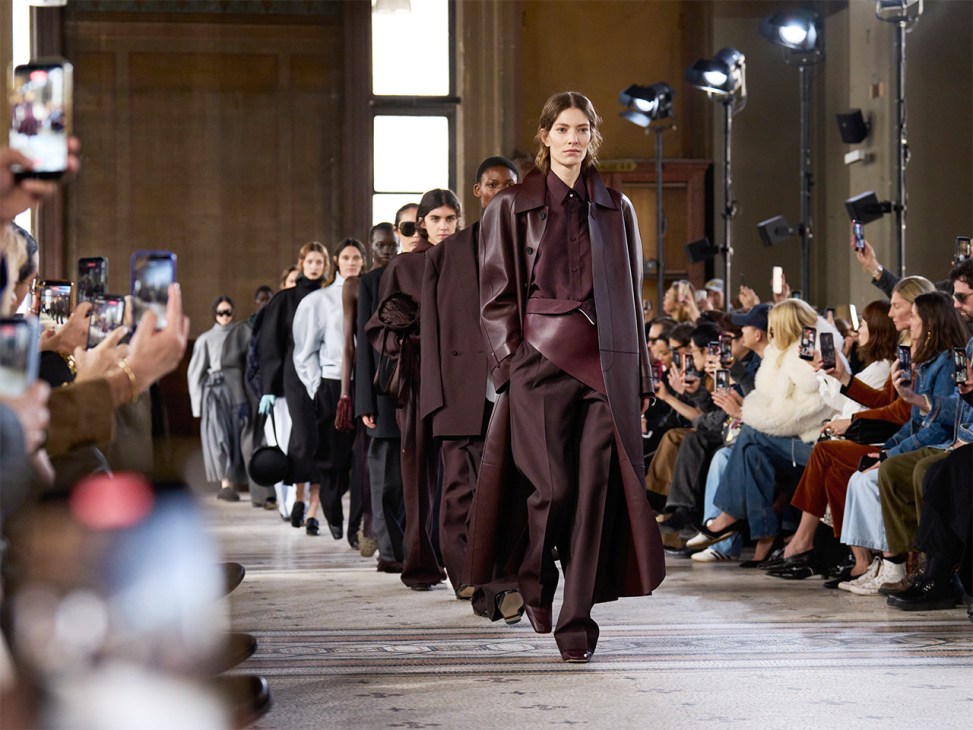

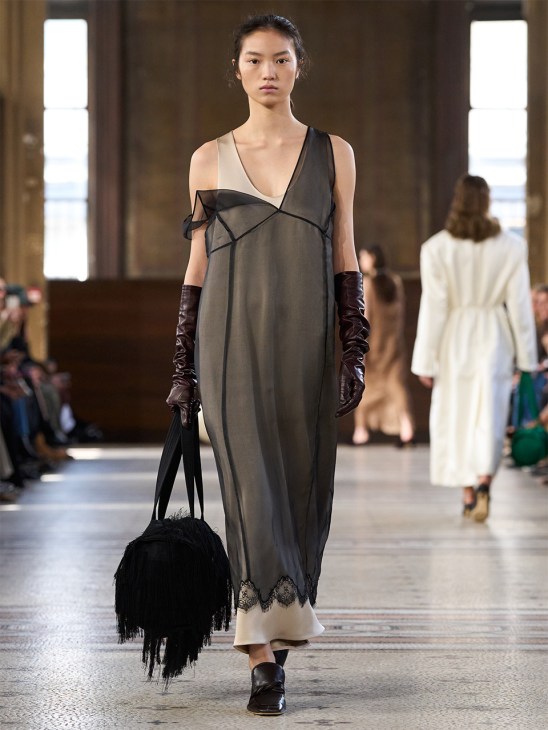
The show opened with a model styled in near-floor-length, deep-burgundy leather. A series of loosely tailored sets were followed by more expressive pieces, including diaphanous organza slip dresses, cream trousers with tufted tiers of fil coupé and ruched silk. It was a masterclass in considered minimalism – the kind that is generous in its materiality and exacting in its proportions.
carven.com
6.
Celine
The act of dressing intuitively rather than through deliberate calculation was the starting point for Michael Rider’s autumn/winter 2026 womenswear collection for Celine. “I love when messy, complex, layered inner lives come through underneath great clothes,” he shared in his show notes. “Putting on clothes, a look, can change the day. Change how we walk and feel. I love that.”


Statement pieces from leopard-print coats and wide-brim hats were spliced into an otherwise restrained collection that featured slimmed-down silhouettes. But, as was with his previous collections for the French brand, the key to decoding the new Celine sensibility is how outfits are styled, from a jacket carried over the arm or a shirt peaking out from under a jacket to grey trousers tucked into knee-high leather boots.
celine.com
7.
Hermès
The opportunity to either conceal or reveal with a zipper was the unifying theme for Hermès artistic director Nadège Vanhée-Cybulski’s latest collection. Zipped dresses, jumpsuits and jackets took on streamlined silhouettes that allowed for a sense of agility and dynamism. Unzipped, longline coats with sheepskin collars swooped dramatically as models made their way down the runway.

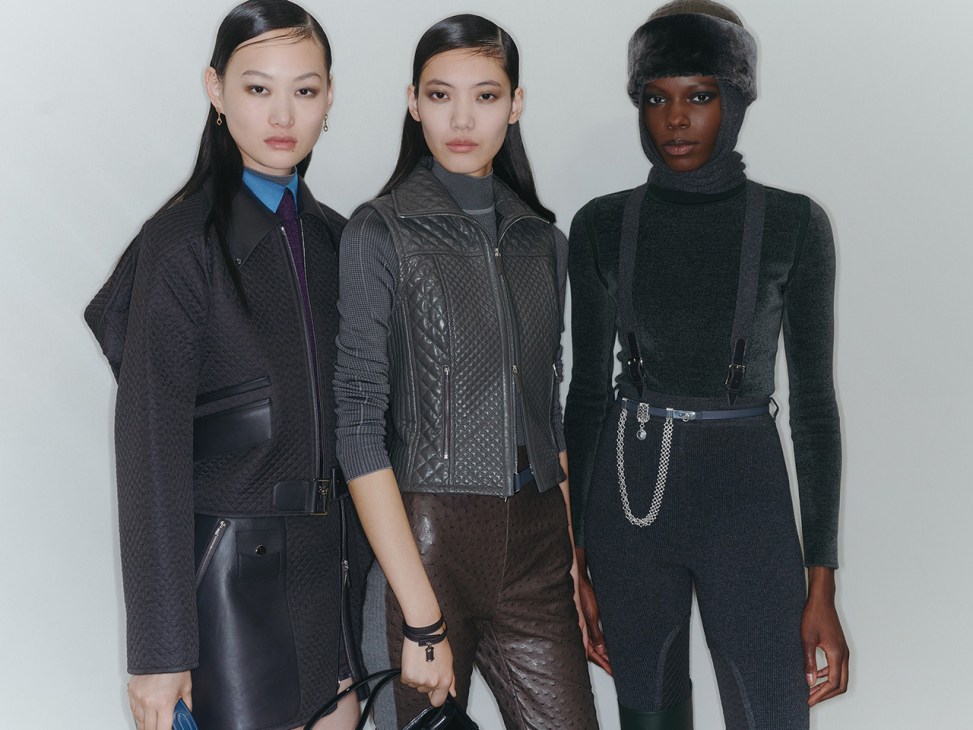
Elsewhere, jodhpurs, over-the-knee boots and quilted-leather pieces were clear nods to the maison’s equestrian heritage. The collection’s moody palette was inspired by nightfall: oxblood reds, forest greens and deep, almost-grey blues looked particularly seductive when applied to leather. New accessories included a series of ostrich-leather chapka hats and bags with small timepieces disguised in their handles.
hermes.com
8.
Alaïa
As Pieter Mulier’s five-year tenure at Alaïa comes to an end, the Belgian designer’s final collection for the brand was an ode to the art of editing – a skill that he claims to have perfected in the ateliers of the French house. As such, the line-up featured neither bags nor jewellery. (Could he be saving his ideas for his next appointment as the creative director of Versace?) Instead, a series of body-hugging dresses in muted tones, leather coats and velvet pantsuits made their way down the runway. “Minimal, pure, essential. There is no distraction. The focus here is on the body within the clothes, clothes that always celebrate women,” shared Mulier in his show notes.


“There are eternal totems of Alaïa that I had to address, to pay homage to – dresses of chiffon and transparent jersey, inlaid with crocodile,” he added. “There are Alaïa proportions, timeless yet reconsidered for today. Even the timeless must reflect its time.” While what comes next for Mulier and Alaïa is highly anticipated, the celebration of the designer’s remarkable time at the label (and the way in which he doubled its revenue in five years) is worth celebrating until then.
alaia.com
9.
Chanel
For his sophomore ready-to-wear collection as Chanel’s creative director, Franco-Belgian designer Matthieu Blazy turned Paris’s Grand Palais into something of a construction site, with colourful cranes illuminated by spotlights. Could it have been a gentle riposte to the impatience of the industry and the pace at which change is expected? Though Blazy might consider his work at Chanel still in progress, the results from his first collection are already in: a few days before the show, a shopping frenzy took over Paris as it hit the racks of the maison’s shops.

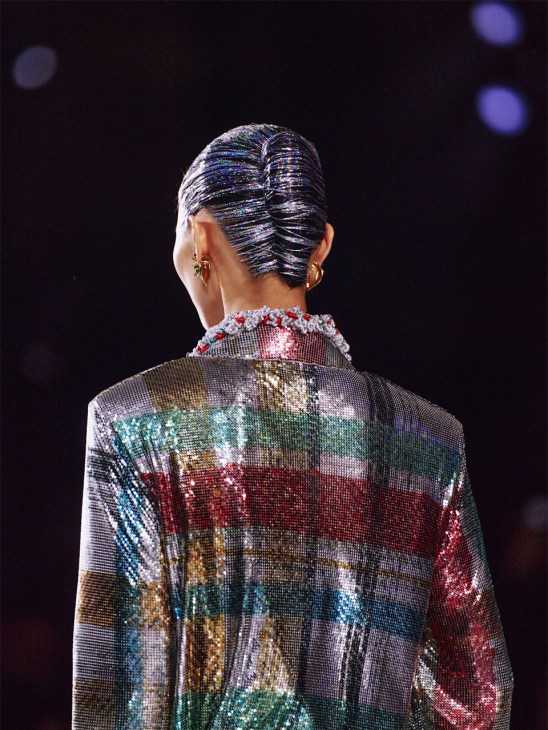
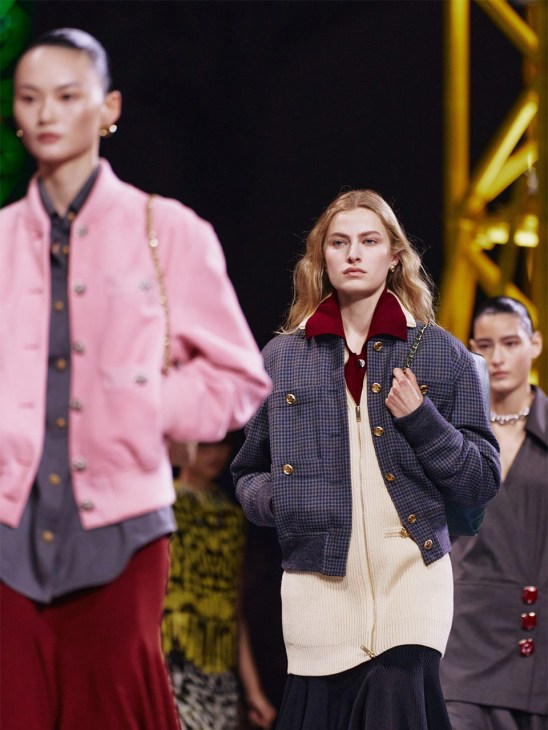
Buoyed by this momentum, models made their way down the runway to the tune of Lady Gaga and Brazilian bossa nova. In the collection notes, a quote by Gabrielle Chanel emphasised the duality that is expected of women. “Fashion is both caterpillar and butterfly. We need dresses that crawl and dresses that fly. The butterfly doesn’t go to the market and the caterpillar doesn’t go to the ball.” In practice, this looked like a series of practical sets, ribbed knits, belted drop-waist skirts and monochromatic coats that gave way to iridescent tweeds (paired with hairstyles held together by glitter glue) and embellished slip dresses with cascading cuts. “Chanel is function, Chanel is fiction,” said Blazy. “It represents the freedom to choose between the caterpillar and the butterfly whenever you want.”
chanel.com
10.
Givenchy
Sarah Burton’s ability to cut and tailor suits is one that commands respect in the fashion industry. Though the British designer never trained on Savile Row, she learned her craft as the right-hand woman of the late Alexander McQueen. This season, her reputation for meticulous fittings was on full display. Suit jackets featured lapels turned inwards, double-pleated trousers offered a ballooned fit and velvet tunics sublimated the curves of their wearers. Elsewhere, a poppy print from the Givenchy archive mingled with leopard and silk jacquard.


At the show, models wore silk T-shirts draped over their heads like 17th-century Flemish milkmaids. This touch of fantasy came from the mind of British milliner Stephen Jones. Sculptural jewellery made from wood and leather also brought an organic, sinuous feel to the collection, while elbow-length gloves pooled around wrists. It was the type of collection that could only come out of experience – the kind Burton boasts – as well as a confident demonstration of a craft honed over time.
givenchy.com