
In 2020, the National Society of Film Critics gave a special Film Heritage Award to the Brattle Theatre for “holding strong in continuing the time-honored tradition of daily double features.” The Brattle’s double bills have been a vital part of Greater Boston’s film education since the theater first started showing movies in 1953. That tradition is getting turned upside down — or maybe just sideways — with “Ultimate Double Feature Weekend,” a cockeyed approach to programming that kicks off a wild weekend of movies and movies-within-movies at area theaters, culminating with an unfinished masterpiece that bootlegger and political patriarch Joseph P. Kennedy pulled the plug on almost 100 years ago.
“I’ve always been fascinated by films within films,” said the Brattle’s creative director Ned Hinkle. “Whether they are actual cinema-going moments with real movies, or public domain footage on a TV in the background. None of these are by accident and it’s always fun and frequently illuminating to think about what a filmmaker was trying to communicate by using a particular title.”
Inside every cinema buff is a frustrated DJ, and we often see directors sampling scenes from other movies and shouting out their influences by showing the characters going to see films that reflect or comment upon the story.
“For me, the best instances of these are when an audience watching a film in the real world is brought into a cinema by the character onscreen and we all experience a particular moment together,” he elaborated. “It creates a crazy, almost metaphysical bond with the characters in the movie because, especially if it’s something you are familiar with, you are probably sharing the emotion with the person onscreen.”
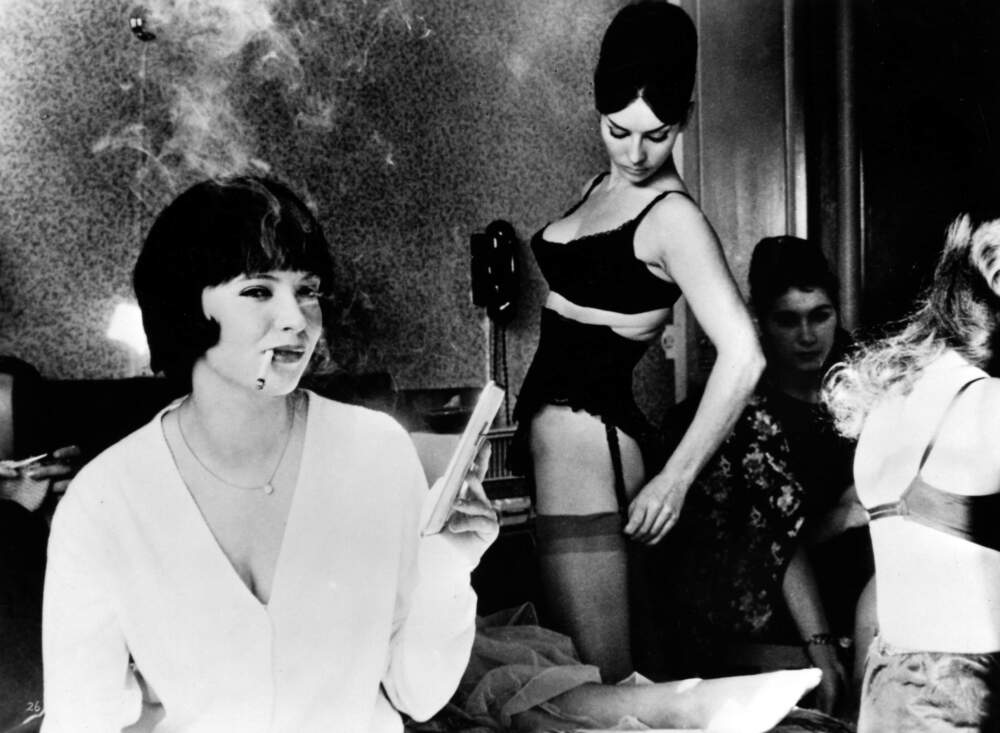
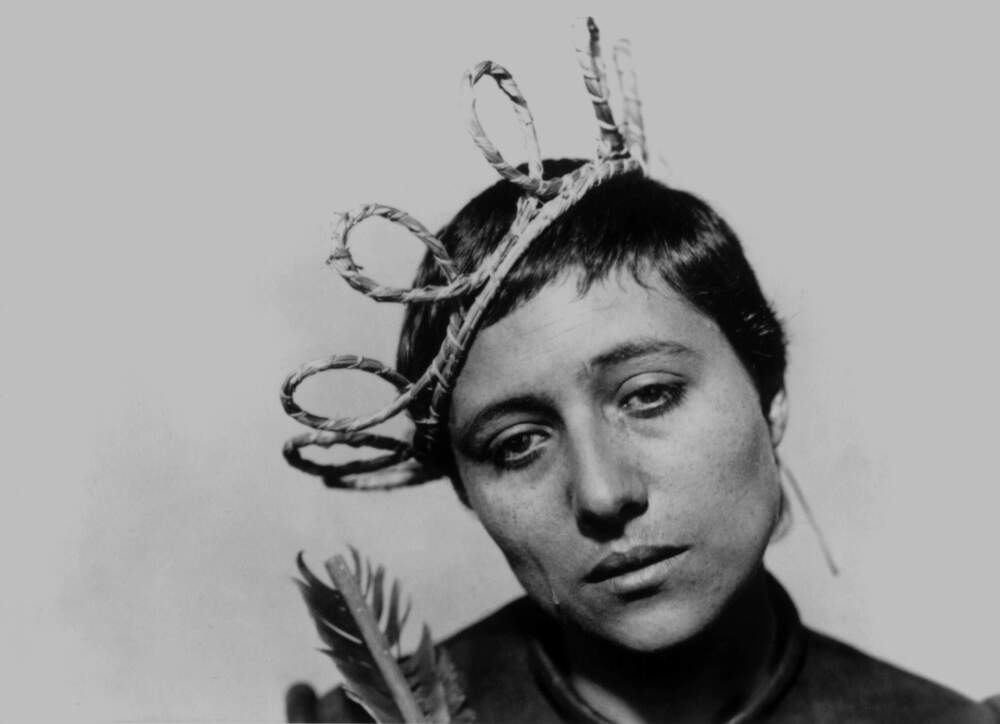
Hinkle wondered what it might be like if we were to watch the whole movie with these characters? For example, the most famous scene in Jean-Luc Godard’s “Vivre Sa Vie” follows star Anna Karina into a Paris movie house where she watches Carl Theodor Dreyer’s “The Passion of Joan of Arc.” So during the Friday, Feb. 27 screening of “Vivre Sa Vie,” at roughly the 15-minute mark, when Karina sits down in the auditorium, Dreyer’s film will play in its entirety. Then the Godard picture will pick up with her leaving the theater, after shedding what Hinkle calls “one of cinema’s most famous tears.”
Likewise, during the Saturday, Feb. 28 show of “Donnie Darko,” when Jake Gyllenhaal and Jena Malone go see the “Halloween Frightmare Double Feature” at Santa Monica’s famous Aero theater, Sam Raimi’s “The Evil Dead” will unspool in full. (The Brattle isn’t showing the second half of the movie’s Frightmare bill, “The Last Temptation of Christ,” because it’s 164 minutes long and would probably be a bit of a mood-killer. Also, in the movie, it looks like Donnie leaves right after “The Evil Dead.”)
Hinkle can’t recall how he first got this idea. “It either came to me in a dream or during an Instagram k-hole moment and I have no idea which,” he admitted. “…I’m not saying it’s an original idea, but we might be the first legit cinema to actually put it into practice.”
I took advantage of the snow day and tried this at home, watching “Vivre Sa Vie” on the Criterion Channel and switching over to my “Passion of Joan of Arc” Blu-ray during the cinema scene, then coming back to where we’d left off in the Godard film. Despite one being about a 1960s sex worker and the other the trial of a 15th-century martyr, the films conjure similar moods and tell surprisingly simpatico stories. Viewed semi-simultaneously, we can better see how Godard’s picture is in conversation with Dreyer. Both movies make extensive use of close-ups, allowing entire scenes to play out upon two of the most expressive faces in film history. In its daily trials and indignities, “Vivre Sa Vie” feels like a spiritual remake of “Joan,” with an ending nearly as cruel as being burned at the stake.
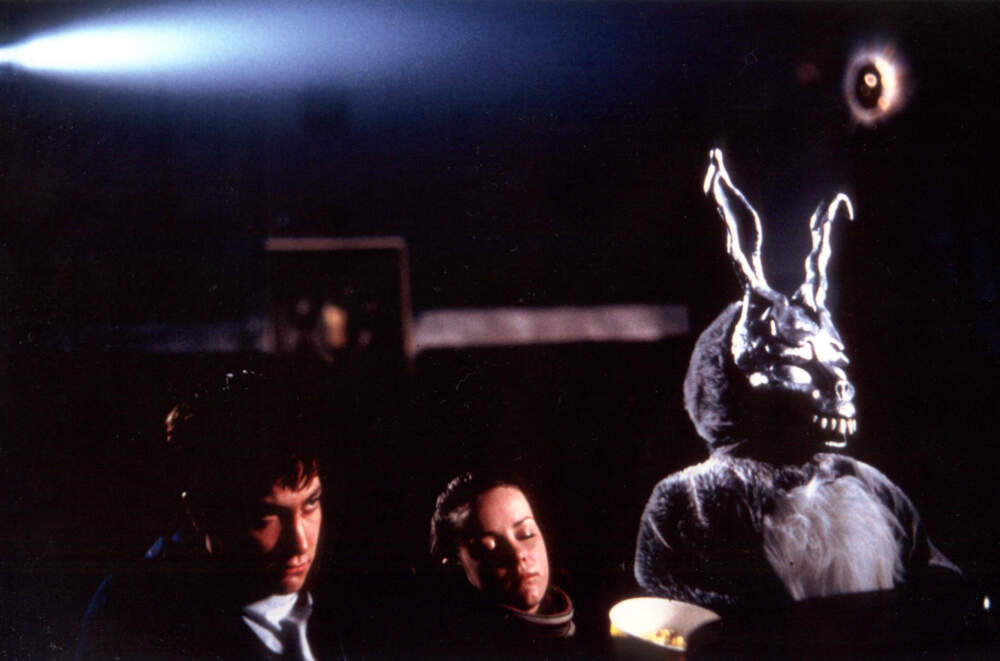
One can assume that a shared maniacal energy will unify “Donnie Darko” and “The Evil Dead.” (I’m saving that experience for the big screen on Saturday.) The Brattle is also screening all four films as conventional, uninterrupted double features over the weekend. That’s how the theater will be presenting the Sunday, March 1 showings of “The Last Picture Show” and “Red River.” There may not be a better movie about what movie theaters mean to a community than Peter Bogdanovich’s 1971 masterpiece. “The Last Picture Show” chronicles the decline of a small Texas town after the closing of the local movie house and passing of its proprietor, Sam the Lion, played by screen cowboy legend Ben Johnson. Howard Hawks’ 1948 classic “Red River” looms large over the proceedings, not just as the final film screened at Sam the Lion’s theater, but as a dream of a wild west that never really existed but haunts these characters all the same.
I’d say it’s always a good time to watch “Red River,” except maybe not in the middle of “The Last Picture Show.” Kudos to the Brattle for understanding it would do a profound disservice to both films trying to run them in the “ultimate double feature” format. It’s fun to think of other movies that would be ruined by the attempt. Imagine having to stop Martin Scorsese’s “Cape Fear” and sit through “Problem Child” when Robert De Niro stalks Nick Nolte’s family outing to see the awful John Ritter comedy? (I’ve always thought it’s such a great joke that De Niro is laughing at this dreck like it’s the funniest thing he’s ever seen.)
The most insane opportunity for one of these would be during “Annie Hall,” when Woody Allen and Diane Keaton go see Marcel Ophüls’ 251-minute French resistance saga “The Sorrow and the Pity.” Dropping a nearly four-and-a-half-hour World War II documentary into the middle of the best romantic comedy ever made could be an art-punk stunt for the ages. (The Ophüls film would begin immediately after the film’s funniest moment, when Allen enlists media scholar Marshall McLuhan to help confront a blowhard pontificating behind him in line at the movies — a scene that basically formed my adult personality.) Hinkle joked about the possibility while promoting the series onstage at this month’s Crystal Ballroom Movie Trivia, but Brattle executive director and outspoken Woody Allen-hater Ivy Moylan vetoed him from the crowd, shouting “We’re not showing ‘Annie Hall’!”
As it happens, you can see “Annie Hall” as part of a regular double feature this Friday, Feb. 27, at the Somerville Theatre. Sadly, it’s not showing with “The Sorrow and the Pity,” but rather “Modern Romance.” Albert Brooks’ 1982 breakup comedy is so exquisitely uncomfortable you might find me pacing around the back of the theater, since certain scenes are so squirm-inducing I find it difficult to remain seated while watching the movie. Brooks may not have invented cringe comedy, but he perfected it. No wonder “Modern Romance” was one of Stanley Kubrick’s favorite films.
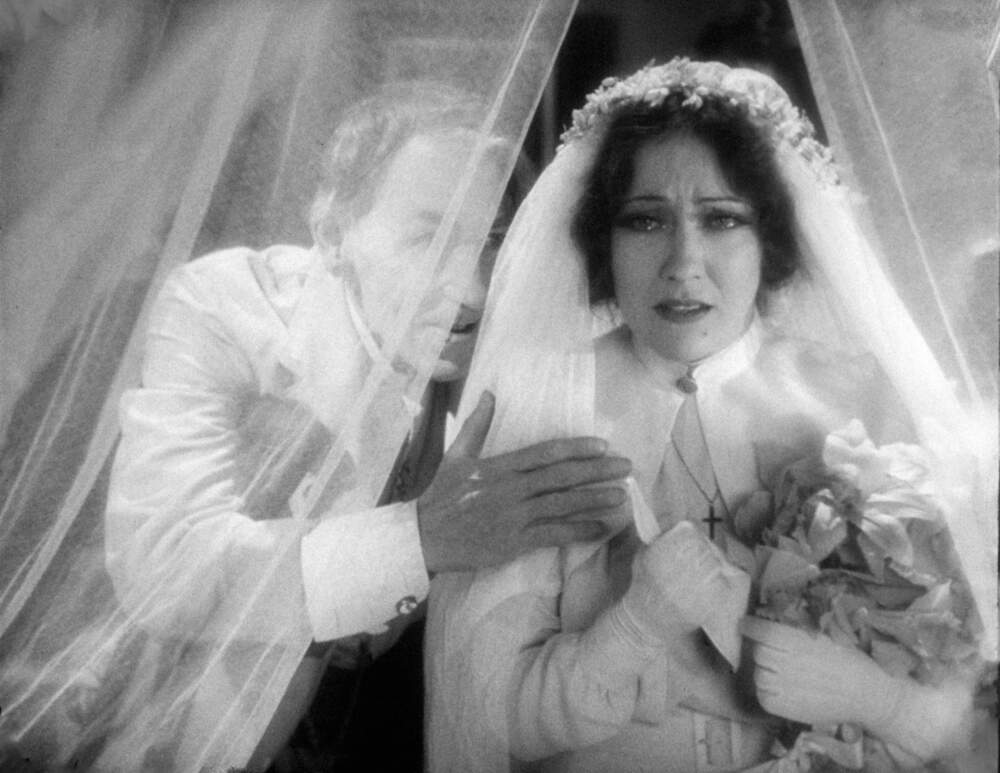
And from double features to a half-finished epic, folks have been waiting nearly a century to see “Queen Kelly.” Director Erich von Stroheim started shooting the movie in 1928 as a vehicle for silent-era superstar Gloria Swanson, mistress of the film’s financier, Joe Kennedy. The madly ambitious, continents-spanning saga follows Swanson’s plucky Irish convent girl who falls for a prince of a fictional European state who is unfortunately already engaged to the country’s mad queen. Despite chivalrous gestures like the prince setting fire to the nunnery so he can see Swanson again, their romance is thwarted by circumstances so wild our heroine winds up running an East African brothel.
Like all of von Stroheim’s famously profligate productions, every dollar was onscreen, but there were a lot more of them than originally bargained for. If shot as scripted, “Queen Kelly” would have run five hours. Way behind schedule and massively over budget — with the added complication of Kennedy and Swanson’s relationship winding down — the director was fired and an abrupt ending hastily tacked on for overseas markets. The movie wasn’t shown in America until 1985.
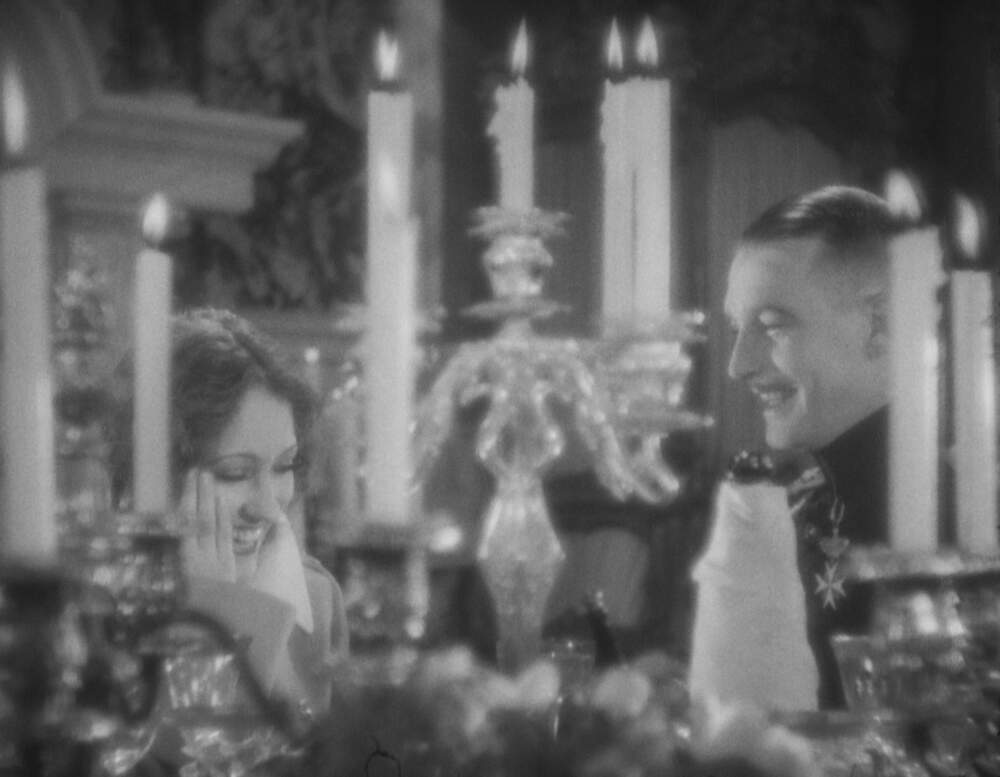
Working with recently discovered never-before-seen footage, the good folks at Milestone have reconstructed “Queen Kelly” in 4K according to von Stroheim’s original screenplay. Since the film was shot in sequence, we spend an hour and a half or so watching an epic for all time begin to unfold, before a flurry of production stills and onscreen text rush to tell us what would have happened next. In this case, half of a movie is better than most in full. “Queen Kelly” is a film of dazzling breadth and grandeur, with a naughty modernity that reportedly caused clashes on the set between filmmaker and star. (No doubt the Hollywood censors at the Hays Office never would have allowed the prince’s panty-sniffing scene.)
But all was eventually forgiven, as Swanson and von Stroheim were reunited decades later in “Sunset Boulevard.” Billy Wilder’s pitch-black, anti-Hollywood noir gave Gloria Swanson the role of her career as a vain silent film actress clinging to past glories. Von Stroheim played her sinister chauffeur. It may have taken 98 years, but “Queen Kelly” is finally ready for its closeup.
“Ultimate Double Feature Weekend” runs at the Brattle Theatre from Friday, Feb. 27, through Sunday, March 1. “Annie Hall” and “Modern Romance” screen in 35mm at the Somerville Theatre on Friday, Feb. 27. “Queen Kelly” plays Sunday, March 1, and Monday, March 2, at the Somerville and from Friday, March 6, through Sunday, March 8 at the Brattle.