
When the Center for Community Investment (CCI) launched nine ears ago, the community development field was experiencing a surge of innovation. New tools were emerging to organize capital, attract investors and fund ambitious projects. At the same time, CCI noticed a fundamental imbalance.
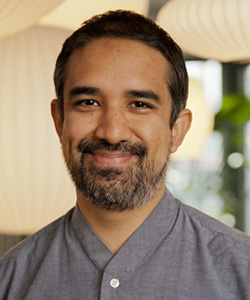
“We were seeing the field place a lot of attention on organizing capital in exciting ways,” said Omar Carrillo Tinajero, executive director of the Center for Community Investment. “But there was far less support for communities to get clear about what they wanted to build and to have real influence over those decisions.”
Too often, outside investors and capital providers were shaping which projects moved forward and what communities would ultimately become, leaving community priorities on the sidelines.
Recognizing that gap, CCI set out to help historically disinvested communities transform their investment systems so resources flow more equitably and finance projects they need to thrive. That meant supporting communities to absorb capital by:
- Defining their priorities
- Developing their own pipeline of projects, and
- Reshaping local ecosystems so that residents drive investment
Building healthy investment ecosystems
Over the past decade, CCI found that communities need healthy investment ecosystems, not just capital. In places where community investment ecosystems are stronger, progress is driven by alignment between public agencies, developers, the community finance sector, community organizers and residents themselves.
“The places that make progress tend to have strong coordination across sectors,” Carrillo Tinajero said. “That alignment creates a shared sense of what everyone is trying to achieve.”
In many communities, however, the conditions needed for that alignment have been eroded over time. Communities are expected to compete for capital without sufficient access to the relationships, coordination and infrastructure that support long-term development.
Black, Brown, immigrant and rural communities, in particular, have experienced generations of disinvestment that have weakened the systems needed to turn local priorities into investable projects. In many of these same places, that disinvestment was not passive. Infrastructure, institutions and wealth were actively removed from communities precisely because of who lived there.
This is not an accident.
“We know that racial harm continues through harmful investment practices,” Carrillo Tinajero said. “That harm has followed a pattern. The segregation of our communities and the fact that Black and Brown people continue not to benefit from investment is by design. Recognizing that is a critical first step.”
For CCI, that recognition leads to a deeper question: What would reparative capital look like in places that have assets, but have endured long histories of exclusion rooted in discrimination?
Toward community-owned real estate
As CCI reflected on lessons from its first decade, one theme surfaced consistently across geographies and issue areas: community ownership.
Whether partners were working in housing, economic development or climate resilience, communities were asking similar questions about who controls land and assets, and who benefits from development over time.
“We kept hearing interest in community ownership as a strategy to control land and real estate as a way of building wealth,” Carrillo Tinajero said. “Across many fields, practitioners and community partners were moving toward increased community control of land and assets.”
Community land trusts, cooperative businesses, shared-equity housing and other collective ownership models were emerging across the country.
Community land trusts, cooperative businesses, shared-equity housing and other collective ownership models were emerging across the country. Each successful in their own community context, but difficult to replicate or scale. CCI came to understand these models collectively as community owned real estate (CORE), a shared ownership strategy for communities to control land and assets over time.
“Projects were popping up, but they still felt like one-offs,” Carrillo Tinajero said. “There wasn’t a coordinated system at the local, regional or federal level to support these models at scale.”
CCI took that as a starting point. Over the past several year, the organization has learned with and from practitioners across models and geographies, mapped hundreds of CORE projects across the country, and convened funders and field leaders to build shared knowledge and connections. What had looked like isolated efforts began to take shape as a field.
The next phase of the work
CCI’s next phase of work in CORE will continue to build the infrastructure needed to make it a recognized, mainstream approach to development. Learning and collaborating with partners, funders and practitioners has made clear that what this requires goes deeper than capital alone. The path forward requires confronting barriers that are structural.
Financial systems lag behind community ownership models. Few financial products in capital markets or community development finance are designed to support collective ownership. Conventional practices continue to favor traditional ownership structures, limiting access to capital for community-led projects.
Public policy has not fully adapted. Funding streams and policy frameworks that support shared ownership remain limited. Without policy alignment, communities must navigate complex and inconsistent requirements for each unique project. That navigation can be made easier through shared tools, common taxonomy and collaborators working to make information more accessible.
Cultural narratives about ownership are deeply ingrained. In the United States, ownership is often framed exclusively as an individual achievement. This narrative obscures the stabilizing and wealth-building potential of community-owned real estate models that can benefit communities collectively while supporting individual prosperity. Shifting those narratives requires uplifiting the stories of communities where community-owned real estate is already working and creating spaces for practitioners to share and learn from each other.
Repair in practice
CCI understands that tools such as land trusts, cooperative financing and shared ownership structures can serve not only as engines of development, but also as vehicles for repair by expanding who owns, who benefits and who holds power.
Across the country, communities are already experimenting with different approaches, testing what repair and community-owned real estate can look like in practice.
“There’s often a belief that the right program, funding source or policy can undo long histories of extraction,” Carrillo Tinajero said. “But repair and transformation require adaptive solutions, not just technical ones.”
Adaptive solutions require time, trust and sustained investment in relationships and leadership. They demand an acknowledgment of historical harm — and a commitment to supporting communities as they navigate political, cultural, and economic complexity.
Leadership development is foundational to going beyond the technical work of community investment.
“It takes courage and risk to lead,” Carrillo Tinajero said. “Especially in this work of building strong local ecosystems and racial repair, leaders need strong networks and support from others doing this work.”
The next phase of work at CCI is ambitious because its purpose has only sharpened. Transforming how communities invest, own and thrive requires more than new capital — it requires shifting who decides, who benefits, and what the field believes is possible.