

Long before the first Neolithic villages appeared in Greece, something remarkable had already begun. Around the 11th millennium BC at the end of the last Ice Age, communities in the Aegean were experimenting, adapting, and quietly reshaping their relationship with nature. Evidence from Franchthi Cave, alongside sites such as Klissoura Cave 1 and Kalamakia Cave, suggests that the roots of the Neolithic in Greece may stretch back far earlier than traditionally believed.
Rethinking the origins of agriculture in Greece
For decades, most scholars placed the beginning of agriculture in Greece at around 7000–6000 BC. They linked this transformation to incoming farmers from the Fertile Crescent. However, the discoveries in these caves tell of a more complex story. They point to a gradual process already unfolding thousands of years earlier.
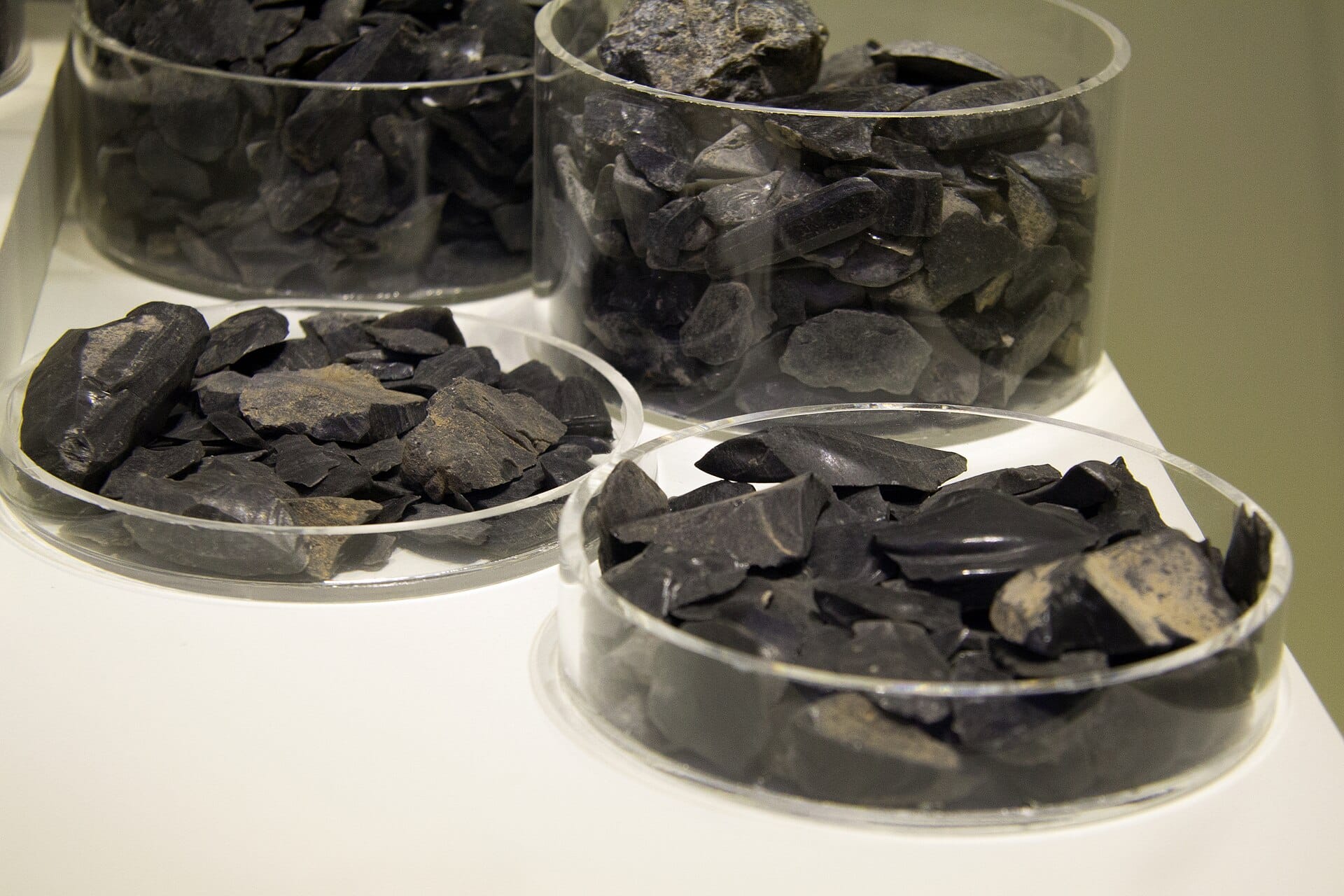
At Franchthi Cave, one of the longest continuously occupied sites in Europe, life was not at a standstill. Around 11,000 BC, its inhabitants showed clear signs of innovation. They imported obsidian from the island of Milos, which lies over 100 kilometers (62 miles) away. This was not a sudden occurrence. It required planning, navigation, and knowledge of the sea. These early inhabitants of Greece had already developed maritime networks long before the Bronze Age.
At the same time, their diet began to change. Archaeologists Jane Renfrew and Julie Hansen discovered remains of barley among the plant evidence dating to the 11th millennium. This finding is enormously significant. Barley is known to have been among the earliest domesticated crops in human history. Its presence at Franchthi does not mean inhabitants were entirely reliant on agriculture at the time. However, it strongly suggests early experimentation with plant management. These communities likely gathered, selected, and perhaps even cultivated wild cereals in small, controlled ways.
Meanwhile, in the caverns of Klissoura and Kalamakia, a different story emerges. There, archaeologists uncovered the remains of Capra ibex, the wild goat native to the Greek landscape. The remains appear consistently across successive layers, indicating that humans depended on them for generations. Yet this was not random hunting. The patterns point to knowledge, strategy, and a sustained tradition.
The role of indigenous fauna and early domestication
Hunters selected animals with care. They understood seasonal cycles and herd behavior. Over time, this relationship may have shifted. Instead of simply hunting ibex, humans may have begun to influence their movement and reproduction. This marks a critical threshold between hunting and proto-domestication.
This reshapes the entire picture. The ibex was not an imported species; it belonged to the Greek environment. Any early management of it, therefore, reflects indigenous knowledge rather than borrowed practice.
Moreover, early Neolithic layers in Greece reveal the presence of both Capra ibex and Capra hircus, the domestic goat. This overlap raises a crucial question. Did domesticated goats arrive fully formed from the East, or did local populations already possess the knowledge to manage goats, later integrating foreign breeds into existing systems?
At this point, an important question emerges, yet mainstream narratives rarely confront it directly. While dominant scholarship maintains that farmers migrated from the Fertile Crescent into the Aegean, it often overlooks a basic issue of logic. Why would established farming communities abandon one of the most fertile and productive regions in the world to settle in the far more fragmented and demanding landscapes of Greece and the Aegean islands?
The terrain of the Fertile Crescent offered rich soils, reliable rivers, and highly favorable agricultural conditions. In contrast, the Greek mainland presented mountains, limited arable land, and environmental constraints. Migration certainly occurred in prehistory, but such a large-scale movement of farmers into a less accommodating environment requires a more viable explanation than it typically receives. Therefore, rather than assuming a one-directional flow of innovation, it becomes equally plausible that local populations—already experimenting with plants and animals—developed agriculture in parallel, adapting it to their landscape through gradual and indigenous processes.
Questioning the migration model
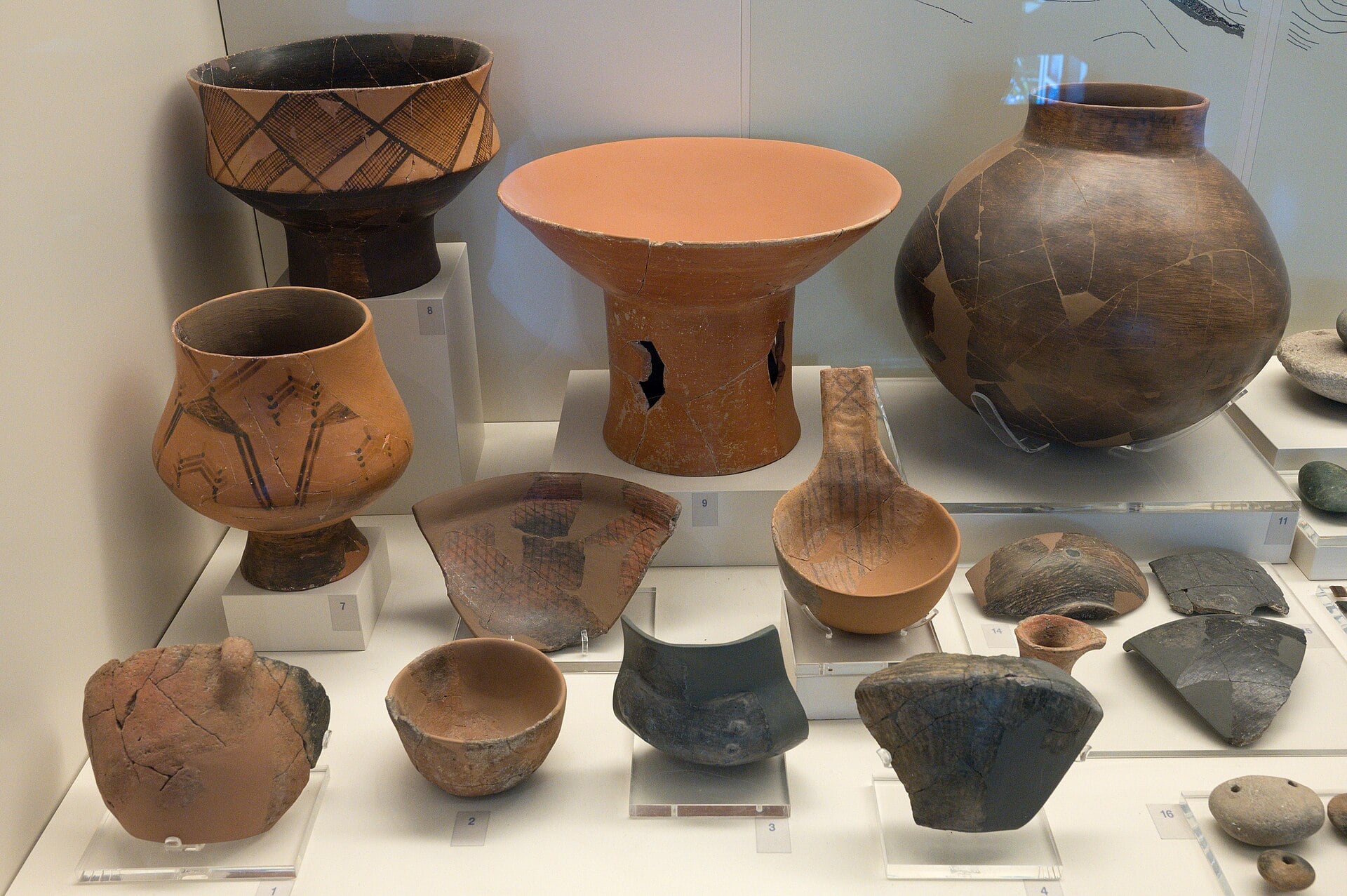
Moreover, their demonstrated seafaring ability, evidenced by the long-distance transport of obsidian, makes the selective importation of crops and ideas through maritime contact far more plausible than the large-scale movement of entire farming populations.
This possibility deserves serious consideration. When the evidence is viewed collectively, a clear pattern emerges. By the 11th millennium, communities in Greece already exhibited three essential elements of the Neolithic way of life. They navigated the sea and sustained trade networks, experimented with plant resources such as barley, and exploited and even likely managed local animal species such as the ibex. This does not yet constitute full agriculture. However, it unmistakably lays the groundwork for it.
Furthermore, such a gradual transition aligns more closely with human behavior. Major transformations rarely occur abruptly; instead, they develop over time through observation, trial, and adaptation. The people of Franchthi did not suddenly become farmers—they became farmers over generations of accumulated knowledge.
In this light, the traditional model begins to appear incomplete. It assumes that farming arrived suddenly with migrating populations. Yet the archaeological record in Greece points more toward continuity than rupture, suggesting local populations evolving rather than being replaced.
Of course, contact with the Fertile Crescent remained significant. Trade networks existed, and ideas traveled alongside materials. However, influence does not imply dependence. Greek communities could have adopted certain crops or animals while already in possession of the conceptual foundations for agriculture. Indeed, their maritime capabilities reinforce this view. If they could sail to Milos for obsidian, they could also engage with other regions on their own terms. Exchange, in this context, reflects not passive reception but active participation.
Imported farming or indigenous development?
Additionally, the Greek landscape itself encouraged innovation. Mountains, coastlines, and islands created a mosaic of ecological niches that demanded constant adaptation. Such an environment favored flexibility, experimentation, and resilience—qualities that lie at the very heart of the Neolithic transformation. The central question, then, becomes unavoidable: was the Neolithic age in Greece truly imported, or did it emerge through a long, indigenous process that began as early as the 11th millennium BC?
The evidence does not yield a simple answer. Yet it strongly challenges the notion of a sudden agricultural “arrival” from the East. Instead, it points to a deep prehistory of preparation. By the time organized farming villages appeared, Greek populations may already have spent millennia refining their relationship with plants and animals.
This perspective also restores agency to these early communities. They were not passively awaiting change but actively creating it. Every journey to Milos, every harvested grain of barley, and every hunted or managed ibex formed part of a broader narrative: a gradual transformation rooted in the land itself.
Ultimately, this interpretation reshapes how we understand the origins of European civilization. If the groundwork for the Neolithic began in Greece around 11,000 BC, then the Aegean stands not at the periphery of innovation but closer to its core. It emerges as a region where human ingenuity quietly bridged the divide between survival and cultivation.
The cave of Franchthi preserves not merely evidence but a process, a slow awakening, and a transition that began long before villages, fields, and domesticated herds came to define the landscape. Around 11,000 BC on the shores and mountains of Greece, the first steps toward the Neolithic age were already underway.