
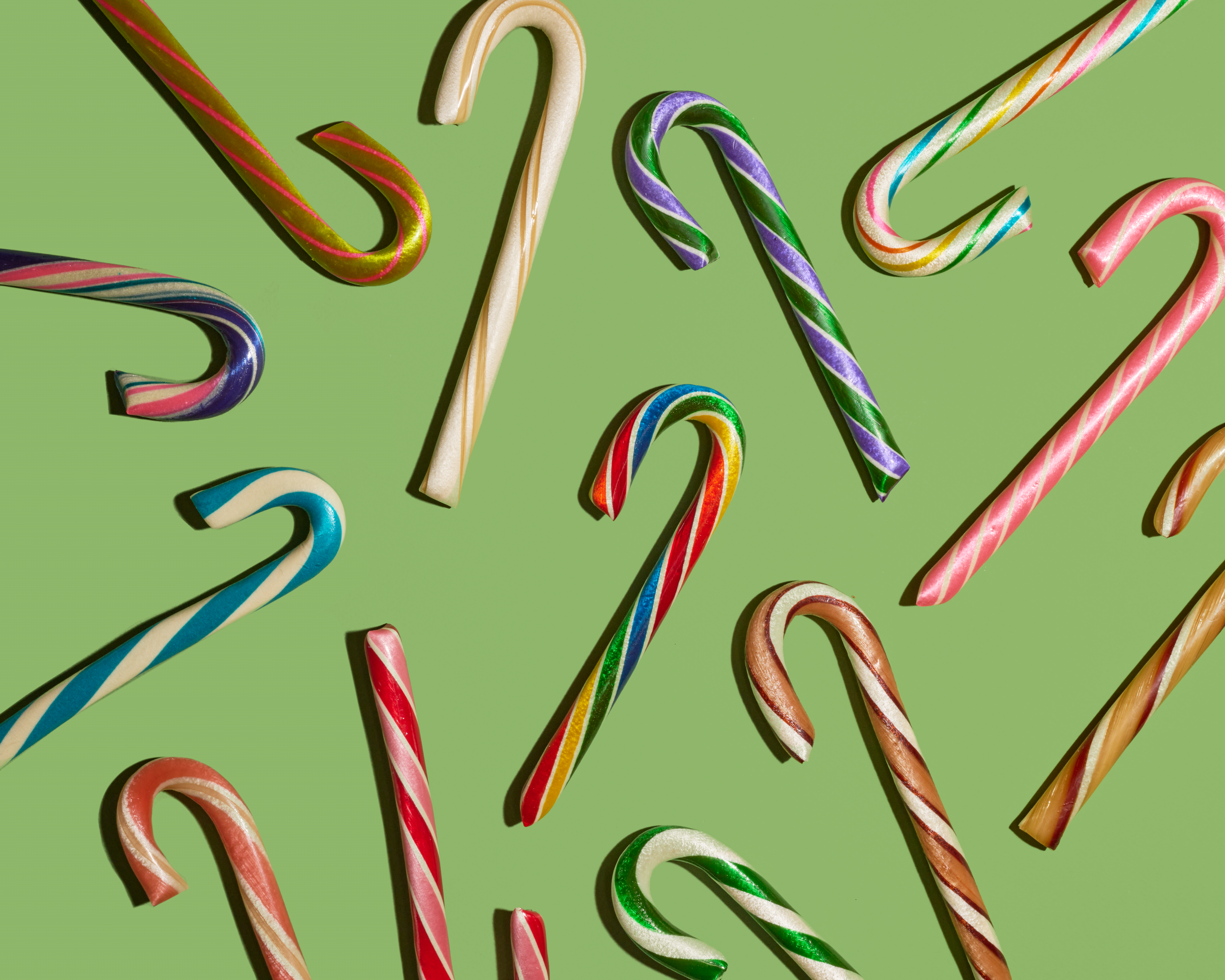
They’re sugary, sweet, and not just peppermint-flavored anymore. Candy canes are a holiday staple with roots dating back to the 1600s. The story suggests that in 1670, a choirmaster in Cologne, Germany, gave children these sugary sticks shaped like a shepherd’s staff for the long nativity church service.
While the confection has come a long way in the centuries since, the candy canes made by Hammond’s Candies in Denver, Colorado, still share one thing with that 17th century German candy maker. Their current roster of 26 different flavors of candy cane are handmade.
“Everything is done by hand,” Hammond’s head cook Victor Ortiz tells Popular Science. “Each batch takes about five to six people one hour and 30 minutes. That gives us 600 candy canes.”
Ortiz (whose favorite flavor is strawberry) first began working part time in Hammond’s packaging department 24 years ago, working his way up to head cook. The 105-year-old company makes everything from traditional ribbon candy and lollipops to gourmet chocolates to their colorful candy canes. To keep up with the candy cane demand, they must work about a year ahead.
Here’s how that sweet treat takes shape.
Related Stories
Liquid candy and gooey centers
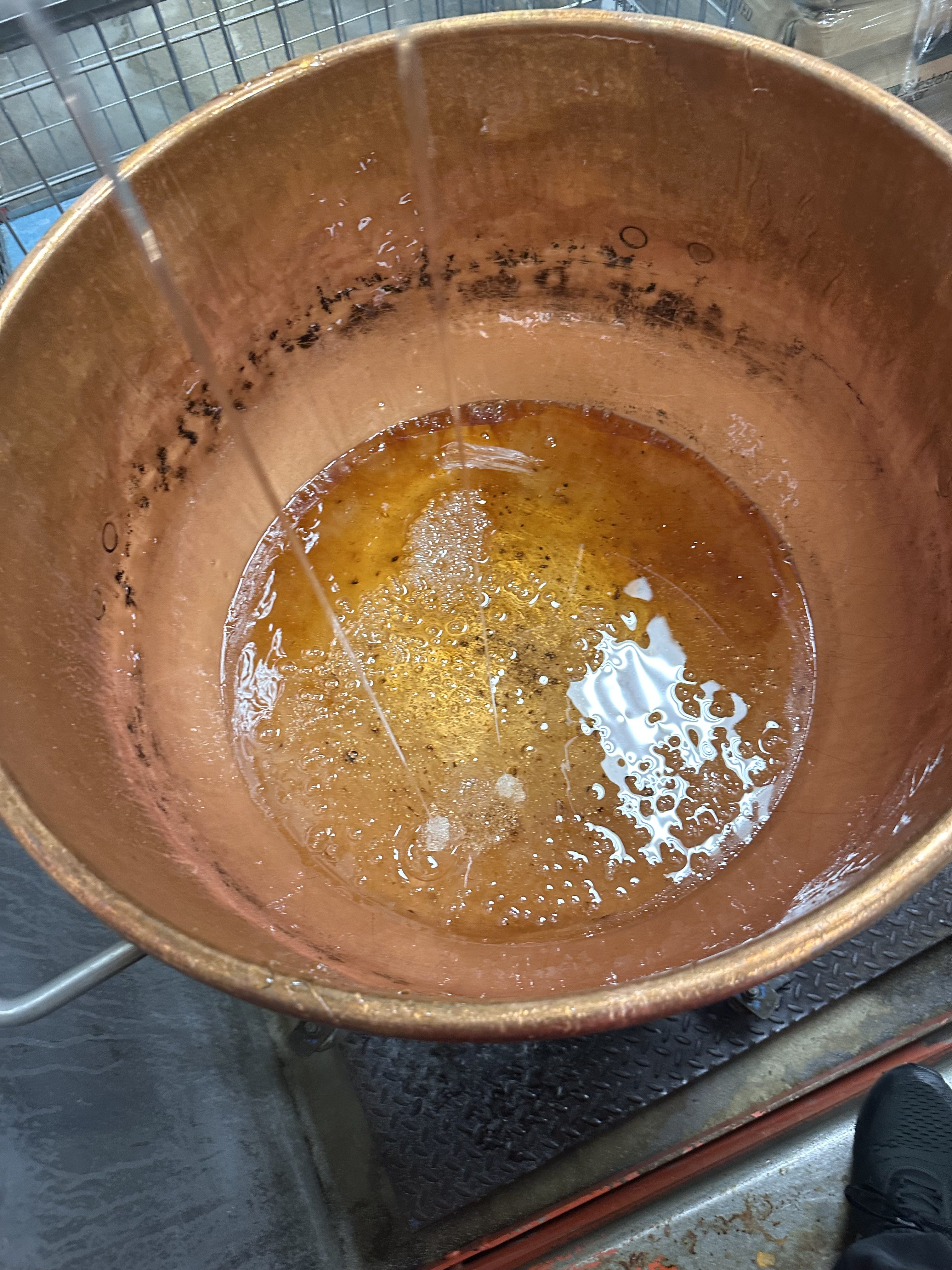
Hammond’s uses four main ingredients in their candy canes—sugar, corn syrup, water, and a little cooking oil to keep it from over boiling. The ingredients are mixed together in a copper pot until they reach a balmy 300 to 325 degrees Fahrenheit.
The mixture is then placed onto a stainless steel cooling table that has hot and cold water running through it. That hot water keeps it from cooling down too quickly, while the cold water helps the liquid solidify, so that the cooks can cut and separate the colors that make up the candy cane.
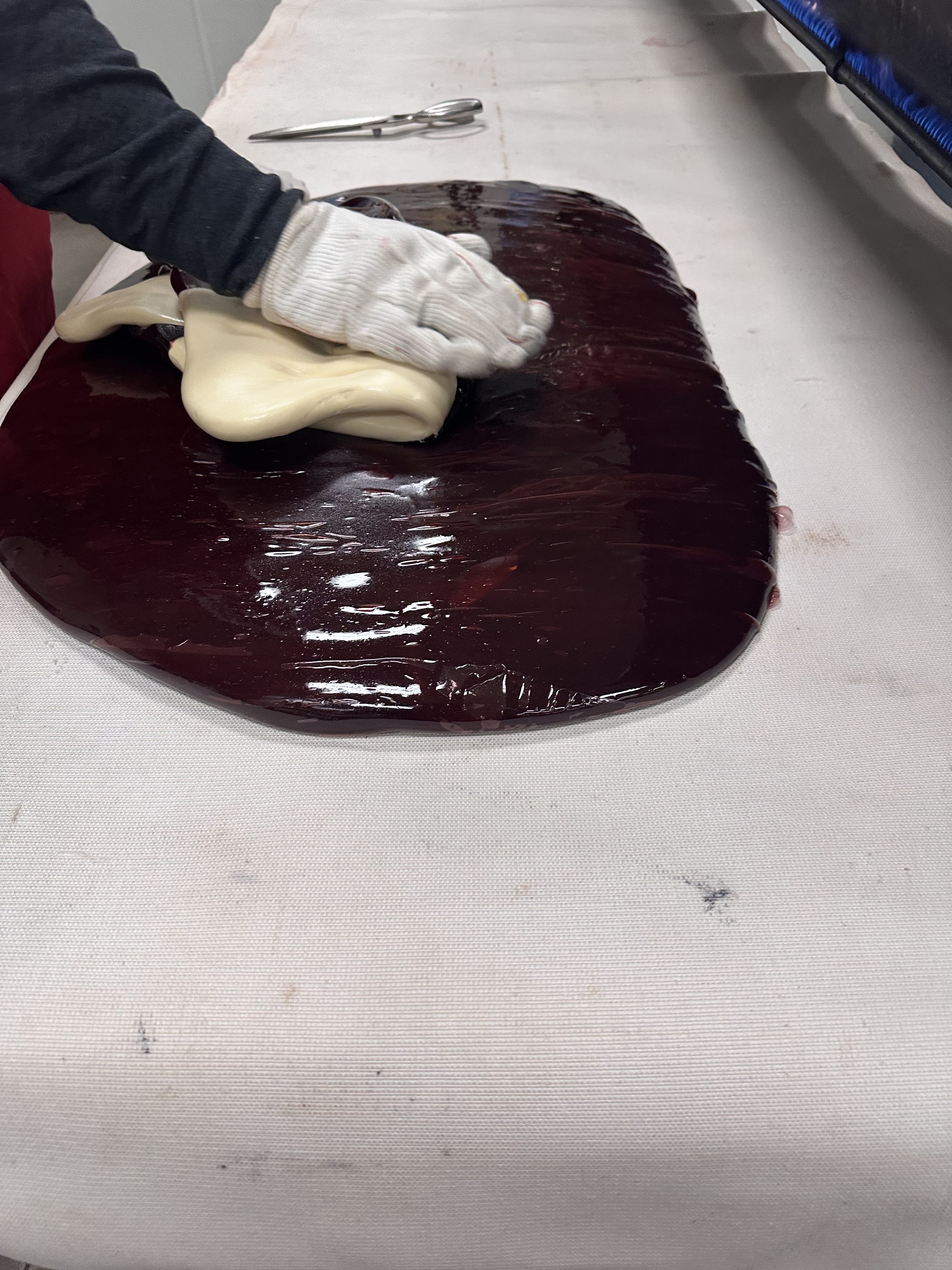
“The candy is all liquidy on the table,” explains Ortiz. “That table is going to be where we add the color and the jacket, or the outside of the candy cane.”
It is also where they add the flavored and softer center of each candy cane. To do this, the candymakers use broken pieces from the previous batch of the same flavor. The broken candy is then heated up to 325 degrees where it can become a slightly gooey center of the candy cane.
Cut and color
Once the candy hits the right temperature, it is transferred to the building table where it’s time for the candymakers to make some cuts. If they’re making a traditional peppermint candy cane, they’ll divide the candy jacket into two different pieces—red and white. For something a bit more unique like root beer, it’s shades of brown.
The color and flavor are added to the candy with the help from a good old-fashioned candy pull. The globs of pliable sugar are placed on an early 20th century puller, just like the cooks would have done in 1920. The puller adds air to the mix and distributes the color and flavor to the candy cane’s outer jacket and softer center. The candymakers then continue to pull the candy by hand to stretch it out even further.

“When we have the center and the jacket together, we actually bring it to the center, and then put it in the middle of the jacket, and wrap the jacket around the center,” says Ortiz.
All of the extra smaller stripes on the candy cane are added to the jacket here by pulling them to various thicknesses. If the stripes are not exactly right, they will be broken up and be used for the center of the next batch. And not all candy cane flavors are the same.
“There’s a candy cane that we make called birthday cake, and it has five different colors, six with the white,” says Ortiz. “Putting all those colors together takes a long time. It may take about 15 minutes to put together the jacket for the peppermint candy cane, but when you’re making the birthday cake one, it takes about 25 minutes to 30 minutes because there’s a lot of pieces.”
Getting hooked
After that colorful striped jacket is wrapped around the softer candy cane center, it is placed on a batch roller. On the roller, more heat is added so that the candy can be more pliable again. After about 10 minutes, a huge striped cylinder of candy is ready to be cut down into sticks about a half inch in diameter
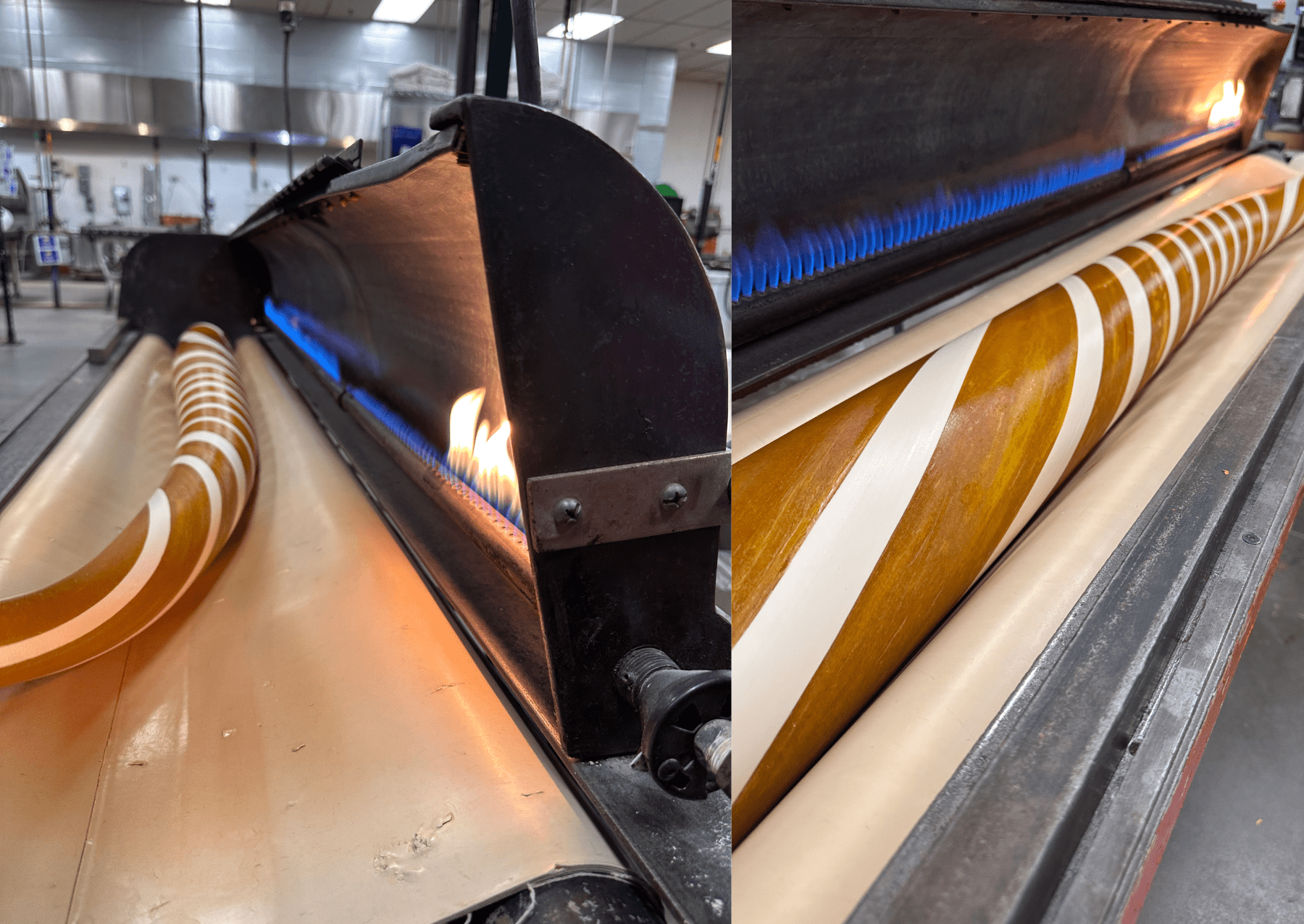
“They kind of eyeball the hook and shape it by hand. We don’t have any molds or anything like that,” Ortiz explains. “We train cooks to just put their hand on the piece of candy and make the hook by grabbing one end and turning it.”
If the cooks are making a lollipop, the candy making process is almost exactly the same. However, instead of shaping the hook one cook will mold the lollipop into its circular shape, while another is ready with the stick. They can also make 1,000 lollipops per batch, compared to 600 candy canes.

Shaping a candy cane’s hook
After they get their signature hook, the candy canes are packaged, shipped, sold, and perhaps placed in a lucky person’s stocking.
“A lot of companies are trying to move on with automation,” says Ortiz. “We’re still making the candy canes the old-fashioned way, which I think separates us. We put a lot of effort into whatever we are making.”

2025 PopSci Outdoor Gift Guide