
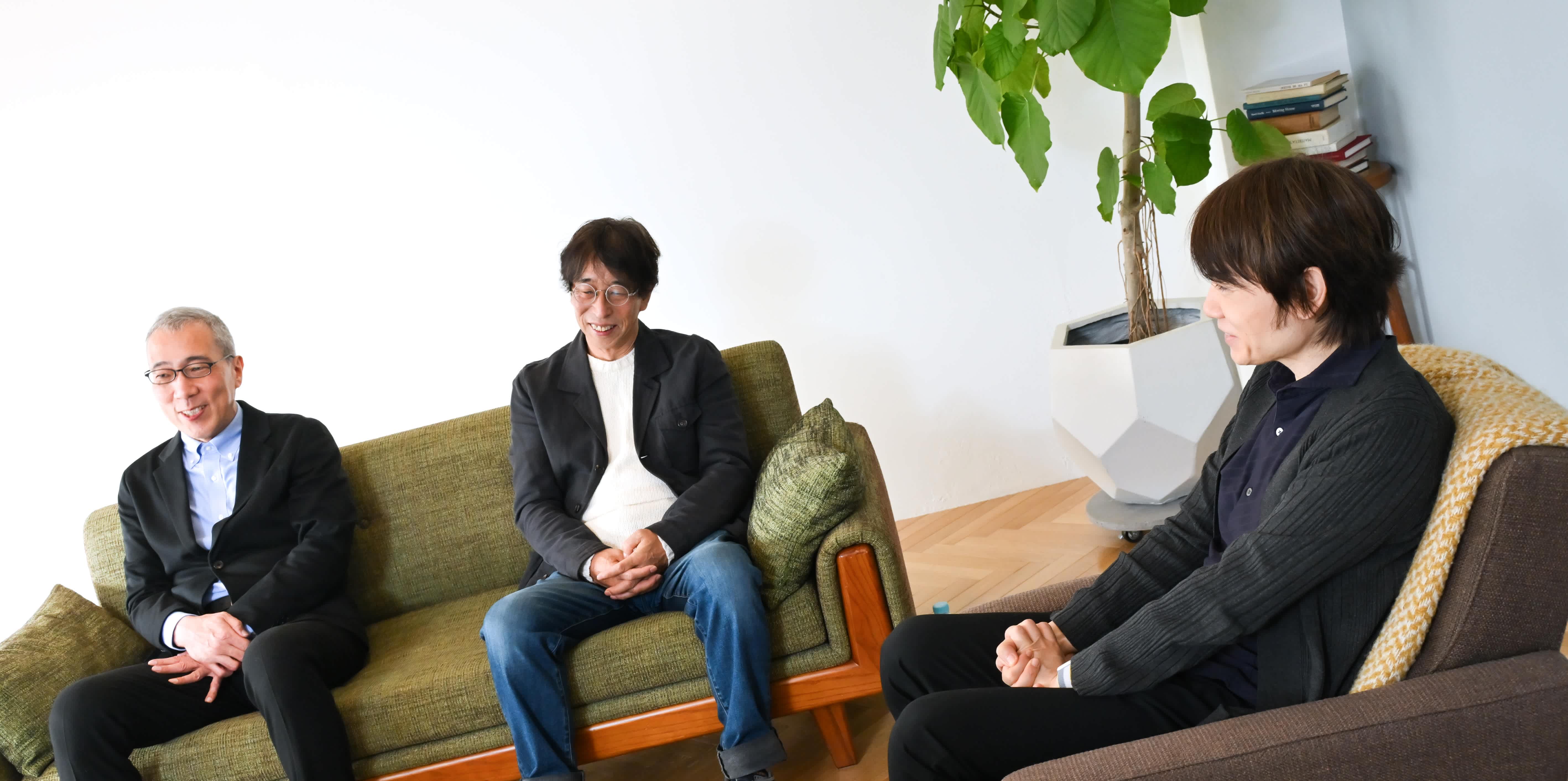
Interviewees
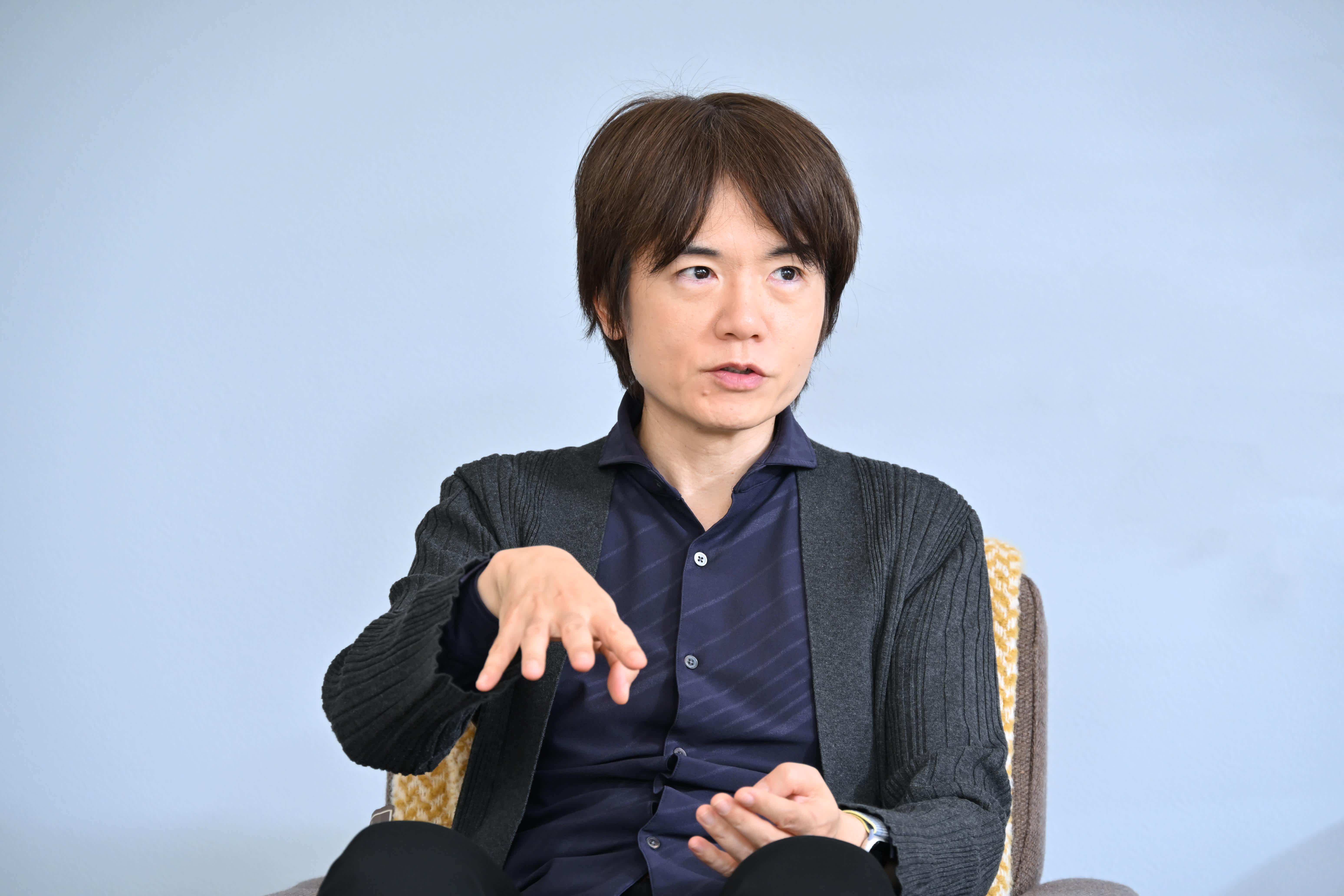
Masahiro Sakurai (middle) Director of Kirby Air Riders. Worked on the Kirby™ series, Super Smash Bros.™ series, Kid Icarus™: Uprising, and more.
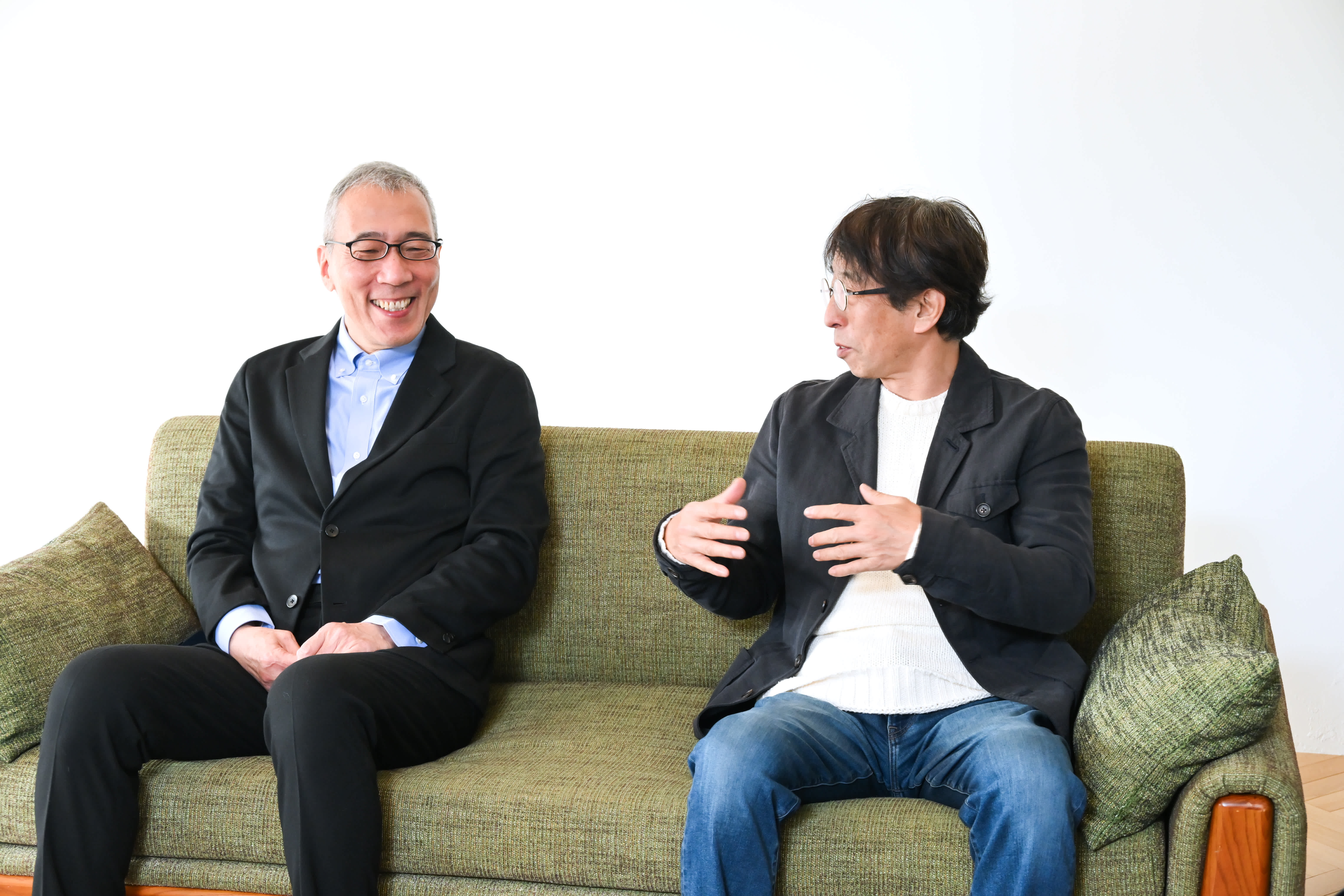
Noriyuki Iwadare (right) Composer. Best known works include the Grandia series, LUNAR series, and the Super Smash Bros. series.
Music Contribution: Teaser/Starlit Journey (JP ver.)/Starlit Journey: Ballad/Starlit Journey: Free/Airtopia Ruins/Crystalline Fissure/Steamgust Forge/Cyberion Highway/Skyah/Skyah (alt)
Shogo Sakai (left) Composer. Worked on Kirby Air Ride, MOTHER 3 (released in Japan only), Super Smash Bros. series, and many other game titles.
Music Contribution: Floria Fields/Waveflow Waters/Cavernous Corners/Mount Amberfalls/Galactic Nova
The wide variety of music in Kirby Air Riders is part of what makes it so fun. In Part 2, the trio discuss the behind-the-scenes story of its development. We have the game’s director, Masahiro Sakurai; the composer of the game’s main theme, “Starlit Journey (JP ver.),” Noriyuki Iwadare; and creator of various familiar music tracks, such as “Floria Fields,” Shogo Sakai.
In Part 2, we delve into the secrets behind the creation of the main theme, “Starlit Journey (JP ver.)”, take an inside look at the recording process, and hone in on the meticulous process of fine-tuning the music. We hope you will enjoy this alongside Part 1, where we took a look at the creation process and the concepts behind the compositions.
Chapter 3: Revealing the Lyricist for the Main Theme…
Sakurai: The main theme was okayed on the first take, wasn’t it?
Iwadare: I presented you with three songs out of nowhere. I started making what I thought was “the one” but then felt like something was off. That was my first take. I realized I needed to make something cheerful that children could sing along to, so I had a super cheery song as my second take. But then I reconsidered it yet again, thinking that I’d overdone the cheeriness a little. So I made a third take.
Personally, I felt like the third one was the best, but I wanted Sakurai-san to make the decision and submitted all three.
Sakurai: The second one you mentioned just now became “Starlit Journey (JP ver.),” and the third one became the ending theme, “Starlit Journey: Free (JP ver.).”
An excerpt from the final songs for Starlit Journey (JP ver.)
An excerpt from the final songs for Starlit Journey: Free (EN ver.)
Iwadare: The lyrics are the same in all three songs, since we made them lyrics-first (10).
(10) A song-writing technique where the lyrics are created before the melody.
So you intended for one song to be chosen from the three you submitted, but two were chosen?
Iwadare: Yes, that’s right. I was really surprised. (Laughs) Later on, they had me make an instrumental version (11), a solo version of the ending song, and all kinds of different arrangements of the main theme. Because two songs were selected, my workload effectively doubled. I got to try all sorts of things though, so it was a lot of fun.
(11) An instrumental version is a song without the vocals.
Sakurai: Your first take was a great song too. It just goes to show how much better the other two were. By the way, regarding the lyrics for the theme song, I haven’t mentioned it yet since I wanted to keep it under wraps, but I wrote them myself.
Animation directors, for instance, sometimes use a different name when releasing music, right? As a child, I really couldn’t understand why they would do that. Now I understand that you shouldn’t have that work’s world associated with a single person. Of course, there might be completely different reasons for it too.
It would bother me a great deal if people thought that the world of Kirby Air Riders was a certain way because I’m the one who made it. I want to keep fantasy as fantasy, to have a certain theme song because this or that happened in the Kirby world. I’m only bringing this up because we are discussing the circumstances behind the main theme this time around…
I had been thinking of the main theme as basically one song, but the lyrics I wrote had two sides to them. On the surface, the song expresses the joy of being together with the machines, but underneath all that is Zorah’s wish to regain his lost freedom as well. Iwadare sent me three great songs, and it occurred to me that we could use the third song, his third take, and integrate it into a Zorah-themed ballad of sorts.
But I was a little lost on how to actually make it work. The track that was sent to me was really just the first step. From there, it was going to be a very long road until it became a complete song. Even so, I decided to go ahead with it because I’d personally never heard a song where the lyrics conveyed two completely different sets of emotions through layers of connotations. This felt novel to me, so I asked Iwadare to take on the challenge.
When it comes to the lyrics, my basic premise is to remove anything that isn’t necessary and keep the phrases simple and short. I also pay a lot of attention to how the words sound, and have the A-section and chorus all follow a 7/5/7/5/7/7 pattern.
How is it in reality? As musicians, have either of you worked on a song that had a single set of lyrics but two distinct themes before?
Sakai: No, I’ve never heard of that before. Needless to say, I’ve never made anything like that either.
Iwadare: Nothing comes to mind. Once I’ve fully developed a song, only that particular melody comes to mind for those lyrics. Thankfully we were still just in the beginning stages this time, so I still had plenty of melodies to give.
Sakai: Iwadare-san, after you finished those three songs, you did say you could make ten more if you were asked to. (Laughs)
Iwadare: I was really in the zone at that point. (Laughs) Like I could switch modes and move on to a different song after one day. So I figured I could work while exploring different aspects. I think it actually might have been because the lyrics had so few words.
Sakai: Good point. The simple lyrics and tone were a good thing, they made it easier to come up with melodies.
Iwadare: I must have been really into the different aspects part of it.
Sakurai: It’s really the rhythm that makes the words sound good, isn’t it.
Iwadare: Yet in the Japanese chorus, one of the lines started with three syllables and another started with two.
Sakurai: I thought that would make things difficult too, and tried hard to find alternatives, but no matter what similar word I changed it to, it would just feel completely different. So I stuck with it.
Iwadare: You really had me scratching my head while working on it. (Laughs)
Sakurai: There’s another similar spot too, for a certain Japanese word that could be read as three or four syllables. I wrote it with four syllables in mind, but when the song was first finished, I realized it had been composed to three syllables instead. Still, it fit the rhythm of the song, and that was good enough for me.
Iwadare: Yeah, I didn’t think it could be read as four syllables. It didn’t fit lyrically, and three sounded better to me, so that’s what I went with.
Sakurai: The best songs are the simple ones, after all.
Iwadare: I was very conscious of sticking to making a song that a child could sing. While I was working on my second take, I wanted to create buzz with band music, so I just used band instruments for the chords, and that’s how the current accompaniment came to be.
Sakurai: At first, when making the main theme for City Trial, we discussed whether we should go with galop (12) for the tune. In the end, it did turn out somewhat similar to that.
(12)A musical term for a lively, galloping rhythm in a duple meter.
Now, back to the discussion about the way words sound. The course ‘Steamgust Forge’ is named ‘Machine Gust’ in Japanese, and it has a longer vowel sound, so it’s pronounced “Machiiine Gust”. But the Air Ride “machines” that appear in this game use a shorter spelling of this word, so you’d think it’d make sense to use the shorter spelling of “machine” in the course title as well, right?
Sakai: Yes, I was wondering what was up with that inconsistency.
Sakurai: The one with more characters is better. Not because it just had to have more characters. It’s hard to explain why it sounds better, but I wrote it that way because I think it’s important. For the lyrics for Starlit Journey (JP ver.) as well, they were much shorter at first, but I supplemented them for the sake of the song.
Iwadare: The lyrics were way too short, it was a real problem for me. (Laughs)
Sakurai: There was one line in the Japanese song in particular that was made longer afterwards. Aside from that we mostly kept it the same, and I think we did a pretty good job of bringing it all together.
Another thing I thought about while creating the lyrics was to have the imagery in mind. For example, in the Japanese lyrics there’s the line “Load up your luggage, light a fire,” but Air Ride machines can’t actually carry any luggage. (Laughs) So it feels a little inconsistent when thinking about it in-game, but “load up your luggage” does convey the feeling that something is about to begin, don’t you think? Like a journey is about to start, or you’re heading out somewhere. By using figurative expressions like these, I aim to evoke emotion and imagery in each line.
Sakai: The line about reaching long-awaited dreams makes the listener feel like the song is about them, and then they’ll have the secondary impression of it maybe being about Zorah. It’s the kind of thing that gives you goosebumps later on.
Sakurai: And also, for the ballad version (Starlit Journey: Ballad (JP ver.)), we actually considered using Vocaloid software to bring out Zorah’s mechanical aspect, didn’t we? We put a slight effect on the voice, but it was hard to get it sounding like something semi-alive or incomplete. We went back and forth numerous times between the effect sounding too robotic or too human.
Iwadare: The one thing I clearly remember about the main theme was the English lyrics. Sakurai-san turned down every suggestion to have the lyrics sound better translated a certain way, and insisted on keeping them exactly as they are. Even for the English lyrics, he was extremely particular about keeping the word count tight, and making sure that the phrasing didn’t sound strange or unnatural.
Sakurai: I think you might have misunderstood something there… There are certainly parts that differ from the Japanese lyrics. That said, I do remember when they translated a section as “shooting stars in the night”, and I told them it’d be a problem for it to be nighttime in that spot. The overall lyrics take place over the span of a day, so we can’t have the time of day suddenly changing.
This isn’t directly related to our current discussion, but during the translation period, there were times where we asked for adjustments to avoid contradictions in the game’s setting. Because otherwise, what each person pictures in their mind would end up inconsistent.
Sakai: That’s truly a director’s perspective to have.
How did you decide on the vocalists for the main theme, YuReeNa and Sayo?
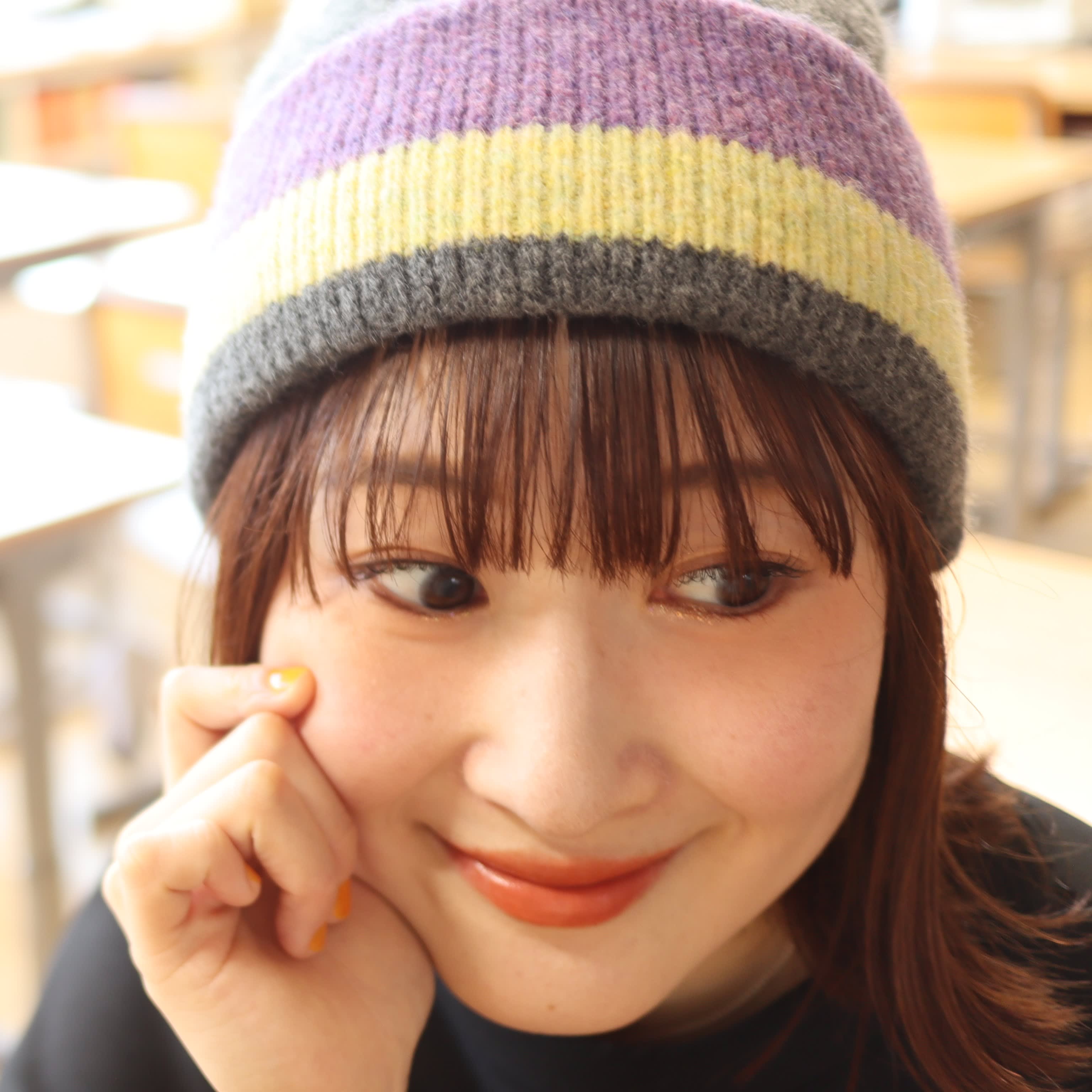
YuReeNa. A vocalist for the main theme, Starlit Journey (JP ver.)
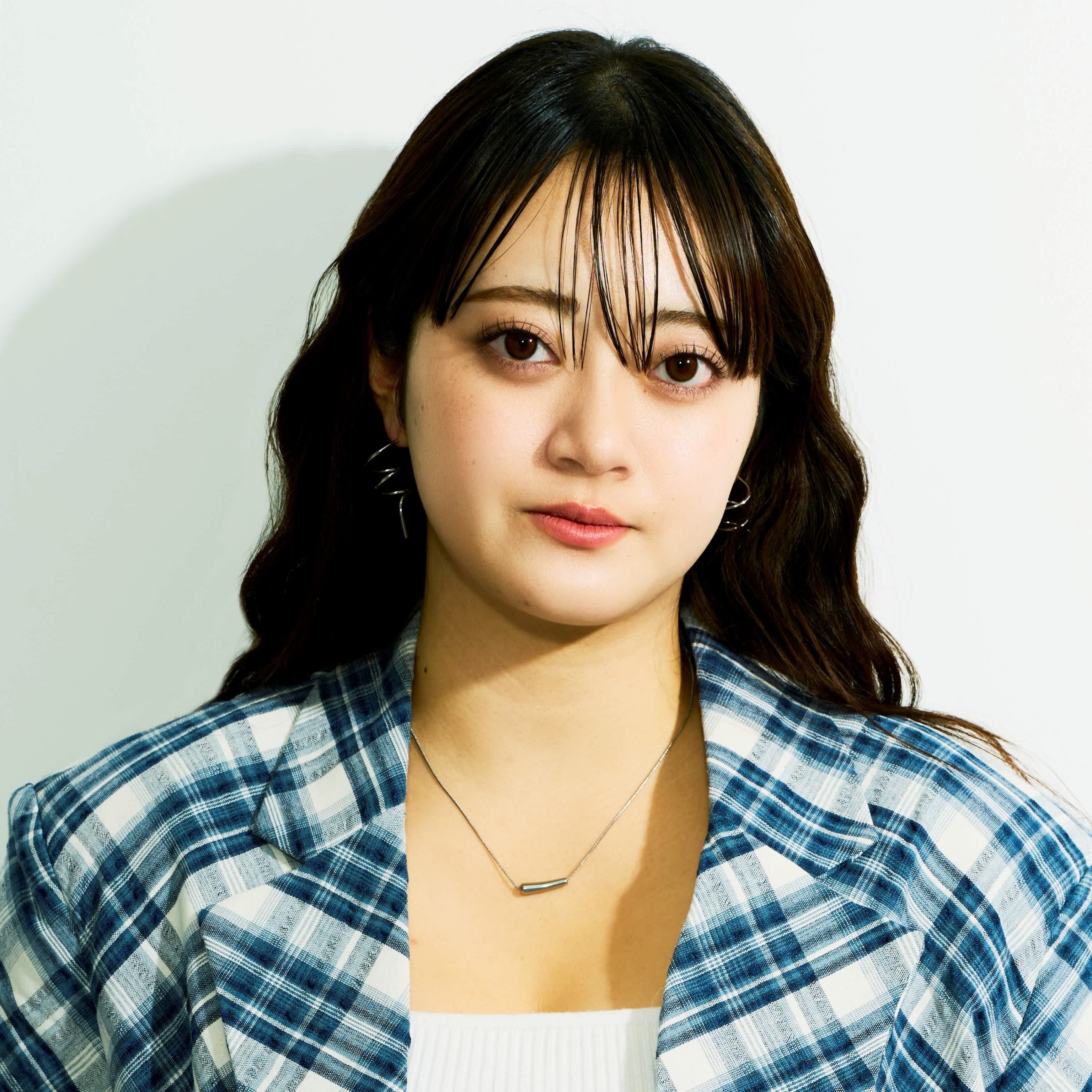
Sayo. Vocalist for the ending theme, Starlit Journey: Ballad (JP ver.), Starlit Journey: Free (JP ver.)
Sakai: We made a request to Face Music (12), and they sent us several candidates.
(12)Handled the coordination of performers and studios for this title
Iwadare: We had already decided which key the song would be in, so we searched for people who would suit it, listened to them together, then discussed it and made a decision.
Sakurai: All of the candidates were excellent, but since we didn’t want anything too distinctive for the song itself, we chose those with a more neutral singing style.
Iwadare: It was difficult to convey how we wanted them to hold back and adjust their singing style.
I actually thought it would be best to convey this intention to YuReeNa-san directly before recording, so I had her practice at a local karaoke store while explaining it to her. Thanks to that the recording went comparatively smoothly and we were able to get a good take.
On the other hand, Sayo-san seemed to struggle with the low key. After multiple takes, we were able to get a good recording with vocal scoops and vibrato kept in check. The song that Sayo-san sang was actually originally intended for a male vocalist.
Incidentally, both of them happened to be very big Kirby fans, so they were really nervous speaking with Sakurai-san online for the first time. (Laughs)
Sakurai: From what I saw of them online, they didn’t seem like that at all though?
Iwadare: No, not at all. During our meeting, I had only told them that myself and staffers from Bandai Namco Studios would be present, and, without mentioning your name directly, I mentioned that another director might be there. Then you came in and said “Hello, Sakurai-san here.” And the two of them said “We can’t believe Kirby is actually here!”.
Sakurai: I’m not Kirby, though. (Laughs)
Iwadare: We’d heard these singers’ very first songs, and during recording we sometimes felt bad that we were forcing them to sing with so little emotion, despite being such good singers.
Sakurai: There were points where we had them hold back from using their signature styles.
Iwadare: Yes, even though we asked them to sing in a way that toned down their strengths, we were able to get some good takes out of them.
Sakurai: After all, it’s the final product that matters the most. I’m very glad that the final product has been well received.
Sakai: During production, Sakurai-san actually blurted out “This might be my favorite ending out of all of the games I’ve made so far.” I got a little choked up when I heard that. You’re usually so unfazed by everything, but even you felt that way!
Sakurai: Hey now, don’t make me sound like some kind of emotionless monster. (Laughs) That ending is great because, in terms of pacing, the tension builds and then releases very cleanly. The rebound is huge. I want people to really feel that.
Sakai: That’s why when I heard you say those words, I really was overjoyed. Though I haven’t actually seen the ending in the game yet myself. (Laughs)
Sakurai: The pair of you need to go rescue Zorah. (Laughs)
Chapter 4: An Extravagant Recording
How were the songs actually recorded?
Iwadare: We did one recording session in February, and another one in May. It was a lot to record live. We had strings, wind, guitar, piano, drums, and bass. We had different performers come in depending on the day, and it took about one week to record each song.
Sakai: We had the absolute best musicians perform for us. It wasn’t just the music from the two of us either. Including the music handled by the development team at Bandai Namco Studios, there were over fifty songs. I think it was quite the extravagant music production.
Iwadare: I was pretty worried that we wouldn’t get the same members for both February and May. Worst case scenario, we’d have to use some different performers, but by some miracle, we were able to have all the same members show up.
Sakai: We had the same musicians for each session, so we were able to get the same sound. Same with the studio. And of course the engineers, too. It really had that sense of unity.
Iwadare: And then we had Sakurai-san listen to the final version at the studio.
Sakurai: Although, there were times when everyone on site thought that something sounded good, but I’d listen to it myself and think “Hold on a second!” That’s because I was reviewing it across different playback environments. Not high-performance studio speakers, but purposefully cheap speakers, regular headphones, even the built-in TV speakers, and changing the output source each time.
Sound issues are tricky because even the same thing can sound completely different depending on different factors, such as the listener’s age. This isn’t only a sound problem of course. Video quality can also change depending on things like HDR settings. So all we can do is average it out.
Sakai: Speaking of sound adjustments, in the announcement footage for Kirby Air Riders in Nintendo Direct: Nintendo Switch 2 – 4.2.2025, Sakurai-san pointed out that the guitar and orchestral layers were split into two. Basically, the guitar layer was too loud, but I was impressed with how you put it.
Sakurai: It’s okay to have the guitar extra loud if everything sounds coherent, but I could tell it was on separate layers, so I asked them to have it blend better.
Sakai: I see, it’s because it wasn’t blending in. To check the problem, I didn’t listen to it on the studio monitor. I intentionally brought a cassette player, listened to it, and thought “This bit, right here.”
Sakurai: There’s no single right answer for the output. So even if we can’t cover everything, we can only aim to cover as many bases as possible. But when everyone’s working hard in the studio, the creators themselves get too used to hearing it.
Sakai: Your ears get tired.
Sakurai: And in that state, when someone like me turns up and gives it a listen, it’s like “What’s up with this?” Having an objective viewpoint is very important.
We also had the main theme play at the start of the Kirby Air Riders Direct. It’s not just the music either, it’s really important to make everything easy to remember. Same thing with the names for Zorah and Gigantes, they’re easy to remember. You don’t want the kind of name where someone plays Road Trip and thinks to themselves, “That poor character, what’s his name again?” (Laughs)
A lot of people have asked me why his name is Zorah, but it’s simply because I thought to myself, “This guy’s name is Zorah,” while I was writing the scenario. Just that, no other reason. As for Gigantes, since it was supposed to be something unknowable, there was no point in over-thinking it. So I named it with what my heart was telling me at the time.
Sakai: Rumors on the internet say that it’s related to Sora Ltd. (13) in some way.
(13)A game development company founded by Masahiro Sakurai.
Sakurai: That is absolutely unrelated. I did write the scenario for Road Trip myself, but it wasn’t part of the design plan to begin with, so I didn’t have time to hesitate. Well, we can talk about that more somewhere else.
Do you have any other songs in Kirby Air Riders that you’re particularly attached to?
Sakai: Floria Fields left the biggest impression on me personally. It was the first song I completed, and I don’t think it had too many takes.
Sakurai: That one was fast. It was right on the mark from the start.
Sakai: I composed that song during a phase where I was rather conscious of what Sakurai-san wanted from me, as someone who had worked on the previous Kirby Air Ride. Namely, something similar to Fantasy Meadows. So I figured I could work the atmosphere of the course into the song bit by bit, and it went smoothly.
The song shifts between various instruments throughout, but the melody pulls the whole thing together, like one big brush stroke. So I feel like I managed to create a strong, sonorous melody.
Iwadare: I was really surprised when I listened to it coming through the Nintendo Switch 2 system itself. It actually sounds more coherent on the Switch 2 than it does in the studio. I think it’s because of the proximity of listening to it in your hands. I really want everyone to have a chance to hear it from the system’s speakers.
Sakai: And actually, Sakurai-san instructed me to make the intro for Floria Fields light and energetic, so I reworked it.
Sakurai: Yes, how it starts really matters, so I was quite particular about the intro. It’s not about whether it suits the course or not, what matters the most is whether it feels good.
Iwadare: I’m quite partial to Skyah (Alt) myself. I really wanted a trumpet solo in the instrumental ending.
Sakurai: Indeed, when I think of Iwadare-san, I think of trumpets.
Iwadare: I’m actually a trombone player myself, but I love brass. For the guitar, bass, and brass players, they were brought together with my input, so we were able to create something with a sense of mutual understanding.
Crystalline Fissure is also another memorable song. I tried putting in a high-speed drum and bass (14) beat. I actually had them play it live, and it turned out incredibly well. This whole time we kept saying that there’s no way we could record the whole thing live, and yet we were given the privilege of indulging in that extravagance.
(14)Music with a high-speed and complicated drum beat combined with bass.
Sakai: The performers were incredibly meticulous too. We had an issue where the coordination between the bass and drums was ever so slightly off. Looking at the waveforms, it was a difference of barely a few milliseconds (15)… Even when we said it was fine, they would go back and play the part again from the beginning. It really was an extravagant recording session.
(15)1 millisecond = 1000th of a second
Sakurai: And on the flip side, we have songs that were quite difficult to create.
Iwadare: I was working on Cyberion Highway right up until the very last second. I even mixed it myself, but I still couldn’t make it in time. (Nervous laugh)
Sakurai: It didn’t have many retakes though. Was the deadline a little too tight?
Iwadare: Having to make more arrangements for the main theme was the biggest thing. We worked on the main theme for around nine months, didn’t we?.
Sakai: Ah yes, that’s right. We were working on that for a long time.
Sakurai: The main theme was used as a field song in City Trial as well. The field song was a whole five minutes, so it was quite long.
Iwadare: And to make it fill out that five minutes, we had to power it up from the 4:30 mark. I didn’t think we could pump it up without bringing it down first, but Sakurai-san insisted that we go all in without the descent. We had countless discussions and adjustments, and the days just flew on by… That’s how it felt.
Sakai: I can barely remember anything from when we were working.
Iwadare: Me neither, I don’t remember anything. (Laughs)
Sakurai: True, when there are so many takes, it’s hard to remember which one becomes the final version.
Sakai: File management is a nightmare as well. It’s like, did I really make this many?
Iwadare: Do you keep your old files?
Sakai: I do, just in case. I keep all of them.
Iwadare: I myself think I’ll never use them, so I delete them all. I don’t keep any rejects.
Sakurai: I don’t keep everything. If I did that, I’d have to keep everything from the entire team, not just audio. That said, it is interesting to listen to the first take of a song, isn’t it?
Iwadare: Before this interview, I listened to all the songs again. We made all kinds, but listening to them as a whole piece, there is a sense of unity. We really did stick to the Kirby Air Riders concept.
Sakurai: The melodies form the flesh and bones of the game, but even with the variety of melodies, the game is a unified whole. It’s not a matter of which came first.
Iwadare: That there were so many different versions might even be a factor in that sense of unity.
Sakurai: That way the songs are memorable to the players.
Iwadare: Yeah, again, I’m really glad. It was such an interesting project.
Sakurai: That we’re able to have this discussion at all shows that we’re all very glad. We wouldn’t be here if the project ended with everything thinking, “I’m so over this!” (Laughs)
Iwadare: That’s a very good point. (Laughs)
Sakai: Right when I was thinking that I might never get to work with Sakurai-san again, this offer came through. I really am so glad we could work together like this.
Iwadare: It’s fine, we’ll have plenty more chances.
Sakurai: Well, we’d be singing a different tune depending on whether the final product was received well or not. And it was received surprisingly well this time. Some people are playing for worryingly long periods, others have cried over the composition of the music. So of course I think this was an interesting project. I’m quite touched. (Laughs)
(Laughs) Thank you for joining us today!

*Nintendo Switch Online membership (sold separately) and Nintendo Account required. Not available in all countries. Internet and compatible smart device required to use app. Data charges may apply. Terms apply. nintendo.com/purchase-terms/