

Nazi sergeant Hermann Hoyer, whose photos of the execution of Greek patriots at Kaisariani resurfaced after 82 years, is seen in this picture. The year is 1944.
At the Arsakeio of Psychiko, a Greek school requisitioned by occupying forces to serve as a military hospital, he is seen in the middle among German soldiers who pose for a souvenir photograph. Hoyer could never have imagined that 82 years later, the images he captured would spark a national movement and become the subject of high-level diplomatic negotiations.
This is the story of a film roll containing 262 photographs. Among them are the first visual records in history of the execution of 200 Greek communists and patriots at Kaisariani on May 1, 1944. Hoyer’s album, which documents the period of 1943–44, was recently authenticated by experts from the Greek Ministry of Culture in Evergem, Belgium. Following personal negotiations by Culture Minister Lina Mendoni, the album is finally returning to Greece.
The Belgian collector, Tim de Craene, expressed his “relief and happiness” that the collection is returning to the Greek State. The acquisition is estimated to cost €100,000 ($117,850) with the process expected to be finalized in the coming weeks.
Identifying the witness
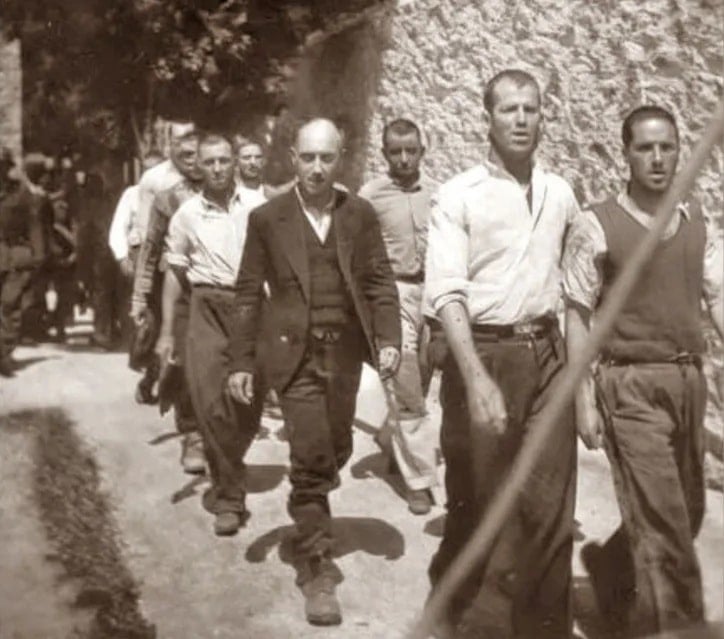
Through historical documents presented by Proto Thema and the research of collector Alexios G. Katefidis, the man who recorded these crimes has finally been identified. Sergeant Hermann Hoyer of the 1012th Battalion, originally from Birkenfeld, Germany, traversed Greece as a conqueror. His Leica camera documented everything from the Corinth Canal and Patras to the Haidari concentration camp.
Hoyer’s lens captured the arrival of Wehrmacht Major General Franz Krech via seaplane, the ambush that claimed Krech’s life, and the subsequent Nazi funeral in Athens, where coffins were draped in the swastika. Most significantly, he documented the “reprisal” orders and the lead-up to the execution of the 200 patriots at Kaisariani.
Hoyer was a seasoned soldier, a veteran of the 1939 invasion of Poland who had served on the Siegfried Line and across Western Europe. After a brief discharge, he was re-mobilized in 1943, serving in Yugoslavia before arriving in occupied Greece. He survived the war, leaving the Balkans in September 1944, just a month before German forces blew up the Corinth Canal during their retreat.
The missing “aftermath”
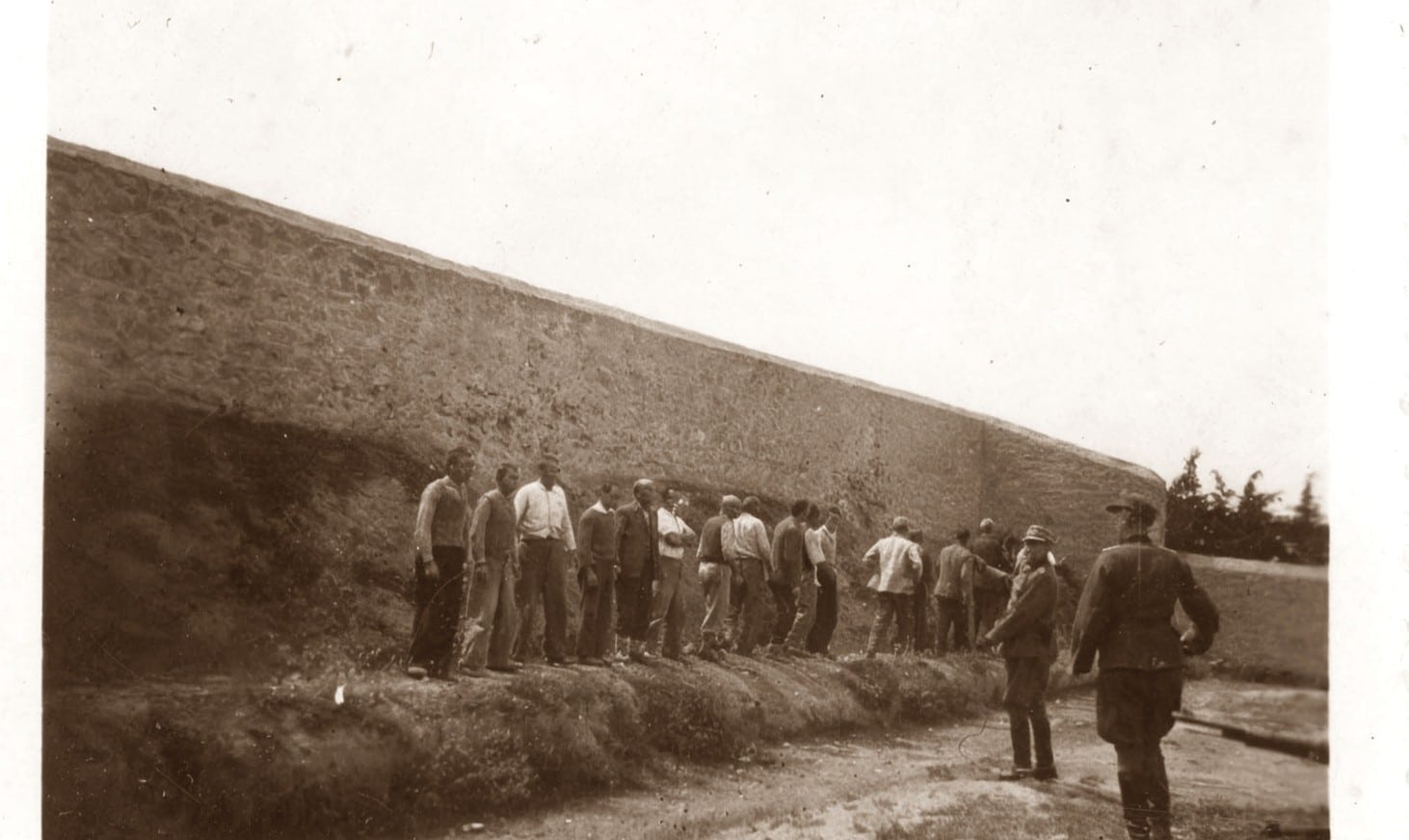
One chilling question remains: What happened to the photos of the “aftermath”—the images of the fallen patriots? It is almost certain that Hoyer photographed the bodies, as it was common practice for German soldiers to document every stage of an operation for their souvenir albums.
“The Germans documented everything at a strategic and operational level,” explains Mr. Katefidis. It is possible that Hoyer himself destroyed the most graphic images of war crimes to avoid future prosecution, or that a middleman—perhaps a relative or an auction house—removed them before the album reached De Craene.
However, the value of what remains is immeasurable. For the descendants of the victims, these photos offer a first-ever look at their grandfathers and great-grandfathers standing defiant before the firing squad. Until now, these moments existed only in oral descriptions. Now, they have a face.
A global market for occupational history
While this specific collection is unique, the trade of such artifacts is vast. On platforms like eBay and specialized German military collectibles sites, thousands of photographs of occupied Greece are sold daily, with prices ranging from €3 ($3.54) to over €30 ($35).
For some German soldiers, these photos were clinical documentations of their “adventures” abroad. For others, they were a darker, more perverse form of trophy-hunting. Regardless of the original intent, for Greece, these images are more than just paper—they are the returned fragments of a national tragedy.
Related: The 200 Greeks Executed by Nazis on May Day