
Ever since Phil the groundhog wobbled out of his burrow on Feb. 2 and predicted six more weeks of winter, we’ve been counting down to spring—and it’s finally here. Spring begins March 20, at 10:46 a.m. EDT.
Science behind spring
What does it mean when we say we’re “in spring”?
Meteorologists define spring as March, April and May, where astronomically, it is March 20–June 21. We refer it to as the vernal equinox —“vernal” meaning spring and “equinox” meaning “equal night and day.”
The vernal equinox is the exact moment when the sun’s direct rays cross the Earth’s equator.
The Earth is a sphere, and it takes 365 ¼ days to orbit around the sun and because it spins on a tilted axis—23.5 degrees from vertical—we experience seasons. That axial tilt is the reason we have spring, summer, fall and winter.
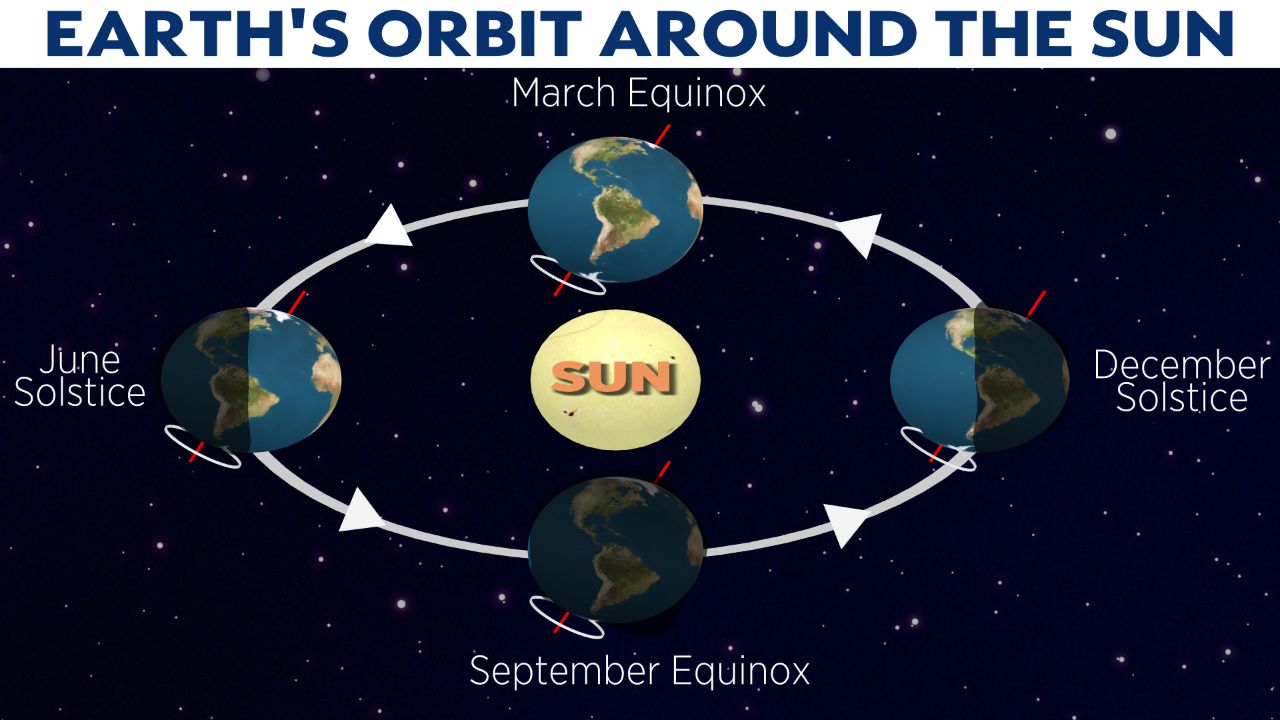
The equator divides the Earth into the northern and southern hemispheres. During winter in the northern hemisphere, it tilts away from the sun while the southern hemisphere tilts toward it.
At the vernal equinox, the northern hemisphere begins tilting back toward the sun and the southern hemisphere begins tilting away, so the sun appears to pass directly over the equator during this transition.
At the winter solstice in the northern hemisphere, the sun is directly over the Tropic of Capricorn, 23.5 degrees south of the equator—its farthest point—resulting in the shortest day and longest night of the year.
At the summer solstice, the opposite occurs: the sun is directly over the Tropic of Cancer, 23.5 degrees north of the equator—its closest point—bringing the longest day and shortest night of the year.
Equal day and night, not exactly
Our “equal” day of daylight and night doesn’t fall precisely on the equinox because of our atmosphere and the physics of how light behaves.
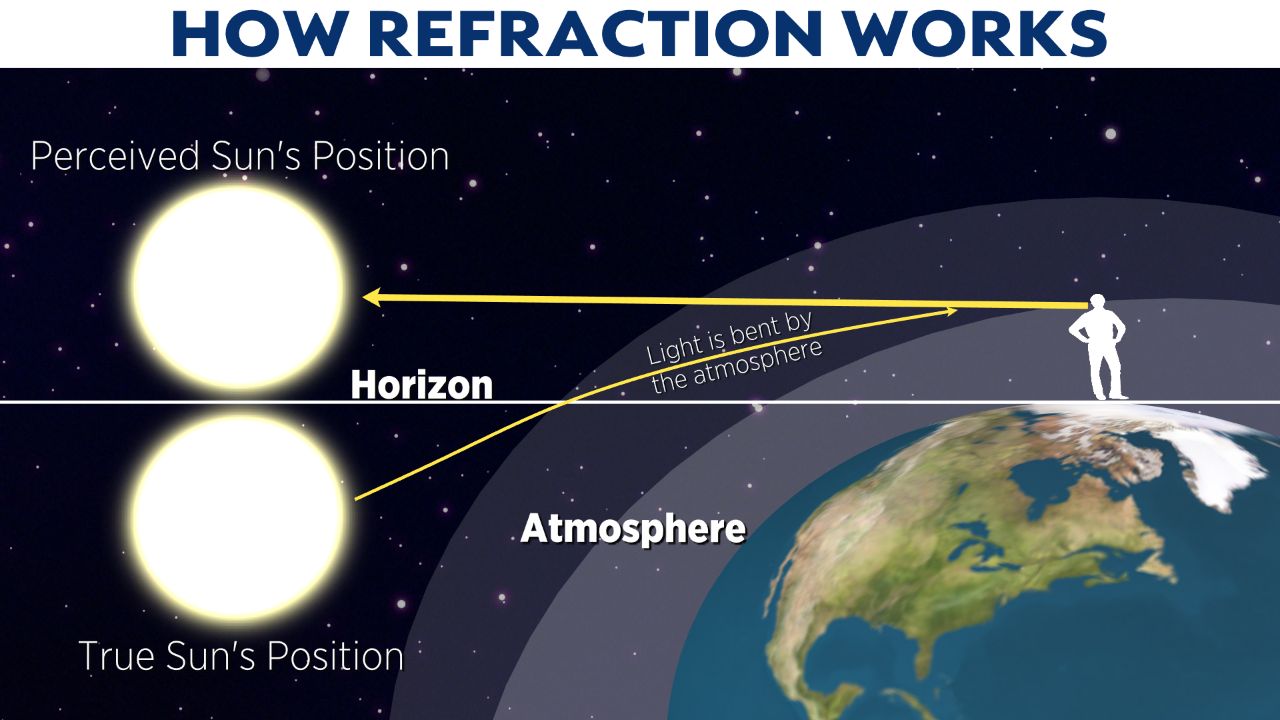
When light passes at an angle from one medium into another that is denser, its path bends. This occurs in our atmosphere as sunlight enters it: the light waves bend—a phenomenon called astronomical refraction—allowing us to see the sun for a bit longer than we otherwise “should.”
It’s similar to placing a pencil in a cup of water and looking at it from the side; the pencil appears to bend where it enters the water.
Sunrise and sunset
Another thing to consider is defining sunrise or sunset means.
For sunrise, it’s when you first see the sun above the horizon and for sunset, it’s when it slips below the horizon.
If you classify it, there would be a few moments longer, causing the day to be a bit longer than the night at the equinox.
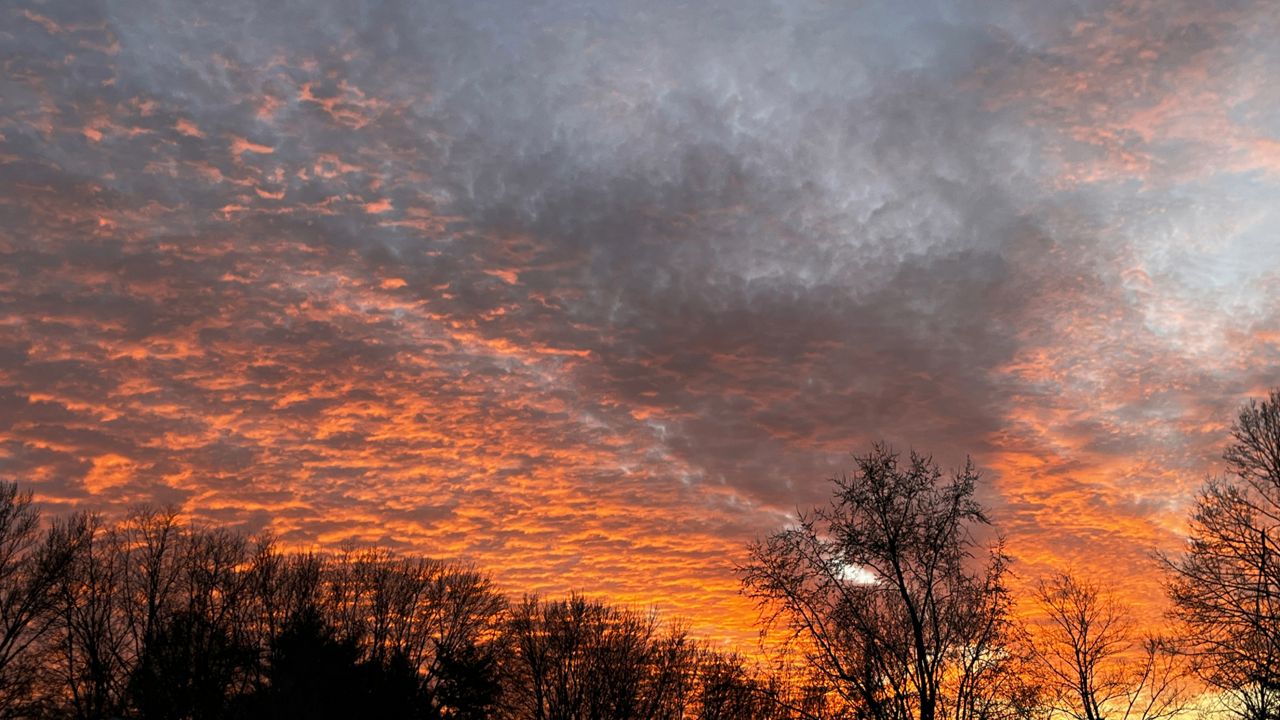
A winter sunset in St. Charles, Mo. (Spectrum News/Stacy Lynn)
Debunking spring myths
Lots of fact and fiction regarding the equinox. Some refer to the equinox as the only day you can balance an egg on its end or place a broom on the floor and it will stand on its own.
Spoiler alert, you can do these any day of the year.
Beginning of spring outlook
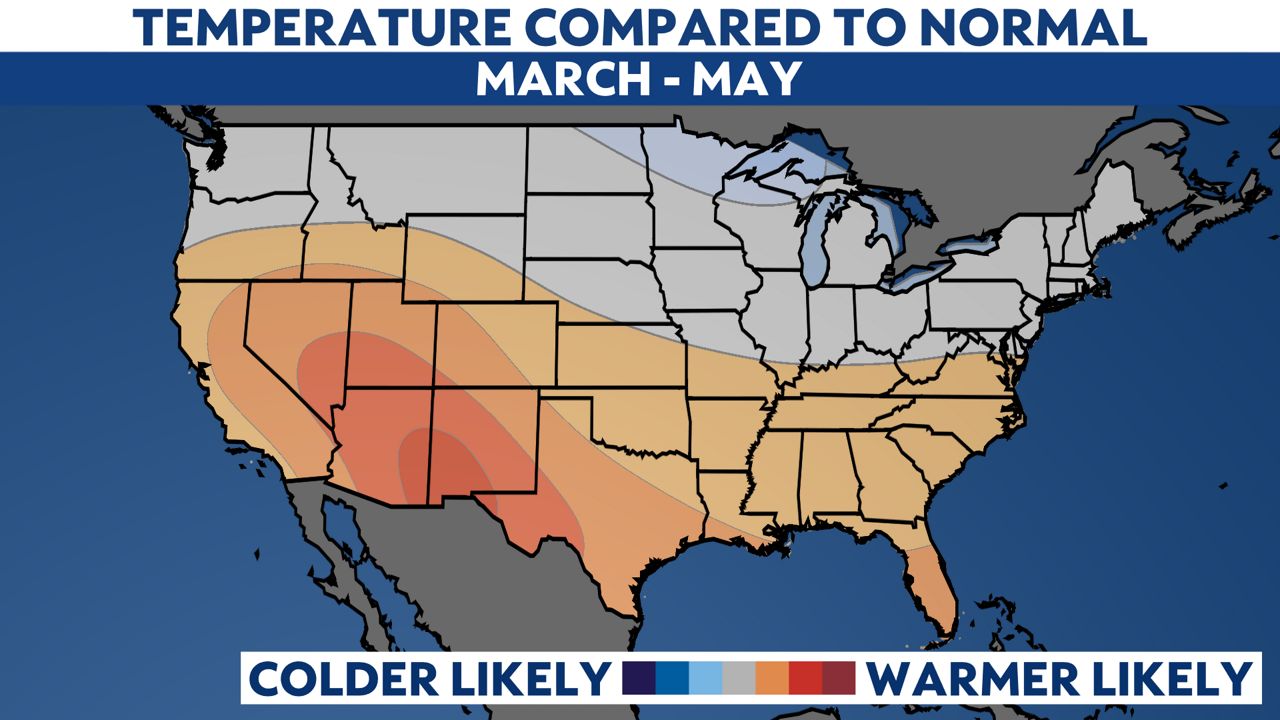
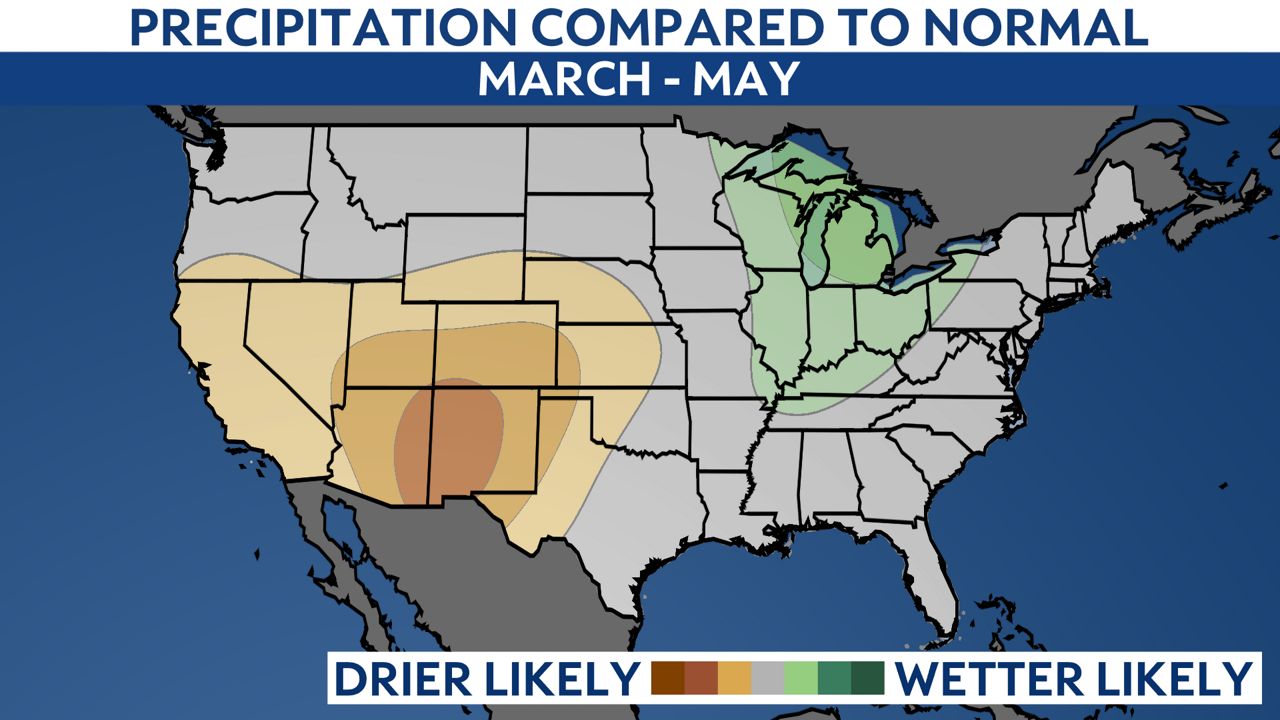
According to the Climate Prediction Center, spring is shaping up to be warmer than average for the southern half of the country, especially in the southwest. It also looks like it will be drier than average there as well. Precipitation may be a bit above average around the Great Lakes.
The summer solstice will begin on June 21 at 4:24 a.m. EDT this year.