
Read more Featured Stories like this in The Strad Playing Hub
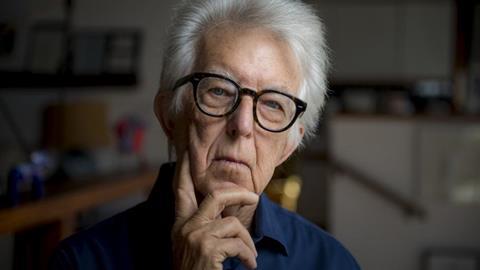
Roger Reynolds has long pursued a distinctive path shaped by an intrepidly experimental outlook and a voracious curiosity for connections between music, literature, visual art and film. Awarded the Pulitzer Prize in Music in 1989 for Whispers Out of Time for string orchestra, the San Diego-based composer continues to write with undiminished energy into his nineties.
That unstoppable creative drive is reflected in the latest Ekkozone release, the third in a three-disc series of premiere recordings devoted to his music. The two pieces gathered here, both written in the past decade, exemplify the close collaborative relationships with performers that have long been central to Reynolds’s process.
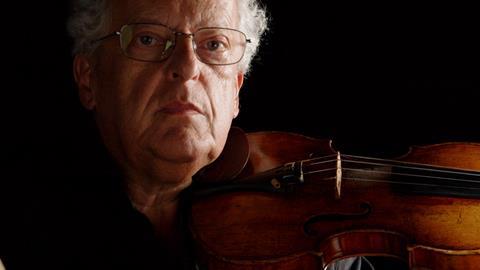
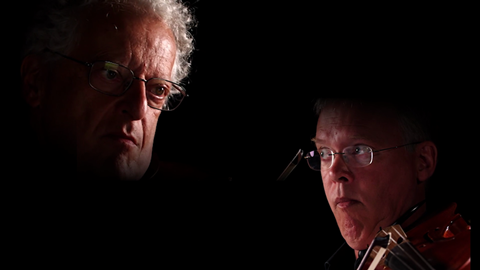
WISDOM’s Sources, a violin–viola duo created with Irvine Arditti and his Arditti Quartet colleague, violist Ralf Ehlers, draws on contrasting notions of ‘wisdom’ — from Greek tragedy and Buddhist philosophy to the writings of W. E. B. Du Bois. ’O’o for flute and string quartet, its companion work on the album, takes its starting point from the song of an extinct Hawaiian bird, shaping its material around ideas of call and response.
A central thread in the Ekkozone series is Reynolds’s long-standing artistic partnership with Arditti, for whom he has written extensively. During the summer of 2024, as friends gathered to celebrate the composer’s 90th birthday, Arditti and Ehlers visited him at his home on the California coast to record WISDOM’s Sources.
The sessions were filmed by Reynolds’s colleague, filmmaker Kyle Johnson, as the basis for an accompanying film portrait — an independent visual composition that unfolds in parallel with the music.
In conversation with US correspondent Thomas May, Arditti reflects on his decades-long engagement with Reynolds’s music, the collaborative process behind WISDOM’s Sources, and his experience of performing the composer’s work.
You’ve known Roger Reynolds and his music for many years now. Tell us a little about how you first connected and how your friendship and collaboration developed.
Irvine Arditti: Roger appeared at one of our concerts in Huddersfield’s new music festival in the early ’80s. We were playing music of Xenakis, whom I later found out Roger admired as much as I did. We were then a young, promising group rapidly gaining a reputation, and Roger offered us a quartet gratis if we agreed to programme it as much as we could.
We immediately got on and our friendship developed rapidly from mutual respect for each other and our musical interests. Over the years, other interests were exposed and often shared in our mutual residences: a love of eating and him cooking, with me as his tidy-upper, tennis, discussing the various styles of the then superstars, etc.
From a violinist’s perspective, what stands out to you about the way Reynolds writes and thinks as a composer?
Irvine Arditti: For me, Roger is the ideal composer in his attitude and care in writing for the violin. He has always shown great care for our long-standing relationship, and above all wanted me to enjoy playing his music.
He has gone to great lengths to make his music enjoyable to play and even said so during the process of composition – comments like ‘I want you not just to execute my piece with your dedicated professionalism but also to enjoy playing it.’
It is my interpretation that by making his music more enjoyable to play, it has opened up access to more traditional violinists, without requiring a new music specialist.
But this is where the intellectual challenges begin, as the depth of the music offers many possibilities.
The new Ekkozone release includes WISDOM’s Sources, a violin–viola duo written for you and your quartet colleague Ralf Ehlers. How collaborative was the process of bringing this piece into being – especially given the visual dimension that accompanies the work?
Irvine Arditti: Roger is constantly desiring feedback from his performers, before and after, and also afterwards with other musicians that he respects. He does not compose in a vacuum. So I would say without hesitation, the most collaboration that could be possible between composer and performer.
WISDOM’s Sources, a violin–viola duo, was no exception and probably the most extreme in terms of collaboration before the work’s composition.
Roger writes: ‘Roberto Gerhard taught me that the best condition in which to begin a creative project is a state of “mild anxiety”. I don’t remember ever daring to approach a subject as serious (to me) as personal identity (especially my own) or what “wisdom” or “truth” might be or mean.’
He sent materials that address three possible perspectives on a very fundamental question, which he characterises as this: ‘What process, what way of thinking/acting can most usefully lead us towards improved understanding, wisdom, truth about our place in this world?’
He did not claim that the perspectives he chose were the most valuable or useful, but that our shared history had ratified the view that they have mattered. These were Greek tragedy, Buddhist ideals and the African-American circumstance. How our reactions to these subjects influenced the writing of the composition remains a mystery, but the subsequent arrival of many sections of musical material, which were sent for our reaction with regard to the final composition, began the next process of collaboration.
You’ve of course premiered an extraordinary range of contemporary music over the years, much of it written especially for you and the Arditti Quartet. When Roger sends you a new score, what are the first things you look for as you begin to get to know the piece? And given that his music often draws on philosophical or extra-musical ideas, how much do those conceptual layers influence the way you approach it in practice?
Irvine Arditti: Firstly, I would not say that I would approach a work of Roger’s in a different way to most other scores received of the same ilk.
I would go through it, analysing the complications or challenges of the work and then mark my part so that it contained as much information as possible that only the score possesses, such as synchronisations and rhythmic and pitch relationships between my part and the other three players.
The initial process would be purely technical, although also absorbing the architecture of the music. For me, this is the most important initial process, and only later can the real shaping and other more external influences take place. Sometimes these external influences do not affect the interpretation and are purely part of the composition process.
Roger is now in his nineties and still writing music that pushes into new territory. From your perspective as a longtime collaborator, what continues to surprise you about his work?
Irvine Arditti: Roger is an amazing composer. I have known him for almost fifty years, and to this moment he continues to stimulate both his performers and audiences with the most carefully thought-out, crafted and inspiring music.
He does not just write notes on paper but analyses why those notes, and not others, should be there. Post-composition, he also has an amazingly clear idea of how the music should be interpreted. Roger’s great intellect allows him to incorporate many other thoughts and connections to other art forms into his compositions.