
To begin, I’d like to ask about your company’s philosophy and approach to manufacturing. When looking at Japanese apparel, I often feel that Japanese makers place a strong emphasis on precision, continuous improvement, and the pursuit of craftsmanship—driving product innovation that helps wearers feel more confident and perform better every day. Your concept of “unfinished craftsmanship” also seems to embody that spirit. Could you share your approach to product development, and the philosophy behind “unfinished craftsmanship,” with Newsweek’s 65 million readers?
The mindset of craftsmanship in apparel has existed for a long time all over the world, not only in Japan. However, medical uniforms were an exception. For many years, they were treated like consumables—almost disposable workwear—and circulated as standardized products you could find anywhere. Yet the people who actually wore them were never truly satisfied. When we founded the company, we happened to realize this through customer feedback. The products existed in form, but they did not fully meet the functions and value that were genuinely needed. From there, we focused on what healthcare professionals truly want—something that motivates them and lifts their spirits when they put it on—and we have continued to refine our products through repeated improvements.
Medical apparel is not a field where trends change frequently like in other industries. For years, there was almost no change. That is precisely why we have continued to improve based on essential needs. Our philosophy is to take something good and keep making it better over the medium to long term. That is why, in Classico’s craftsmanship, we use the word “unfinished.” Because we operate as a D2C business, we hear directly from customers—but they are never 100% satisfied. Needs constantly evolve depending on generation and working environment. As long as we keep responding to those voices, improvement never ends. That is why, for us, product making is “unfinished”—an ongoing evolution.
Your business model is centered on B2C and D2C, and in medical apparel you are truly a pioneer. Why did you choose this model, and what are the strengths of the B2C/D2C approach?
Before we entered this industry, there was almost no B2C. There was always an agent between the manufacturer and the user, and manufacturers could not directly hear the voices of the people actually wearing the products. Through a D2C business, we can receive feedback directly from end users—healthcare professionals—and capture frontline insights that were previously overlooked. We can understand their requests, expectations, and challenges, and reflect them in our products. That is our greatest strength, and it leads to continuous improvement.
Could you share an example of how customer feedback directly led to product improvement?
There are many, but a representative example is “Classico Tailor,” which we developed at the time of our founding. It is a long-selling product that we have updated more than 20 times over the past 17+ years. The first model was 100% cotton. At the time, fewer manufacturers were making cotton lab coats, and there was strong demand for the comfort of cotton. However, healthcare professionals are extremely busy, and we received many comments that ironing was time-consuming. So we repeatedly improved the product—such as blending in polyester appropriately—to reduce wrinkles and enhance functionality. Those accumulated refinements are what have made it a product loved for so many years.
Looking at major supply-chain trends, traceability, sustainability, and diversification are becoming increasingly important. Your company manages the entire value chain—from material development and manufacturing through to sales—so it seems you are well positioned to adapt. How do you expect your business to evolve over the next five years in response to these trends?
In broad terms of sustainability and traceability, what differentiates us is that we did not start these efforts because external investors told us to. We began from internal, intrinsic motivation. In Japan, there is a philosophy called “sanpō-yoshi”—good for the seller, good for the buyer, and good for society—meaning the entire community should benefit. This way of thinking has permeated our organization, and many employees have been concerned about the apparel industry’s environmental impact.
A few years ago, we formed an internal sustainability team and have been exploring better approaches to manufacturing and company building from multiple perspectives. We have set milestones toward 2030, including reducing environmental impact and cutting CO₂ emissions by 50%. Over the next five years, I believe we will strengthen even more proactive and distinctive initiatives—for example, collaborating with the “Hitoiro Project.”
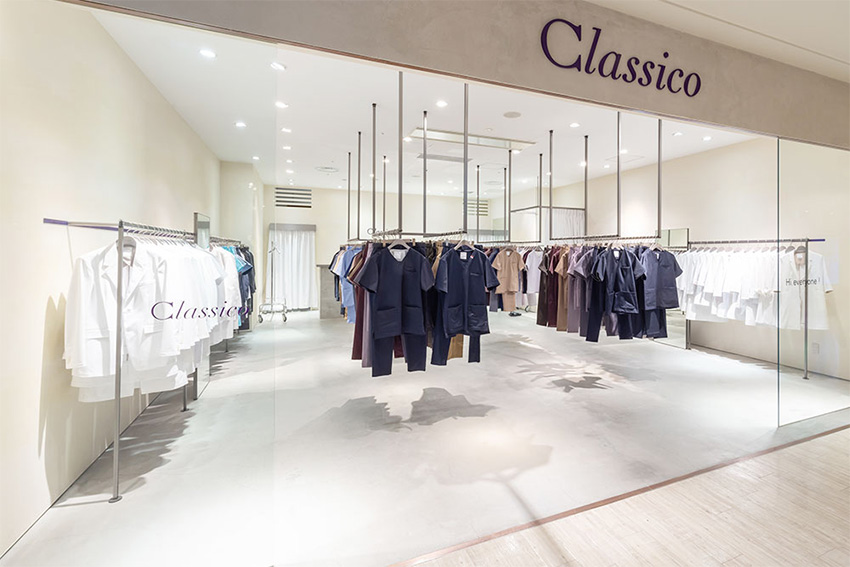
Classico operates physical retail stores in Marunouchi in Tokyo, Osaka, Yokohama, and Nagoya.
What is the Hitoiro Project, and what is hospital art?
Hospital art refers to initiatives that introduce art into hospitals and medical facilities in order to ease the psychological burden on patients and medical staff and improve the overall quality of the medical environment. Hospitals can easily become sterile and tense spaces, but art helps bring warmth, comfort, and positive emotional value into these settings. We provided the Hitoiro Project with unusable leftover materials generated during our product-making process, and they used them as canvas materials for art. We also provided materials for workshops where hospitalized children could draw freely. For people who stay in hospitals for long periods, it can be a significant source of emotional support.
It’s a beautiful initiative. I myself spent eight months in the hospital, and I can only imagine how much something like this would have helped me.
Exactly—this is an effort to support both the “inner and outer health” of medical spaces.
Next, I’d like to ask about demographics. Japan’s population crisis has been discussed for nearly 50 years, but it has never felt as serious as it does today. People aged 65 and over now account for more than 30% of the population, and the nurse shortage is estimated at as many as 270,000. In this context, uniforms for staff and clothing for patients play an increasingly important role in supporting safety, morale, and psychological well-being on the front lines. How is your company addressing these challenges?
I completely agree. Aging, harsh working environments, labor shortages, and turnover—the healthcare infrastructure is under severe strain. We hear these voices from healthcare professionals every day. I was not originally from the healthcare industry, so I did not know this reality until we founded the company. But as we began listening directly to healthcare professionals through our D2C model, I realized that lab coats and scrubs have a significant psychological impact. We started receiving messages like: “When I go to work wearing Classico, I can get through the day,” “A patient complimented me and it made my day,” and “I wear Classico on Wednesdays because I want to feel motivated.” Medical wear is not just workwear. Because people wear it for long hours, it can strongly influence how they feel and how they approach their work. If we can support those who support healthcare, that is our mission.
At the same time, patient-side issues are also serious. With aging, more people face long hospital stays or spend their final days in hospitals. In Japan, rental patient garments are common, but many people are dissatisfied with the design and comfort. Your company is working in this area as well.
Yes. Traditional patient wear has drawn many complaints—about comfort, appearance, and functionality—and it has seen very little improvement for many years. When hospitalization is decided, people are already feeling down, and many feel even worse thinking, “I have to wear this.” Some even say they don’t want friends visiting because they don’t want to be seen in it.
Together with our partner company Elan, we developed a new patient-wear brand called “lifte.” While the specific features vary by series, the garments are designed with enhanced stretch compared to conventional cotton-based patient wear, making it easier for patients with limited mobility to change clothes. They also significantly reduce the physical burden on healthcare workers who provide assistance, while helping to preserve patient dignity. In the past, when a patient’s body was rigid and difficult to move, changing clothes could be so hard that caregivers would sometimes simply cover them with fabric. With lifte, we developed a product that provides a real solution. We see this as an important response to Japan’s aging society.
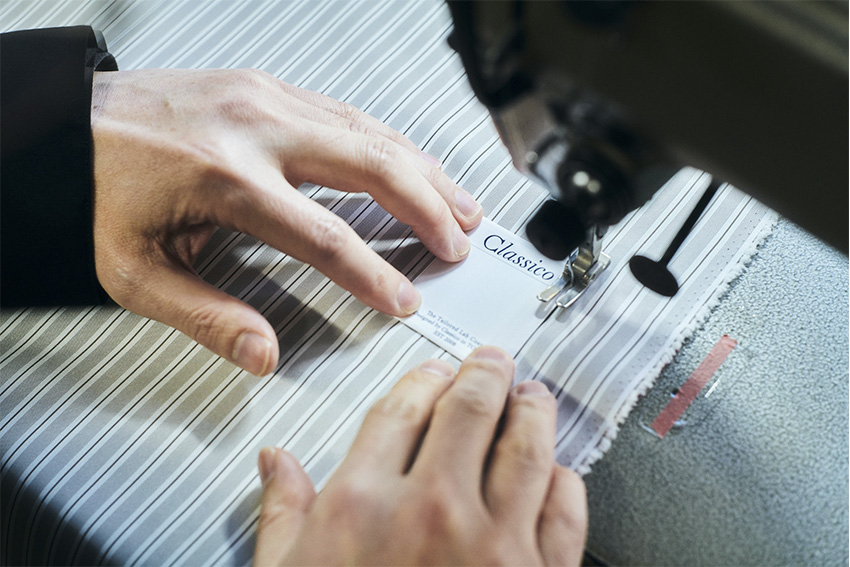
Meticulous stitching completed in accordance with rigorous quality standards.
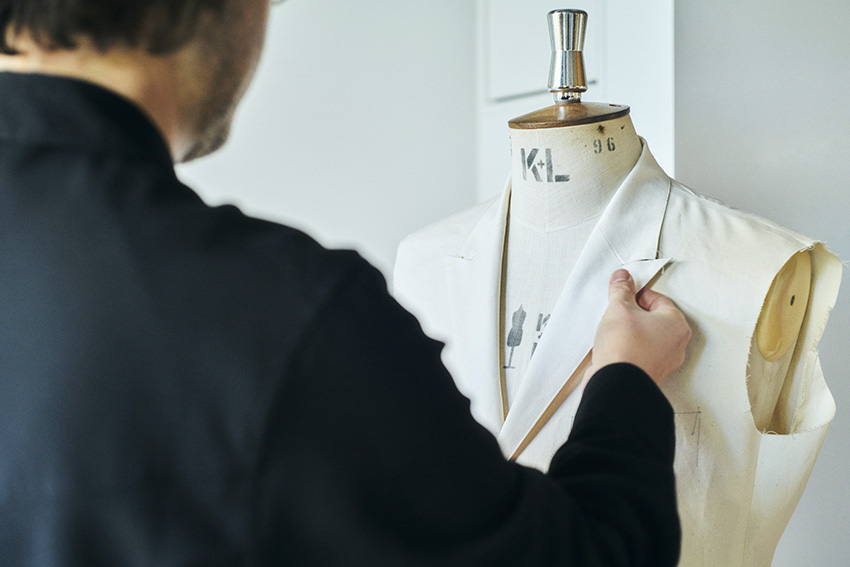
Three-dimensional designs crafted through exceptional tailoring techniques.
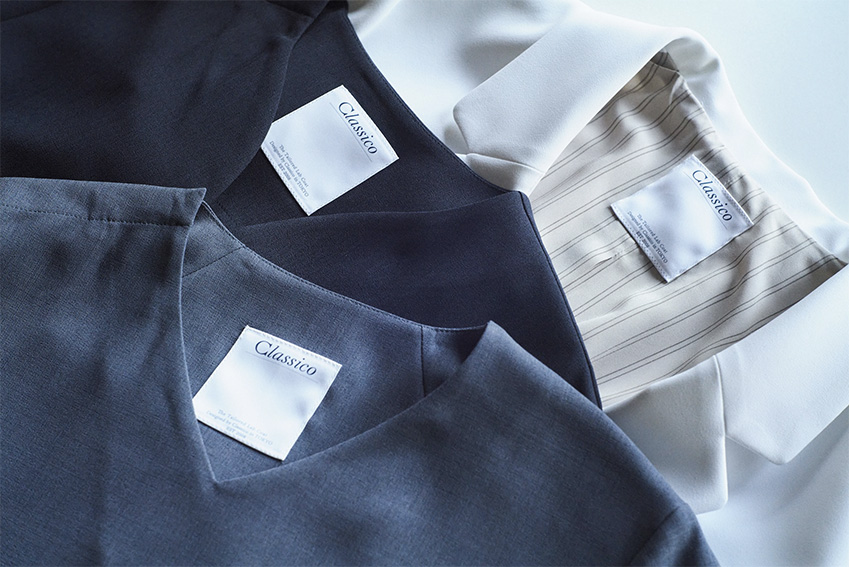
Material development driven by extensive in-house research, pursuing texture, comfort, and functionality.
Next, many companies are pursuing overseas expansion as a response to population decline. Your company already has a strong presence in Taiwan, Hong Kong, and Southeast Asia, and this November you will expand into the United States, Australia, and Canada. Could you share the importance of these markets, the challenges you face, and your entry strategy?
We have sold products in the U.S. before. At the time, however, we only offered sizing for Asian markets, which did not fit Western body types. Returns increased significantly, and we decided to close the operation. But the U.S. is the world’s largest medical apparel market—by the number of people wearing medical uniforms, as well as demand for scrubs and lab coats. If we want to deliver value globally, it is a market we cannot avoid. By expanding our pattern design and size range to fit local healthcare professionals, we can now offer products suited to the market. That is why this is the right timing for re-entry, and it also connects to our expansion into Canada and Australia.
Strategically, will you also be looking for partners?
Yes. In Japan, we operate both D2C and B2B, and we believe both pillars will be important overseas as well. Because we are positioned as high-quality and premium-priced, we need to communicate the story and value behind the products carefully on our website—this does not change across countries.
At the same time, with apparel, it is hard to convey quality without trying it on. So in each country, we will select partners, bring samples into hospitals, and create opportunities for medical staff to try them on. Then we will approach the market through two channels: our e-commerce site and purchases through partners.
We are looking for partners not only in the U.S., Canada, and Australia, but also in other Asian countries. We will continue to actively exhibit at medical trade shows to expand our network—in fact, we are holding an exhibition in Taiwan this week, and we participate in events almost every month.
One thing stood out in my research. In Japan, there are few competitors to your D2C model, but in the U.S. there are strong D2C brands such as FIGS and Moxie Scrubs. For the 1.64 million doctors and the millions of nurses in the U.S., Canada, and Australia, what do you see as your competitive advantage?
In Japan, across Asia, and in parts of Europe, lab coats and scrubs are often collected and laundered by specialized laundry companies, so durability is extremely important. That is why we develop our own materials from the yarn up, creating fabrics that achieve durability, functionality, and design at a high level. This is a major strength. In the U.S., because people typically do laundry at home, the demand for durability is not yet as high. However, our material development capability—our ability to create fabric from yarn—allows us to offer value that competitors cannot.
Next, I’d like to ask about e-commerce. You have been expanding your domestic and international EC business. What have you done to make the experience easier for English-speaking users—especially in the U.S., Canada, and Australia?
Our global e-commerce site supports multiple languages and multiple currencies and is optimized so customers around the world can purchase smoothly. Taiwan operates on a separate site, but five Southeast Asian countries, as well as the U.S., Canada, and Australia, can all use the integrated global site. In particular, we believe language support is extremely important in Australia, where there are many nurses with overseas qualifications.
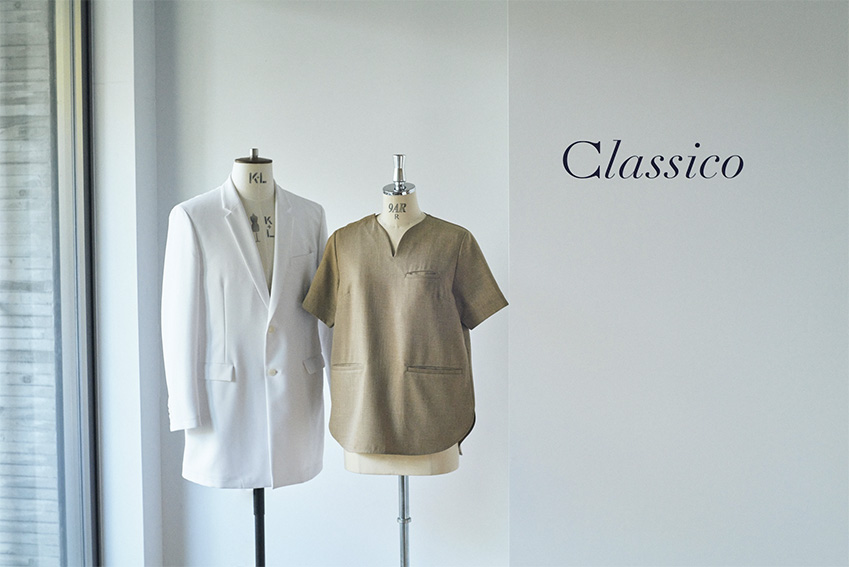
To raise the emotional temperature of healthcare professionals, and to continue creating inspiration and innovation for every individual beyond them.
I’m sure many readers are looking forward to this, but I’d like to ask about your collaboration projects. Your initiatives with Pokémon and Where’s Waldo? became widely talked about. Do you have any new collaborations planned?
Collaborations are a way to create new value that we could not generate on our own. By blending Classico’s sophisticated design with the iconic, playful world of Pokémon and Waldo, we unite two unique strengths to deliver unprecedented value. Our collaborations with characters and IP are mainly developed through a platform called “Scrub Canvas Club” (SCC). We treat lab coats and scrubs as a canvas and add design to create new forms of expression. We will continue working with various partners going forward.
Collaborations with SpongeBob—or, in Australia, something like Blinky Bill—could also be interesting.
That’s a wonderful suggestion. We’ll definitely keep it in mind.
Finally, thank you again for your time today. Regarding your medium-term plan toward 2030, could you briefly share the key milestones you aim to achieve? We also heard about a 50% reduction in CO₂ emissions.
We have not yet announced our medium-term management plan, so I cannot share specific figures or details at this time. We may disclose it in the future. However, in terms of sustainability, we have clearly set targets toward 2030. We have established milestones across four key areas—including reducing environmental impact and cutting CO₂ emissions by 50%—and we are steadily working toward them.
Lastly, for Newsweek’s diverse readership, how would you describe your company in one or two phrases?
“An innovation company that brings sensibility to the medical front lines”—and at the foundation of that is our “philosophy of being unfinished.”
For more information, please visit their website at: https://classico-global.com/