
That was rough.
The past year had a combination of policy fiascos, natural disasters and a steady march toward a future that is too hot.
Many of the major events of 2025 flowed from the decision by U.S. voters to return Donald Trump to the White House with Republican majorities in Congress. The Trump administration’s dismantling of environmental protection rules was more far-reaching than even some of the most pessimistic expectations.
On the world stage, the United States largely ceded its leadership role in climate policy, and, by its absence, helped solidify China’s status as the ascendant power.
It wasn’t all bad. The world took significant steps forward with growing market share for solar power and electric vehicles. China led the way on both fronts.
Here is what happened through the lens of Inside Climate News reporting:
January
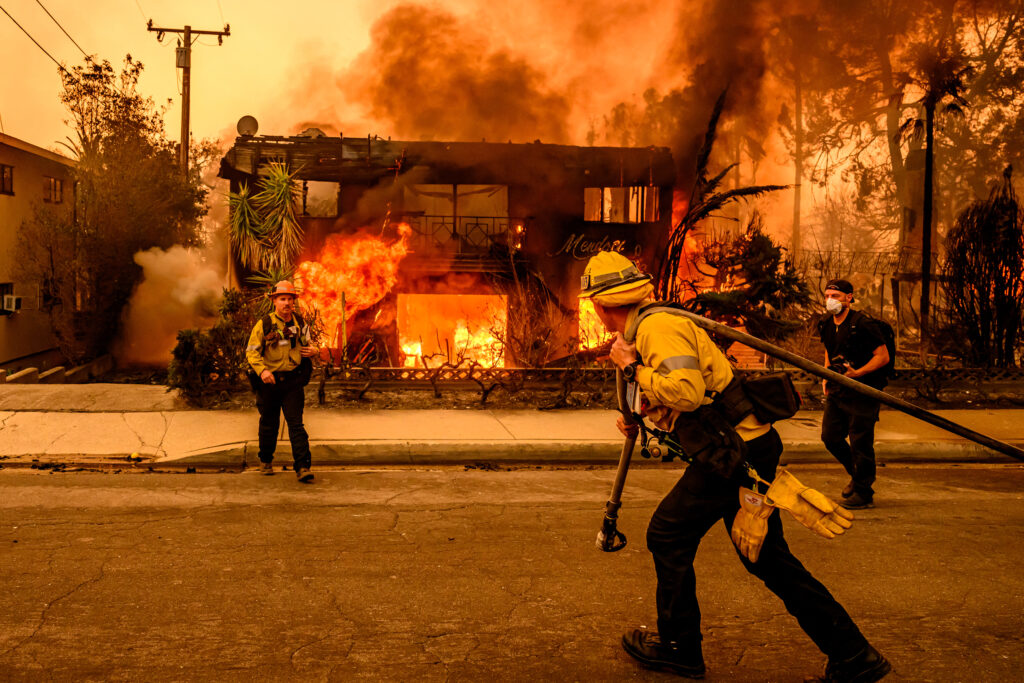
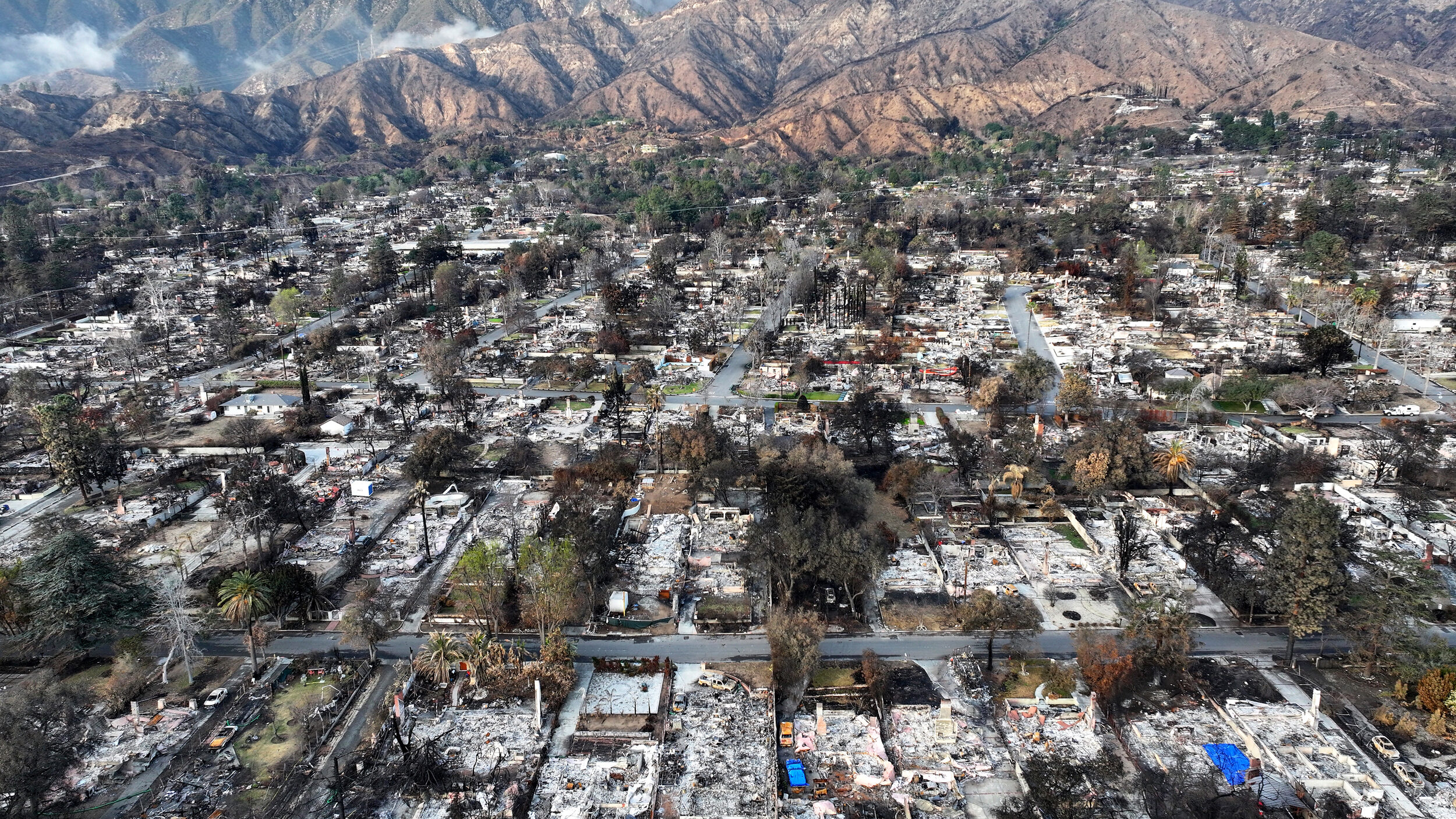
The year began with wildfires in the Los Angeles area, displacing thousands of people. California Gov. Gavin Newsom declared a state of emergency.
The warm and dry conditions that increased the fire risk were linked to ongoing increases in global temperatures. Early in the month, international agencies reported that the world’s average surface temperature in the previous year was the highest on record and that the temperature was more than 1.5 degrees Celsius above the pre-industrial average, as Bob Berwyn reported. These were grim findings, given that global organizations had worked for years to avoid this threshold of warming because of fears of irreversible damage.

On Jan. 20, Donald Trump took office and immediately issued executive orders to kickstart his agenda of expanding the use of fossil fuels, discouraging renewable energy and weakening environmental regulations. The scope of the orders turned out to be an accurate indication of what lay ahead.
For environmental advocates, one of the tragedies was that the outgoing administration of President Joe Biden had taken many steps to embrace a clean energy economy and combat climate change, but its efforts had barely begun by the time Trump returned to office, as Marianne Lavelle reported.
“Two things are true,” said Stevie O’Hanlon, spokesman for the climate advocacy group Sunrise Movement. “One is that President Biden did more than any other president to tackle the climate crisis and really kick-start development of a renewable energy economy. That is historic and really game-changing. And at the same time, oil and gas production is at record highs, and the policies that Donald Trump is foreshadowing spell out the worst reality for our generation’s future.”

February
After the initial executive orders, the Trump administration barely paused before moving on to make deeper cuts and reshape the government. Tesla CEO Elon Musk joined the administration to lead the newly formed Department of Government Efficiency, which oversaw widespread layoffs and the rescission of previously approved grants.
The Environmental Protection Agency was hit especially hard, including mass layoffs of staff members hired during the Biden administration to lead climate and pollution programs, as Aman Azhar reported. Groups representing federal employees would later sue to stop some of the layoffs, leading to ongoing legal challenges.
Interior Secretary Doug Burgum issued an order on his first day on the job to expand the parcels of public land available for oil and gas drilling, weaken protections for migratory birds and make it more difficult to develop wind and solar power.
The U.S. Department of Energy granted conditional authorization to a liquified natural gas export terminal in Louisiana, the first such move during the Trump administration. This was a reversal from the Biden administration, which had paused such permits.

The administration also sought to eliminate public access to climate data and research.
Some of the changes verged on the absurd, such as when federal employees arrived at work and found that their preferred pronouns had been removed from email signatures and federal websites, part of the administration’s desire to combat what it called “gender ideology extremism.”
“Folks are afraid to turn their computers on,” said Marie Owens Powell, president of the American Federation of Government Employees, Council 238, a union that represents more than 8,000 EPA employees. “They don’t know what message will be coming out next.”
March
Opponents of Trump’s agenda, with few allies in positions of power, devoted much of their energy to lawsuits and public demonstrations.
Scientists gathered to protest across the country and in Europe as part of a campaign called Stand Up for Science. Participants sought to highlight the human harm of cutting scientific research funding. Among the signs in the crowd in San Francisco: “Up and atom. Stand up for science.” “It’s time to react.” “We want scientific data not alternative facts.”
“This is going to affect everybody, whether you have a loved one who is sick and is waiting for the cures of tomorrow, if you benefit from vaccines or from being able to get good, up-to-date information on the CDC website about a flu outbreak,” Amanda Rabinowitz, a neuropsychologist and federally funded researcher, said at an event in Philadelphia.

In Texas, local governments went to court to try to prevent a company from pumping massive amounts of groundwater to help support rapid residential development. This was part of a broader trend across the country, underscoring how water scarcity could shape the economy in the near future, as Dylan Baddour reported.
“Water is the new oil,” said Alan Day, manager of Brazos Valley Groundwater Conservation District.
ICN launched its Project China series, tracing that country’s growing influence on worldwide infrastructure construction, including energy projects. The series began with a report from Katie Surma that documented the scope of China’s Belt and Road Initiative and the environmental harm of a dam in Argentina.

April
The Trump administration reached the 100-day mark, traditionally a period when a president takes credit for a long list of accomplishments. There was little doubt that Trump had succeeded in disrupting the government through layoffs, budget cuts and regulatory changes. But he struggled to demonstrate that the changes were producing tangible benefits for the country, especially when it came to climate and the environment.
“It is not an overstatement to say that the Trump administration has launched the worst White House assault in history on the environment and public health. Day by day and hour by hour, the administration is destroying one of the signature achievements of our time,” said Manish Bapna, the president and CEO of the environmental nonprofit Natural Resources Defense Council, referring to Biden’s Inflation Reduction Act. “If this assault succeeds, it could take a generation or more to repair the damage.”
The EPA and National Park Service were among the several government agencies affected by budget cuts and layoffs in the early months of the Trump administration. Al Drago and David Calvert/Getty Images
ICN highlighted the harm of the administration’s support for liquified natural gas exports. Phil McKenna and Peter Aldhous analyzed data showing that a single year of greenhouse gas emissions from tankers carrying LNG from the United States was enough to offset the annual emissions reductions attributable to all electric vehicles on U.S. roads.
The Trump administration proposed a rule to rescind many of the habitat protections for species listed under the Endangered Species Act. The new rule would open the door for development in places that would significantly disrupt critical habitat for species listed under the act, as Kiley Price and Wyatt Myskow reported.

The administration’s deregulatory agenda extended to the oceans with an executive order promoting deep-sea mining. The order applied to U.S. and international waters, raising fears from scientists who warned of risks to fragile ecosystems, as Teresa Tomassoni reported.
Pope Francis, who made climate and environmental stewardship a key part of his papacy, died at 88, as Kiley Bense reported. In a 2015 letter, Francis wrote that climate change is a “global problem with grave implications,” and he wrote about the disproportionate harm to people living in poverty. Climate activist and author Bill McKibben called Francis “perhaps our greatest environmental leader.”
May
The growth of data centers was one of the factors leading to a nationwide surge in electricity demand. Companies invested heavily so they could increase capacity for cloud computing and artificial intelligence. But the public was largely left in the dark.
In Bessemer, Alabama, residents couldn’t get answers to seemingly reasonable questions about what a large new data center would mean for the community, as reported by Lee Hedgepeth and Lanier Isom.
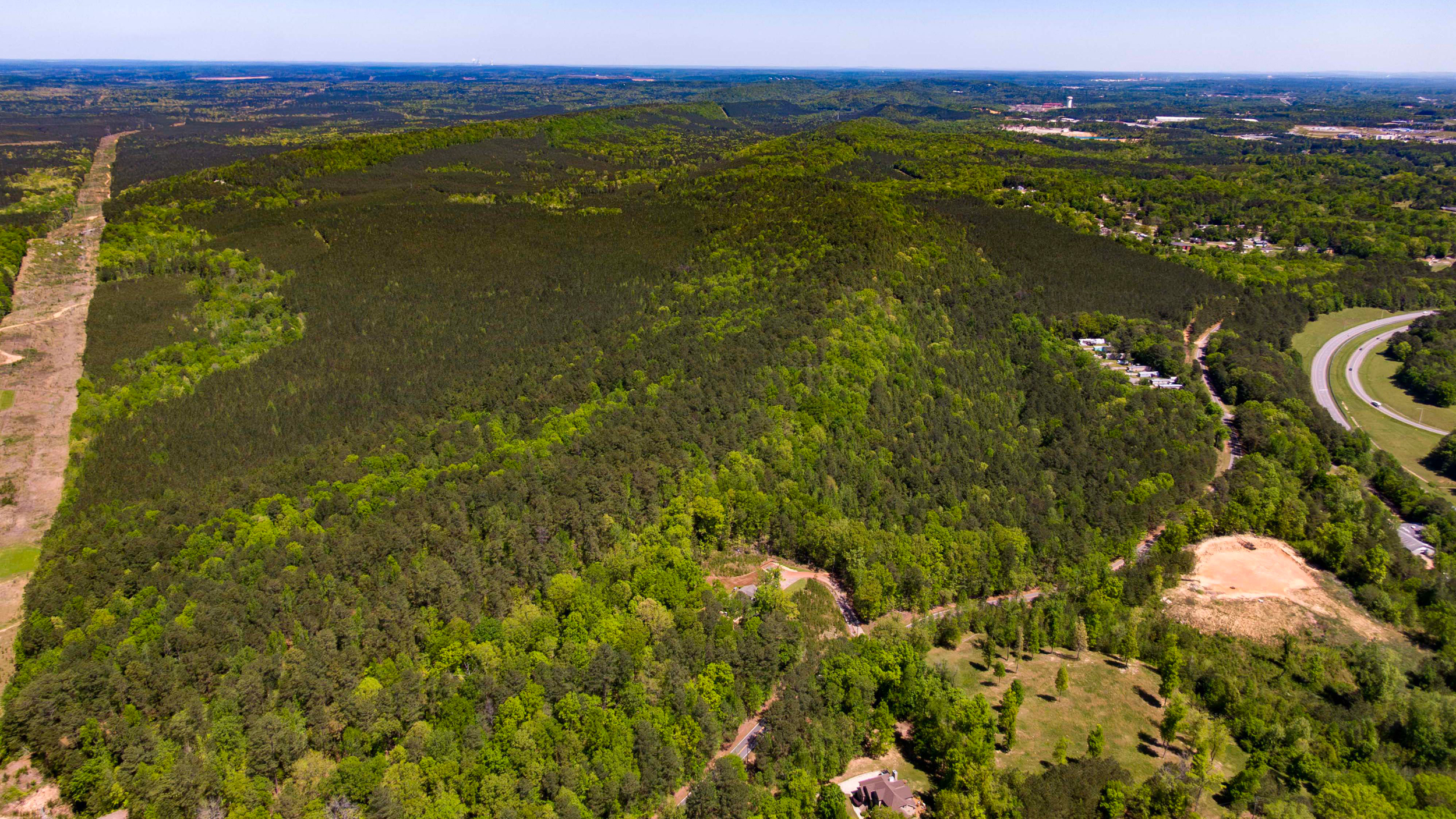
“This is about protecting property owners’ rights to protect their land from money-grabbing AI developers who have devastated many, many communities across the country,” said Reginald McDaniel, the residents’ attorney.
As summer approached, much of the country suffered from drought. In Texas, oil and gas companies used billions of gallons of water from the Rio Grande and Pecos rivers over the last four years to support drilling, a fact revealed through reporting by Martha Pskowski. This use of scarce resources infuriated people who depend on the rivers.

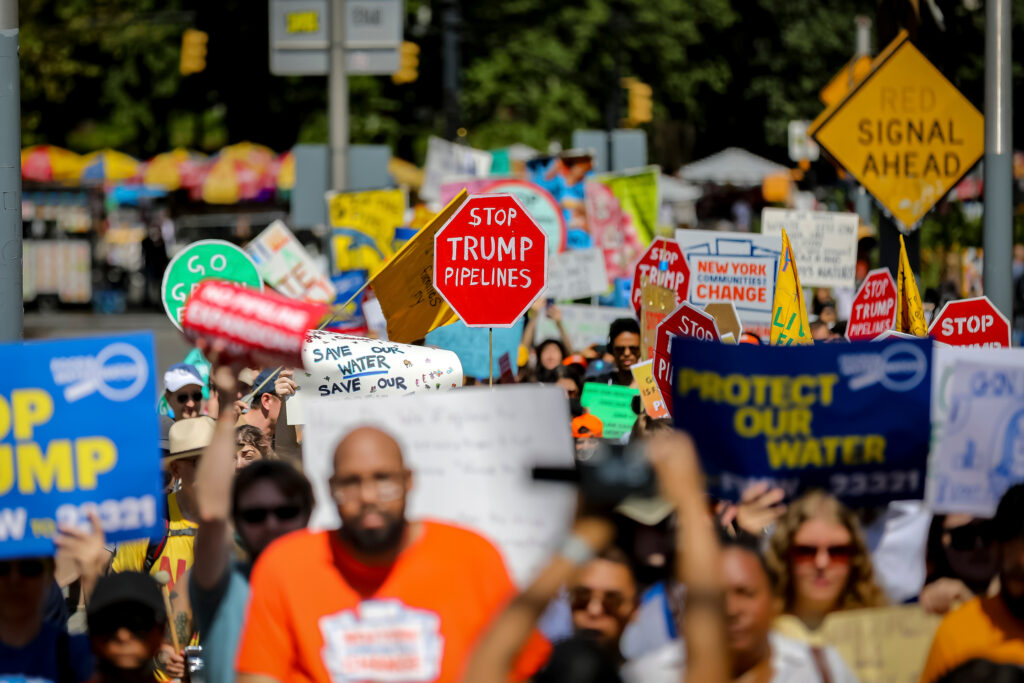
One recurring theme in the first few months of the Trump administration was an attempt to slow or stop offshore wind energy development. Among the few bright spots for offshore wind happened when New York Gov. Kathy Hochul, a Democrat, persuaded the administration to lift a stop-work order for the Empire Wind project south of Long Island.
Observers at the time speculated that Hochul had agreed to allow for natural gas pipeline infrastructure to be built in the state in exchange for action on Empire Wind, which Hochul’s staff denied. And yet, months later, the state took steps to allow a gas pipeline project to proceed.
June
For the first time in decades, the United Nations held climate talks without an official delegation from the United States. The United Nations Framework Convention on Climate Change, held in Bonn, Germany, was a round of meetings for technical groups ahead of COP30 to be held in Brazil a few months later.
But a coalition called American Is All In, which includes cities, states, faith groups, tribes, universities and others, attended the conference with the goal of contributing to progress, as Bob Berwyn reported.

Sweltering weather arrived in much of the country. Rising heat has included hotter nights, which can be harmful to human health. The level and duration of heat were unusual for June and posed a threat to anyone without adequate cooling or hydration, said an advisory from the National Weather Service.
Aman Azhar reported on extreme heat from Karachi, Pakistan. He described a city in which the rich live in temperature-controlled mansions while millions of the poor endure exposure to the elements and weather-related turmoil. Urban centers such as Karachi are vulnerable to extreme heat because of scorching summertime temperatures and clusters of heat-retaining structures.
“Winters used to mean sweaters,” said Sherry Rehman, a longtime Pakistani senator and former federal minister for climate change. “Now it’s summer nearly all year.”

July
Trump signed the One Big Beautiful Bill Act on July 4, a measure that extended tax cuts for the wealthy and eviscerated funding for healthcare, renewable energy and electric vehicles. The bill, which narrowly passed the House and Senate, included rapid phaseouts of tax credits enacted during the Biden administration to encourage a shift away from fossil fuels.
That gave the Trump administration a major legislative accomplishment that seemed to signal that the energy transition had hit a speed bump and fossil fuels would have an advantage in the U.S. market for the foreseeable future.


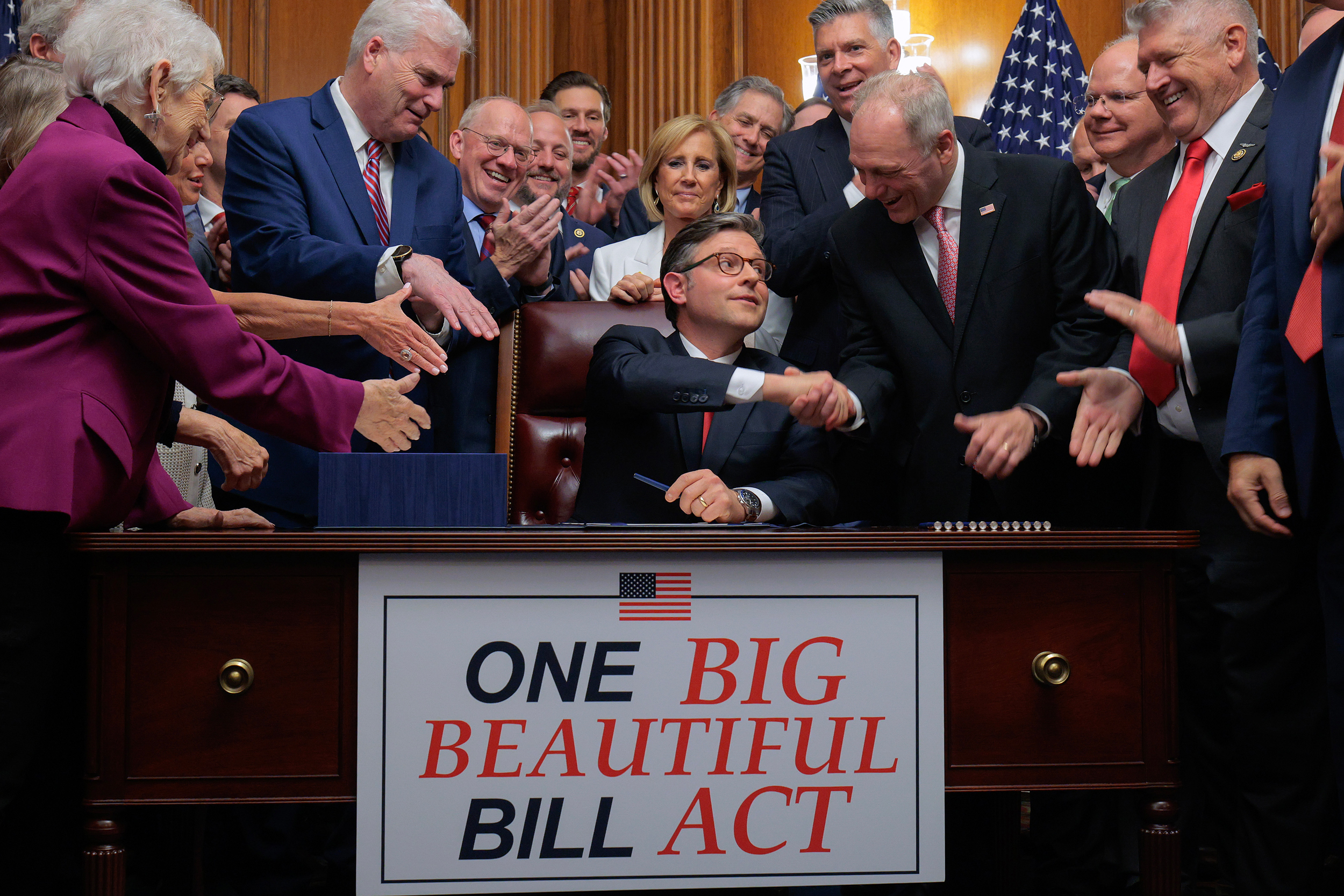
But some Republicans raised concerns that the bill didn’t go far enough to hinder development of wind and solar. They sought assurances from Trump, who responded by issuing an executive order saying the country would “end taxpayer support for unaffordable and unreliable ‘green’ energy sources.” It wasn’t clear how the order did anything different from what the bill had done, and it remains unclear.
For many analysts, it made little sense to slow the development of certain energy resources at a time when the country needed a rapid build-out of power plants to meet projected demand, as Aidan Hughes reported.
The consequences of demand growth came into focus when PJM Interconnection, the company that oversees the country’s largest grid region, held an auction that led to higher prices to obtain enough power plant capacity, as Rambo Talabong reported. Consumers in PJM’s territory, which stretches from New Jersey to Chicago, would soon see some of the ramifications in the form of higher electricity bills.

Meanwhile, the Trump administration continued to weaken environmental protection rules. The EPA announced plans to revoke the “endangerment finding,” which is the legal underpinning of the agency’s ability to regulate climate-warming gases, as Wyatt Myskow reported. The rule change marks a significant shift in EPA’s role, one that environmental advocates say is likely to embolden polluters.
Tropical Depression Chantal dumped water in North Carolina, leading to severe flooding. The state worked to recover at the same time that the legislature was pushing through a bill that would weaken climate and clean energy regulations, as Lisa Sorg reported. Scientists have shown a relationship between global warming and an increasing severity of storms.
“I can’t overstate how removing our carbon goal is not a good idea,” said Rep. Pricey Harrison, a Democrat from Guilford County. “This bill promotes natural gas and nuclear at the expense of cleaner energy sources. It’s not balancing environmental goals.”
August
In Geneva, Switzerland, United Nations talks on reducing plastic pollution ended without an agreement. The participants found little common ground in assessing the scale of the problem and determining enforceable solutions. The result was a disappointment to advocates and others who have grave concerns about the climate and health effects of vast quantities of plastic waste.
The Trump administration and Florida Gov. Ron DeSantis drew criticism over the hastily constructed Everglades detention site for undocumented migrants, called Alligator Alcatraz. Federal and state officials characterized the area as a treacherous swamp. But this remote region of the Everglades is home to the Miccosukee people who view the land as sacred, as Amy Green reported.


In Colorado, regulators considered how to handle water left over from oil and gas drilling. Environmental advocates raised concerns that this water is unsafe and would contribute to an increase in emissions, as Jake Bolster reported.
In California, Liza Gross took a critical look at Los Angeles County’s Chiquita Canyon Landfill, which has emitted high levels of toxic gases and climate super pollutants. Residents have asked for help for years, but state officials are doing little to respond.


Chicago has a big problem with lead pipes. A team of reporters from ICN, WBEZ radio and Grist collaborated to unearth the extent and help residents determine their level of risk. The reporting showed how the unsafe conditions intersect with poverty and race. Keerti Gopal, one of the reporters on the team, discussed the project in a video interview, including how Chicago is struggling to replace lead pipes.
ICN’s Nicholas Kusnetz reported from Indonesia about an endangered orangutan species and the threat posed by a Chinese hydropower dam. Scientists and advocates tried to stop the project and faced a heavy-handed government response. Some of them lost their jobs and one died following head injuries that colleagues say was likely retaliation, although local authorities said the injuries were related to a motorbike accident.
September
The tensions between Trump and much of the rest of the world were on display when he addressed the U.N. General Assembly and discouraged other countries from taking action to address climate change.
“I’ve been right about everything, and I’m telling you if you don’t get away from the green energy scam, your country is going to fail,” he said in a rambling address.
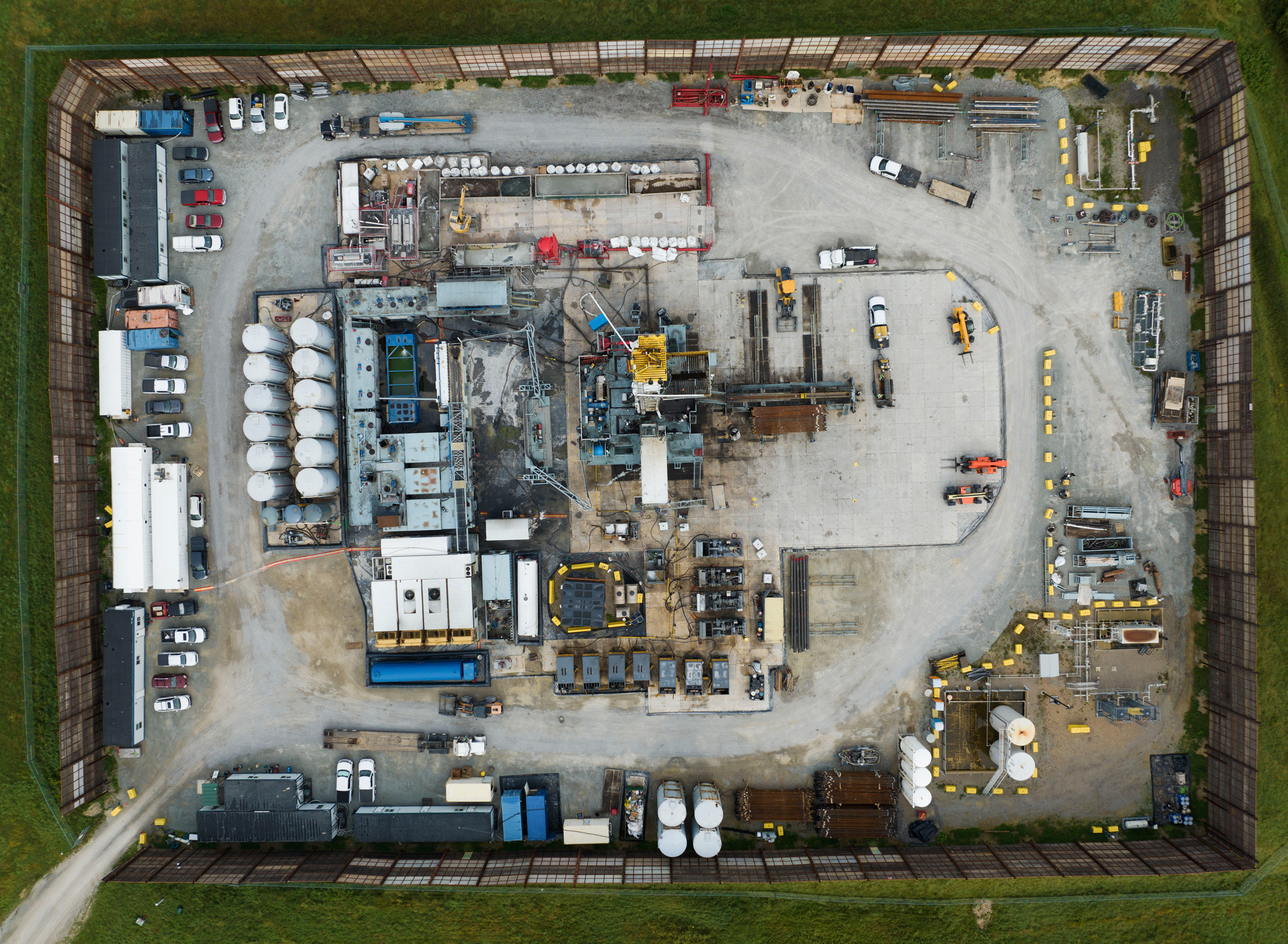
The Trump administration has continued to encourage states to look to fossil fuels to meet rising electricity demand. The consequences of this approach are evident in Pennsylvania, where a fracking boom has largely failed to fulfill its promise to reduce electricity bills.
While Trump hadn’t had much time to fulfill his promise of cutting electricity prices, he was off to a bad start. ICN’s Inside Clean Energy looked at which states had the largest increases so far in 2025 and over the last five years. The largest percentage increase so far in 2025 was in Missouri, with 38 percent. The rest of the top five were North Dakota, New Jersey, Iowa and Montana.
October
The rise of artificial intelligence was transforming the U.S. economy and raising fears of an investment bubble. But AI technologies also showed promise to advance discussions about the rights of nature. Scientists from an international nonprofit are using some of the new tools to help understand sperm whale communications, which could be used to argue that the whales are entitled to legal rights, as Katie Surma reported.
The expansion of AI also is fueling a boom in data centers. Northern Virginia is the world’s leading market for data centers and is poised to grow substantially in the coming years. Dan Gearino and Charles Paullin reported on how and why Northern Virginia gained this status as the global leader.

While data centers received much of the blame for rising electricity prices, the reality wasn’t so simple. Blanca Begert examined research that quantifies which factors are driving prices. One important driver was the price of natural gas, which had risen from the lows of the early days of the fracking boom.
The need for lithium has inspired a push to expand mining in Texas, as Dylan Baddour reported. The emergence of a lithium industry in the state is part of a broader effort to secure domestic production of materials needed for batteries, solar panels, microchips and advanced weapons.
This story is funded by readers like you.
Our nonprofit newsroom provides award-winning climate coverage free of charge and advertising. We rely on donations from readers like you to keep going. Please donate now to support our work.
In Peru, Teresa Tomassoni reported on a little-known species of stingless bees that are under threat from climate change and deforestation. Scientists are working with Indigenous Asháninka communities to protect the bees and assert that the insects have legal rights.
Pope Leo, whose papacy began in May, made clear that he could continue his predecessor’s legacy of speaking out on the need to preserve the environment and fight climate change, as Carl David Goette-Luciak reported. Leo spoke before a melting chunk of ice in Vatican City and called on citizens across the globe and their governments to work together to mitigate environmental damage.
November
Democrats dominated in off-year elections, including winning the governor’s races in New Jersey and Virginia and gaining two seats on the Georgia Public Service Commission.
Zohran Mamdani was elected mayor of New York City following a campaign that emphasized affordability along with environmental issues, as Lauren Dalban reported.


Massachusetts considered a bill that would have rolled back climate policy gains, but decided to postpone the discussion until 2026. The state has long been a leader on climate and renewable energy, and could have been trend-setting if it had reduced its ambitions. Several other states chose different paths, with Arizona, Connecticut and North Carolina all passing bills this year that could be viewed as backsliding on renewable energy.
The utility Alabama Power stands out for its high customer bills and high profits. Dennis Pillion and Lee Hedgepeth examined how the company has little accountability, a situation tied to its cozy relationships with political leaders and regulators.
COP30 ended in disappointment for anyone who wanted to see a step forward on phasing out fossil fuels. The climate talks, held in Brazil, failed to produce a road map for addressing global warming.

The results were a “theater of delay” with endless discussions, and the creation of yet more administrative duties, “solely to avoid the actions that matter—committing to a just transition away from fossil fuels and putting money on the table,” said Harjeet Singh, founding director of the Satat Sampada Climate Foundation in India.
December
The Trump administration saved one of its most significant attacks on environmental rules for near the end of the year, announcing a rollback of the Biden administration’s fuel economy standards. This unsurprising action will be followed by a lengthy rulemaking process, as Arcelia Martin reported.
“If there’s one thing you can count on, it’s that this administration will never act in the best interest of our health or the environment,” stated Gina McCarthy, a former White House national climate advisor. “The rest of the world will continue to innovate and create cleaner cars that people want to buy and drive, while we’re forced to sit in our clunkers, paying more for gas and pumping out more tailpipe emissions.”
The policy change bodes poorly for the competitiveness of the U.S. auto industry. While the United States sought to prolong the era of the internal combustion engine, China made significant strides to increase EV adoption within its borders and expand its global footprint for making and selling cars in other countries.
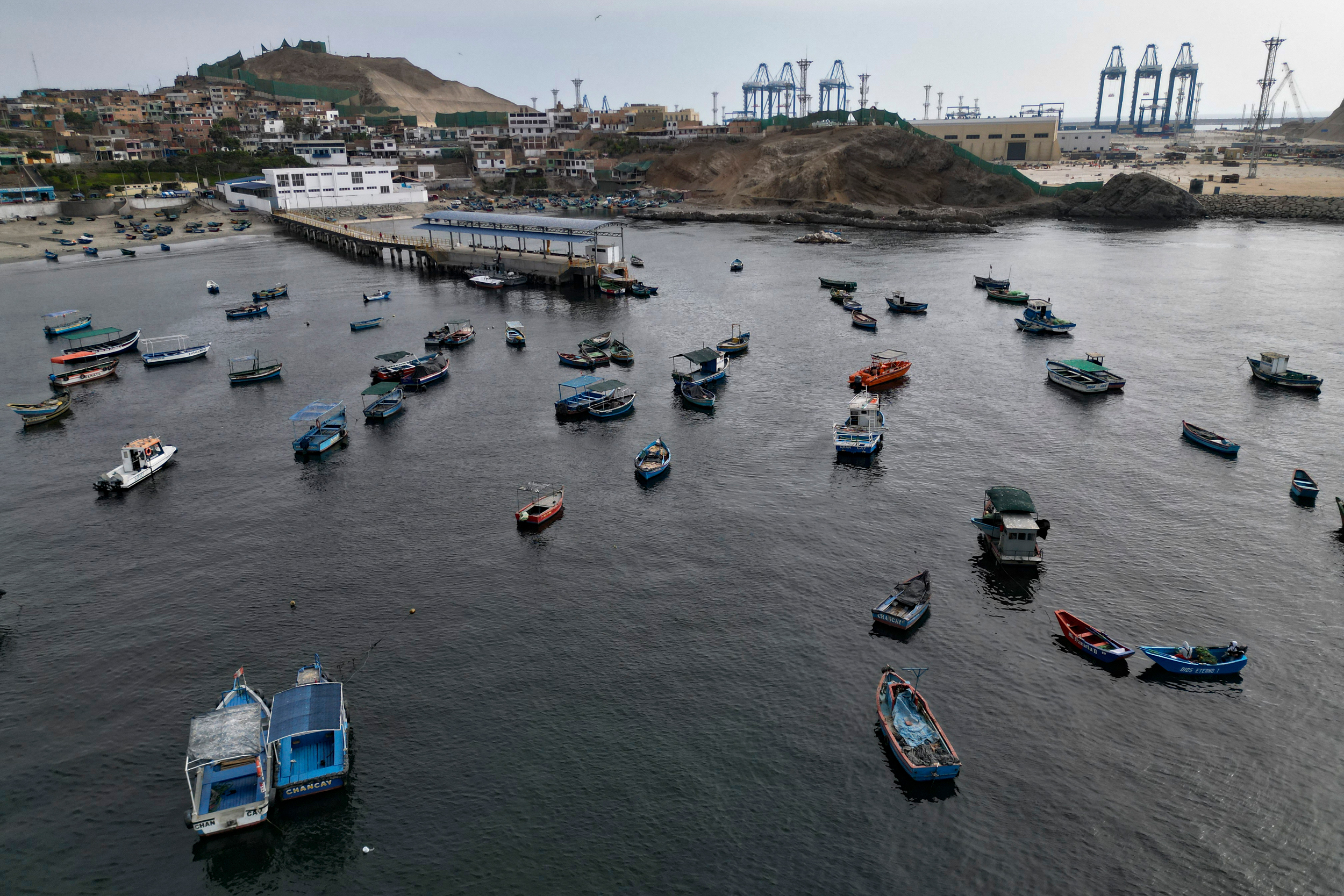
China’s infrastructure investments have included a large new port in Peru. For ICN’s Planet China series, Georgina Gustin reported that the port and its accompanying economic activity threaten the Amazon ecosystem, one of the world’s most crucial regions for managing climate change.
In Iowa, a state with vast amounts of livestock manure, officials do little to track where all that waste goes. Anika Jane Beamer probed this problem in collaboration with Nina B. Elkadi of Sentient Media.
As the year drew to a close the Trump administration’s attacks on renewable energy continued. The Department of Energy said it was renaming the National Renewable Energy Laboratory to reduce the emphasis on wind, solar and other renewables. Now, it’s the National Laboratory of the Rockies. If the name change indicates a shift in the lab’s work, it would be a serious blow to the United States’ status as a leader in renewable energy research.
But, as with so many actions by this administration in 2025, it wasn’t clear whether the renaming had any substance to it or whether the change would endure.
About This Story
Perhaps you noticed: This story, like all the news we publish, is free to read. That’s because Inside Climate News is a 501c3 nonprofit organization. We do not charge a subscription fee, lock our news behind a paywall, or clutter our website with ads. We make our news on climate and the environment freely available to you and anyone who wants it.
That’s not all. We also share our news for free with scores of other media organizations around the country. Many of them can’t afford to do environmental journalism of their own. We’ve built bureaus from coast to coast to report local stories, collaborate with local newsrooms and co-publish articles so that this vital work is shared as widely as possible.
Two of us launched ICN in 2007. Six years later we earned a Pulitzer Prize for National Reporting, and now we run the oldest and largest dedicated climate newsroom in the nation. We tell the story in all its complexity. We hold polluters accountable. We expose environmental injustice. We debunk misinformation. We scrutinize solutions and inspire action.
Donations from readers like you fund every aspect of what we do. If you don’t already, will you support our ongoing work, our reporting on the biggest crisis facing our planet, and help us reach even more readers in more places?
Please take a moment to make a tax-deductible donation. Every one of them makes a difference.
Thank you,

Reporter, Clean Energy
Dan Gearino covers the business and policy of renewable energy and utilities, often with an emphasis on the midwestern United States. He is the main author of ICN’s Inside Clean Energy newsletter. He came to ICN in 2018 after a nine-year tenure at The Columbus Dispatch, where he covered the business of energy. Before that, he covered politics and business in Iowa and in New Hampshire. He grew up in Warren County, Iowa, just south of Des Moines, and lives in Columbus, Ohio.