
Video games have evolved so much even within the past decade alone that it can often be needless to reflect on decades prior and the thousands of games that past eras brought. Indeed, game design has changed so much that it is difficult, in many cases, to return to the games of yesteryear, finding oneself endlessly fighting with the controls, wishing core concepts were more fleshed out, or simply despising the outdated fetch quest model. We should absolutely be reveling in the wondrous possibilities of modern game design, especially when it is bringing us such incredible experiences as Baldur’s Gate 3.
However, all that being said, it does feel as if games today are missing something. When I look back at past generations, especially the PlayStation 2, I can’t help but feel as if the gaming industry had discovered a beauty inherent to video games that has now been lost, or, perhaps more aptly, abandoned. In our desire to deliver photorealistic visuals, we’ve left behind the abstract and more fantastical visuals so commonplace throughout the PS2’s run, and that is a genuine shame. Not only has it resulted in a far more homogenized library of games, but it has pushed us further away from achieving a distinct style unique to video games.
The Pursuit For Photorealistic Visuals Is Hurting Games

The value we place on visual diversity in video games has drastically changed over the past two decades. Upon entering the Xbox 360 and PlayStation 3 era, the obsession with gritty, gunmetal grey visuals began, the race to create the most photorealistic visuals suddenly becoming an all-consuming need rather than an option. The increased popularity of Unreal Engine and the state of the art visuals it provided led to the aforementioned homogenization of video game visuals, a distinct aesthetic popping up so frequently that one could identify a game’s engine before its logo appeared.
With the introduction of Unreal Engine 5, this has only become more extreme, as, while the engine can cater to more stylized visuals, the belief that all gamers want are visuals as close to real-life as possible spurs developers on to eschew style. Of course, this isn’t exclusively the case; there are still games within the indie and AA space that adopt a unique aesthetic, and a handful within the AAA arena, too. However, for the most part, this willingness to experiment with style began dying off during the 360 era and has almost become extinct today.
The PS2 Era Had Some Of The Best-Looking Video Games
One only need look back at the vast library of PlayStation 2 games for evidence of this shift in priorities. A prime example of the expressive visual stylings of the early 2000s is the extremely underrated PlayStation 2 RPG, Magic Pengel: The Quest for Color. Featuring art design from Studio Ghibli, Magic Pengel is so vibrantly and vividly distinct from its contemporaries and a far cry from the expected visual design of today. However, it wasn’t merely stylish for the sake of it; it baked its expressive, colorful, and cartoonish aesthetic into the gameplay itself, with players having to draw their own Pokémon-esque creatures called Doodles.
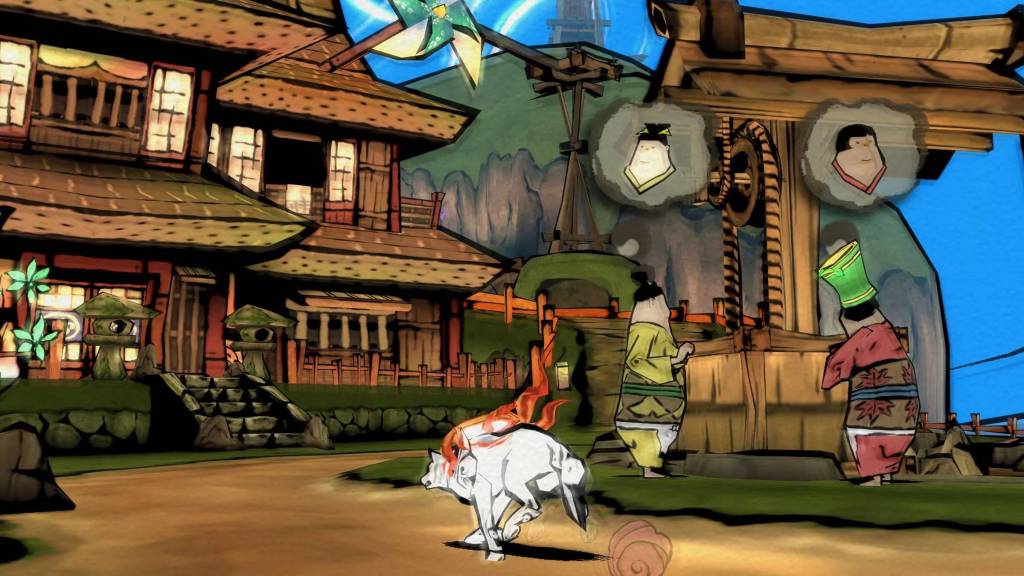
This principle extends to one of the greatest PlayStation 2 games of all time, Okami. Its visual style was heavily inspired by the traditional Japanese art style, Ukiyo-e, and has players draw symbols with their paintbrush to deliver attacks and solve puzzles. Even when games weren’t directly incorporating their unique visual style into their gameplay, it heightened it in a way that could only work within this unique medium. The comically exaggerated animations of platformers like Spyro, Crash Bandicoot, and Jak made attacks and exploration more dynamic; the unique aesthetic of Gitaroo Man and similar rhythm games accentuated the frenetic beats of its soundtrack; the doll-like designs for Boku No Natsuyasumi 2 helped sell the childlike wonder of its central plot.
It wasn’t even just the PS2 that was graced with such visual diversity. The Nintendo line of consoles has always prioritized visual style and variety over the photorealistic aesthetic, with the Nintendo DS in particular playing host to a plethora of visually distinct titles. The very best GameCube games, like Animal Crossing and Wind Waker, also carried this philosophy of novel graphics, as did many of the best Dreamcast titles. Of course, these eras were all defined by the limitations and restrictions they had to work with, the technology underpinning the medium not quite at a point where it could render the level of visual fidelity available now.
It goes without saying, but most great art is born out of limitation. Nowadays, especially with the medium’s rise in popularity affording developers bigger and bigger budgets, there is little getting in the way of producing visuals far superior to those once exclusively reserved for pre-rendered cutscenes. It is amazing that we have reached this point and that there is the option to produce such impressive spectacle, but it is a shame that we’ve lost the essence of what made video games so distinct in the first place, much in the same way that Disney’s attempts at remaking its library of classic animated films feels like a fundamental misunderstanding of what made those films so important.
There’s Still Hope For The PS2 Aesthetic To Return

Fortunately, I do believe that there is potential for modern developers to eventually circle back to the more varied visual styles of the PS2 era. We’re already seeing a plethora of indie developers releasing games heavily inspired by the PS1 aesthetic that go on to be critically and commercially successful. Games like Crow Country and Easy Delivery Co. have proven that a return to that graphical style is desired by much of the indie gaming community, at the very least. It stands to reason, then, when those who grew up with the PS2 begin developing games, we’ll see a return to the color and vibrancy that its library of games brought.
We’re already somewhat seeing that within the indie and AA space, with games like the criminally overlooked open-world platformer, The Knightling, evoking the colorful and fantastical visuals of games like Spyro and Jak and Daxter. Chibig, the studio that has made a name for itself developing Studio Ghibli-inspired games like Mika and the Witch’s Mountain, is working on the Nintendo 64-inspired Bel’s Fanfare. We’re even getting a sequel to Okami, which, one would hope, retains the same aesthetic as its predecessor.
I, of course, never meant to imply with any of this discussion that games sporting a visual style akin to that of the PlayStation 2 era no longer exist. Rather, especially within the triple-A space, we’re seeing less and less visual variety, and that’s a legitimate shame as it robs the gaming industry of its unique appeal and forces everything to look life-like, something the film industry has well and truly covered. Photorealistic visuals undeniably have their place within this medium, especially when cinematic, narrative-heavy games are concerned. However, not everything needs to be a colorless, hyper-real, exceptionally detailed game with little to no distinct style. Sometimes, it is nice to embrace the same beauty of the abstract and deliver visual experiences that dare to be different.
Do you think we should return to PS2-style visuals? Leave a comment below and join the conversation now in the ComicBook Forum!