
Everything old is new again: These paleontological discoveries of 2025 — from tiny dinosaurs to zombifying fungi — opened up brand-new insights into the distant past.
Nanotyrannus grows up
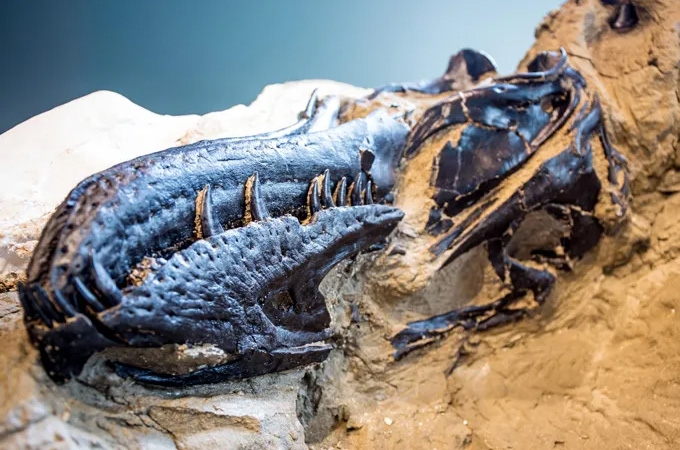
Nanotyrannus came into its own in 2025. The diminutive dinosaur may have resembled Tyrannosaurus rex, but it wasn’t just a teenage version of the iconic dino, scientists reported in two separate studies. The finds may at last settle one of paleontology’s longest-standing debates, sparked by an enigmatic fossil skull unearthed in the 1940s: Some said it was a new species, Nanotyrannus lancensis, and others said was a young T. rex.
One team analyzed the limbs of a small tyrannosaur in a famous fossil called Dueling Dinosaurs. The other looked at growth patterns in throat bones found with the original skull. Both teams came to the same conclusion: These specimens were full-grown adult N. lancensis. They lived around 67 million years ago, alongside T. rex.
Cicadas’ ancient song
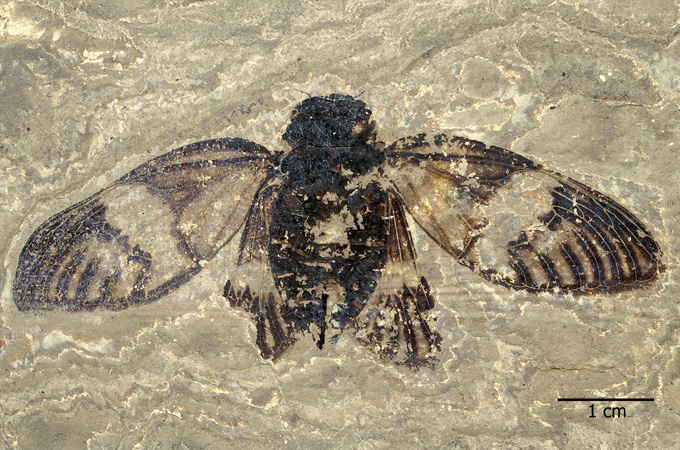
Earth resonated with the song of cicadas as far back as 47 million years ago, 17 million years earlier than thought. A fresh look at a fossil housed in the Senckenberg Museum for decades revealed two females belonging to a new species, Eoplatypelura messelensis, that is related to modern singing cicadas. The find also offers tantalizing clues to the evolution of insect song, as in modern cicadas, it’s only the males who sing.
Grand Canyon penis worm
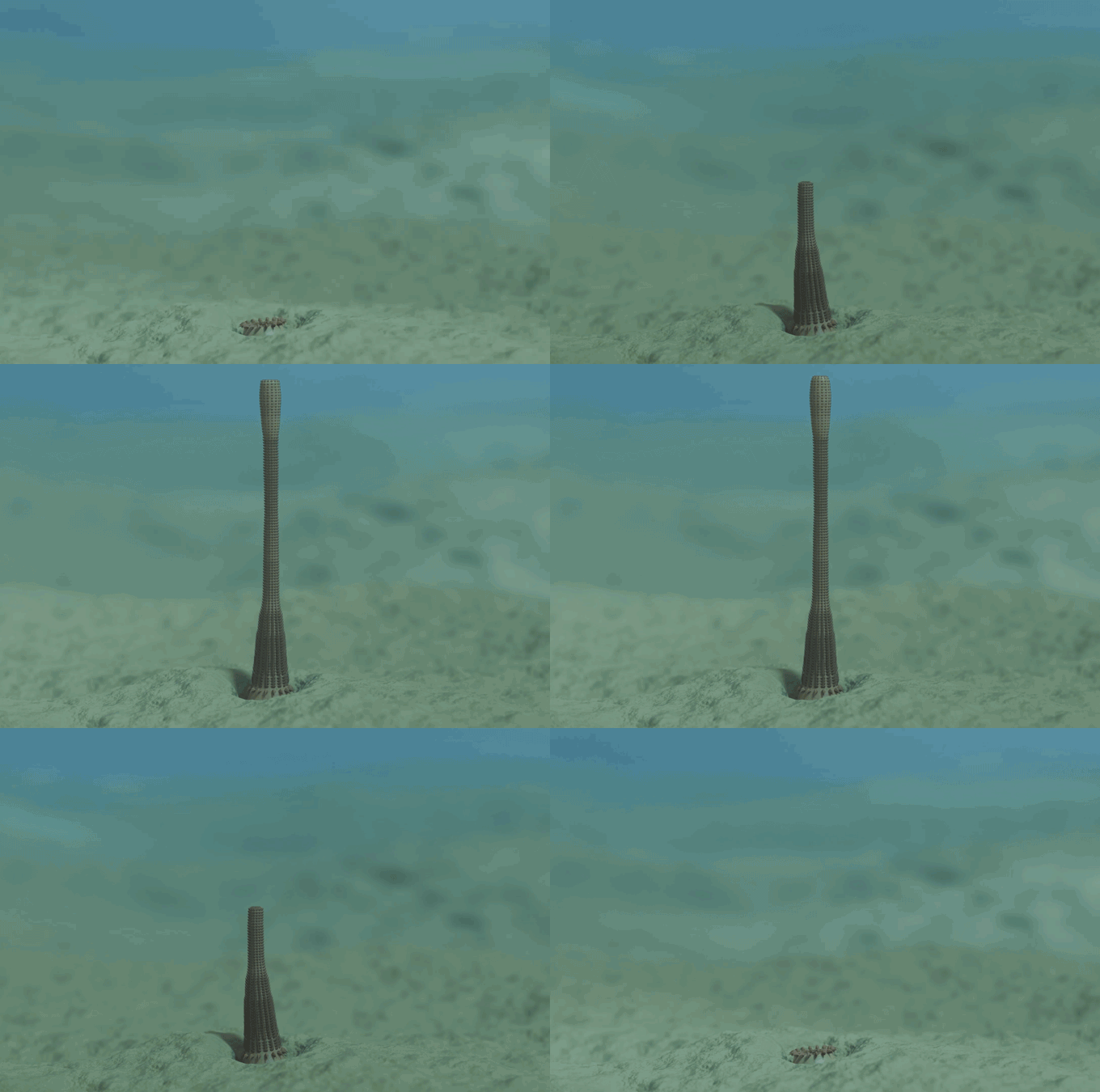
Okay, stop it, this is serious stuff. The striped cliffs of the Grand Canyon turn out to hold a trove of fossils dating to the Cambrian Period, a time around 540 million years ago when an abundance of new forms of life exploded onto the scene. Among those was a newly identified species of penis worm, an organism previously seen in other Cambrian-age rocks — but never in so sophisticated a form, with its complex teeth and finely branching projections lining its pharynx. This complexity is typical of this whole new fossil trove, the researchers say, suggesting the environment had abundant resources that allowed life forms to experiment with new adaptations.
Zombifying fungi
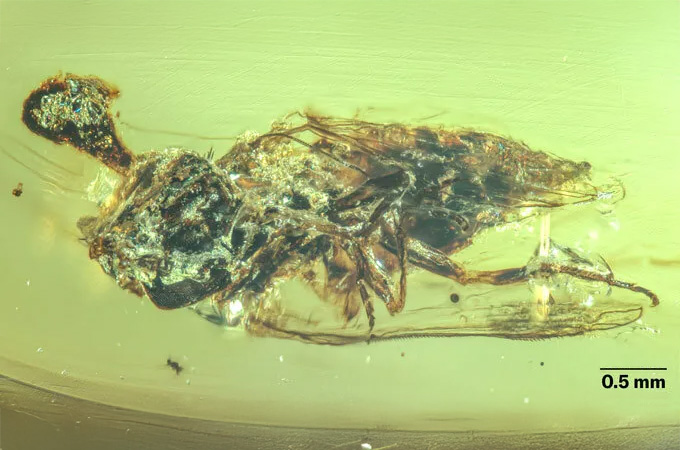
It’s a horror scene preserved in amber: An ancient drop of tree sap captured the moment, 100 million years ago, when a fungus burst out of the body of an ant pupa. Such real-life brain-hijacking fungi were the inspiration for the Netflix series The Last of Us — and now we know that the zombifying organisms have been around at least twice as long as thought. So that’s comforting. The fossil is a very rare find, scientists say, as the soft bodies of fungi rarely fossilize. And it’s another example of how museum collections — in this case, in a lab basement at Yunnan University in China — can still hold hidden treasures.
How Archaeopteryx took wing
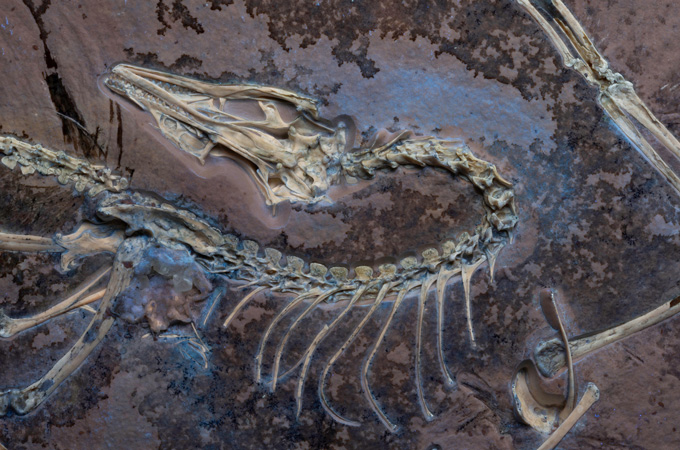
An exceptionally well preserved and complete fossil of Archaeopteryx, Earth’s most ancient bird, is offering new clues to how flight took off in birds. Nearly 100 percent complete, and not crushed by postmortem geologic pressures, the 150-million-year-old fossil — preserved with wings outstretched — contains the imprints of soft tissues like feathers and skin. Among other reveals, the wings show the bird had tertials, a type of specialized inner feathers on its upper arms. That’s a feature of modern flying birds but not nonavian feathered dinosaurs. It also had mobile digits on its hands, supporting a hypothesis that Archaeopteryx wasn’t just able to fly but may have been able to climb trees.
Lucy’s neighbors
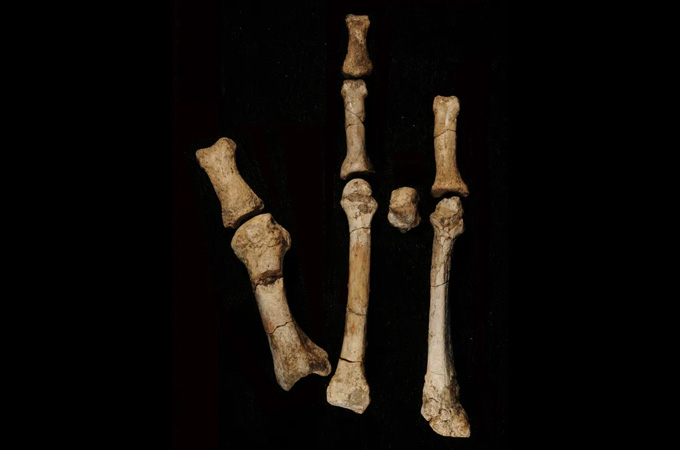
The famed Lucy lived about 3.2 million years ago in what’s now East Africa. Scientists once thought her species, Australopithecus afarensis, was the only early human relative in the area between about 3.8 million and 3 million years ago. But new fossil finds in Ethiopia dating to around 3.4 million years ago, including a foot and fragments of a pelvis, skull, jaw and teeth, suggest she had neighbors.
The fossils belonged to Australopithecus deyiremeda, scientists say, suggesting multiple related species coexisted in the same region. A. deyiremeda had more primitive features than A. afarensis, including a grasping big toe for climbing trees. Chemical analyses of the teeth suggest it had a less diverse diet than A. afarensis too, consisting mostly of leaves, shrubs and fruit.
Dragon Man was a Denisovan?
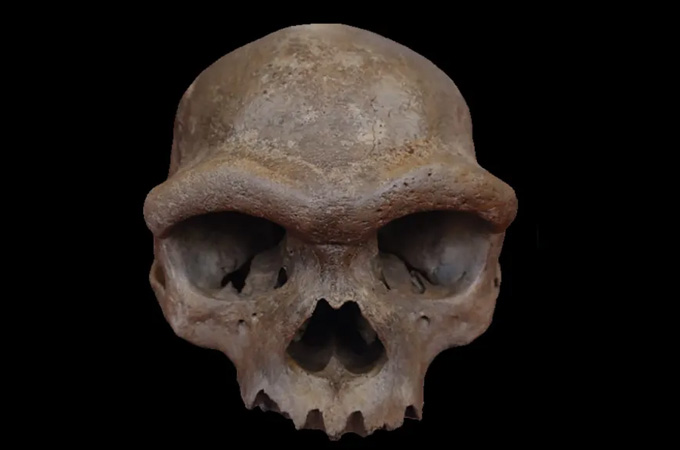
About a century ago, a nearly complete 146,000-year-old skull of an adult male was found in Harbin, China. Dubbed “Dragon Man,” it was previously thought to be a new species of early human called Homo longi.
But now, two separate studies say that it’s actually the first known fossil skull of mysterious human relatives called the Denisovans. The scientists determined that proteins extracted from the fossil skull, as well as DNA from the skull’s dental tartar, align closely with details from other Denisovan finds. But other scientists are not convinced, noting uncertainties in the identification of protein variants and the possibility of contamination of the DNA — so for now, Denisovans retain their mystery.
World’s first butt-drag fossil
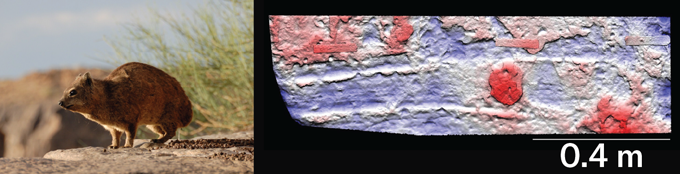
Africa’s adorable rock hyraxes have, apparently, been dragging their butts along the ground for at least 126,000 years. Newly discovered fossil traces in South Africa’s Walker Bay were likely made by ancient rock hyraxes, scientists say — and they include a trackway of not just footprints but also a distinct groove (with possible fossil dropping) that bears a strong resemblance to modern hyrax butt-drag tracks. In dogs, butt drags can be a sign of parasitic infections; why hyraxes do it is unclear. But one thing is clear: If this is a butt-drag fossil, it’s definitely the first of its kind anywhere in the world.
Chicago’s “Rat Hole” reexamined
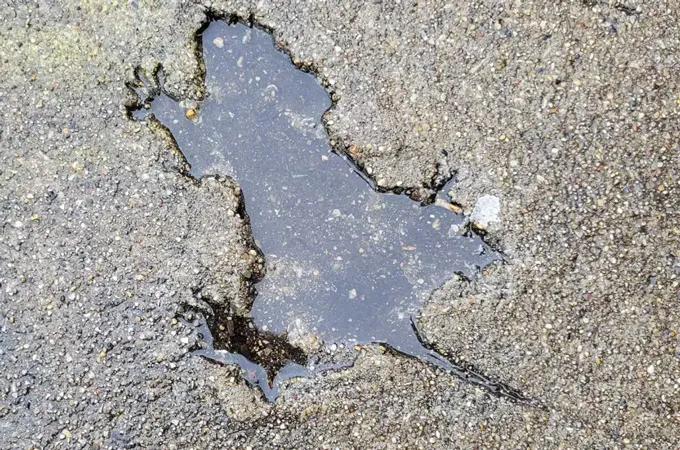
A fossil is the preserved remains of a living thing from a past time — and today’s cement sidewalks may one day offer up a fossil trove as diverse as the Burgess Shale. Witness the Chicago “Rat Hole,” an impression of a rodent that fell into the still-drying sidewalk decades ago, leaving behind an enigmatic outline filled with dirty water and paleontological questions. What manner of creature made it? How did it happen? Was it street art or a true snapshot of the past?
Now, we have answers, sort of. For one thing, the Rat Hole was probably not made by a rat. Its anatomical measurements match those of an eastern grey squirrel or a fox squirrel. It probably fell out of an overhanging tree (no fossil footprints preserved in the cement). It was a real, deep-dish slice of city life. Still, the lingering uncertainty over its identity just goes to show: If it’s this hard to identify a still-living species from an impression left a few decades ago, imagine the challenge of naming a creature from Earth’s far distant past.
Source link