
Few games can quite match the legacy and brilliance of Bethesda’s The Elder Scrolls. It has achieved commercial and critical success in a way other games could only ever dream of, becoming not just one of the most popular video game series of all time, but also one of the most discussed. I know I can’t stop nattering endlessly about Skyrim and the many ways it shaped me as a child, nor my enduring love for The Elder Scrolls IV: Oblivion, and how I feel it is ultimately the superior experience. Bethesda’s fantasy RPG series is beyond good, great, or excellent. It is in its own realm of brilliance that so few series can ever achieve.
However, that all being said, The Elder Scrolls hasn’t had a new entry in 15 years, and, as a result, it’s hard to keep singing its praises. Sure, there’s been numerous re-releases of Skyrim, and there’s that frankly abysmal Oblivion remaster that robs it of its very essence, but beyond that, we’re yet to see a new mainline title that showcases Bethesda is still capable of delivering the engrossing RPG experience it was once lauded for. As a consequence of this unfortunate hiatus, new rivals have begun sprouting out of the proverbial woodwork, many of which offer comparable or even better adventures. However, one game, Tainted Grail: The Fall of Avalon, is so good, so unbelievably better than Skyrim, Oblivion, Morrowind, and everything before them, that I struggle to see how Bethesda will be able to match it with The Elder Scrolls 6.
Tainted Grail: The Fall Of Avalon Is Everything TES Should Be
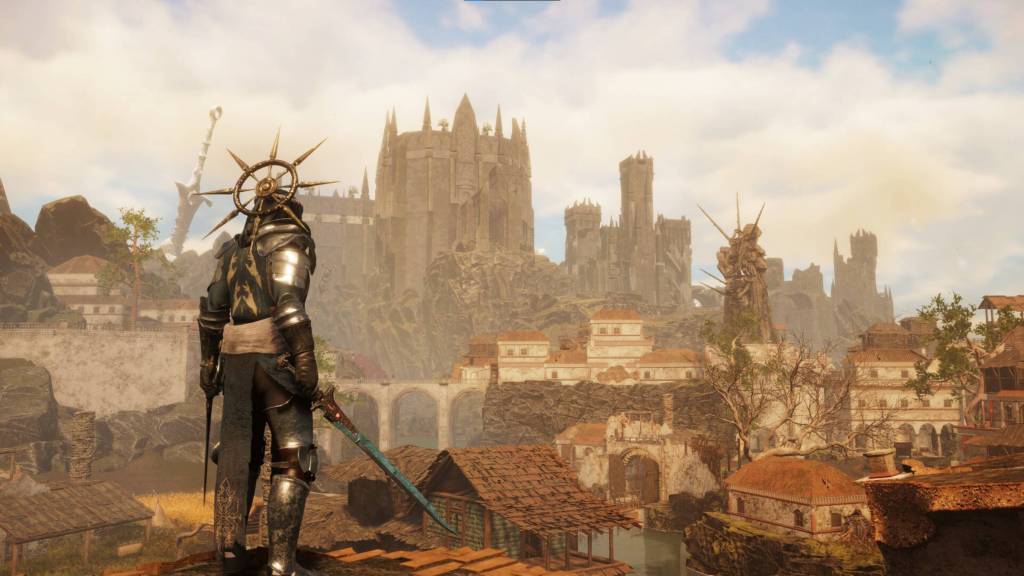
I find myself frequently wondering whether The Elder Scrolls 6, Bethesda’s long-gestating upcoming RPG, will truly live up to the astronomical hype behind it. This isn’t merely because such a lengthy wait facilitates an inherent expectation of a quality few games could genuinely achieve, but because Bethesda has proven time and time again that it simply isn’t the same studio it once was, or, perhaps more aptly, its priorities and design philosophies are vastly different. Many expect TES6 to learn from Stafield’s mistakes, to serve as a much-needed return to form for the studio, to prove that everything Bethesda has done post-Skyrim has simply been misguided experiments. Unfortunately, I think there is a greater chance The Elder Scrolls 6 will replicate Starfield’s major flaws, rather than rectify them.
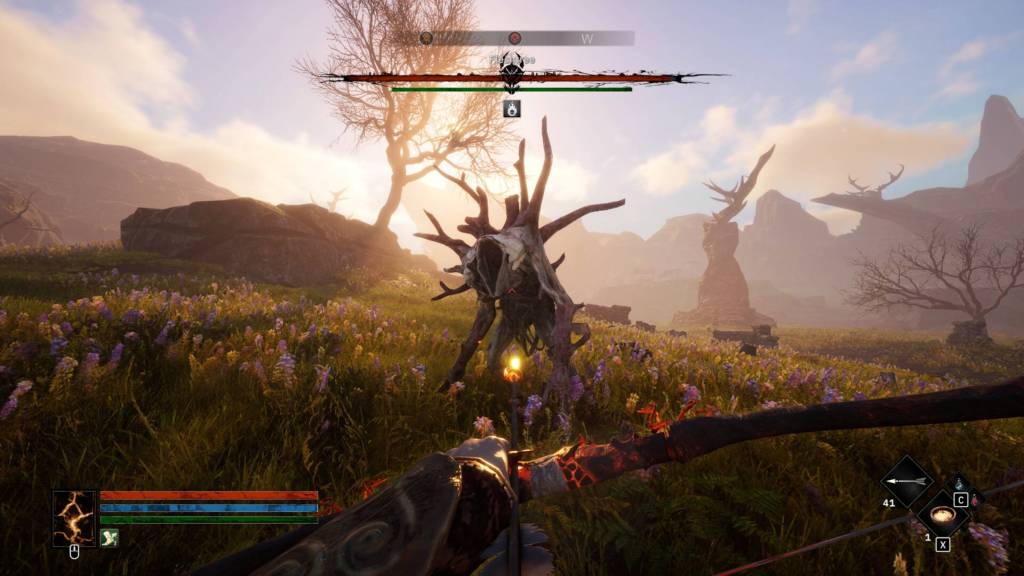
I also wonder whether Bethesda will be able to achieve something even remotely as good as Tainted Grail: The Fall of Avalon, especially considering that it is not only a superior confluence of the core tenets that formed the foundation of The Elder Scrolls’ success, but also significantly better than everything Bethesda has released in the past decade and a half. Tainted Grail: The Fall of Avalon’s approach to world design, combat, quests, writing, narrative, and even art direction surpasses the bar once deemed so high that few developers dared to better it. This is a game with rich, meaningful choices, one in which quests are unexpected, surprising, and above all else, expertly written, a game that elicits a genuine sense of awe and wonder, even in spite of the horrors that have befallen its world. Tainted Grail: The Fall of Avalon is the game we remember Skyrim to be, not what it actually was.
The Fall of Avalon succeeds in expanding upon many of the ideas Bethesda once held sacred while also delivering some much-needed modernization to ensure it feels innovative rather than iterative. Where Bethesda has often sought to oversimplify its once critically acclaimed approach to choice and exploration, Tainted Grail: The Fall of Avalon doubles down on player expression and complex storytelling, offering challenging and rewarding combat and a greater level of depth in its player-directed exploration. Of course, it isn’t perfect; after all, it was developed on a sliver of the budget one expects Bethesda is afforded. However, it delivers an experience that more or less achieves what I suspect Elder Scrolls fans had hoped Skyrim’s sequel would be, only years before TES6’s extremely distant release date.
Crucially, Tainted Grail: The Fall of Avalon benefited significantly from being developed in tandem with its budding community. Launching into Early Access, Awaken Realms was able to alter the core experience based on feedback from players, something Bethesda has struggled to do years after Starfield’s release. It ostensibly took a page from Larian’s book, gaining both a loyal following and an understanding of player expectations. I’ve long advocated for games to avoid being developed in a vacuum and copy Baldur’s Gate 3’s masterfully handled development cycle, and Tainted Grail: The Fall of Avalon is proof of why. The Elder Scrolls 6, for obvious reasons, cannot benefit from that, and, after over a decade in development, taking inspiration from a wide pool of now-outdated gameplay conventions, it will surely fail where The Fall of Avalon succeeded.
As BioWare floundered with the much-maligned launches of Anthem, Mass Effect: Andromeda, and Dragon Age: The Veilguard, studios like Spiders flourished. While the likes of GreedFall and even The Technomancer aren’t as widely praised as Mass Effect and Dragon Age, Spiders accomplished something that felt both reminiscent of the iconic BioWare formula while also feeling entirely distinct. It innovated where BioWare regressed, pushing the ideas and concepts the once legendary studio had established to new heights, even within its restrictive budgets. Sure, I doubt Spiders will ever get the flowers it deserves, nor will its games ever be recognized as the genuinely inspired RPGs that they are, but it set out to offer something akin to the traditional BioWare experience that had long been abandoned.
I mention this because I firmly believe that this is the direction developer Questline and its parent company Awaken Realms are going in, albeit with Bethesda instead of BioWare. Tainted Grail: The Fall of Avalon isn’t merely another Scrolls-like game attempting to ape the success of those past titles and resurrect a feeling desired by so many. Rather, it is a genuine attempt at continuing the legacy that Bethesda has seemingly given up, to build upon the foundation that made Skyrim, Oblivion, and the like so beloved. In many ways, it succeeds, creating something altogether new that nevertheless encompasses the spirit that made us all fall in love with The Elder Scrolls and long for its return.
I firmly believe that Questline is set to become the next Spiders, the next studio to break new ground, push the experience abandoned by another developer to new heights, and deliver genre-defining RPG gameplay that will forever surpass the efforts of said original developer. Tainted Grail: The Fall of Avalon is such a profoundly good foundation from which the studio can build more experiences that outclass what Bethesda has been offering for years. Of course, I don’t intend for any of this to mean that Questline or indeed Tainted Grail should replace Bethesda and TES. Rather, I believe that it will compete against it, establish a new bar for Bethesda to overcome, and thus better The Elder Scrolls and the studio’s other RPGs.
Bethesda has not had any competition within this space for a very long time, and that has enabled it to be lazy, to take over a decade to produce The Elder Scrolls 6, and rest on its laurels. Friendly competition is what ultimately breeds innovation, pushes studios to do better, to think of novel ways of outclassing their rivals and delivering an unparalleled experience. Questline is capable of being that competition, of truly standing toe-to-toe with Bethesda; I just hope that Bethesda actually listens up, realizes its flaws, and learns from the best.
Who do you think of Tainted Grail: The Fall of Avalon? Leave a comment below and join the conversation now in the ComicBook Forum!