
Published on
February 17, 2026
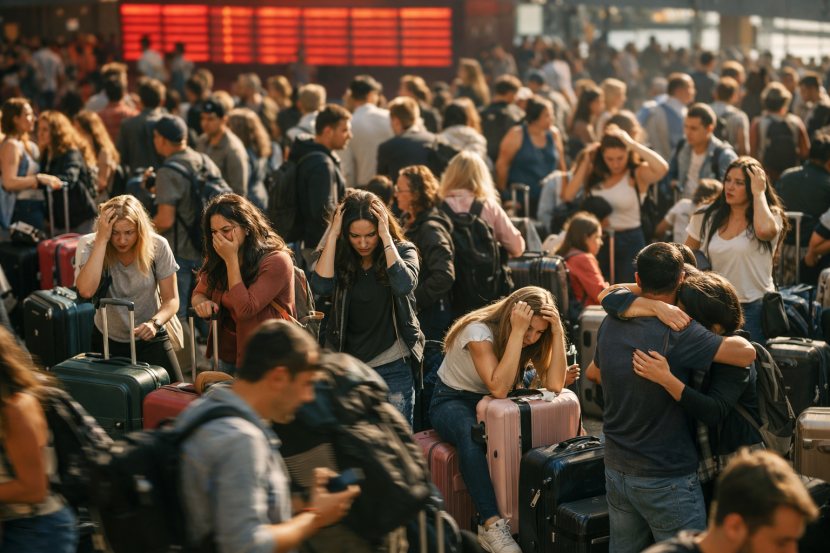
Image generated with Ai
Thousands of travellers stranded today in Europe as Germany, France, Netherlands, UK, Denmark, Norway, Greece, Portugal, Poland, Finland And Sweden faced 2,417 flight disruptions, across 14 major European airports spanning Amsterdam, Stockholm, Berlin, Paris, Copenhagen, Frankfurt, London, Manchester, Oslo, Athens, Lisbon, Warsaw and Helsinki. The most affected airlines were easyJet (200 delays, 2 cancellations), Lufthansa (192 delays), Air France (176 delays, 4 cancellations), KLM (132 delays, 6 cancellations) and SAS (102 delays, 14 cancellations). Other significantly impacted carriers included TAP Air Portugal (96 delays), Ryanair (72 delays) and Aegean Airlines (54 delays, 1 cancellation). Based on the latest flight data, major airports facing operational strain included Frankfurt (284 delays, 1 cancellation), Paris Charles de Gaulle (279 delays, 2 cancellations), Amsterdam Schiphol (247 delays, 7 cancellations), London Heathrow (200 delays, 5 cancellations), Lisbon (201 delays, 2 cancellations), Paris Orly (189 delays, 2 cancellations), Copenhagen (186 delays, 6 cancellations), and Manchester (164 delays, 3 cancellations).
- Updated Today: European airports recorded 2,365 delays and 52 cancellations across 14 major hubs.
- Frankfurt (284 delays) reported the highest delay volume.
- Oslo (9 cancellations) recorded the highest cancellation count.
- easyJet (200 delays) led delay volume among airlines.
- SAS (14 cancellations) recorded the highest airline cancellation total.
- London Heathrow (23 US-related delays) had the highest transatlantic disruption.
- Air France (176 delays) and Lufthansa (192 delays) showed strong hub concentration impacts.
- Disruption affected airports across Germany, France, the Netherlands, the United Kingdom, Denmark, Norway, Greece, Portugal, Poland, Finland and Sweden.
European Airports Facing the Worst Cancellations And Delays Right Now
Frankfurt Airport (284 delays, 1 cancellation)
Frankfurt Airport recorded the highest delay count, with Lufthansa operations heavily represented in disruption totals.
Paris Charles de Gaulle (279 delays, 2 cancellations)
Paris Charles de Gaulle, France’s primary international gateway saw extensive delays, largely concentrated in Air France operations.
Amsterdam Schiphol (247 delays, 7 cancellations)
Amsterdam Schiphol, the Dutch hub experienced both high delay volume and notable cancellation exposure, particularly impacting KLM services.
Advertisement
Advertisement
London Heathrow (200 delays, 5 cancellations)
London Heathrow, the UK’s busiest airport recorded significant disruption, including the highest number of US-related delays.
Lisbon Humberto Delgado (201 delays, 2 cancellations)
Portugal’s main airport saw high delay volume, with TAP Air Portugal accounting for the largest share.
Advertisement
Advertisement
Paris Orly (189 delays, 2 cancellations)
Leisure-focused operations, including Transavia France and Air France, drove delays.
Copenhagen Airport (186 delays, 6 cancellations)
Nordic network disruption centered on SAS and affiliated regional carriers.
Advertisement
Advertisement
Manchester Airport (164 delays, 3 cancellations)
Low-cost carrier operations, especially easyJet and Ryanair, accounted for the majority of delays.
Athens International (139 delays, 2 cancellations)
Greek carriers including Aegean Airlines and Sky Express were most affected.
Berlin Brandenburg (131 delays, 2 cancellations)
Delay-heavy impact spread across easyJet, Lufthansa and Ryanair.
Airlines with the Highest Cancellation And Delay Rates Across Europe
easyJet (200 delays, 2 cancellations)
Operations across Manchester, Berlin, Amsterdam, Lisbon and Paris contributed to the highest delay total among airlines.
Lufthansa (192 delays)
Disruption concentrated primarily at Frankfurt, alongside additional impacts in Berlin, Copenhagen, Heathrow and Helsinki.
Air France (176 delays, 4 cancellations)
Paris Charles de Gaulle and Paris Orly operations accounted for most disruption.
KLM (132 delays, 6 cancellations)
Amsterdam Schiphol contributed the largest share of KLM’s operational impact.
SAS (102 delays, 14 cancellations)
Scandinavian hubs including Oslo, Copenhagen and Stockholm saw notable cancellation concentration.
TAP Air Portugal (96 delays)
Lisbon operations were the dominant driver of delays.
Ryanair (72 delays)
Manchester, Berlin, Lisbon and Copenhagen contributed to delay totals.
Aegean Airlines (54 delays, 1 cancellation)
Athens operations accounted for the majority of delays.
What Can Affected Passengers Do?
- Check airline apps regularly for updated departure times.
- Monitor airport websites such as Frankfurt or Heathrow for operational notices.
- Contact airlines directly for rebooking options.
- Retain boarding passes and receipts in case compensation rules apply.
- Arrive earlier than usual at busy hubs like Amsterdam or Paris.
- Review EU261 passenger rights for eligible compensation claims.
Financial Impact On Airlines
Operational disruption can generate additional expenditures across multiple areas of airline activity. Irregular schedules may increase staffing requirements, fleet allocation adjustments and service-related outlays. Broader consequences can also emerge through regulatory obligations, network recovery efforts and brand perception challenges. For carriers operating complex hub structures, sustained irregularity can intensify financial strain over time due to interconnected scheduling dependencies.
Overview of Flight Cancellations and Delays In Europe
Operational disruption affected major European aviation markets including Germany, France, the Netherlands, the United Kingdom, Denmark, Norway, Greece, Portugal, Poland, Finland and Sweden. Cities such as Paris, Frankfurt, London, Amsterdam, Copenhagen, Lisbon and Oslo recorded significant delay volumes.
Major network carriers including Lufthansa, Air France, KLM, British Airways, SAS, and TAP Air Portugal experienced concentrated disruption at their primary hubs. Low-cost operators such as easyJet, Ryanair, and Wizz Air also recorded substantial delay figures across multiple airports.
Germany and France collectively accounted for some of the highest disruption totals through Frankfurt, Berlin, Paris Charles de Gaulle and Paris Orly. The United Kingdom saw significant operational pressure at London Heathrow and Manchester. Nordic countries including Norway, Denmark, Finland and Sweden experienced disruption primarily linked to SAS network operations. Southern Europe saw impact across Athens and Lisbon, while Central Europe recorded delays in Warsaw.
Across all 14 airports, the aggregated total reached 2,365 delays and 52 cancellations, highlighting a widespread but delay-heavy operational pattern rather than mass grounding events.
Source: Different airports and FlightAware
