
WASHINGTON – by Petros Kasfikis, TO VIMA –
When Greece’s new ambassador, Antonis Alexandridis, presented his credentials at the White House, the ceremony followed diplomatic tradition. The emphasis, however, was unmistakably strategic.
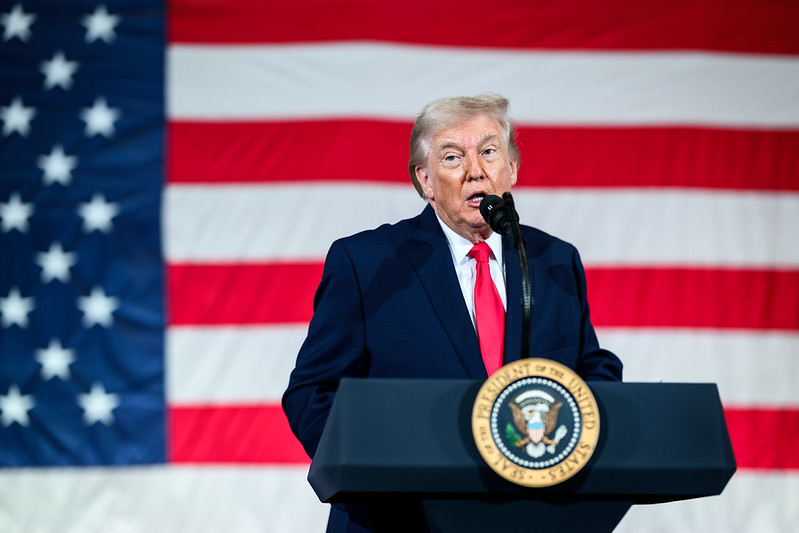
President Donald Trump used the occasion not simply to praise bilateral ties. He signaled what could be a new phase in the U.S.–Greece relationship, focused on industrial cooperation, naval production and Greece’s move toward spending 5 % of GDP on defense.
Trump described the relationship as “stronger than ever,” calling the friendship between the two nations historic and rooted in shared democratic heritage.
He noted that Ambassador Kimberly Guilfoyle is “one of my most trusted envoys,” underscoring the importance he attaches to the partnership, and acknowledged the support of the Greek-American community, particularly in South Florida.
Yet the most consequential signals were policy driven.
Trump commended Athens for its progress toward NATO’s 5 % defense spending benchmark, saying Greece is demonstrating “real leadership” within the Alliance.
If achieved, that level would place Greece among NATO’s highest defense spenders relative to GDP, a point of growing significance as Washington presses European allies to shoulder a greater share of collective security.
But it was shipbuilding that marked the most forward-looking dimension of the remarks.
The president pointed to ongoing discussions about constructing American-designed frigates in Greek shipyards and linked the effort to a broader push to revitalize American shipyards while expanding allied production capacity.
For Washington, which faces mounting strain on domestic naval construction amid intensifying global competition, integrating capable allied yards into production planning is increasingly attractive.
Athens has expressed interest in participating in advanced U.S. naval programs, including potential industrial involvement in next-generation warship construction. For Greece, the implications are substantial.
Revitalizing its shipbuilding sector through U.S.-linked naval production would not only modernize its fleet but also reposition domestic industry within NATO’s long-term force planning. After years of contraction and restructuring in Greek shipyards, integration into American naval supply chains would represent a structural upgrade in the relationship.
Alongside this emerging industrial dimension, trade, investment and energy cooperation remain central pillars. Trump cited U.S. liquefied natural gas exports and the Vertical Corridor as key components of regional energy security, saying the two countries are accomplishing “a great deal” together and could do more.
He also praised Greece for what he described as a “courageous” decision to abstain at the International Maritime Organization during adoption of a net-zero shipping emissions framework, arguing that the measure could have burdened consumers, businesses and global trade.
As Washington urges allies to spend more on defense, it is also encouraging deeper integration of industrial capacity. Greece’s movement toward the 5 percent threshold, combined with potential naval co-production, would shift its role from reliable regional partner to embedded stakeholder in transatlantic defense manufacturing.
If those plans move forward, Greece would not simply spend more on defense. It would help build it.
Petros Kasfikis is an accredited correspondent covering the White House, State Department, and Capitol Hill for MEGA TV and newspaper To Vima. For the latest political developments from Washington, D.C., you can subscribe to his YouTube channel: youtube.com/c/PKas?sub_confirmation=1