
Recently, GamingTrend had the chance to interview the development team behind Under the Island, Johannes and Simone Grünenwald, via Email. We asked a ton of questions, and they’ve got all the answers:
GamingTrend: What’s the most recent book you’ve read or are reading?
Johannes: At the moment I’m reading “Story” by Robert McKee again, one of my favorite books when it comes to storytelling. The last novel I read was probably “Unseen Academicals” by Terry Pratchett.
Simone: I’m deep into fantasy books and am currently Reading Fool’s Assassin by Robin Hobb, which must be the 15th book that I’m reading set in the same world.
GT: It’s clear Under the Island was inspired by The Legend of Zelda, but what other things did you look to for inspiration?
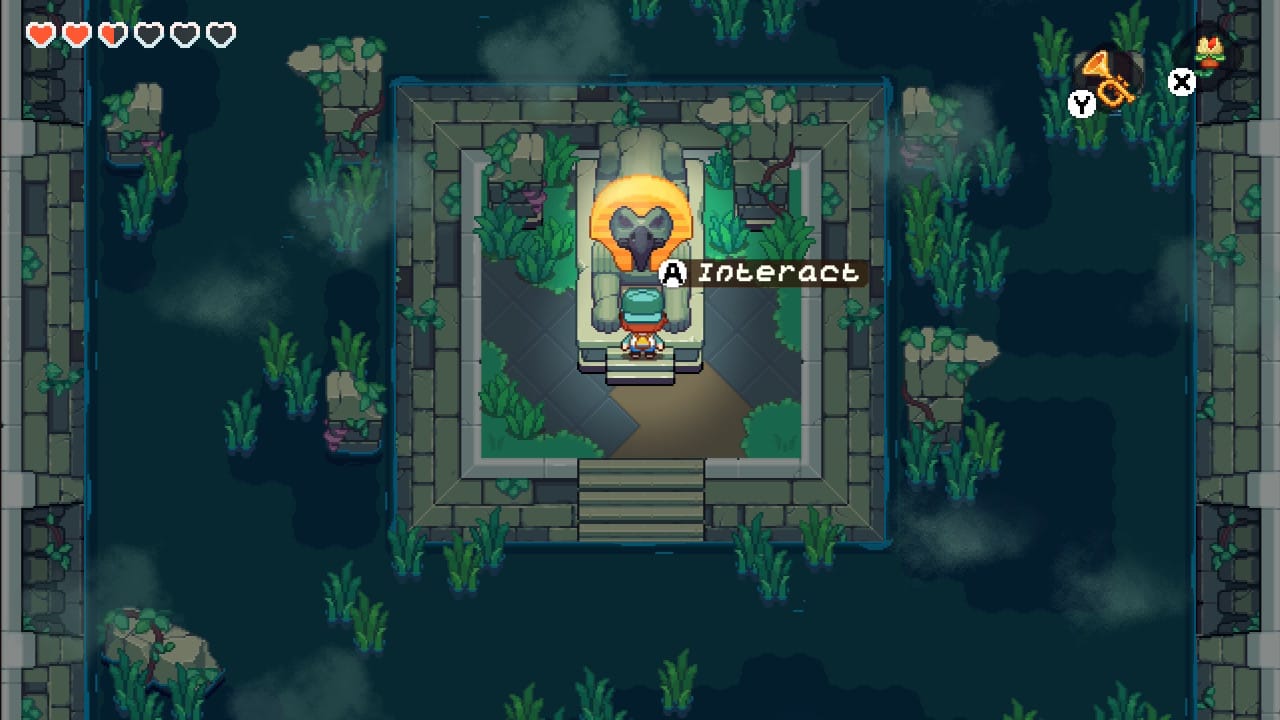
Johannes: A lot of it came from my own childhood. I grew up in a small village, and there was a sawmill there that we used to sneak into. They had piles of leftover wood pieces, which we secretly took and later carved into bats for a sport we had invented ourselves. That’s how the stealth mission in the sawmill came about.
Of course there were also other games and media that influenced me a lot. Earthbound and Mother 3 in particular, without those two games, the setting probably never would have become 90s reality meets fantasy.
Terranigma wasn’t just a big inspiration either, we even managed to get Miyoko Takaoka as one of our composers.
When it comes to puzzles, Zelda was actually less of an inspiration than Alundra and Lufia 2, both of which have phenomenal puzzles, some of them really difficult. I always loved that and think it’s a bit of a shame that many modern action-adventure games don’t challenge players as much anymore.
And finally, Gravity Falls with its many mysteries was also a big influence. You might notice that more in the monster design or in the Barlu Forest.
Simone: Artistically I was thinking Ghibly [sic] but mixed with my own style.
GT: Only two people making a game sounds like a difficult task, let alone those two people being married. Did development affect your personal lives at all?
Johannes: I don’t think it had a huge impact. We both have our strengths and weaknesses and complement each other very well. Fortunately Simone doesn’t have very strong opinions when it comes to games, so we never really argued about anything.
Simone also didn’t work on Under the Island full-time, which definitely helped. Otherwise it would have been much riskier financially.
Right before and after release I sometimes worked 14 hours a day to fix bugs, and of course that did affect our personal life a bit. Luckily Simone is very understanding.
Simone: Yeah I was mainly helping with the visuals and game design wise I was used for bouncing ideas a lot, but Johannes always called the direction the game would go.
GT: What tips would you have now for anyone trying to make a game similar to Under the Island?
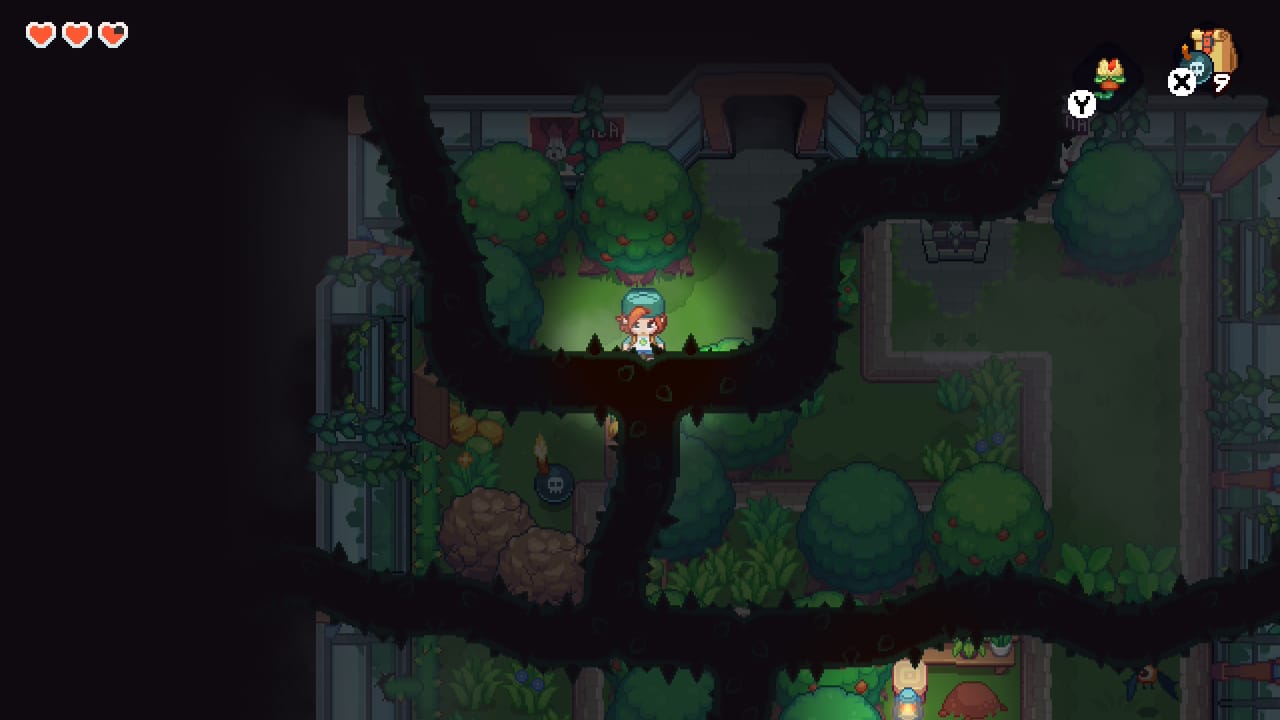
Johannes: Don’t give your main character a hockey stick as a weapon. A character with a sword explains itself immediately, while a character with a hockey stick first needs some explanation.
Also be careful with your minigames. We received quite a bit of criticism for some of them, especially the snowboard minigame with its tank controls.
GT: Are there any games you’re looking forward to this year?
Johannes: My list is still surprisingly short this year, but I’m really looking forward to Car Park Capital, The Merlies, and the new Tomb Raider remake. I’m also hoping we’ll get a new game from Monolith Soft.
GT: I’ve never seen an “item” quite like Under the Island’s bird, how did you come up with that idea?
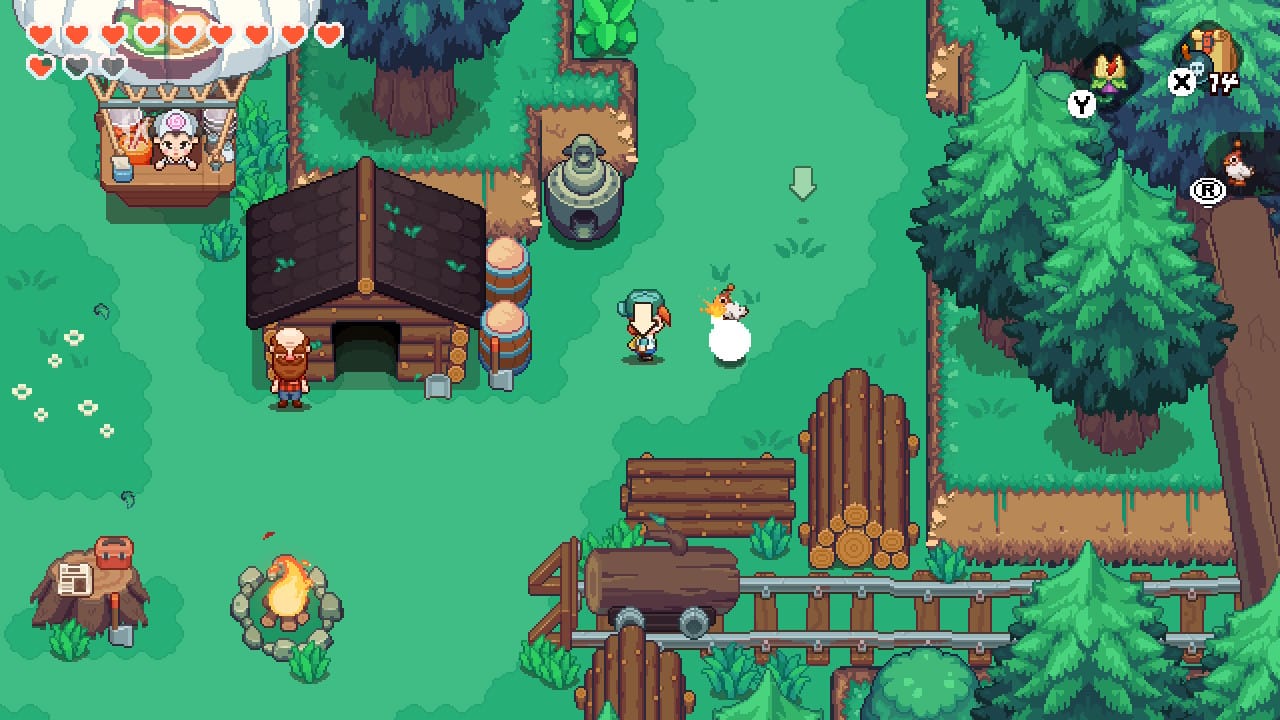
Johannes: I was thinking about how we could use the right analog stick for an item, and that’s when the idea of a grabber came up that would use the same mechanic. But the grabber had some downsides, for example, it doesn’t really make sense that it could reach over small walls or trees. At some point we realized that a bird would actually solve that problem perfectly.
Simone: I was thinking of a remote controlled toy when designing it, which is why the bird has a sort of antenna.
GT: What was something you really wanted to implement in Under the Island, but had to cut for whatever reason?
Johannes: I would have loved to include many more small stories about the villagers, similar to Mother 3. That was originally planned as a way to support the rather simplistic main story.
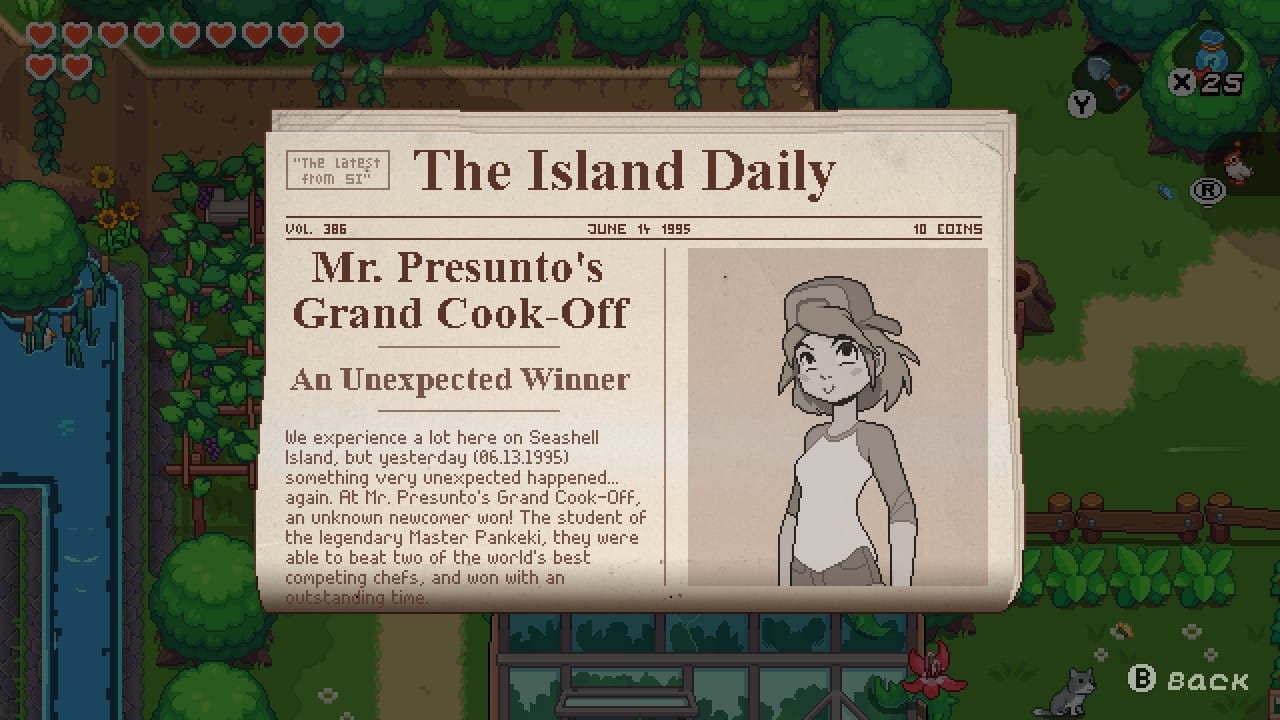
GT: Under the Island can take a very unorthodox approach to traditional dungeons, like a cooking contest or picross puzzles, what was the impetus behind these design choices?
Johannes: We wanted the game to feel very varied. Many games start with a goal like “collect 8 artifacts,” and then you essentially go through the same dungeon eight times with different paint on the wall. We wanted to break away from that.
Each gear chapter should feel unique and have its own concept. Our main design pillar was always exploration, and that doesn’t work as well if players always have to do the same activities.
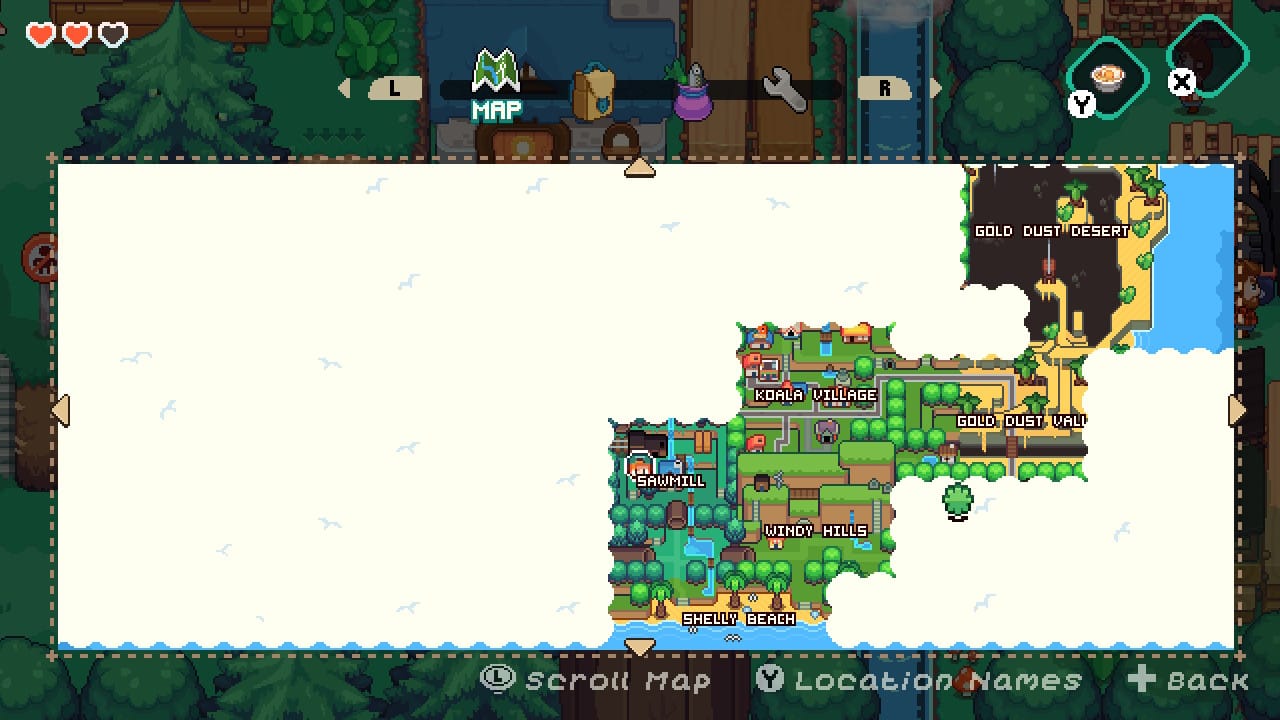
GT: Did any real life cultures influence the setting of Seashell Island?
Johannes: Yes, there are quite a few influences. Seashell Island was designed as a place settled by migrants. The people there haven’t lived there for thousands of years, only for a few generations. New people kept arriving and settling on the island.
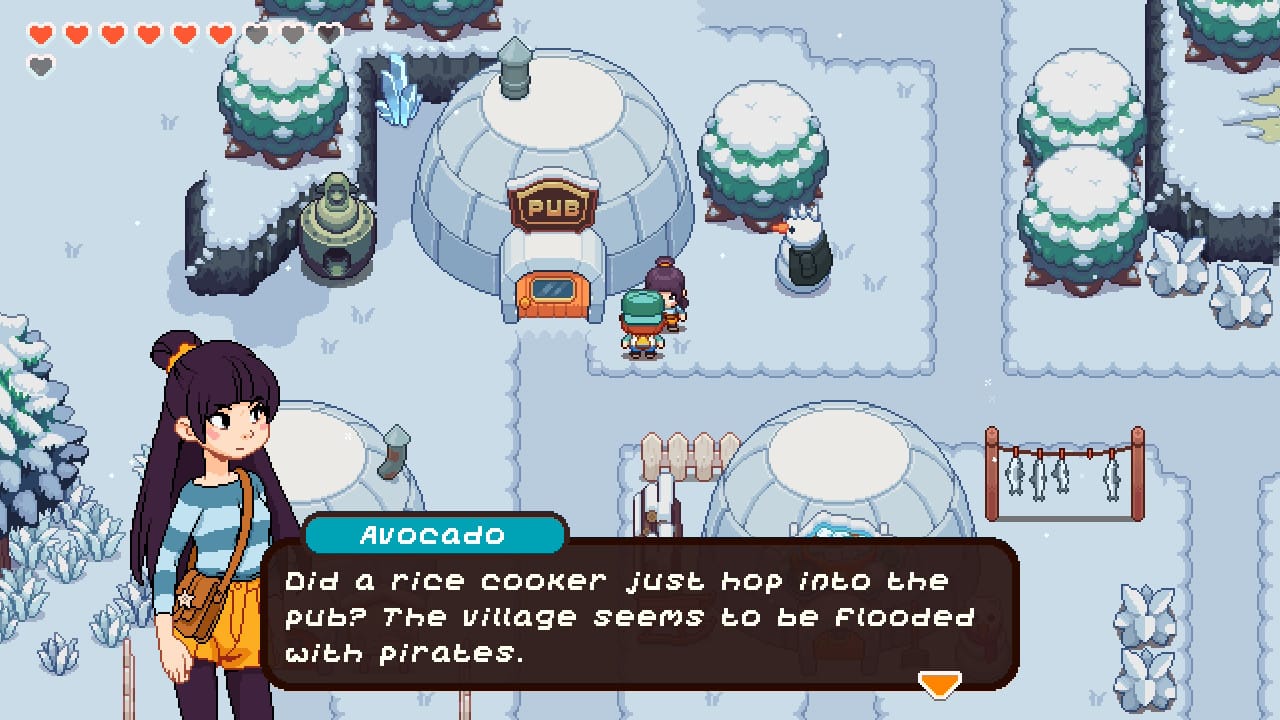
That’s why you can see influences from Asian culture, like the ramen vendor, or the Italian farmer Alberto. You’ll also find a bit of German culture in the game through some of my own childhood experiences.
GT: Under the Island has an adorable, colorful art style – especially the character portraits. Was it difficult to nail down a consistent style for the various characters and biomes, and what influenced your style?
Johannes: The art direction was inspired by many games. Most obviously The Legend of Zelda: The Minish Cap, but also Earthbound, Trials of Mana, Alundra and Terranigma.
Once you have a solid starting point with a few sets, like interiors, grassland, and forest and the colors work well together, it actually becomes much easier to stay consistent. Still, over such a long development time it was quite challenging. I had to revisit and rework older assets many times. Even now, in the finished game, I still notice assets I would love to improve.
Simone: As to the character portraits and keeping all characters coherent it always helps to have the existing ones open while designing a new character. But also having them all in the pixel outline style is a unifying aspect.
GT: Can you give any insight as to what’s next for Slime King Games?
Johannes: We’re definitely planning to carry everything we learned from Under the Island into our next game, so it will probably be something in a similar genre. Thanks to all the feedback we received, we now have a good idea of what players enjoyed and where we can still improve.
Under the Island wore its inspirations quite openly, and I think the next game will feel much more unique while still keeping the same strengths.
GT: Finally, is there anything else you’d like to share with our readers?
Johannes: If you play Under the Island, under no circumstances should you shoot a sheep with a fireball! The consequences could be horrible.
Under the Island review
Under, over, and around
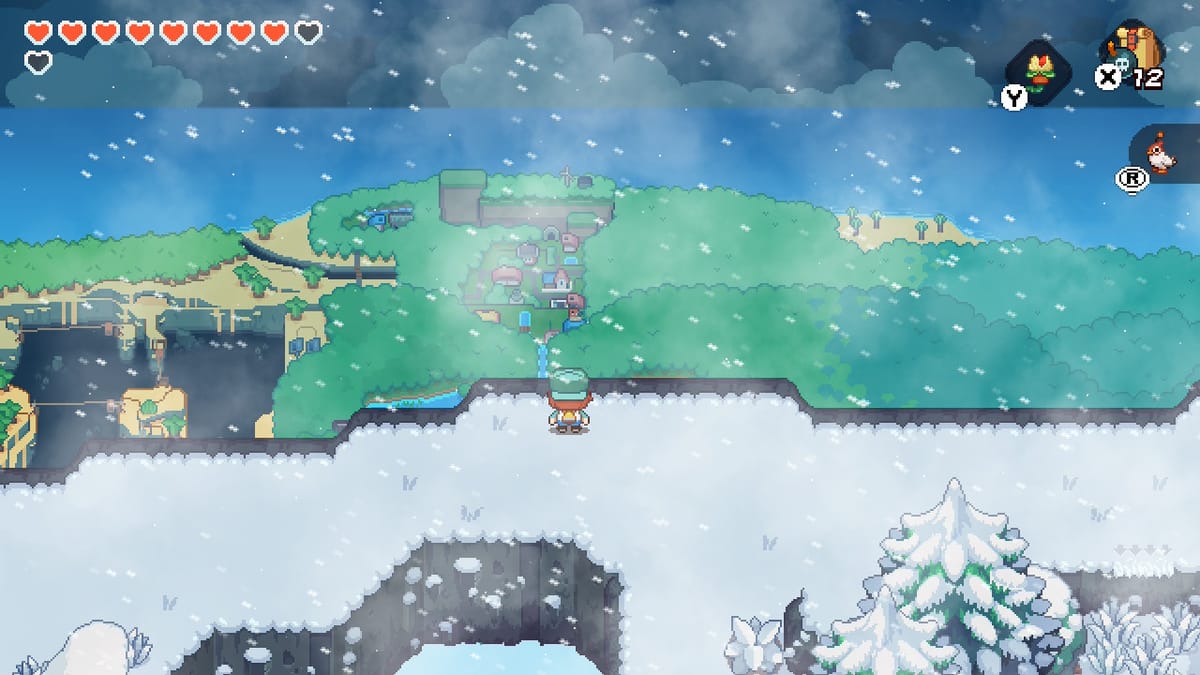
I had a lot of fun with both this interview and Under the Island itself, and I’m looking forward to whatever Johannes and Simone Grünenwald get up to next. Thanks to Slime King Games for the interview opportunity, and for more on all things indie games, stay tuned to GamingTrend.