
Published on
March 24, 2026
By: Tuhin Sarkar

Image generated with Ai
The United States overtakes France, New Zealand, Spain, Greece, Ireland and more countries around the world emerging as safest travel destinations in this year, when most of the nations teeters on war chaos and geopolitical tensions rise. The United States overtakes France, New Zealand, Spain, Greece, Ireland and more not just in perception, but in operational strength. Therefore, the United States emerges as a powerful safe travel choice.
As nations teeter on war chaos and geopolitical tensions rise, travellers now rethink safety. They move fast. They choose stability. They demand reliability. Consequently, the United States overtakes France, New Zealand, Spain, Greece, Ireland and more countries around the world because it delivers strong infrastructure, advanced aviation systems, and fast emergency response. Moreover, the United States emerging as safest travel destinations in this year is driven by its ability to operate without disruption.
However, while France, New Zealand, Spain, Greece, Ireland and more still rank high in traditional safety metrics, the United States overtakes France, New Zealand, Spain, Greece, Ireland and more in a new safety era. This era values resilience. This era values control. This era values continuity. As a result, the United States becomes the destination where travellers feel protected, connected, and secure.
Travel And Tour World urges readers to read the entire story, as the United States overtakes France, New Zealand, Spain, Greece, Ireland and more countries around the world emerging as safest travel destinations in this year, when most of the nations teeters on war chaos and geopolitical tensions rise, redefining global travel safety at scale.
Advertisement
Advertisement
The United States is increasingly being positioned as a complex yet highly secure travel destination, where safety varies significantly by region but remains strong across many of its most visited locations. While the country does not consistently rank among the safest nations globally, it offers a powerful combination of advanced infrastructure, strong law enforcement systems, and highly secure tourist zones. As a result, travellers are discovering that the United States delivers a unique safety proposition—one that is not defined by national averages but by localised excellence.
This evolving perception is reshaping global tourism flows. Visitors are no longer assessing safety at a country level alone. Instead, they are focusing on specific cities, regions, and travel corridors. In this context, the United States stands out as a destination where carefully chosen locations can rival or even exceed global safety benchmarks.
Advertisement
Advertisement
Why Does the United States Rank Differently at Country and City Levels?
One of the most important aspects of understanding safety in the United States is recognising the contrast between national rankings and city-level performance. Globally, the country often falls behind nations such as Iceland, Switzerland, and Canada in overall safety indices. These rankings consider factors such as crime rates, social stability, and firearm-related incidents.
However, this broad assessment does not reflect the reality on the ground for travellers. The United States is vast and decentralised. Each state, city, and even neighbourhood operates with different safety dynamics. This results in a fragmented but highly optimised safety landscape.
Advertisement
Advertisement
Cities such as Honolulu, San Diego, and Burlington consistently demonstrate low crime rates, efficient emergency response systems, and strong public safety frameworks. These cities are not anomalies. They represent a broader trend where well-managed urban and suburban areas deliver safety levels comparable to some of the safest destinations globally.

Image generated with Ai
TTW reveals the Top 50 safest travel destinations around the world for 2026 as global uncertainty continues to reshape how people travel. Safety is no longer optional. It is essential. Rising geopolitical tensions across Latin America and West Asia are pushing travellers to rethink plans. Many are now avoiding high-risk regions and choosing destinations that offer stability, strong governance and reliable infrastructure.
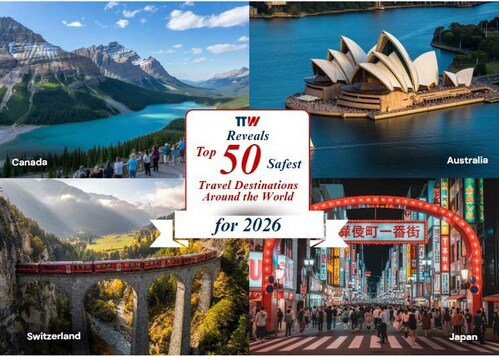
Image generated with Ai
TTW reveals the Top 50 safest travel destinations around the world for 2026 to reflect this major shift. Countries in Northern and Western Europe, along with Asia-Pacific hubs such as Japan and Singapore, are gaining attention for their security and efficiency. Meanwhile, island destinations like Mauritius and Maldives are emerging as peaceful escapes.
This ranking highlights a clear trend. Travellers are prioritising confidence, predictability and safety. TTW reveals the Top 50 safest travel destinations around the world for 2026 to guide smarter decisions in a rapidly changing global travel landscape.
“Escalating geopolitical tensions—from instability in Latin America to conflicts involving the US, Israel, and Iran—are reshaping global travel patterns. Travelers are increasingly prioritizing safety and stability, avoiding high-risk regions. In response, Travel and Tour World (TTW) has ranked the safest destinations for 2026, guiding travelers toward secure alternatives.” said Anup Kumar Keshan, Founder and Editor-in-Chief of TTW.
| Rank | Country | Region |
| 1 | Canada | North America |
| 2 | Australia | Oceania |
| 3 | Switzerland | Europe |
| 4 | Japan | Asia |
| 5 | United States | North America |
| 6 | France | Europe |
| 7 | New Zealand | Oceania |
| 8 | Spain | Europe |
| 9 | Greece | Europe |
| 10 | Ireland | Europe |
| 11 | China | Asia |
| 12 | Germany | Europe |
| 13 | United Kingdom | Europe |
| 14 | Singapore | Asia |
| 15 | Italy | Europe |
| 16 | Netherlands | Europe |
| 17 | Dominican Republic | Caribbean (North America) |
| 18 | Austria | Europe |
| 19 | Denmark | Europe |
| 20 | Portugal | Europe |
| 21 | South Korea | Asia |
| 22 | Finland | Europe |
| 23 | Belgium | Europe |
| 24 | Sweden | Europe |
| 25 | Thailand | Asia |
| 26 | Bahamas | Caribbean (North America) |
| 27 | Vietnam | Asia |
| 28 | Seychelles | Africa |
| 29 | Czechia | Europe |
| 30 | Argentina | South America |
| 31 | Estonia | Europe |
| 32 | Malaysia | Asia |
| 33 | Iceland | Europe |
| 34 | Uruguay | South America |
| 35 | Latvia | Europe |
| 36 | Lithuania | Europe |
| 37 | Mauritius | Africa |
| 38 | Panama | Central America |
| 39 | Barbados | Caribbean (North America) |
| 40 | Costa Rica | Central America |
| 41 | Slovenia | Europe |
| 42 | Maldives | Asia |
| 43 | Malta | Europe |
| 44 | Botswana | Africa |
| 45 | Fiji | Oceania |
| 46 | Chile | South America |
| 47 | Taiwan | Asia |
| 48 | Croatia | Europe |
| 49 | Georgia | Eurasia |
| 50 | Monaco | Europe |
United States Rises as a Resilient Travel Destination Amid Geopolitical Turmoil, Challenging France, New Zealand, Spain, Greece, Ireland and More
The United States rises as a resilient travel destination amid geopolitical turmoil, and the United States is now challenging France, New Zealand, Spain, Greece, Ireland and more countries around the world as travellers rethink safety in a volatile global environment. As geopolitical instability continues to disrupt traditional travel corridors, the United States emerges as a strong alternative where safety is increasingly defined by operational resilience, infrastructure strength, and crisis response capability.
However, the United States rises not because it overtakes France, New Zealand, Spain, Greece, Ireland and more in traditional safety rankings, but because the definition of safety is shifting rapidly. Travellers now prioritise stability, accessibility, and reliability. Therefore, the United States offers a compelling proposition. It delivers advanced aviation systems, strong emergency services, and structured tourism zones that ensure continuity even during global disruptions.
Moreover, while countries like France, New Zealand, Spain, Greece, and Ireland continue to perform strongly in global peace and safety indices, the United States rises by offering a diversified safety landscape. Travellers can select destinations within the United States that meet high safety standards. From coastal cities to suburban hubs and national parks, safety becomes a choice rather than a limitation.
As a result, the United States rises as a destination that combines scale with control. Travel And Tour World urges readers to read the entire story as the United States challenges France, New Zealand, Spain, Greece, Ireland and more countries, redefining how global travellers evaluate safety in 2026.

Image generated with Ai
Why Is the Definition of Travel Safety Changing in 2026?
The global travel industry is undergoing a structural shift. Safety is no longer defined only by crime statistics or peace indices. Instead, travellers are evaluating destinations based on their ability to operate smoothly during crises.
Geopolitical tensions, regional conflicts, and economic disruptions have forced travellers to reconsider traditional “safe destinations.” Countries that once dominated safety rankings now face challenges such as over-tourism, civil unrest, and operational strain. As a result, travellers are prioritising destinations where systems remain functional even under pressure.
The United States benefits from this shift. Its large-scale infrastructure, decentralised governance, and advanced crisis management systems allow it to maintain stability. Flights continue to operate, emergency systems remain active, and tourism infrastructure adapts quickly. This operational resilience is becoming a key determinant of safety, giving the United States a strategic advantage.
How Does the United States Compete with France, New Zealand, Spain, Greece and Ireland?
France, New Zealand, Spain, Greece, and Ireland continue to rank highly in traditional safety metrics. They offer low crime rates, strong social systems, and high levels of public trust. However, their smaller size and concentrated tourism zones can create vulnerabilities during periods of disruption.
In contrast, the United States operates as a diversified safety ecosystem. It does not rely on a single tourism hub. Instead, it offers multiple safe regions spread across the country. Travellers can shift between destinations based on conditions, ensuring flexibility.
Additionally, the United States provides unmatched connectivity. Its aviation network is one of the most advanced globally, allowing travellers to reroute easily. This flexibility reduces risk and enhances confidence. While European and Oceanian destinations remain safe, the United States competes by offering scale, redundancy, and adaptability.
What Makes the United States Operationally Safer in Times of Crisis?
Operational safety is emerging as the most critical factor in modern travel. The United States excels in this area due to several key strengths.
Advanced Infrastructure
The country’s airports, highways, and transport systems are designed for high capacity and efficiency. This ensures continuity even during disruptions.
Emergency Response Systems
The United States has one of the fastest emergency response frameworks in the world. Medical services, disaster response teams, and communication systems operate seamlessly.
Real-Time Information Access
Travellers benefit from instant updates through digital platforms, enabling informed decision-making.
Strong Law Enforcement
Tourist zones are heavily monitored, reducing risks and ensuring quick intervention when needed.
These factors collectively position the United States as a destination where travellers feel secure, not just because of low risk, but because of high preparedness.
Which Destinations in the United States Offer the Highest Safety?
Safety within the United States is highly localised. Certain destinations consistently deliver strong safety outcomes.
- New York City offers controlled tourism zones and high security despite its scale.
- San Diego maintains one of the lowest crime rates among major cities.
- Honolulu combines geographic isolation with strong governance.
- Vermont and Maine regions provide low-density, low-crime environments.
- Seattle and Chicago offer structured urban safety with strong policing in key areas.
These destinations demonstrate that safety in the United States is not uniform, but it is highly accessible.
Are Traditional Safe Destinations Losing Their Edge?
Countries like France, Spain, and Greece continue to attract millions of tourists. However, they face increasing challenges.
- Over-tourism is straining infrastructure
- Urban centres are experiencing rising petty crime
- Protests and social unrest occasionally disrupt travel
New Zealand and Ireland remain among the safest globally. However, factors such as geographic isolation and limited scalability can impact accessibility during global disruptions.
This does not mean these destinations are unsafe. Instead, it highlights a shift in comparative advantage. The United States is gaining ground because it offers stability at scale.
How Does Accessibility and Policy Strengthen U.S. Travel Safety?
The United States enhances travel safety through structured entry systems such as ESTA and visa programmes. These systems streamline entry while maintaining security.
Additionally, the country’s regulatory environment ensures high standards across aviation, hospitality, and transportation sectors. Travellers experience consistency, transparency, and predictability, which are critical components of perceived safety.
Accessibility also plays a role. With multiple international gateways and strong domestic connectivity, travellers can adjust plans quickly, reducing exposure to risk.
How Do U.S. Tourist Destinations Maintain High Safety Standards?
Tourist-centric destinations across the United States are designed with safety as a core operational priority. Major cities and resort regions invest heavily in surveillance systems, emergency services, and law enforcement visibility. Airports, hotels, entertainment districts, and transportation hubs operate under strict regulatory and safety frameworks.
For example, destinations such as Virginia Beach and San Diego benefit from structured urban planning, consistent policing, and strong community engagement. These elements significantly reduce risks for visitors. In addition, national parks and rural destinations such as those in Vermont, Maine, and Alaska offer naturally low crime environments due to lower population density and controlled access.
Another critical factor is the country’s emergency response capability. The United States has one of the most advanced emergency systems in the world, including rapid medical response, disaster management protocols, and integrated communication networks. This ensures that even when incidents occur, they are managed quickly and efficiently.
Which Regions in the United States Are Considered the Safest?
Safety in the United States is highly regional. Certain areas consistently perform better due to socio-economic stability, governance, and urban planning.
Northeast and New England
States such as Vermont and Maine are frequently ranked among the safest due to low crime rates and strong community structures. Cities like Burlington exemplify this trend, offering a calm and secure environment for travellers.
Midwest Suburban Hubs
Cities such as Overland Park in Kansas and Columbia in Maryland highlight the safety advantages of suburban planning. These areas combine low population density with strong policing and high living standards.
West Coast Urban Centres
San Diego stands out as one of the safest large cities in the United States. Despite being a major metropolitan hub, it maintains relatively low crime levels and high tourist confidence.
Island and Remote Regions
Honolulu and parts of Alaska offer unique safety advantages. Geographic isolation, controlled access, and strong local governance contribute to a secure travel experience.
Why Do Iconic U.S. Cities Continue to Attract Global Travellers?
The United States is home to some of the most recognisable cities in the world, each offering a unique blend of culture, entertainment, and safety infrastructure.
New York City stands as a global tourism powerhouse. With attractions such as Times Square, the Statue of Liberty, and Broadway, the city combines high-density tourism with strong policing and surveillance systems. Its airports—John F. Kennedy (JFK) and LaGuardia (LGA)—ensure seamless international and domestic connectivity.

Image generated with Ai
Top 10 Safest Destinations in the United States
| No. | Destination | Key Highlights | How to Reach |
| 1 | New York City, New York | Times Square, Statue of Liberty, Broadway, and world-class museums. | Fly into John F. Kennedy (JFK) or LaGuardia (LGA). |
| 2 | Los Angeles, California | Hollywood, beaches, Universal Studios, and Santa Monica Pier. | Fly into Los Angeles International Airport (LAX). |
| 3 | San Francisco, California | Golden Gate Bridge, Alcatraz, cable cars, and cultural districts. | Fly into San Francisco International Airport (SFO). |
| 4 | Las Vegas, Nevada | Casinos, nightlife, entertainment shows, and the iconic Strip. | Fly into McCarran International Airport (LAS). |
| 5 | Orlando, Florida | Walt Disney World, Universal Studios, and theme parks. | Fly into Orlando International Airport (MCO). |
| 6 | Chicago, Illinois | Architecture, Millennium Park, Navy Pier, and vibrant food scene. | Fly into O’Hare (ORD) or Midway (MDW). |
| 7 | Washington, D.C. | White House, Capitol, Smithsonian museums, and historic landmarks. | Fly into Dulles (IAD) or Reagan National (DCA). |
| 8 | Miami, Florida | Beaches, Art Deco architecture, nightlife, and multicultural cuisine. | Fly into Miami International Airport (MIA). |
| 9 | Seattle, Washington | Space Needle, Pike Place Market, and scenic natural surroundings. | Fly into Seattle-Tacoma International Airport (SEA). |
| 10 | Grand Canyon, Arizona | Iconic natural wonder with hiking, viewpoints, and outdoor adventures. | Fly into Phoenix (PHX) or Las Vegas (LAS) and drive. |
Los Angeles offers a contrasting yet equally compelling experience. Known for Hollywood, beaches, and theme parks, the city operates under a well-developed tourism framework. Los Angeles International Airport (LAX) serves as a major gateway, handling millions of passengers efficiently.
San Francisco, with its iconic Golden Gate Bridge and cultural districts, adds a historic and scenic dimension. Despite being a major urban centre, it maintains structured safety measures, particularly in tourist-heavy zones.
How Do Entertainment and Leisure Destinations Enhance the U.S. Travel Experience?
Entertainment-driven destinations form a critical part of the United States tourism landscape.
Las Vegas is globally recognised for its casinos, nightlife, and entertainment shows. The city’s tourism model is built on controlled environments, particularly along the Strip, where security and surveillance are highly visible. Harry Reid International Airport (LAS) provides direct access, ensuring convenience for travellers.
Orlando represents the epicentre of theme park tourism. With Walt Disney World and Universal Studios, the city is designed for family-friendly travel. Orlando International Airport (MCO) connects visitors to a highly organised and secure tourism infrastructure.
Miami, on the other hand, blends beaches with cultural vibrancy. Its Art Deco architecture, nightlife, and multicultural cuisine attract a global audience. Miami International Airport (MIA) ensures strong international connectivity, particularly with Latin America and Europe.
What Makes U.S. Urban Centres Safe and Efficient for Travellers?
Major urban centres in the United States are engineered to handle both domestic and international tourism efficiently.
Chicago offers a mix of architecture, cultural landmarks, and a vibrant food scene. With access through O’Hare (ORD) and Midway (MDW), the city maintains a strong transport network supported by visible law enforcement in tourist areas such as Millennium Park and Navy Pier.
Washington, D.C. provides a unique blend of political significance and tourism appeal. Landmarks such as the White House, Capitol, and Smithsonian museums are protected by layered security systems. Airports including Dulles (IAD) and Reagan National (DCA) ensure accessibility while maintaining strict safety protocols.
Seattle adds a natural and technological dimension to the travel experience. With attractions like the Space Needle and Pike Place Market, the city combines urban safety with scenic surroundings. Seattle-Tacoma International Airport (SEA) supports its role as a gateway to the Pacific Northwest.
Why Do Natural Destinations Like the Grand Canyon Stand Out?
The United States is not limited to urban tourism. Its natural landscapes play a significant role in attracting visitors seeking outdoor experiences.
The Grand Canyon in Arizona is one of the most iconic natural wonders in the world. Visitors typically access the site via Phoenix Sky Harbor International Airport (PHX) or Las Vegas (LAS), followed by a scenic drive. The area is managed under strict national park regulations, ensuring visitor safety through controlled access, marked trails, and ranger supervision.
Such destinations highlight the country’s ability to balance adventure tourism with structured safety measures, making even remote locations accessible and secure.

Image generated with Ai
How Does Infrastructure Support Travel Safety in the United States?
One of the defining strengths of the United States as a travel destination is its advanced infrastructure.
Transport Systems
The country’s aviation network is among the most developed globally, with major airports handling millions of passengers annually. Domestic connectivity is equally strong, allowing travellers to move efficiently between cities.
Healthcare and Emergency Services
The United States offers world-class healthcare facilities and rapid emergency response systems. From urban hospitals to emergency helplines, support systems are readily available.
Law Enforcement and Surveillance
Tourist areas benefit from visible policing, surveillance systems, and coordinated security measures. This ensures a controlled environment, particularly in high-traffic zones.
How Do Visa Policies and Accessibility Enhance Travel Confidence?
The United States has streamlined entry processes through visa programmes and the Electronic System for Travel Authorization (ESTA). These frameworks facilitate entry for travellers from multiple countries, reducing barriers while maintaining security.
Clear guidelines, digital application systems, and pre-screening processes contribute to a predictable and transparent travel experience. This accessibility enhances traveller confidence, positioning the country as a well-connected global hub.
What Defines the Safety and Stability of the U.S. Travel Environment?
The United States offers a travel environment defined by stability, governance, and operational efficiency.
- Stable political and administrative systems ensure continuity in tourism operations
- Strong law enforcement presence enhances security in public and tourist spaces
- Reliable infrastructure supports consistent service delivery
- Advanced communication systems provide real-time updates and alerts
While certain challenges such as urban crime variability and natural disasters exist, they are largely localised and managed through structured response mechanisms.
The United States stands as a powerful example of how safety in tourism can be delivered through infrastructure, governance, and strategic planning. It may not rank as the safest country globally in aggregate terms, but it excels in providing secure, well-managed travel environments across its प्रमुख destinations.
From New York City and Los Angeles to the Grand Canyon and Seattle, each destination reflects a commitment to safety, accessibility, and visitor experience. Advanced transport systems, efficient emergency services, and transparent visa policies further strengthen its global appeal.
For international travellers, the United States offers not just diversity in experiences but also the ability to choose destinations that align with their safety expectations. In doing so, it transforms from a single travel destination into a network of secure, high-performing tourism hubs.
This combination of iconic attractions and structured safety ensures that the United States remains a leading force in global tourism, delivering both confidence and unforgettable experiences to travellers worldwide.
What Risks Still Affect the United States’ Global Safety Ranking?
Despite its strengths, the United States faces several structural challenges that impact its global safety perception.
One of the most significant issues is gun violence. Compared to other developed nations, firearm-related incidents remain higher, influencing international safety rankings. Additionally, crime rates in certain urban areas can vary widely, creating pockets of higher risk within otherwise safe cities.
Natural disasters also play a role. Hurricanes in coastal regions, wildfires in the West, and severe storms in central states contribute to the overall risk profile. While these events are managed through advanced disaster response systems, they still affect how safety is perceived globally.
However, it is important to note that these risks are highly localised. Most tourists are unlikely to encounter them when travelling within well-established and monitored destinations.
How Safe Is the United States for International Travellers?
For international visitors, the United States remains a largely safe destination when standard precautions are followed. Tourist areas are heavily monitored, and incidents involving visitors are relatively rare compared to overall travel volumes.
Travellers are advised to:
- Avoid poorly lit or unfamiliar neighbourhoods at night
- Follow local advisories and safety guidelines
- Use licensed transportation and verified accommodation
- Stay informed about weather conditions and regional alerts
These are standard global travel practices and are not unique to the United States.
Importantly, the country’s transparency and access to information enhance safety. Real-time updates, digital navigation tools, and emergency communication systems allow travellers to make informed decisions quickly.
Why Is the United States Still a Strong Global Travel Choice?
Despite not leading global safety rankings, the United States continues to attract millions of international travellers each year. This is due to a combination of safety, infrastructure, and diversity.
The country offers:
- World-class healthcare and emergency services
- Highly regulated aviation and transport systems
- Extensive tourism infrastructure
- A wide range of destinations, from urban centres to natural landscapes
This diversity allows travellers to customise their experience based on comfort and safety preferences. Whether choosing a quiet New England town or a well-regulated coastal city, visitors can find destinations that align with global safety standards.
\The United States presents a nuanced but compelling case as a global travel destination. It is not the safest country in the world when measured by national averages. However, it is one of the most strategically safe destinations when analysed at a regional and city level.
This duality defines the U.S. travel experience. High-performing cities and tourist zones deliver exceptional safety, supported by advanced infrastructure and strong governance. At the same time, broader national challenges create variability that influences global rankings.
For travellers, the implication is clear. Safety in the United States is not uniform, but it is highly accessible. By choosing the right destinations, visitors can experience a level of security that rivals the best in the world.
In an era where travel decisions are increasingly data-driven, the United States stands out not as a uniformly safe country, but as a destination where safety can be precisely selected, optimised, and experienced at a world-class level.
Geopolitical Tensions and the Rising Narrative of World War III
Global geopolitical tensions have intensified sharply, creating a widespread narrative around the potential emergence of a third world war. However, current evidence suggests that while risks are elevated across multiple regions, the likelihood of a full-scale global conflict remains low in the immediate term. Instead, the world is transitioning into a phase of managed instability, characterised by regional conflicts, strategic competition, and controlled escalation among major powers.
This report evaluates the drivers behind rising tensions, examines the credibility of the “World War III” narrative, and assesses the implications for global systems, particularly travel, trade, and economic stability.

Image generated with Ai
Global Power Shift and Strategic Competition
The most significant driver of current geopolitical tensions is the transition from a unipolar to a multipolar world order. The dominance of the United States is increasingly being challenged by China and Russia, while regional powers such as Iran, Turkey, and India assert influence in their respective spheres.
This shift has intensified competition across several domains:
- Military positioning in Eastern Europe and the Indo-Pacific
- Technological rivalry, particularly in artificial intelligence and cyber capabilities
- Economic influence, including trade routes, energy markets, and supply chains
The result is a fragmented global landscape where cooperation is limited and strategic rivalry is persistent. Unlike the Cold War, the current environment involves multiple actors, making conflict dynamics more complex and less predictable.
Active Conflict Zones and Escalation Risks
Several ongoing conflicts are contributing to heightened global instability.
Russia–Ukraine War
The conflict continues to draw involvement from Western nations through financial aid, military equipment, and strategic support. While direct NATO-Russia confrontation has been avoided, the risk of escalation remains a critical concern.
Middle East Instability
Tensions involving Israel, Iran, and proxy groups have created a volatile environment. Disruptions in the Red Sea and surrounding regions have impacted global shipping and aviation routes, highlighting the global reach of regional conflicts.
Indo-Pacific Tensions
The South China Sea and Taiwan Strait remain flashpoints between China and the United States. Military exercises and strategic signalling have increased, raising concerns about potential confrontation.
Korean Peninsula
North Korea’s continued missile testing and nuclear development contribute to regional instability and global uncertainty.
These conflicts are interconnected through alliances and economic dependencies, increasing the risk of spillover effects beyond their immediate regions.

Image generated with Ai
The “World War III” Narrative: Perception vs Reality
The concept of World War III is being driven largely by perception rather than concrete indicators of imminent global conflict. Several factors contribute to this narrative:
- Alliance structures that could theoretically trigger chain reactions
- Media amplification of military movements and political rhetoric
- Public anxiety in response to overlapping crises
However, there is no evidence of coordinated global mobilisation or unified conflict blocs comparable to previous world wars. Instead, conflicts remain regionalised, even when supported by global actors.
Structural Constraints Preventing Global War
Despite rising tensions, several structural factors significantly reduce the likelihood of a full-scale world war.
Nuclear Deterrence
The presence of nuclear weapons among major powers creates a strong deterrent against direct confrontation. The principle of mutually assured destruction ensures that escalation carries unacceptable consequences.
Economic Interdependence
Global economies are deeply interconnected. Trade relationships between major powers, including the United States and China, create strong incentives to avoid large-scale conflict that would disrupt global markets.
Controlled Escalation Strategies
Modern conflicts are managed through indirect means such as proxy wars, sanctions, and diplomatic pressure. This approach allows nations to compete without engaging in direct warfare.
Emerging Risk Landscape
While global war remains unlikely, the current environment presents several significant risks.
Regional Conflict Expansion
Localised conflicts may expand geographically, drawing in additional actors and increasing instability.
Hybrid Warfare
Cyberattacks, disinformation campaigns, and economic sanctions are becoming primary tools of conflict. These methods allow states to exert pressure without traditional military engagement.
Trade Route Disruptions
Maritime chokepoints such as the Red Sea and South China Sea are increasingly vulnerable. Disruptions in these areas have direct implications for global trade and supply chains.
Accidental Escalation
Miscommunication or unintended military incidents could trigger rapid escalation, particularly in high-tension regions.
Impact on Global Travel and Economic Systems
Geopolitical tensions are already reshaping global travel and economic patterns.
Aviation and Transport
Airspace closures and rerouting have increased travel times and operational costs. Airlines are adapting by adjusting routes and schedules, but disruptions remain frequent.
Tourism Behaviour
Travellers are shifting preferences toward destinations perceived as stable and operationally reliable. Regions near conflict zones are experiencing reduced demand.
Insurance and Risk Management
Travel insurance costs are rising, reflecting increased risk. Organisations are investing in real-time intelligence and monitoring systems to manage traveller safety.
Economic Implications
Global trade is facing increased volatility. Supply chain disruptions, energy price fluctuations, and market uncertainty are direct consequences of geopolitical instability.
Rise of Stability-Based Destination Preferences
As traditional definitions of safety evolve, travellers and businesses are prioritising destinations that offer:
- Political stability
- Reliable infrastructure
- Effective crisis response systems
Countries such as the United States, Canada, Australia, and Japan are benefiting from this shift. Their ability to maintain operational continuity during crises positions them as preferred destinations in an uncertain global environment.

Image generated with Ai
How Safety Travel Index and Tourism Sector Are Being Impacted by Geopolitical Tensions
The escalation of geopolitical tensions across multiple regions is fundamentally reshaping both the global safety travel index and the tourism sector. Safety is no longer evaluated purely through crime rates or peacefulness. Instead, it is increasingly assessed through operational resilience, political stability, crisis response capability, and infrastructure reliability. This shift is altering rankings, traveller behaviour, and destination competitiveness worldwide.
Impact on Global Safety Travel Index
Shift from Traditional Metrics to Dynamic Risk Models
Historically, safety indices relied on:
- Crime rates
- Political stability
- Terrorism risk
However, recent geopolitical instability has introduced new evaluation parameters:
- Airspace security and conflict proximity
- Supply chain and transport reliability
- Emergency response efficiency
- Cyber and infrastructure resilience
As a result, safety rankings are becoming more fluid and situational, rather than static.
Regional Winners and Decliners
Countries Losing Relative Advantage
- Parts of Europe (France, Spain, Greece)
- Increased protests, over-tourism stress, petty crime concerns
- Middle East regions
- Active conflicts, airspace disruptions
- Conflict-adjacent zones globally
Countries Gaining Ground
- United States, Canada, Australia, Japan
- Strong infrastructure
- Stable governance
- High crisis-response capability
The United States tourism sector is currently navigating a period of structural pressure, as confirmed by multiple official and government-backed data sources. According to the National Travel and Tourism Office (NTTO), international visitor arrivals into the United States have shown inconsistent recovery patterns, with several key markets underperforming compared to pre-pandemic levels. This decline is particularly concerning given that inbound tourism remains a major contributor to the U.S. economy.
Further reinforcing this trend, the U.S. Department of Commerce highlights that while international visitors continue to contribute billions in spending, growth has slowed significantly. This stagnation reflects a combination of rising travel costs, policy barriers, and shifting global traveller preferences. At the same time, U.S. Customs and Border Protection data shows fluctuations in traveller entry volumes, indicating that demand remains volatile and sensitive to external conditions.
From an aviation and infrastructure perspective, the Bureau of Transportation Statistics (BTS) confirms that international arrivals have not yet fully rebounded to pre-2019 levels. This gap underscores the ongoing challenges in restoring long-haul travel demand. Globally, comparative data from the World Bank shows that other regions are recovering faster, intensifying competition for international tourists.
However, domestic travel remains a relative strength. Insights from the U.S. Travel Association indicate strong domestic demand, which is helping to partially offset international losses. Despite this, the long-term outlook depends on the United States improving accessibility, perception, and cost competitiveness to regain its position as a leading global tourism destination.

Image generated with Ai
United States Sets New Benchmark for Safe Travel with Secure Cities, World-Class Hotels, Reliable Airlines, Verified Airbnbs, and Highly Monitored Tourist Attractions
The United States is redefining global travel safety by building a multi-layered ecosystem where cities, airlines, hotels, accommodations, and attractions operate under structured safety frameworks. While the country may not consistently rank as the safest nation overall, it delivers one of the most controlled and optimised travel environments when analysed at a granular level. From low-crime cities and highly regulated hotels to advanced aviation safety standards and monitored tourist zones, the United States offers travellers the ability to curate a secure and seamless experience.
This evolving safety architecture is positioning the United States as a preferred destination in an era where travellers prioritise stability, reliability, and operational resilience. Each component of the travel journey is designed to minimise risk while maximising comfort, creating a comprehensive safety-driven tourism model.
How Do Safest Cities in the United States Strengthen Travel Confidence?
Safety in the United States is highly localised, and several cities consistently outperform national averages. Destinations such as San Jose, Warwick, Overland Park, and Burlington demonstrate low crime rates, strong governance, and high-quality urban planning. These cities offer stable environments where travellers can move freely with minimal risk.
Honolulu stands out as a globally recognised safe destination, combining geographic isolation with strong local governance. Meanwhile, cities like San Diego and Seattle show how large urban centres can maintain safety through effective policing, infrastructure, and community systems.
This city-level strength is critical. It allows travellers to select destinations that meet global safety benchmarks, even within a country that has diverse regional conditions. As a result, the United States transforms safety into a choice-based advantage, rather than a uniform standard.
Why Do Hotels in the United States Rank Among the Safest Globally?
The U.S. hospitality sector operates under some of the most stringent safety and regulatory standards in the world. Leading hotel brands such as Four Seasons and The Ritz-Carlton maintain comprehensive security systems, including controlled access, surveillance, and 24/7 operational monitoring.
Luxury urban hotels provide a secure environment through trained staff, emergency protocols, and integrated healthcare access. Resort destinations in Hawaii and Florida enhance safety further by offering controlled, self-contained environments where risks are significantly reduced.
Even business and airport hotels maintain high compliance standards, ensuring consistency across categories. This regulatory depth ensures that travellers experience a predictable and secure environment, regardless of location or price segment.
How Do Airlines Enhance Safety Across the United States Travel Network?
Air travel remains one of the safest components of the U.S. tourism ecosystem. Airlines such as Alaska Airlines, Delta Air Lines, and Southwest Airlines consistently perform well in safety and operational reliability.
The United States aviation system is governed by strict regulatory oversight, advanced air traffic management, and continuous safety audits. Airlines invest heavily in pilot training, fleet maintenance, and real-time monitoring systems.
In addition to domestic carriers, international airlines operating within the United States adhere to equally stringent standards. This creates a highly reliable aviation network, enabling travellers to move efficiently and safely across vast distances.
Operational resilience is another key factor. Even during disruptions, airlines adapt quickly through rerouting and schedule adjustments, maintaining continuity in travel operations.
What Role Do Airbnbs Play in Safe Travel Experiences?
The rise of Airbnb and alternative accommodations has introduced flexibility into the U.S. travel landscape. Safety within this segment is driven by platform transparency, host verification, and user-generated reviews.
Cities such as Austin, San Diego, and Portland have emerged as strong Airbnb markets due to regulatory oversight and community standards. Travellers increasingly prefer entire-home rentals in safe neighbourhoods, reducing exposure to risk.
Premium offerings such as Airbnb Plus and Luxe further enhance safety by ensuring quality checks, verified hosts, and consistent service standards. However, safety in this segment remains location-dependent, requiring travellers to make informed choices based on neighbourhood data and reviews.
Which Tourist Attractions in the United States Offer the Highest Safety?
Tourist attractions in the United States are designed with safety as a central priority. Urban landmarks such as Times Square and the National Mall benefit from high surveillance, visible policing, and controlled crowd management systems.
Theme parks, including Walt Disney World and Universal Studios, represent some of the safest environments globally. These destinations operate under strict engineering standards, emergency protocols, and real-time monitoring systems, ensuring visitor safety at scale.
Natural attractions such as the Grand Canyon, Yellowstone, and Yosemite are managed by the National Park Service. These sites provide structured access, marked trails, and ranger oversight, balancing adventure with safety.
This combination of urban, entertainment, and natural attractions demonstrates the United States’ ability to deliver safe experiences across diverse tourism categories.
How Does the United States Integrate Safety Across Its Travel Ecosystem?
One of the defining strengths of the United States is its integrated safety framework, where multiple sectors work in coordination.
- Aviation operates under advanced regulatory systems
- Hotels maintain strict compliance and security protocols
- Cities implement localised policing and surveillance
- Attractions utilise controlled access and monitoring
This integration ensures that safety is not limited to a single touchpoint. Instead, it is embedded throughout the entire travel journey. Travellers benefit from consistent standards, whether they are flying, staying in a hotel, exploring a city, or visiting a national park.
United States Tourism Sector Under Pressure: A Comprehensive Report on Current Challenges, Declining Demand, and Structural Shifts
The United States tourism sector is currently facing a convergence of structural, economic, and perception-driven challenges that are impacting its global competitiveness. At a time when international travel demand is rebounding worldwide, the U.S. is experiencing declining inbound tourism, rising costs, policy-related barriers, and shifting traveller preferences. These pressures are not isolated. They interact across aviation, hospitality, policy, and global sentiment, creating a complex risk environment.
This report analyses the key challenges affecting the U.S. tourism sector, evaluates their underlying causes, and outlines the broader implications for global tourism positioning and economic performance.
Declining International Tourism Demand
One of the most pressing challenges is the continued decline in international visitor arrivals. While global tourism has recovered strongly post-pandemic, the United States has not matched this trajectory.
International arrivals have fallen across several major markets, including Canada, Europe, and parts of Asia. This decline is particularly significant because international travellers contribute disproportionately to tourism revenue through higher spending on accommodation, shopping, and experiences.
The reduction in inbound tourism is not merely cyclical. It reflects deeper structural issues related to accessibility, perception, and cost. As global travellers evaluate destinations more critically, the United States is losing ground to competitors that offer easier entry, lower costs, and more favourable perceptions.

Image generated with Ai
Policy and Visa Constraints
Government policies are playing a central role in shaping tourism outcomes. The United States maintains stringent visa requirements, complex entry procedures, and enhanced security screening, which can deter potential visitors.
For many travellers, especially from emerging markets, the visa process is time-consuming and costly. Additional requirements, including interviews, documentation, and fees, increase friction in the travel decision-making process.
Even for visa-exempt travellers, entry procedures can be perceived as strict or unpredictable. This perception affects destination choice, particularly when alternative countries offer simplified visa systems or visa-free access.
As a result, the United States is increasingly viewed as a high-friction destination, reducing its appeal in a competitive global market.
Negative Perception and Global Sentiment
Perception has emerged as a critical determinant of tourism demand. In recent years, the United States has faced challenges in maintaining a welcoming global image.
Media coverage of immigration policies, border control practices, and political developments has contributed to a perception that the country is less accessible or less hospitable. This perception is particularly influential in key source markets such as Canada and Europe.
Traveller sentiment is also shaped by broader geopolitical narratives. In an environment of global uncertainty, travellers are more sensitive to perceived risks and disruptions. Even when actual safety conditions remain stable, negative perception can significantly reduce demand.
This highlights a fundamental shift: tourism is increasingly driven by perceived experience rather than objective conditions.
Rising Costs and Affordability Challenges
The United States is widely regarded as one of the most expensive travel destinations globally. Rising costs across accommodation, food, transportation, and attractions are creating affordability challenges for international visitors.
Currency exchange rates further amplify this issue. A strong U.S. dollar increases the relative cost of travel, making alternative destinations more attractive. In many cases, travellers can experience similar or superior offerings in Europe or Asia at lower prices.
Tour operators and travel agencies are also reporting higher package costs for U.S. itineraries, which can deter price-sensitive travellers. As affordability becomes a key decision factor, the United States risks losing market share to destinations that offer better value.
Intensifying Global Competition
Global competition in tourism has become increasingly aggressive. Countries across Europe, Asia, and the Middle East are investing heavily in tourism promotion, infrastructure, and policy reforms.
These destinations are:
- Simplifying visa processes
- Offering competitive pricing
- Launching targeted marketing campaigns
- Enhancing visitor experience through technology and infrastructure
In contrast, the United States has not kept pace in certain areas, particularly in accessibility and cost competitiveness. While it remains a strong destination in terms of attractions and infrastructure, it faces growing pressure from countries that are more agile and responsive to changing traveller needs.
Aviation and Operational Challenges
The aviation sector plays a critical role in supporting tourism, and current challenges in this area are affecting the United States.
Global geopolitical tensions have led to airspace disruptions, rerouting of flights, and increased operational costs. These factors contribute to higher ticket prices and longer travel times for international visitors.
Additionally, operational issues such as airport congestion, staffing shortages, and service disruptions can impact the overall travel experience. While the U.S. aviation system remains advanced, these challenges highlight vulnerabilities in maintaining seamless connectivity during periods of stress
Uneven Recovery Across Key Destinations
Major tourism hubs within the United States are experiencing uneven recovery. Cities that traditionally rely on international visitors, such as New York, Los Angeles, and San Francisco, have not fully returned to pre-pandemic levels.
The decline in international tourism has a cascading effect on local economies, including hospitality, retail, and entertainment sectors. Reduced visitor spending impacts employment, tax revenues, and business sustainability.
Domestic tourism has partially offset these losses, but it cannot fully replace the economic contribution of international travellers. This imbalance underscores the importance of restoring inbound tourism demand.
Economic and Policy Uncertainty
Broader economic and policy uncertainties are adding to the challenges faced by the tourism sector.
Inflation, exchange rate volatility, and global economic slowdown are influencing travel decisions. At the same time, changes in government policies, including potential reductions in tourism promotion funding, can weaken the country’s ability to attract international visitors.
The tourism sector operates within a highly interconnected global system. Economic instability in one region can quickly affect demand in another. As such, the United States must navigate both domestic and international economic pressures.

Image generated with Ai
Changing Traveller Behaviour
Traveller behaviour is evolving rapidly. Modern travellers prioritise:
- Ease of entry
- Cost efficiency
- Safety and stability
- Flexibility in bookings
There is also a growing preference for regional and short-haul travel, particularly in uncertain global conditions. This trend disadvantages long-haul destinations like the United States, which require greater time and financial commitment.
Additionally, travellers are increasingly relying on digital platforms, reviews, and real-time information to make decisions. Destinations that can provide transparency, convenience, and adaptability are gaining a competitive edge.
Why Is the United States Emerging as a Preferred Safe Travel Destination?
In a world shaped by geopolitical uncertainty and evolving travel risks, the United States is gaining prominence as a resilience-driven destination. Its ability to maintain operations, adapt to disruptions, and provide reliable services gives it a competitive edge.
Travellers are no longer looking only for low-risk destinations. They are seeking locations that can manage risk effectively. The United States delivers this through its infrastructure, governance, and technological capabilities.
Additionally, the diversity of destinations allows travellers to tailor their experiences based on safety preferences. Whether choosing a quiet suburban city, a controlled resort, or a monitored urban centre, travellers can achieve a high level of security.
The United States is setting a new benchmark for travel safety by combining secure cities, world-class hotels, reliable airlines, verified Airbnb ecosystems, and highly monitored tourist attractions. While it may not lead global safety rankings at a national level, it excels in delivering a layered and controllable safety experience.
This approach transforms the United States into more than just a destination. It becomes a network of safe travel environments where each element is designed to protect and support the traveller. In an era where safety is defined by resilience and adaptability, the United States stands out as one of the most strategically secure travel ecosystems in the world.
The United States overtakes France, New Zealand, Spain, Greece, Ireland and more countries around the world emerging as safest travel destinations in this year, when most of the nations teeters on war chaos and geopolitical tensions rise because safety now depends on resilience, infrastructure, and response. The cause is global instability. The answer is operational strength. The reason is adaptability. Therefore, the United States leads in a new safety paradigm. It delivers stability when others face disruption. It ensures continuity when uncertainty grows. Ultimately, the United States proves that modern travel safety is not just about low risk, but about control, readiness, and sustained confidence.
