
Greece has moved firmly into the era of digital payments, with credit and debit cards now accepted in most cities, islands, and major tourist destinations. Yet visitors still encounter moments where cash is easier, fees are confusing, or a foreign card simply does not work as expected. Understanding how to use credit cards in Greece, and when to rely on other options, can help you avoid awkward payment problems and unnecessary costs on your trip.
The Big Picture: Cards, Cash and the Euro
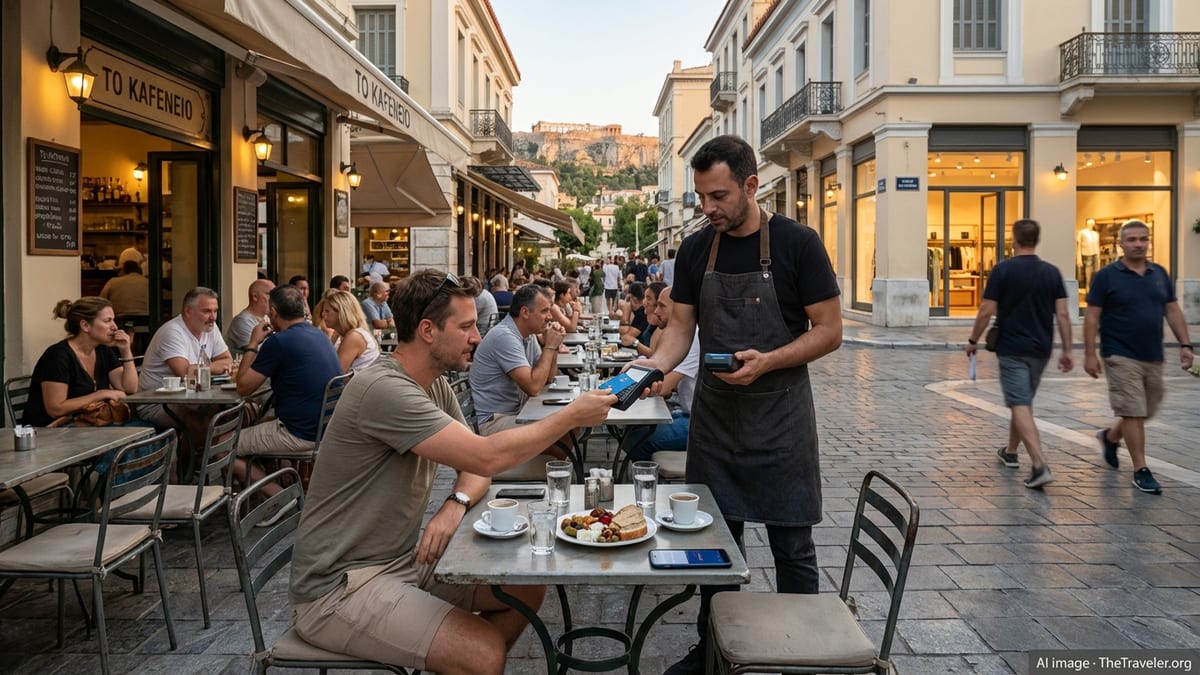
Greece uses the euro as its official currency, and its payment system is closely aligned with the rest of the eurozone. For travelers, this means that familiar brands like Visa and Mastercard are widely accepted in shops, hotels, restaurants, and major attractions. In cities such as Athens, Thessaloniki, Heraklion, and in popular island destinations, it is increasingly normal to tap a card or phone for everything from a coffee to a ferry ticket.
Credit and debit cards have become a central part of everyday spending in Greece. Government efforts to tackle tax evasion have encouraged electronic payments, and many businesses are now legally required to provide card terminals. In practice, this means you can usually rely on plastic or mobile wallets for most mid sized and larger purchases, particularly in places that see a steady flow of tourists.
However, cash has not disappeared. In smaller villages, remote islands, family run tavernas, and at occasional market stalls, notes and coins still play an important role. Power cuts and patchy internet service, especially on islands in peak summer, can also interrupt card processing. As a visitor, it is wise to think of Greece as a card friendly destination where cash remains an important backup rather than something you can ignore entirely.
For planning purposes, many travelers find that a mix of one or two main credit cards, a backup debit or multi currency card, and a modest cash reserve in euros covers almost every situation. You can then top up from ATMs when needed, rather than exchanging large sums before departure.
Where Credit Cards Are Commonly Accepted
In urban and tourist areas, you can expect to use a credit or debit card for most of your travel expenses. Hotels, from budget city properties to high end resorts, almost always accept major cards and often require one to secure a booking or pre authorization. Large restaurant chains, many independent tavernas, and most bars in busy districts are equipped with modern card terminals that support chip and PIN and contactless payments.
Transport and ticketing have also become card friendly. Airline counters, ferry companies, intercity bus operators, and car rental offices generally accept credit cards, particularly Visa and Mastercard. On public transport in Athens, card payments and contactless options are increasingly used for tickets, while in many other cities you can buy passes and tickets with a card at machines or staffed kiosks. Taxis in major cities and at airports are expected to offer card payment, although drivers may still occasionally request cash for short journeys or late night trips.
Retailers, from international brands to local boutiques, typically accept cards for purchases, especially in shopping streets and malls. Supermarkets and convenience stores in towns and resort areas are also set up for card payments, including small everyday transactions. In practice, if a business is used to serving international visitors or operates in a busy commercial area, it is more likely than not that your card will be welcome.
American Express and other non mainstream brands can be more hit and miss. Some hotels and larger businesses accept them, but many smaller shops do not, mainly due to higher processing costs. Travelers who rely on American Express should carry at least one Visa or Mastercard as a primary or backup card to avoid frustration at checkout.
When You Will Still Want Cash
Despite strong growth in electronic payments, Greece has not become fully cashless. There are still many practical reasons to keep an envelope of euros in your day bag or hotel safe. Small family run cafes, traditional tavernas in quieter neighborhoods, and roadside stalls selling fruit or snacks may display a card terminal but prefer cash, particularly for low value purchases.
Open air markets, local craft stalls, and some beach services such as sunbed and umbrella rentals may also lean towards cash, even though regulations increasingly push them to accept cards. On islands with lower tourist numbers or in rural mainland areas, terminals can go offline during power cuts or when mobile data coverage drops. In these moments, being able to hand over cash can save you the hassle of searching for a working ATM.
Tipping is another reason to carry small notes and coins. While you can sometimes add a tip to a card payment, especially in larger restaurants, cash tips are more straightforward and often preferred by staff. A few euros for a porter, driver, housekeeper, or guide are easier to give in cash than trying to adjust a card slip after the terminal has processed your payment.
For budgeting, many travelers find that carrying a modest amount of cash, such as enough for a day or two of food, local transport, and small purchases, strikes a good balance. It protects you from minor disruptions without leaving you exposed to loss or theft of a large sum. You can then replenish from ATMs as needed, using a card that offers reasonable withdrawal fees and a fair exchange rate.
Greece follows European standards for card technology. Chip and PIN is the norm for local cards, but payment terminals are generally set up to accept both PIN and signature, as well as contactless transactions. Most recent cards issued in North America, Europe, and many other regions should work without difficulty, particularly if they have an embedded chip and support contactless payments.
Contactless tap to pay has become common in Greek cities, on popular islands, and at many businesses that cater to visitors. You can usually tap your card or phone for small and mid sized purchases. For larger transactions, or after reaching a certain cumulative contactless limit, you may be asked to insert the card and enter a PIN. This is a security feature rather than a sign that your card is not accepted.
Mobile wallets such as Apple Pay and Google Pay are increasingly supported by Greek merchants and banks. If your home bank allows you to add your card to a digital wallet, you can often use your phone or watch to pay at terminals displaying the standard contactless symbol. This can be convenient in busy environments where taking out a physical wallet feels less secure.
ATMs are also evolving. Large Greek banks have been upgrading machines to support cardless withdrawals using contactless technology and smartphone apps. As a visitor, you will still find conventional ATMs that accept physical cards across cities, airports, and major tourist areas, but there is a gradual shift toward tap and phone based access. In the coming years, travelers who are comfortable with mobile banking will find it easier to interact with these systems, while those relying on older magnetic stripe cards may encounter more limitations.
Fees, Exchange Rates and How to Avoid Unpleasant Surprises
Using a credit card in Greece is convenient, but it is not always free of extra costs. There are three main layers to consider: your home bank’s fees, any local surcharges, and the exchange rate used when converting your spending back to your home currency. Understanding these can help you keep your trip budget under control.
Your own bank or card issuer may charge foreign transaction fees for purchases made in euros, as well as separate fees for ATM withdrawals. These can be flat amounts per transaction, percentage based charges on each purchase, or a combination of both. Before you travel, check the terms for each card you plan to use so you know which one is the most cost effective for spending or cash advances.
Greek ATMs and some merchants may present you with a choice to pay in your home currency or in euros when you complete a transaction. This is known as dynamic currency conversion. Paying in your home currency may appear convenient, but the exchange rate used is often less favorable than the rate your card network would apply if you chose euros. In many cases, declining conversion and paying in euros leads to a better overall rate, even when your bank’s own fee is taken into account.
Recent regulatory changes in Greece and across the European Union have led to reductions or caps in certain banking fees, particularly for ATM withdrawals within the country’s banking network. For local cardholders this has translated into lower costs when using machines operated by other banks. Visitors may benefit indirectly because more ATMs display clear information about any fees before they process a withdrawal, but your home bank’s charges will still play a major role in what you actually pay.
ATMs, Withdrawals and Daily Limits
Cash machines are widespread in Greek cities, airports, and larger towns, as well as in most established tourist resorts. On smaller islands or in remote areas, the number of ATMs can be limited to just one or two machines, which may occasionally run low on cash during peak holiday periods. It is sensible to withdraw money before heading to very small destinations, particularly if you arrive at night or over a busy weekend.
Most Greek ATMs accept international cards from Visa, Mastercard, and other global networks. When you insert your card, the machine typically offers multiple languages, including English, and will show any local operator fees before you confirm the withdrawal. Since Greek banking rules have been tightened, ATM operators are expected to make fee information clear at the point of use.
Daily withdrawal limits are determined primarily by your own bank, not by Greek regulations, although ATMs may impose their own maximum per transaction for security reasons. It is common to encounter per withdrawal caps that encourage you to make several smaller withdrawals rather than one very large one. Planning ahead, and knowing your bank’s daily limit, helps avoid declined transactions at inconvenient moments.
Some Greek banks and third party operators provide ATMs that emphasize currency conversion or fee based services aimed at tourists. These machines may charge higher operator fees or offer less favorable exchange rates. If possible, use ATMs attached to recognizable Greek banks in central locations, and be cautious of standalone machines placed in very touristy spots where terms may be less competitive.
Security, Fraud Prevention and Practical Safety Tips
Greek banks and merchants operate under European Union rules regarding consumer protection, data security, and strong customer authentication. For travelers, this generally translates into modern card terminals, routine PIN or biometric checks, and a structured process for disputing fraudulent charges. That said, common sense precautions remain important, particularly in crowded tourist areas where petty crime exists.
When using an ATM, shield the keypad with your hand while entering your PIN, and avoid machines that appear damaged, have loose components, or are located in poorly lit or isolated spots. Where possible, use indoor ATMs inside bank branches, shopping centers, or established hotels. Keep an eye on anyone standing very close behind you and do not accept unsolicited help from strangers if the machine seems to malfunction.
For day to day spending, carry only the cards you need, and keep a backup card in a separate place such as your hotel safe or a different pocket of your luggage. If your card is lost, stolen, or swallowed by an ATM, contact your bank’s emergency number immediately. Many issuers can freeze a card through a mobile app, which is often faster than calling from abroad.
Before traveling, tell your bank or card issuer that you will be in Greece if they still recommend or require travel notifications. Some institutions now use automated fraud detection instead, but having up to date contact details and mobile numbers on file makes it easier for them to reach you if suspicious activity is detected. Keeping digital copies of your card numbers and contact information in a secure place can also speed up the process of canceling and replacing cards if something goes wrong.
Practical Strategies for Using Credit Cards Smartly
Beyond the technical and regulatory details, a few simple habits can make using credit cards in Greece smoother and more cost effective. First, choose the right primary card before you leave home. If you have a card that waives foreign transaction fees and offers competitive exchange rates, prioritize that one for purchases, and keep a second card as a backup in case of technical issues or security blocks.
Second, decide when to use a credit card versus a debit or multi currency card. Credit cards can offer stronger purchase protection, travel benefits, and sometimes insurance for car rentals or trip interruptions. Debit or app based cards can be more convenient and transparent for ATM withdrawals or everyday small expenses. Many travelers find it helpful to assign each card a role, such as one for larger hotel and transport costs and another for daily spending or cash withdrawals.
Third, get into the habit of checking receipts and payment slips before you sign or tap to confirm. Verify the amount, the currency, and whether any extra fees or conversions have been added. If the terminal shows an option to pay in your home currency, ask the cashier to switch it back to euros if possible. Keeping digital or paper records of your major expenses also makes it easier to spot any errors when you review your statements later.
Finally, balance convenience with caution. Contactless payments and mobile wallets are easy to use and reduce the need to carry large amounts of cash, but they also make it easier to lose track of small purchases. Setting a mental or app based daily budget, and occasionally paying with cash, can help you stay aware of your actual spending while still taking advantage of the flexibility that cards provide.
The Takeaway
Using credit cards in Greece today is straightforward in most situations. Major networks like Visa and Mastercard are widely accepted in cities, resorts, and at key travel service providers, while contactless payments and mobile wallets are becoming part of everyday life for residents and visitors alike. Regulatory changes have pushed more businesses to install card terminals and have nudged banks toward clearer fee structures.
Yet Greece has retained a strong role for cash, particularly in smaller communities, local markets, and informal settings. Power cuts, connectivity problems, and personal preferences mean that you should still carry a modest reserve of euros alongside your cards. Understanding how ATMs work, recognizing when dynamic currency conversion is offered, and knowing your own bank’s fee structure can help you avoid unexpected costs.
For most travelers, a simple strategy works best: bring at least two cards from major networks, enable contactless or mobile wallet payments, inform your bank of your trip, and keep some cash handy for tips and small purchases. With these basics in place, you can enjoy the ease of modern payments in Greece while staying flexible enough to handle the few remaining cash only moments along the way.
FAQ
Q1. Can I use my foreign credit card almost everywhere in Greece?
Most visitors can use major credit cards in cities, tourist areas, hotels, larger restaurants, and shops, but small businesses and remote areas may still prefer or require cash.
Q2. Which card networks are most widely accepted in Greece?
Visa and Mastercard are the most commonly accepted networks. American Express and some other brands are accepted at larger or more upscale businesses but are less reliable in small shops.
Q3. Do I need a PIN to use my credit card in Greece?
Chip and PIN is common, but many terminals also accept chip and signature and contactless payments. Having a PIN set for your card is helpful, especially for ATMs and unattended terminals.
Q4. Are contactless and mobile payments widely available?
Yes. Contactless tap to pay is common in cities and tourist destinations, and many merchants’ terminals work with mobile wallets such as Apple Pay and Google Pay.
Q5. Will I still need cash if cards are widely accepted?
Yes. Cash is useful for small purchases, local markets, some taxis and beach services, and as a backup during power or internet outages, especially on islands and in rural areas.
Q6. What fees should I watch out for when using cards in Greece?
Check your bank’s foreign transaction and ATM withdrawal fees, and be cautious with dynamic currency conversion, which may offer a weaker exchange rate than paying directly in euros.
Q7. Are ATMs easy to find, and are they safe to use?
ATMs are common in cities, airports, and tourist towns, but fewer in remote areas. Use machines attached to banks when possible, shield your PIN, and avoid any ATM that looks tampered with.
Q8. Should I tell my bank I am traveling to Greece?
Many banks no longer require advance notice, but updating your contact details and checking your card’s travel policies can reduce the risk of blocks or fraud alerts while abroad.
Q9. Is it better to pay with a credit card or a debit card?
Credit cards often provide better purchase protection and travel benefits, while debit or multi currency cards can be more cost effective for ATM withdrawals and everyday small purchases.
Q10. How much cash should I carry while visiting Greece?
Carrying enough euros for one or two days of food, local transport, and small expenses is usually sufficient, as long as you have reliable cards and access to ATMs for top ups.