
Last week, in a lovely New Haven bar, six people gathered in front of a crowd to tell stories that were somehow related to science and public health. It was magical.
One person talked about learning how social determinants of health helped them forgive their mother’s alcoholism. Another shared what it’s been like navigating a dementia diagnosis. Another described their last dinner with their mother before they left Nigeria to come to the U.S. and how that moment, plus the diagnosis that followed, shapes their career goals today.
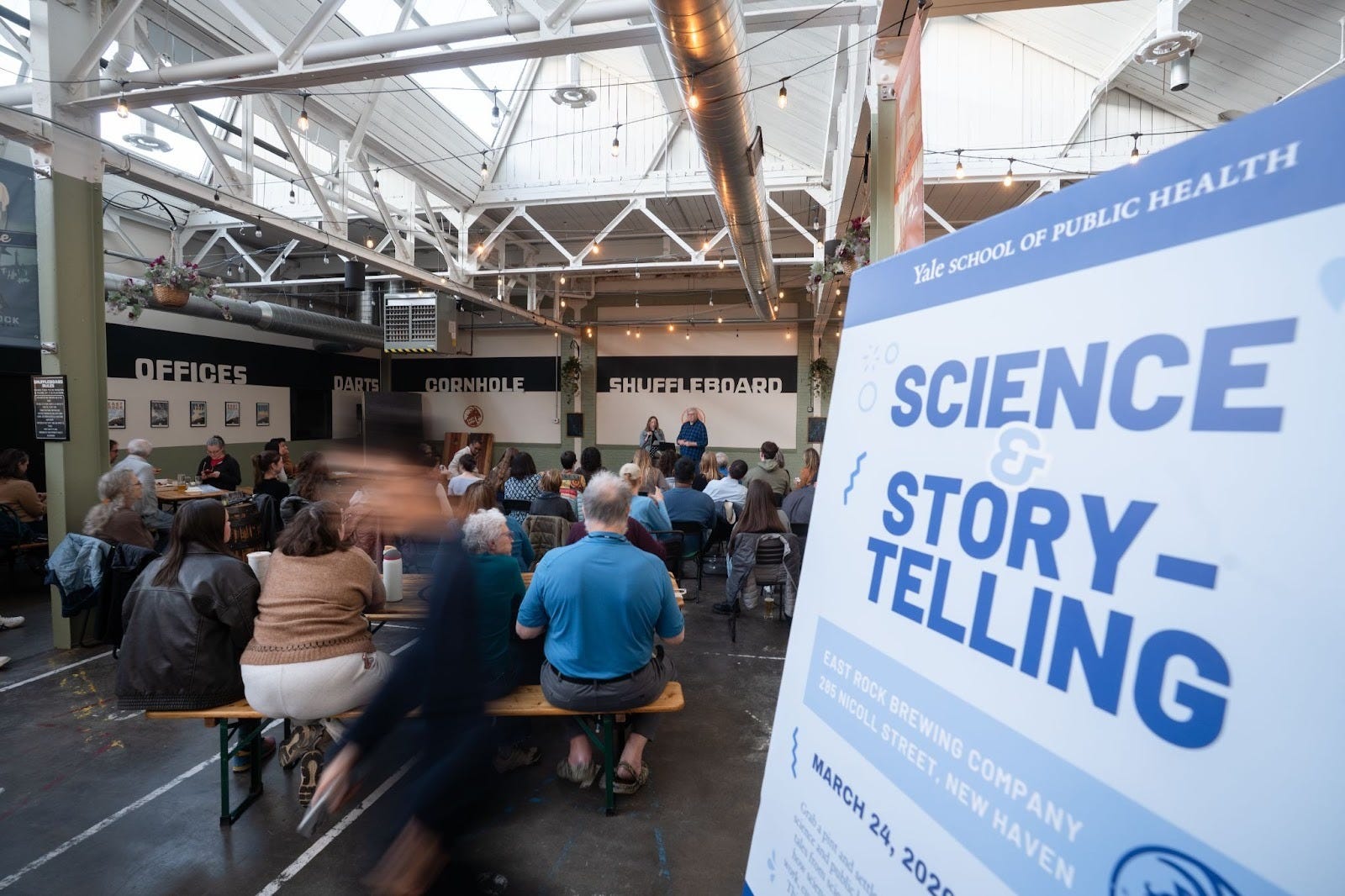
As the Executive Director of The Evidence Collective at Your Local Epidemiologist, I was ecstatic to bring this event, “Science and Storytelling,” to the community surrounding the Yale School of Public Health.
Stories are not the default way most people communicate about science and public health. In fact, we are taught to take all the emotion out of data, but that makes it pretty darn boring to everyone else. And if people can’t see themselves in it, feel themselves in it, or influence it, how can we ask them to support it?
Why do stories stick? How can we all—from community members to public health scientists—do better? And what are some examples?