
March 24, 2026
School of Engineering & Applied Science
Imagine a caregiver tracking a dementia patient’s emotional state in real time with a simple wearable patch on the chest—designed to look and feel like a band-aid. A team of Gonzaga student researchers has been developing this medical device and won a top prize at an international conference this March for their work.
The SPIE Smart Structures + Nondestructive Evaluation conference is a premier global gathering for leaders in advanced electronic materials and sensing technologies. The team attended this year’s event in Vancouver, BC and won an Outstanding Paper Prize in their category.
Different Perspectives, Same Goal
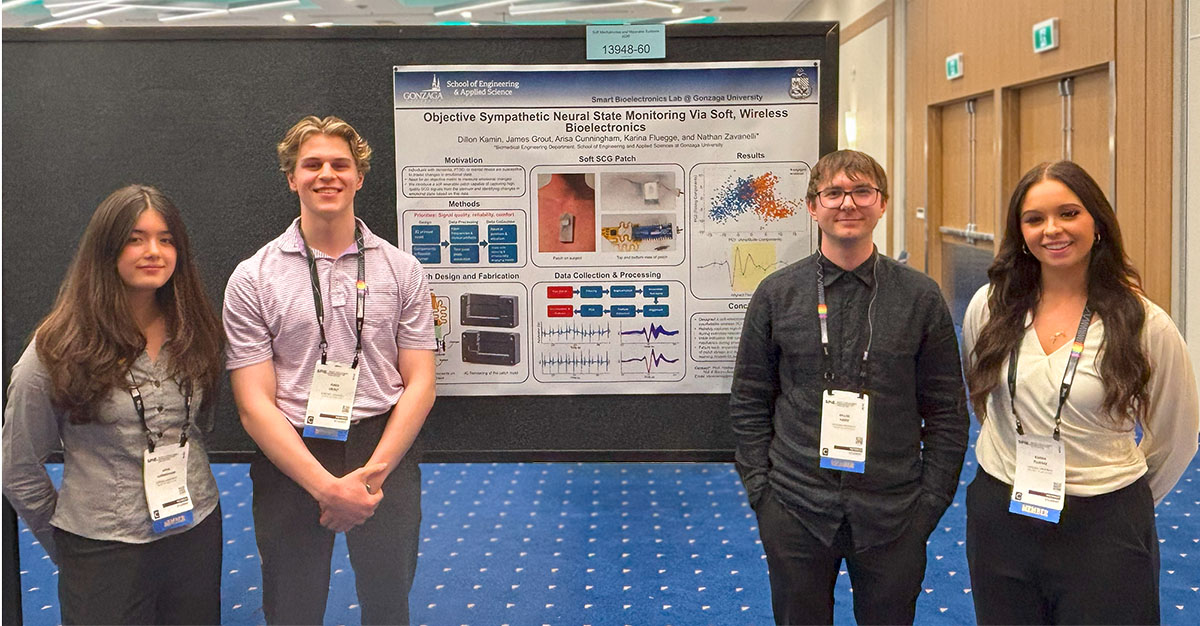
The inability to identify emotional emotional changes in patients with dementia, PTSD, or mental illness is a large barrier to providing effective care. Nathan Zavanelli, PhD, advises the interdisciplinary team addressing this challenge from his biomedical engineering lab.
Both Arisa Cunningham (’28) and James Grout (’27) are biomedical engineering majors, pursuing the patch’s design, fabrication and integration. Karina Fluegge (’26) also works on the system from a neuroscience perspective.
Dillon Kamin, a graduate student in Gonzaga’s MS Data Science program, leads the data analysis effort and is the first author of the prize-winning conference paper.
“The biomedical, neuroscience and MS data science programs are all new, and they’re doing a great job preparing these students for the type of interdisciplinary and applied efforts needed to address critical healthcare challenges. For instance, being able to bring a unique data science perspective to medical signals is highly valuable but not common,” Zavanelli said.
The team’s work was judged on both the technical rigor of the written paper and the team’s ability to defend their research during a high-stakes poster session.
“They were among the only undergraduates at a large technical conference featuring some of the biggest names in the field,” Zavanelli said. “Other faculty members at the socials were amazed that most of these students were still undergrads. Just because they are young doesn’t mean they can’t have an impact.”
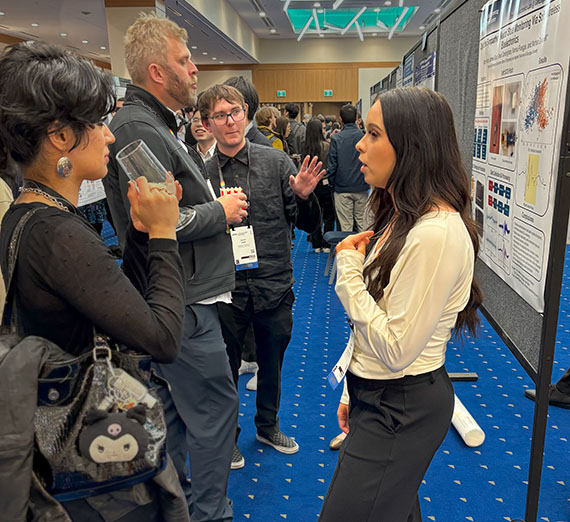
The paper is expected to move forward to full publication after a final peer review. At the conference, the students also immersed themselves in sessions covering everything from implantable neuromodulation devices to the next generation of medical robotics—knowledge they are eager to bring back to the robotics and biomedical engineering labs.
“Dementia care is an area I am really passionate about from my own family experience, and the lack of verbal communication about emotions is such a huge unaddressed problem. Anything we could do to make a difference would be impactful” Zavanelli said.