
Students from any department can enter their scientific art through Wednesday, March 4.

In laboratories across campus, stunning images are captured every day—vivid microscopy landscapes, intricate simulations and colorful data maps that few people outside a research group ever see. In March, those hidden masterpieces will move out of the lab and into the spotlight during the 2026 Art in Science Competition in Chapman Hall, sponsored by the Materials Research Society.
The competition invites undergraduate and graduate students from any department to submit high-resolution scientific images that double as works of art. Whether it’s a mathematical model, a microscopy image or a simulation, organizers say that if it’s science and it’s stunning, it belongs on the wall.
To participate, fill out the form here. Entries must be submitted by Wednesday, March 4, as JPG files under 10 MB, formatted to fit on an 8.5-by-11-inch page at 300 dpi. The images will be printed and displayed in Chapman Hall from March 9 through March 20, with winners chosen by community vote.
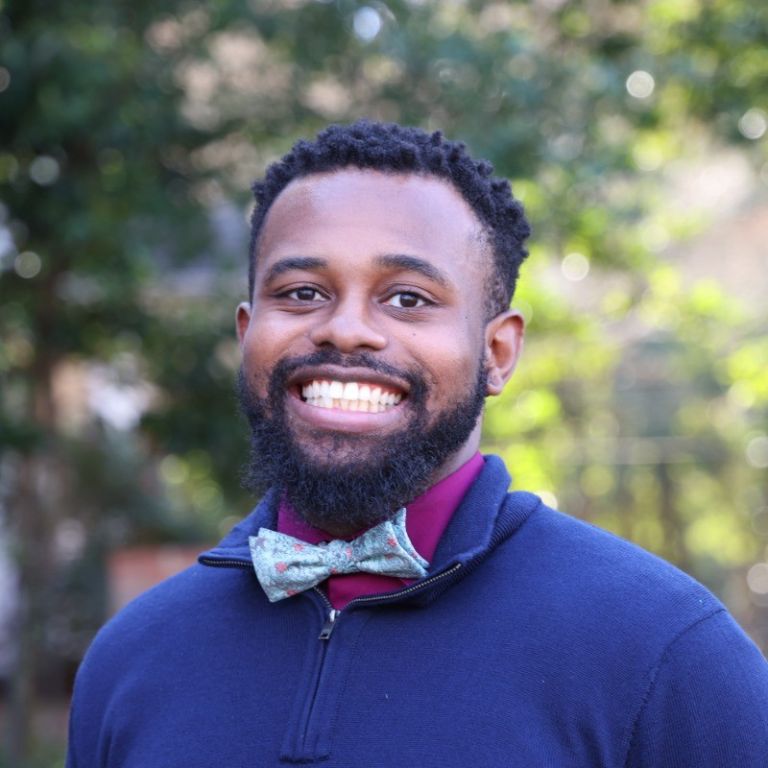
For Trevohn Robinson, a Ph.D. candidate in analytical chemistry and member of the Materials Research Society, the event represents something larger than a contest.
“This year I joined the research team earlier,” said Robinson, “but our main role is to see various scientists, or even biology students, who are really interested in showing their work and how maybe they influence others to be interested in the science field.”
What makes the competition special, he said, is its blend of disciplines. “We’re looking at a mixture of not only scientific methodologies and images, but also some art skills as well. That’s where we’re looking at creativity.”
Robinson emphasized that presentation quality matters because the images will be physically exhibited. “The reason why is to make it fair for everybody,” he said. “We will be printing these out in Chapman, so we want to make sure the images are fair for everyone to present. When we have the voting poll, it’s easy for them to see.”
One distinctive aspect of this year’s competition is its careful stance on artificial intelligence. With rapid advances in AI, he said, it has become harder to distinguish between authentic scientific imagery and generated art. Images solely generated by AI are discouraged, though AI enhancement tools are allowed.
“It’s fine if you enhance an image,” said Robinson, “but typing in, ‘Hey, draw a picture,’ don’t do it. It’s more of a question of, is it really science? We want the data behind it.”
For Robinson, the connection between science and art is deeply personal. In his own research, he uses atomic force microscopy to study surface roughness. The technique produces detailed 3D topographical images that reveal subtle differences between materials.
“It takes time to figure out the data processing,” he said. “But I do like the AFM 3D modeling and the topography.”
He recalls one moment in particular while studying graphene oxide attached to a silicon surface. The phase-shift image displayed alternating bands of purple and green, each color representing variations in thickness. “It reminded me of an album cover,” he said. “You can change the colors, and it was really nice. I can analyze it, but also be creative.”
Beyond aesthetics, the competition aims to broaden participation in science. Robinson hopes undergraduates see the exhibit and imagine themselves in research roles. “Science is available for everybody,” he said. “It’s an open door for anyone who’s interested.”
By Dave DeFusco, Department of Chemistry