
Getting your audio player ready…
A new study has challenged the long-held belief that democratic governance was exclusively born in the classical Mediterranean world of Greece and Rome. By analyzing archaeological and historical evidence from 31 ancient societies across Europe, Asia, and the Americas, researchers have discovered that shared, inclusive governance was far more common and widespread than previously thought. The findings suggest that many ancient communities around the world developed sophisticated ways to limit the power of rulers and give ordinary people a voice in decision-making, and that the roots of ancient democracy run far deeper and wider than Western tradition has long assumed.
“People often assume that democratic practices started in Greece and Rome,” said Dr. Gary Feinman, the study’s lead author and the MacArthur Curator of Mesoamerican and Central American Anthropology at the Field Museum’s Negaunee Integrative Research Center. “But our research shows that many societies around the world developed ways to limit the power of rulers and give ordinary people a voice.”
Rethinking the Autocracy Index
The researchers, whose findings were published in the journal Science Advances on March 18, 2026, examined 40 cases from 31 different political units spanning thousands of years. Because many of these societies left no written records, the team developed an “autocracy index” based on archaeological clues to place each society on a spectrum from highly autocratic to strongly collective. The index drew on 27 proxies for key features of governance, including the scale and layout of monumental architecture, artwork depicting rulers, city planning, administrative systems, and signs of wealth inequality.
According to Dr. Feinman, the use of urban space is particularly revealing. “When you find urban areas with broad, open spaces, or when you see public buildings that have wide spaces where people can get together and exchange information, those societies tend to be more democratic,” he explained. Conversely, societies with pyramids featuring tiny spaces at the top, or urban plans where all roads lead to a ruler’s residence, indicate a more autocratic concentration of power. Artwork depicting rulers as larger than life and monumental gravesites also pointed toward greater autocracy, whereas open plazas and rare portrayals of rulers were indicators of less concentrated power.
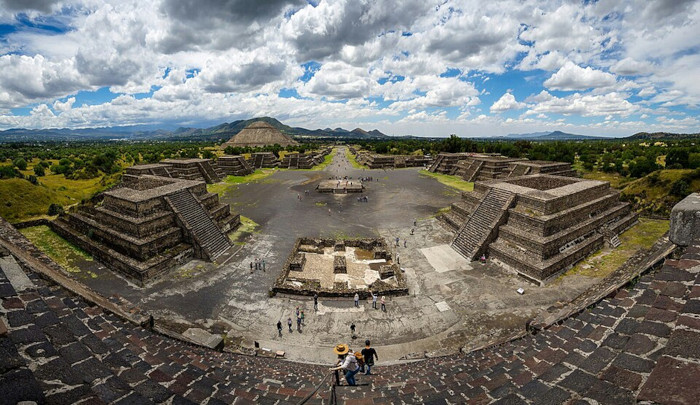
Panoramic view of Teotihuacan, Mexico, showing the broad Avenue of the Dead and open plazas — hallmarks of a more democratically governed society. (Rene Trohs / CC BY-SA 4.0)
Mohenjo-daro, Teotihuacan, and the Iroquois: Democracies Beyond the Mediterranean
The study’s results are striking in their geographical breadth. While Athens and Republican Rome do indeed scale as relatively democratic on the autocracy index, parallels were found in unexpected corners of the ancient world. The early urban center of Mohenjo-daro in the Indus Valley — today in Pakistan’s Sindh province — exhibited significant democratic features comparable to those of the classical Mediterranean. In the Americas, the early highland Mesoamerican cities of Teotihuacan and Monte Albán, as well as the Aztec rival state of Tlaxcallan, showed strong collective governance. The Haudenosaunee (Iroquois Confederacy) and the Protohistoric Zuni in North America were also found to have maintained highly inclusive political systems.
“Among archaeologists, there’s entrenched thought that Athens and Republican Rome were the only two democracies in the ancient world, and that in Asia and the Americas, governance was tyrannical or autocratic,” said Dr. Feinman.
“In our analysis, we saw societies in other parts of the world that were equally democratic to Athens and Rome.”
Several of these centers, including Teotihuacan and Monte Albán, maintained their collectively governed systems for centuries – in Monte Albán’s case, for more than a millennium – proving that early democracies were neither fleeting nor unstable. New York University Professor David Stasavage, a co-author of the study, added that “these findings show that both democracy and autocracy were widespread in the ancient world.”
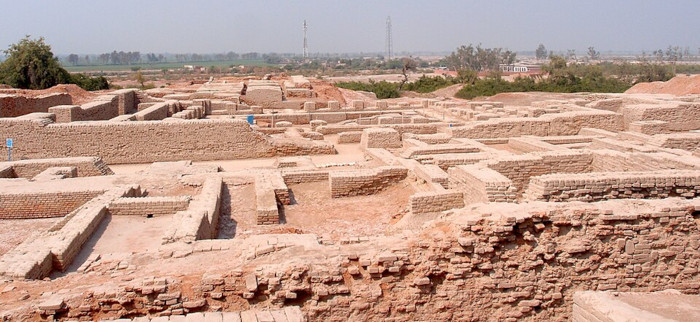
A view of Mohenjo-daro ruins from the stupa mound, Sindh, Pakistan – the Indus Valley city ranked as democratically as ancient Athens in the new study. (Saqib Qayyum / CC BY-SA 3.0)
The True Drivers of Autocracy, and Lessons for Today
One of the most significant insights from the study is that neither the size of a society’s population nor its level of hierarchical complexity determined whether it would be autocratic. This directly challenges the established neoevolutionary idea, rooted in 19th-century social theory, that demographic growth and political complexity naturally lead to strong, centralized rulers. Instead, the strongest factor shaping the concentration of power was how rulers financed their authority. Societies that depended heavily on revenue controlled or monopolized by leaders – such as mines, long-distance trade routes, slave labor, or war plunder – tended to become more autocratic. In contrast, societies funded mainly through broad internal taxes on agricultural products or community labor were more likely to distribute power and maintain systems of shared governance. The research also reveals that societies with more inclusive political systems generally had lower levels of economic inequality, further undermining the notion that hierarchy and wealth concentration are inevitable features of large, organized societies.
The study’s authors are clear that their findings carry urgent relevance for the present day. As concentrations of wealth and power among a very small number of individuals continue to grow globally, a deeper understanding of the historical hallmarks of autocracy can help societies identify warning signs and respond.
“When you do archaeology, you’re looking for patterns that contain potential lessons for the world today,” said Dr. Feinman. “Our findings in this study give us a perspective and guidance that we didn’t have before, and they’re extremely relevant to our lives.”
Coauthor Linda Nicholas, Adjunct Curator of Anthropology at the Field Museum, noted that:
“societies also developed ways for people to share power and facilitate inclusiveness, revealing that democracy has deep and widespread historical roots. I think a lot of people would find that surprising.”
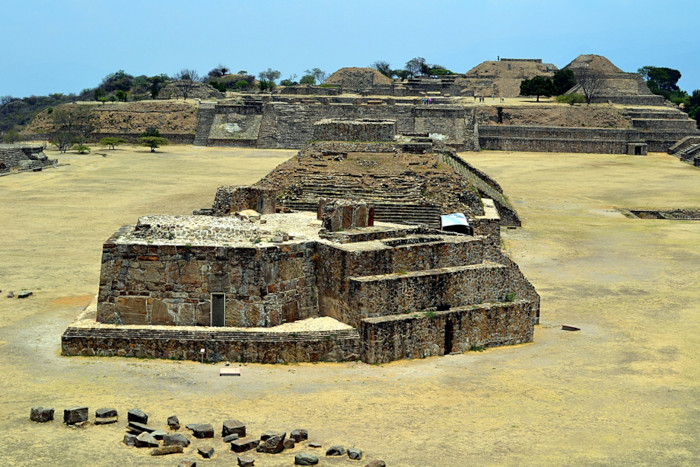
Building J, Monte Alban, Oaxaca, Mexico – the Zapotec capital that maintained collective governance for over a millennium. (Mesoamerican / CC BY-SA 4.0)
The study was contributed to by Gary M. Feinman, David Stasavage, David M. Carballo, Sarah B. Barber, Adam Green, Jacob Holland-Lulewicz, Dan Lawrence, Jessica Munson, Linda M. Nicholas, Francesca Fulminante, Sarah Klassen, Keith W. Kintigh, and John Douglass. The inclusion of Professor Dan Lawrence of Durham University’s Department of Archaeology underscores the international scope of the research, which draws on decades of archaeological fieldwork across multiple continents.
Top image: The Ancient Agora of Athens, a recognized center of democratic governance in the ancient world. Source: DerHexer / CC BY-SA 3.0
By Gary Manners
References
Durham University. 2026. Ancient societies reveal surprising global history of democracy. Available at: https://www.durham.ac.uk/news-events/latest-news/2026/03/—ancient-societies-reveal-surprising-global-history-of-democracy-/
Feinman, G. M., et al. 2026. The distribution of power and inclusiveness across deep time. Science Advances, Vol. 12, Issue 12. Available at: https://www.science.org/doi/10.1126/sciadv.aec1426
Field Museum. 2026. New study shows democracy has deep global roots—not just Greece and Rome. Available at: https://www.fieldmuseum.org/about/press/new-study-shows-democracy-has-deep-global-rootsnot-just-greece-and-rome
Ghai, R. 2026. Mohenjo-daro as ‘democratic’ as ancient Greece and Rome: Study. Down To Earth. Available at: https://www.downtoearth.org.in/governance/mohenjo-daro-as-democratic-as-ancient-greece-and-rome-study
Sci.News. 2026. Democracy’s Roots Run Far Deeper than Ancient Greece, New Study Says. Available at: https://www.sci.news/archaeology/ancient-democracy-14637.html