
Less than a year ago, local music fans collectively pondered whether the summer music festival might be dead in Denver. (To our credit, we opined in this space: “Categorically not.” Actually, our exact words were: “Don’t be daft, punk!”)
But the venerable Underground Music Showcase had announced that its 25th year – and 20th in multiple venues along South Broadway – would be the last “in its current form.”
We now know, of course, that the UMS has since changed (some) owners and will resume July 24-26 in the more logistically challenging RiNo Arts District. And that a cheekily named rival festival (that will look more like the old UMS than the new UMS) will spring up to take its place in the Baker neighborhood “sometime in July.” Sort of like two festivals for the price of one.
No, check that. Definitely two separate prices. But … double your festival fun.
Unless – and this is the part we still don’t know – the two festivals end up going off at the same time. Such intrigue!
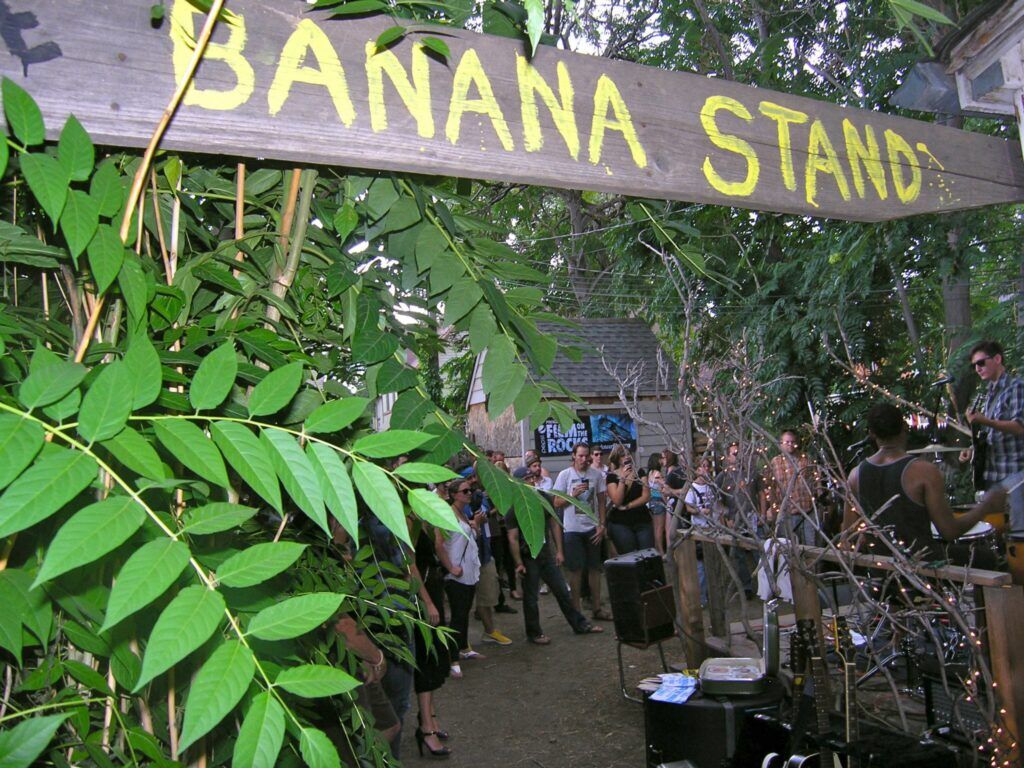
Blucifer’s First Rodeo is the epic name of the new, DIY festival with the ambiguous July dates. It’s being positioned as a local, artist-driven affair harking back to the 2006 roots of the UMS in Baker. The vibe is designed to be “by artists, for everyone.” That means an official lineup of at least 80 designated bands in Baker bars and clubs, as well as pop-up porch, house and backyard shows in the surrounding neighborhood – the kind that sprung up organically around the UMS and quickly became part of its heart and soul. (As anyone can tell you who saw Nathaniel Rateliff playing on the roof of a yellow house nicknamed the Banana Stand and occupied at the time by his future Night Sweats drummer Patrick Meese.)
The name Blucifer’s First Rodeo takes inspiration from the nickname locals have given Luis Jimenéz’s 9,000-pound fiberglass (and some say demonic) “Blue Mustang” sculpture near DIA. It’s known for its glowing red eyes, and for falling on (and causing the death of) the artist who created him in 2006.
The first 30 Blucifer bands will be announced Friday at the Skylark Lounge, owned in part by Rateliff, whose DNA is all over the original UMS. Local bands playing at the announcement party will include Handknit, Mystee and Caspar Milquetoast.
The festival’s lead organizers are Gillian Pasley, lead singer of Caspar Milquetoast (and also the instigator behind a recent alternative to Denver’s annual “The Last Waltz” parties); and Mike Young.
When I started the UMS as a Denver Post reporter in 2001 with my mate Ricardo Baca, who masterminded its expansion five years later into a multi-day festival in Baker, the mantra was “The UMS is Love.” But as the UMS has grown into Denver’s largest indie music festival, it has wrestled with all manner of economic and societal challenges.
No one can tell me the UMS wasn’t the best thing that ever happened to what is now known as the Broadway Merchants Association, but almost everything about the festival, from its embrace of local bands to its business model, has changed since we were told to hand over our baby to the Denver Post Community Foundation in 2010. The Post sold the fest to a creative agency called Two Parts in 2018. Youth on Record bought a 50% stake in 2022 (thanks to a massive donation from MacKenzie Scott) and adopted a noble mission to focus on fostering a more equitable, inclusive local music economy. But last month, Youth on Record exited its ownership, allowing Two Parts to enter into an unusual financial partnership with the RiNo Art District Business District, which has committed to putting $250,000 a year into the UMS for each of the next four years.
But the UMS has been the subject of endless speculation and rancor ever since it was announced a year ago that the festival was no longer financially viable.
Scott Happel, owner of a longtime UMS venue called HQ, recently laid it all out in a letter to Westword.
In the beginning, he wrote, “The UMS was Magic” (upper case!). And I, natch, happen to agree. But, by 2021, coming out of COVID, “things started to change.” The UMS began charging venue fees and increasingly shifted its increasing expenses onto those owners. By 2025, Happel claims, the UMS was charging HQ $3,000 to be a host venue, even with the fest drawing 10,000 ticket-buyers. To us long-gone founders, that sounds unthinkable. But then again, the costs of throwing an event like the UMS in 2025 – from security to insurance to labor – would have been virtually unrecognizable to us back in 2006.
“I couldn’t understand why a festival that was so successful at selling tickets, along with having huge corporate sponsors and collecting the bar sales at the outdoor stages, would keep increasing the costs on the small independent venues that were so vital to the event, and to the neighborhood,” Happel wrote. “The Magic of the UMS was dying.”
Happel also believes a deal was in place to move the UMS to RiNo long before organizers announced “the last UMS” in Baker last July. He says the UMS used the nostalgia of the tradition’s end “as a cynical marketing ploy” to boost ticket sales.
Regardless, the bottom line is this: There will be another UMS. Four of them, at least. That’s worth celebrating. And now there will be a Blucifer. And that is worth celebrating, too.
And there will be a renamed, moved and expanded Outside Days fest headlined by Death Cab for Cutie (May 29-31 on the Auraria campus). And there will be a Bluebird Music Festival (April 18-19) in Boulder. And a 29th Edgewater Music Festival (June 20). And another CrossCurrents (July 11) at Confluence Park). And another Mile High Power Fest (Aug. 15) at Happel’s own Oriental Theater.
Not to mention across Colorado the 53rd Telluride Bluegrass (June 18–21) and Jazz (Aug. 7-9) festivals; the Winter Park Jazz Festival (July 18-19); the 54th Rockygrass (July 24-26 in Lyons); Bluegrass and Beer (Aug. 1-2 in Keystone); Beanstalk (Aug. 7-9 in Bond); Rocky Mountain Folks Festival (Aug. 7-9, in Lyons); and Jazz Aspen Snowmass (Sept. 4-6).
True, Punk in the Park canceled all 2026 events just three days ago. And there is no sign of an imminent return of the Unhinged Festival, which was canceled at the last minute last year.
But all in all, we’ve got plenty to fest about here in Denver.
Linton bringing ‘FDR’ home
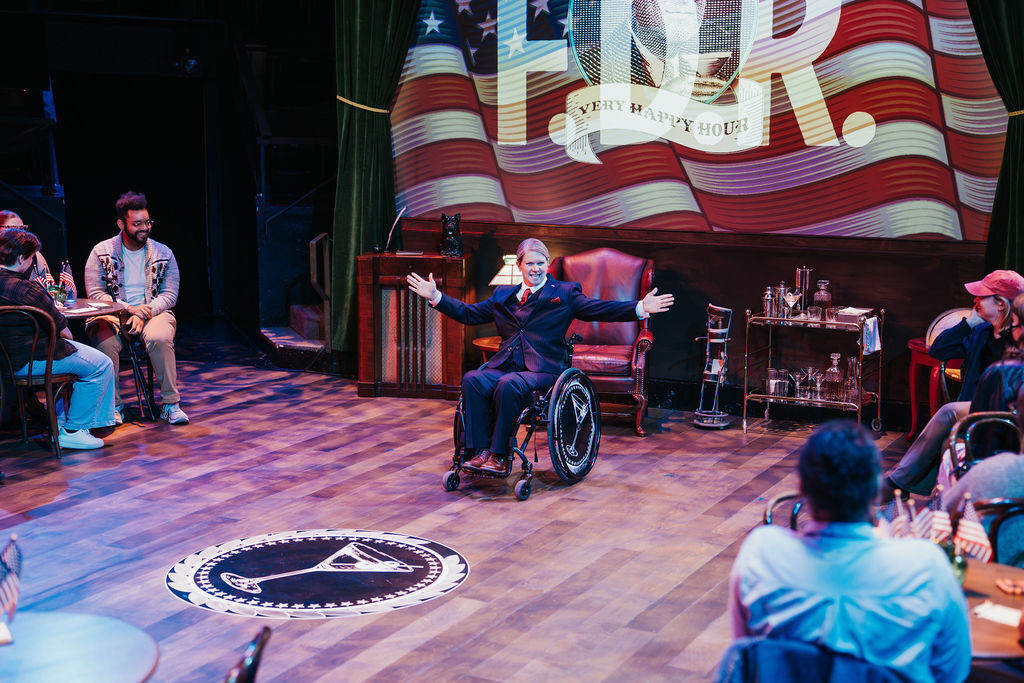
Regan Linton, former artistic director of Denver’s nationally acclaimed disability-affirmative Phamaly Theatre Company, will launch a national tour of her very own play, “FDR’s Very Happy Hour” from Oct. 14-Nov. 1 at the Studio Loft above the Ellie Caulkins Opera House in the Denver Performing Arts Complex.
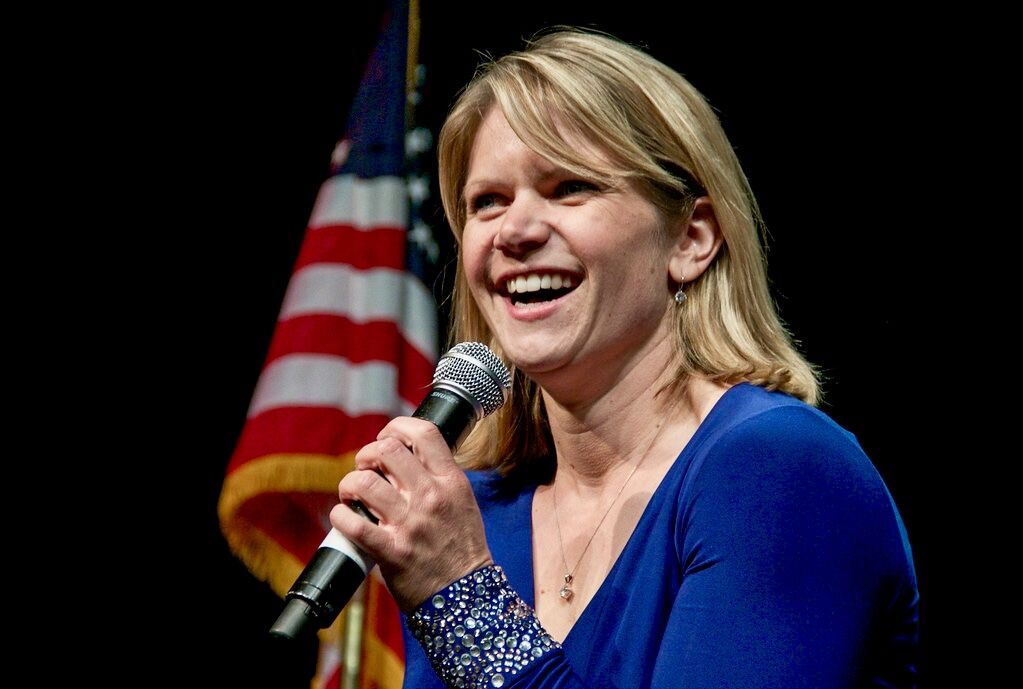
The tour kickoff will be part of a unique partnership with Denver Arts & Venues and the city’s new venue-access initiative called “Denver Creates,” which Mayor Mike Johnston said aims “to ensure that more artists and residents see themselves reflected on our city’s most iconic stages.”
The interactive play, directed by M. Graham Smith, imagines FDR, played by Linton, addressing his legacy and his hidden experience with polio and wheelchair use. Linton hopes her play leverages humor to reframe how the public views historical figures with disabilities.
Linton staged the world premiere of “FDR” last year at the vaunted Actors Theatre of Louisville. She also performed the play in January at APAP|NYC, a huge national conference of agents and presenters in New York City.
The Denver staging takes on even greater meaning given Linton’s personal history with the Studio Loft and the Denver Performing Arts Complex. Linton directed Phamaly’s staging of the musical “Chicago” there in 2019, which itself became the subject of an award-winning documentary called “Imperfect.” (It’s available on AppleTV.)
Just down the archway, Linton made her professional acting debut in Phamaly’s 2005 production of “Joseph and the Amazing Technicolor Dreamcoat” in what is now called the Wolf Theatre. Linton, a graduate of Denver East High School, was 23 at the time, three years after her spine was wrecked in a rear-end auto collision on a rainy Santa Monica Freeway.
In December, Linton won her latest Denver Gazette True West Award, for developing a 20-minute adaptation of “Jack and the Beanstalk” as part of Warner Brothers Studios’ 100th anniversary. That’s still available on HBO. She made her Broadway debut in 2022.
No immediate word on the scale of Linton’s “FDR” national tour just yet. Tickets are not yet on sale.
Stars shine spotlight on Colorado talent
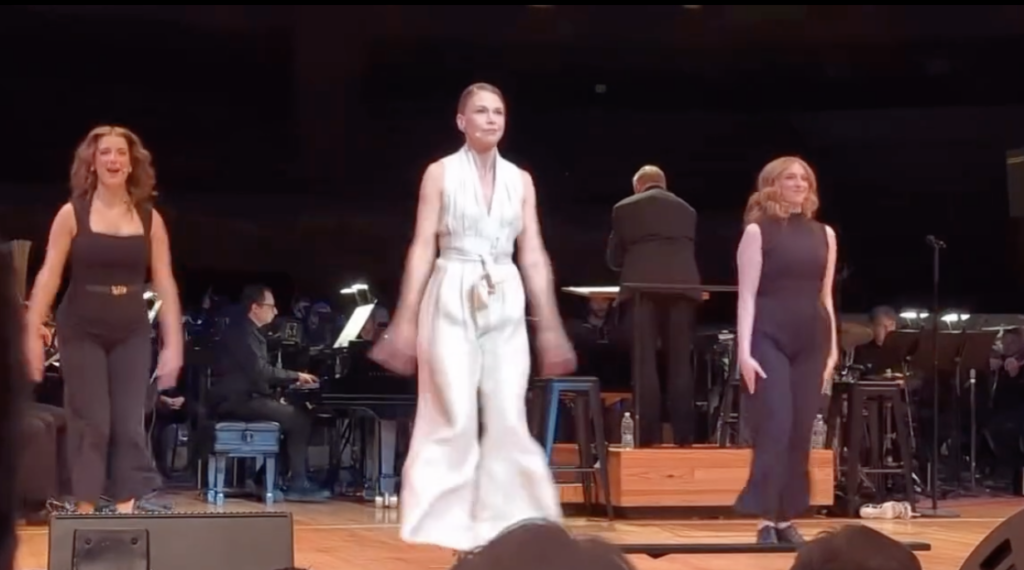
Last week’s concert featuring Sutton Foster and Kelli O’Hara with the Colorado Symphony was pretty spectacular all around, but it got even better when two of Broadway’s biggest stars left the stage to Colorado’s Taylor Baker and Kristen Lester Miller to sing “That’s Life,” accompanied by Dan Lipton on keys. They also got to group tap to one of Foster’s signature Broadway moments, “Anything Goes.”
“When Kelli and I were putting this show together, we were talking about that pivotal time between leaving college and heading out into this business,” said Foster. “Which can be daunting,” O’Hara added. “So we wanted to shine a light on the next generation of singers and hopefuls in your very own state of Colorado.”
Baker is an actor who is currently playing Minnie Fae in Candlelight Dinner Playhouse’s production of “Hello, Dolly!” – and struggling with laryngitis. “What a way to kick off turning 24!” Baker later said of the experience. “I’ve wanted to perform this song since high school, and I can’t believe I got the chance to do it at Boettcher Concert Hall with the Colorado Symphony.”
By the by, yes, Foster’s beau, Hugh Jackman (“Song Sung Blue”), was in town to support. He was backstage and posed for several photos from around town during his visit to Denver.
And finally …
An appreciated moment at Sunday’s Actor Awards: The “In Memoriam” segment included a brief acknowledgement of Denver’s Sheila Ivy Traister, a stage and film actor who died last July.
John Moore is the Denver Gazette’s Senior Arts Journalist – and a co-founder of the Underground Music Showcase. Email him at john.moore@denvergazette.com.