
Something odd happened this year. Microsoft actually seemed to start to listen.
After years of Xbox Series X|S being ignored and bereft of updates, Microsoft began issuing a flurry of new Xbox features in almost rapid-fire style. After a few years of deprioritizing Xbox community building, it has reopened Xbox FanFest this year and is even taking the event global.
The huge pivot began this year … But what changed?
At the start of the year, Microsoft CEO Satya Nadella penned a blog post on the state of tech, with some fairly candid thoughts about the company as well as the trajectory of artificial intelligence. The blog post ended up coining the term “Microslop,” as users rejected Nadella’s vision of a world where AI is accepted, rather than rejected, by the people it’s effectively designed to replace.
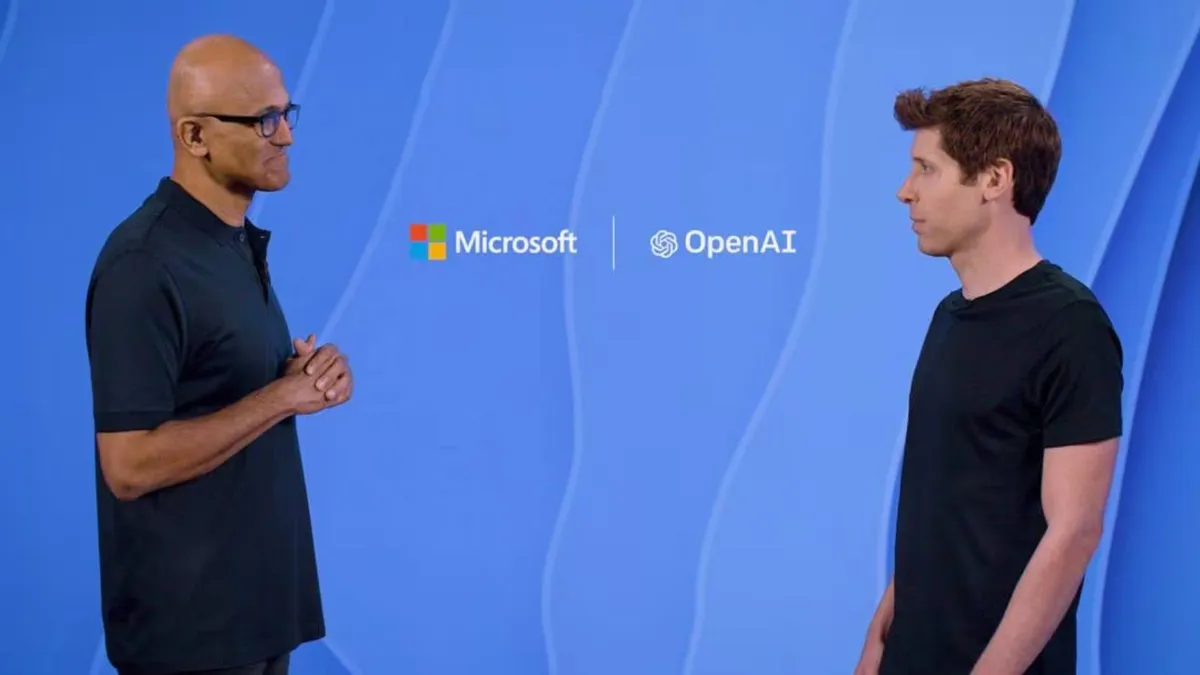
Microsoft has been at the forefront of the AI debate, but not necessarily as an innovator. Microsoft was an early investor in OpenAI, seeding over $13 billion into the company in exchange for what was, on paper, an incredibly lucrative exclusivity deal to its frontier AI models like GPT. Fast forward to 2026, and there are now rumors Microsoft plans to sue OpenAI over its partnerships with Amazon, SoftBank, and others, as it seems increasingly likely the pair are heading for an incredibly messy divorce.
AI is here to stay without question, regardless of what you or I say. The genie is out of the bottle, and whether what we describe as “AI” today amounts to nothing more than a cleaner Google Search or auto-complete tool on steroids, it’s being leveraged in workflows in almost every industry — in the military, in government, in finance, in legal, and everything beyond and in between. Let’s disregard the rampant sycophancy, errors, and hallucinations for a moment.
The big issue for Microsoft is whether it can actually make AI function as a profit-making business. For today’s models (particularly OpenAI’s) they’re so inefficient and unprofitable, it has poisoned the entire Azure cloud operation. Given that Azure is Microsoft’s biggest cash cow, that’s a huge problem.

Wall Street has handed Microsoft billions in lost market capitalization over the last six months as it grows increasingly nervous over the viability of its AI and cloud businesses.
The “AI business” for Microsoft revolves around Azure and the infrastructure, rather than the products, although services like GitHub Copilot are exceedingly popular too. ChatGPT has hundreds of millions of users, and those users are battering Azure’s profitability. AI workloads destroy GPU clusters far more quickly than past-gen high-margin, traditional cloud workloads, and require unprecedented amounts of electricity, water, and other materials to maintain.
Given all the hardware and capacity constraints right now, investors are increasingly concerned about the near to medium-term future for the tech, pending some major breakthroughs. Bloomberg reported that nearly “half” of U.S. data centers planned for 2026 are slated to be canceled.
I’ve glossed over a lot here, but the OpenAI deal with Microsoft is incredibly complicated and fraught with risk. OpenAI and its various partners are basically paying each other with debt and ephemeral commitments that may never materialize in reality, and financing that entire operation is increasingly looking like a giant, server-shaped house of cards.
OpenAI at its current trajectory isn’t expected to turn a profit until 2030 at the earliest, and competition from Anthropic, and perhaps even cheaper Chinese alternatives, makes that proposition look increasingly risky on top.
JUST IN: Nearly half of the U.S. data centers planned for 2026 are reportedly expected to be delayed or canceled.April 8, 2026
The sheer scale of OpenAI and its (actual, or imagined) importance to U.S. national security is also a huge issue here. OpenAI’s deal with Amazon for additional compute could represent a breach of contract for Microsoft and its IP rights to GPT and other OpenAI models … would the U.S. government side with OpenAI in any subsequent court battle?
Basically, what I’m saying in a nutshell here, Microsoft could very much be left holding a huge, festering bag as a result of its “partnership” with notoriously untrustworthy financier Sam Altman and his profit-allergic OpenAI operation. It’s a risk that could still pay off, in much the same way that Amazon did, growing its digital businesses. Amazon is a global default in various markets now. Microsoft’s capital expenditure right now is a bet on becoming the same for artificial intelligence as a category.
I think either way, Microsoft is well-positioned for a future-facing, more realistic, less hype-driven artificial intelligence industry. But I can’t help but feel in my bones that Microsoft knows it has a dud with OpenAI, architecturally maybe, but also simply strategically. There are reams of reports that OpenAI CEO Sam Altman is untrustworthy at best, and potentially even “sociopathic” at worst.
Breaking up with OpenAI will be a short-term catastrophe for Microsoft, on the hook for billions in capital expenditure and AI infrastructure building — infrastructure specifically designed for ChatGPT and other OpenAI models. I highly doubt Azure will be in a situation where its GPUs end up sitting idle; demand for compute is well and truly outstripping supply. But given all the stakeholders … it will doubtlessly be messy.
In a post-partnership world, Microsoft might have realized it should revisit and, dare I say, maintain some of its more reliable staples.
OpenAI has Microsoft holding the bag. And if it all fails … well, you’re kind of going to need Windows and Xbox.

Microsoft CEO Satya Nadella spoke in his New Year blog of “societal permission” within the context of AI.
I can’t help but feel like Microsoft’s broader public image might’ve been weighing on Satya Nadella’s mind as he wrote that. Everywhere you look online, it feels like people well and truly hate Microsoft. For a brief flicker in time, between truly epic Surface innovations, huge investments in Xbox, and even Windows Phone before that, it felt like Microsoft wanted to be seen as consumer-first. Even cool.
In 2026, Microsoft is at the apex of uncool.
In 2026, Microsoft is at the apex of uncool.
Xbox spent the last few years ignoring its customers and community, speed running with Xbox marketing campaigns that literally told people not to buy its products, while leaving Xbox Series X|S consoles unstocked and unavailable to purchase in many cases. After investing billions in the form of studios for Xbox content, Microsoft also decided Xbox didn’t need any unique selling points, and began putting the games onto PlayStation, which is now a bigger audience for Microsoft than Xbox itself.
Windows 11 has seen similar stagnation. The absolute PR disaster with the privacy-destroying Windows Recall drama, the complete failure of the Copilot+ PC branding and rollout, and the death of Surface innovation … Windows itself has created unprecedented interest in competing platforms, like Linux, SteamOS, and potentially even the incumbent Android PC project from Google.
Nobody with a brain is denying that artificial intelligence in at least some form isn’t crucial for Microsoft’s long-term future in tech, but over the last few years, it has come at a huge cost. Both literally and figuratively.
The public hates artificial intelligence for its destruction of the internet, consumer electronics prices, and jobs. Microsoft is the corporate face of AI, by its own design, and neglect of its core services and products that regular people pay for is the cost. The damage to Microsoft’s reputation over the last few years is unlike anything I’ve personally experienced in my 13 years covering Microsoft. It’ll take more than a couple of weeks of minor updates to Windows and Xbox to fix that.
Either way, it seems clear to me that something very specific changed within Microsoft this year. I can’t help but think it smells a bit like panic. And you can’t spell that without AI.

Join us on Reddit at r/WindowsCentral to share your insights and discuss our latest news, reviews, and more.