
While UNESCO’s International Day of Women and Girls in Science falls on 11th February each year, March marks Women’s History Month, and International Women’s Day falls on 8th March. From CERN to the University of Liverpool, and non-profit PLOS’s exploration of women in life sciences, in particular – as in women’s health R&D itself, there is yet a long way to go, unfortunately, to level up the playing field when it comes to female representation in STEM.
In order to discuss this topic further, pharmaphorum spoke with Sheila Diamond, director of scientific engagement at Medidata.
Q. March is Women’s History Month, and yet, even in 2026, women remain underrepresented in the STEM community. Why do you think this is?
Sheila Diamond: Women’s underrepresentation in STEM is rooted in long-standing structural barriers and historical bias in science and medicine. For decades, clinical research and scientific fields were built around male participation and leadership. Those consequences remain visible today, especially across women’s health. A recent McKinsey report showed that women spend 25% more time in poorer health than men. When the data that reflects the state of healthcare does not accurately represent the population it serves, then the science is incomplete.
Closing this gap requires both participation in research and representation in the STEM workforce. Diverse teams ask different questions and challenge inherent assumptions. Particularly in clinical research, the integration of large datasets and advanced analytics allows us to evaluate inclusion more intentionally and design studies that better represent real-world patient populations. Data-driven inclusivity is critical to advancing both innovation and equity in healthcare. This reinforces the importance of increasing representation of women in STEM and clinical research leadership.
Q. Nonetheless, from advancing precision medicine and cell therapies to strengthening clinical diagnostics and sustainable lab practices, women continue to make notable impacts on the research community and global health. What, in your opinion, have been the most notable contributions to the life sciences by women? Who inspired you?
Women have been behind some of the most important scientific breakthroughs in modern medicine. My inspirations have been rooted in my passion for precision medicine. I think of Rosalind Franklin and her contributions that led to the discovery of DNA’s structure; the first all-female team of Jennifer Doudna and Emmanuelle Charpentier, who won the 2020 Nobel Prize for developing CRISPR gene-editing technology; and Katalin Kariko for her groundbreaking findings on how mRNA interacts with our immune system, ultimately contributing to the unprecedented rate of vaccine development when the COVID-19 pandemic emerged.
I’ve also been deeply inspired by the women who built the field of genetic counselling. It’s a profession that combines scientific expertise with empathy to help patients navigate highly sensitive decisions about genomic information and healthcare. Their work shaped my own career path and reinforced a perspective I carry with me today: that the most impactful science happens when data and human experience intersect. This same philosophy drives our mission at Medidata, to power smarter treatments and healthier people.
Q. What has the journey to today been like for you personally within this landscape?
It’s a personal and professional priority of mine to contribute to a mission that is beneficial to the patient. In my role at Medidata, I have the opportunity to be grounded in the intersection of science, technology, and clinical research. As a clinical research genetic counsellor, I spent years working with patients facing complex medical decisions, where the benefits, risks ,and limitations of emerging technologies can be deeply personal. Those experiences reinforced how important it is for scientific innovation to be both evidence-based and patient-centred.
I am grateful to have acquired a multi-faceted view across the clinical landscape in my role at Medidata. It has equipped me to be able to foster connectivity between academic and industry partners and to harness our respective areas of expertise to really innovate across diverse and inclusive perspectives.
Q. What part can visible role models, mentorship, and cultures play here?
Representation matters, especially for children. It is important for them to be able to see themselves as scientists, technologists, engineers, mathematicians, etc., and to know that these paths are possible. When early-career talent see leaders who share their experiences and perspectives, it helps expand what feels possible in STEM careers. Mentorship is critical to navigate the spectrum of practical challenges of clinical and scientific careers, including research and development, leadership, and collaboration.
Just as important is building organisational cultures and teams where diverse perspectives are encouraged and valued. Innovation does not happen in silos, especially in fields like life sciences. The most impactful breakthroughs come from collaborative environments where different disciplines can challenge assumptions and push science forward.
Q. What trends do you believe we will see next when it comes to achieving more balanced representation of women in the STEM community?
Diversity strengthens scientific discovery. We have a moral and scientific responsibility to be diverse, inclusive, and equitable to ensure better outcomes for women’s health globally. Across academic, industry, and global health organisations, there is also increasing momentum to support women entering STEM fields and advancing into leadership positions.
Additionally, advances in AI, data science, and digital health are reshaping the research landscape. These technologies allow scientists to analyse massive datasets, simulate clinical trial outcomes, and generate insights at a scale that was not previously possible. As life sciences become more data-driven, the need for diverse perspectives will continue to grow. The quality of our insights depends on the diversity of the data and the people interpreting it.
About the interviewee
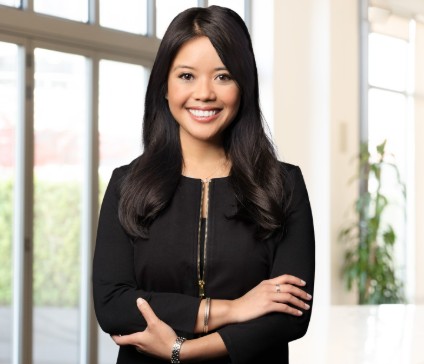
Sheila Diamond, MSc, CGC, is director of scientific engagement at Medidata, a Dassault Systèmes company. She leads the Medidata Research Alliance, a multi-sector scientific research initiative that partners with academic physician-scientists and bridges insights from data into clinical practice. Diamond is a board-certified genetic counsellor with deep domain expertise in communicating the risks, benefits, and limitations of advances in healthcare technology to inform health outcomes personalised to patients. Prior to joining Medidata, she worked at the Genomes2People research programme at Brigham and Women’s Hospital and Harvard Medical School as a senior genetic counsellor who guided patients through the sensitive implications associated with whole genome sequencing; and as a research clinician for translational genomics clinical trials on the medical, behavioural, and economic impact of using ‘omic information in medicine and society. Diamond is a diplomate of the American Board of Genetic Counseling and a member of the National Society of Genetic Counselors. She received her Master’s of Science from the Boston University School of Medicine.