
 Yachats Mayor Craig Berdie walks an audience of 75 through rule and policy changes by the city council in 2025 as part of Tuesday’s State of the City presentation. (Garret Jaros/Lincoln Chronicle)
By GARRET JAROS/Lincoln Chronicle
YACHATS – The hot ticket for community members wanting a rundown of projects, plans, finances and a behind-the-scenes look at Yachats city government was the third annual state of the city address Tuesday.
About 75 people attended the event where the mayor, city manager and commission and committee chairs discussed the goals, objectives and successes of 2025; the goals, objectives and challenges of 2026 and beyond; along with a financial overview and tutorial about the city’s budget.
“The state of the city is a platform for the city’s leaders to showcase the city’s accomplishments and share our goals for the upcoming year,” city manager Bobbi Price said in the opening. “Additionally, this event aims to foster communication and collaboration with our residents as we continue to build a brighter future for Yachats together.”
 Crews from Top to Bottom Construction put the finishing touches on the Little Log Church Museum’s belfry and interior in time for Valentine’s Day renewals on Saturday. (Quinton Smith/Lincoln Chronicle)
A slide show densely packed with bullet points highlighting subjects accompanied speakers as they touched on everything from infrastructure projects to projects like the new library and Little Log Church Museum restoration.
The library’s grand opening is scheduled for Feb. 28 and the museum has a soft opening for vow renewals on Valentine’s Day – although Price cautioned good humoredly “there still might be a little dust hanging in the air.”
The city’s financial health and future challenges were also discussed. That overview said the city’s finances are healthy but is facing some potentially big bills as infrastructure ages and costs continue rising.
Finance committee member and University of Oregon business professor Charles Bame-Aldred began with a bird’s eye view of city finances.
The city’s 2025 audit is being completed, he said, but the audited financial statements ending June 2024 show the city had $10.8 million in cash and an unrestricted fund balance of $4.87 million.
 Yachats’ $1.35 million library reopens Tuesday after the last of new shelves and all its books were put in place. A grand opening celebration is Saturday, Feb. 28. (Quinton Smith/Lincoln Chronicle)
“We are liquid and we have funds for strategic needs,” Bame-Aldred said. “But more study needs to be done. We’re going to be expending some of that this upcoming year and we have plans to do more.”
Public works and streets commission chair Linn West talked about long-range challenges for infrastructure as the city faces ever-increasing costs – even with something as simple as fire hydrants, which coupled with tariffs increased in price by 33 percent just in the last year.
“Projects seem to always deal with more and more inflation of construction costs,” said West, adding that all recent projects have exceeded estimates. “This has made a major impact on public works providing the projects and getting those accomplished.”
The city has had to prioritize and consolidate projects in order to lessen the cost of both engineering and construction, he said, and will have to continue to do so with a number of much needed projects on the horizon.
“We need to replace, improve and expand on our infrastructure — the water, wastewater, stormwater (and) fire along with paving improvements throughout the community,” West said. We need a new 1.5 million gallon water tank. We want to continue to slow down traffic on Highway 101. The speed trailer and extension of the 35 mph speed zones have improved those conditions. But it’s not enough. The committee needs to look at and explore more options.
“We need to protect our watersheds by controlling the land above them. We need to complete our public works standards for development and control to assist planning,” he continued. “We need to complete our stormwater master plan and have solutions to take care of our stormwater issues.”
The challenge is cost, he concluded. To tackle larger projects will mean looking beyond the city’s budget to find funds through state or federal grants or perhaps bonds, taking out low-interest loans, or creating local improvement districts to cover specific street or water and sewer projects.
“Or combinations of any of these to accomplish a project,” West said. “All of us as individuals at some point are probably going to have to commit to some sort of share in this cost.”
“Reality strikes,” said Mayor Craig Berdie.
Price concluded the meeting with a “Budget 101” tutorial with accompanying graphs and pie charts to illustrate the source of the city’s income – primarily transient lodging taxes, the four funds those taxes go to, and the city’s expenses and debts.
Price then shared something most residents who pay property taxes – “and you all probably pay a pretty penny” – do not always understand.
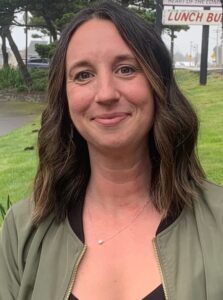 Price
Price“What’s surprising to most people is that our city collects a very small amount of that property tax that’s paid,” Price said. “$54,000 is what our annual budget is estimated to bring in this year from your property tax bills.”
Inside the city of Yachats, the biggest portion of property tax bills goes to the Lincoln County School District, Lincoln County and the Yachats Rural Fire Protection District.
The city collects just 17 cents per $1,000 of assessed property value from the collection of property taxes. That means someone who owns property with an assessed value of $500,000 will pay less than $100 to the city’s general fund – or just 2 percent of the overall property tax pie.
That increases to 13 percent for properties inside the city’s urban renewal district, which captures and sets aside increases in property value or new construction and funnels it to specific projects.
“So we are looking at needing to do a substantial amendment to our urban renewal district and that will be able to expand the amount of money and time that we can collect,” Price said.
Keeping the urban renewal district in place – which is estimated to bring in $588,000 this year – and amending how much it collects will be crucial to do some of “the really big projects that we want to be able to do for our community, because we can’t do it off $54,000,” she concluded.
- Garret Jaros covers the communities of Yachats, Waldport, south Lincoln County and natural resources issues for Lincoln Chronicle and can be reached at Garret@lincolnchronicle.org